Blizzard Entertainment Unveils World of Warcraft Forever and Expands Iconic Franchises at BlizzCon 2026

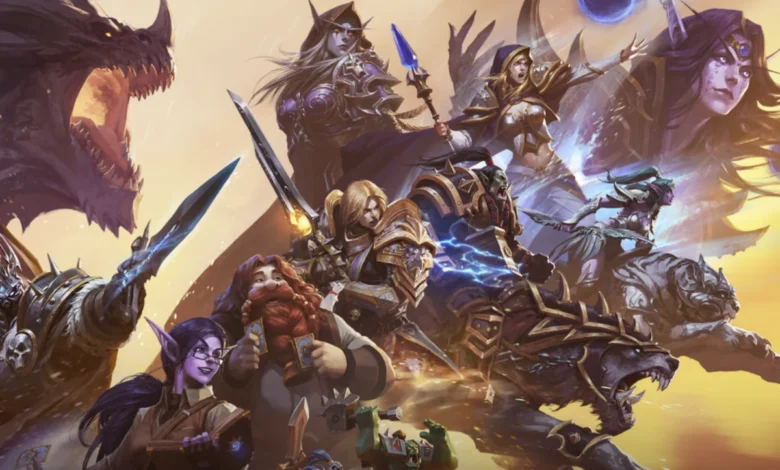
The landscape of massively multiplayer online role-playing games is poised for a significant transformation following the climactic conclusion of the BlizzCon 2026 opening ceremony. Blizzard Entertainment officially announced the development of World of Warcraft Forever, a project long theorized by the community under the moniker "Classic+." Set to launch on November 4, the game invites players to return to the foundational era of the original 2004 release, albeit with a robust suite of new content designed to reshape the traditional Azeroth experience.
This announcement serves as the cornerstone of a broader, multi-year strategic roadmap unveiled by Blizzard, signaling a massive investment in its legacy intellectual properties. The event, held at the Anaheim Convention Center, provided a comprehensive look at the company’s pipeline, which now spans across gaming, animation, and long-term franchise development.
The Vision Behind World of Warcraft Forever
At the heart of the announcement is a shift in design philosophy. Holly Longdale, the executive producer for the Warcraft franchise, emphasized that the team is shifting the focus away from the "end-game grind" that has dominated the genre for years. Instead, the developers aim to make the living world of Azeroth the primary protagonist of the experience.
"In World of Warcraft Forever, it is the journey that counts, not the destination," Longdale noted during the presentation. This design ethos is reflected in the substantial content additions planned for the launch. The game will feature a level cap of 60, mirroring the original vanilla experience, but it will be bolstered by three entirely new zones, over 1,000 quests, nine new dungeons, and two challenging new raids. Furthermore, the introduction of the "Skyborne" race promises to add a new mechanical layer to the established factions, offering players fresh ways to traverse and interact with the world.
The project represents a calculated gamble by Blizzard to retain both nostalgic players and those seeking a more immersive, slower-paced social experience. By keeping the level cap at 60 while injecting massive amounts of horizontal progression—new quests and zones—the company is attempting to curb the "power creep" that often plagues long-running MMOs.
A Historic Expansion for the Warcraft Franchise
Beyond the "Forever" project, the Warcraft team surprised the audience with the immediate release of a new campaign for Warcraft 3. This marks the first major narrative addition to the classic real-time strategy title in over two decades. For a franchise that defines the history of the RTS genre, the return to its roots is significant. It suggests that Blizzard is looking to reinvigorate its older titles to serve as gateways for new players, ensuring that the lore of Azeroth remains accessible regardless of the platform.
The release of this campaign, which is available to players as of today, acts as a bridge between the classic era of Warcraft and the modern iteration of the brand. It reinforces the company’s commitment to "Warcraft" as a multi-generational brand rather than a collection of disparate games.
A Decade of Development: The Future Roadmap
The BlizzCon 2026 announcements were not limited to the Warcraft universe. Blizzard used the platform to outline a ambitious, long-term roadmap for its other core pillars: Diablo and StarCraft.
- Diablo V: The next installment in the gothic action-RPG series is scheduled for a 2029 release. Following the success of recent iterations, Diablo V is expected to lean further into its dark fantasy roots while expanding its open-world capabilities.
- StarCraft: After years of silence surrounding the franchise, the company confirmed that a new StarCraft game is currently in development for a 2030 release. While specific gameplay details remain under wraps, the confirmation alone marks a victory for a fanbase that has clamored for a return to the Koprulu Sector for over a decade.
- Diablo Animated Series: In a move that aligns with the broader industry trend of adapting gaming IP for television, Blizzard confirmed that an animated series based on the Diablo franchise is currently in production with Netflix. This move follows the success of other gaming-to-TV adaptations, positioning the Diablo lore for a wider audience reach.
Contextualizing the Growth of Blizzard Entertainment
The scale of these announcements reflects a post-acquisition era for Blizzard Entertainment, where the focus has shifted toward high-quality, long-term franchise management. The rumors regarding "Classic+" that circulated for weeks prior to the event were not merely community chatter but an indicator of the high level of anticipation for a return to the "vanilla" Azeroth experience.
The strategy appears to be twofold: leveraging the deep, established player bases of classic titles to maintain consistent monthly active users, while simultaneously developing new, high-budget sequels to drive long-term revenue growth. Data from the industry suggests that "legacy" gaming content often performs better in terms of community retention than entirely new experimental IPs, which may explain why the company is investing heavily in the "Forever" concept.
Market Implications and Analyst Perspectives
From an industry standpoint, the announcement of World of Warcraft Forever places Blizzard in direct competition with the growing sub-genre of "revival" MMOs. By providing a curated, developer-supported version of the 2004 experience, the company is effectively reclaiming the player base that had migrated to private servers or alternative games seeking that specific "old-school" feel.
Analysts have noted that the 2029 and 2030 release windows for Diablo V and StarCraft suggest that Blizzard is moving toward a more disciplined production cycle. By pacing these massive titles, the company avoids cannibalizing its own market and ensures that each franchise receives the necessary development time to avoid the "rushed" launches that have historically caused friction with their user base.
Preparing for the Future
The excitement at the Anaheim Convention Center is expected to carry through the remainder of the year. As Blizzard transitions from the reveal phase to the implementation phase, the industry will be watching closely to see if the company can deliver on these ambitious promises.
For the players, the message is clear: Blizzard is doubling down on the core identities that made its games cultural icons. Whether it is the tactical depth of the new Warcraft 3 campaign, the nostalgic journey through the new zones of World of Warcraft Forever, or the long-awaited return to the StarCraft universe, the company is positioning itself to be a dominant force in the gaming industry for the next decade.
As the community digests these updates, the focus shifts to the upcoming coverage of the event. With further details on mechanics, lore expansions, and technical specifications expected in the coming months, the road to November 4 and beyond is set to be one of the most consequential periods in the history of Blizzard Entertainment. The dedication to its legacy, combined with a clear vision for its future, marks a turning point for the publisher as it navigates an increasingly competitive and evolving digital entertainment market.