Mastering Social Media Audience Segmentation: A Strategic Playbook for Modern Enterprise Decision-Making


In the hyper-competitive digital marketplace of 2026, social media has firmly cemented its status as an invaluable goldmine of real-time consumer insight, capturing unvarnished preferences, shifting behaviors, and underlying motivations. Modern enterprise leaders are rapidly realizing that grouping social media users through intentional, live conversation data—rather than relying on static, outdated demographic details—empowers organizations to make substantially smarter business decisions. Whether the goal is optimizing advertising spend, discovering untrodden international markets, or driving scalable revenue, dynamic segmentation has become the cornerstone of modern commercial strategy.
Yet, social media audience segmentation is no longer a localized, one-off marketing exercise relegated to a single department. Instead, it has evolved into a cyclical, enterprise-wide intelligence process engineered to spot emerging opportunities and inform data-grounded strategies across entire corporations. Understanding how to properly approach social media audience segmentation allows organizations to break down rigid silos, align cross-functional workflows, and create lasting business impact.
The Evolution and Definition of Social Media Audience Segmentation
At its core, social media audience segmentation is the systematic process of breaking down a broad target audience engaging across social networks into smaller, distinct groups based on shared characteristics, behaviors, or interests.

In sharp contrast to traditional marketing segmentation, which heavily relies on historical customer relationship management (CRM) databases or periodic survey inputs that reflect the past rather than the present, social segmentation draws directly upon real-time social data. This encompasses live conversations, organic engagement metrics, and immediate sentiment data. By moving away from static assumptions, organizations can uncover the distinct, active groups driving online conversations. Consequently, executive teams across customer care, product innovation, campaign planning, and executive leadership can make targeted decisions aligned perfectly with the current pulse of the market.
Why Audience Segmentation Matters More Than Ever in 2026
A primary catalyst driving the urgent need for advanced audience segmentation is the noticeable degradation of consumer trust and attention in digital spaces. According to the Q1 2026 Sprout Pulse Survey, consumers are becoming increasingly selective about the content they engage with online. Two-thirds of respondents—66%—reported feeling more selective than they were a year prior.
A significant contributor to this eroding trust is the proliferation of what industry professionals call "AI slop"—undifferentiated, one-size-fits-all content produced en masse. The survey revealed that 56% of respondents encounter AI slop often or very often. Despite this consumer fatigue, many brands continue to mistakenly invest heavily in generic, high-volume content. This misallocation of resources inevitably results in wasted budgets, particularly as modern social algorithms increasingly reward true relevance over raw reach.
Effective audience segmentation is the exact mechanism that enables brands to achieve genuine personalization and, by extension, deep resonance with their target audiences—all without necessarily requiring an increase in headcount or advertising budgets.
The Four Pillars of Social Media Audience Segments
To construct an effective strategy, brands must understand the four primary categories of social media audience segments and the specific social signals that bring them to life.
Demographic Segmentation as a Baseline
Basic demographic traits such as age, gender, and follower counts remain a reasonable starting point for initial segmentation. This data is typically gathered via self-disclosure when a user creates a profile, or through network-level analytics reported by ad managers. While these surface-level details rarely tell a complete story on their own, they frequently unveil broader behavioral trends. For instance, generational skews are often visible across different networks and content formats; Instagram Reels and TikTok traditionally attract younger demographics, whereas Facebook’s most active user base skews older.
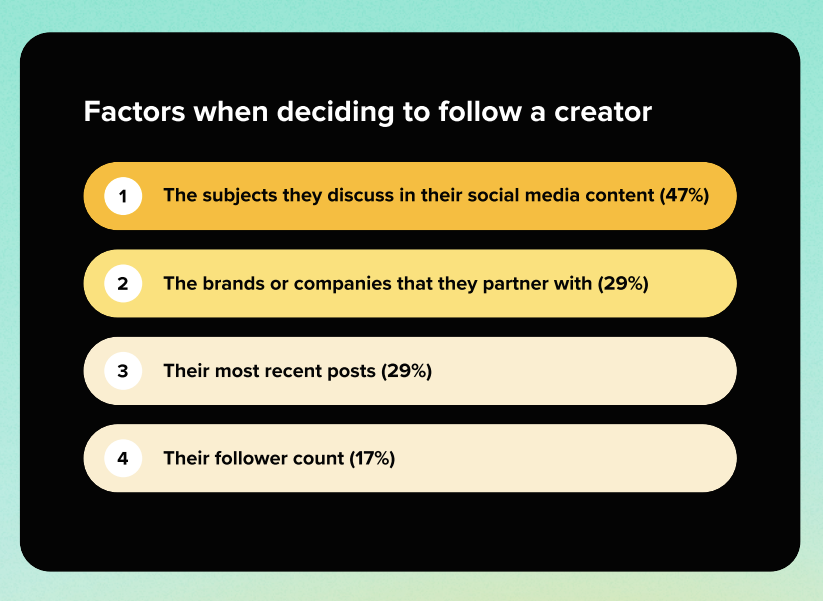
However, demographics should never serve as the primary driver of a segmentation strategy. Self-reported data is notoriously unreliable, as users frequently skip optional profile fields or enter false details to protect their privacy or bypass age restrictions. Furthermore, demographic targeting is rapidly losing its predictive power. Data from the 2026 Influencer Marketing Report indicates that only 17% of consumers check a creator’s follower count before deciding to follow them. For nearly half of respondents—47%—factors such as content topic and behavior matter significantly more. Therefore, demographics should be treated strictly as a foundational baseline rather than an endpoint.
Psychographic Segmentation: Decoding Beliefs and Values
Psychographics involves the classification of individuals based on psychological criteria, including personal values, underlying attitudes, and core motivations that influence their consumption and engagement patterns. By analyzing user comments, posts, and shares, brands can decipher internal belief systems and tailor their messaging accordingly. For example, if an audience segment routinely discusses climate change and environmental sustainability, brands can categorize them as environmentally motivated. Messaging can then pivot toward ethical sourcing, reusable product lines, or community-driven green initiatives.
Behavioral Segmentation: Uncovering Why Consumers Act
While psychographics focus on internal beliefs, behavioral segmentation illuminates external actions. It examines how users behave on social media—the specific actions they take, the conversation threads they join, and the content formats they consume. Building behavioral segments requires observing patterns: How frequently does a user post? Which formats do they share, such as static images, carousels, or short-form video? What themes dominate the comment sections?
Unearthing answers to these questions provides critical visibility into consumer decision-making and underlying motivations. For instance, identifying a segment that consistently participates in digital giveaways, utilizes promo codes, and engages with budget-conscious shopping content reveals a core purchasing motivator: fair pricing and tangible value. Brands can immediately adapt their social messaging to highlight affordability and cost-effectiveness.

Geographic Segmentation: The Regional Nuance
A consumer’s physical location profoundly shapes their social habits and spending patterns. Various signals allow brands to pinpoint whereabouts, including location tags, geotagged stories, and regional dialects or slang. Furthermore, network preferences vary heavily by region. According to Pew Research Center’s Global Social Media Use Report, Facebook remains globally favored in high- and middle-income nations like the United States, Canada, and Australia. Conversely, Instagram dominates high-income regions in Europe and the Asia-Pacific, such as Germany, Spain, and Japan. TikTok commands significant market share in middle-income Asian and African nations including Malaysia, Pakistan, and Ghana.
Geographic segmentation yields the highest ROI when paired with behavioral and demographic overlays—such as examining parents in Australia aged 35 to 44 discussing screen-time challenges.
Essential Tools for Modern Audience Segmentation
Transcending static segments requires advanced technological tools designed to capture intent signals, pain points, and competitive interests.

Social Listening Platforms
Social listening tools transform segmentation from a mere refinement tactic into a powerful discovery mechanism. Because social platforms are filled with unprompted, authentic data, listening tools can surface audience segments and trends that businesses did not even know to look for.
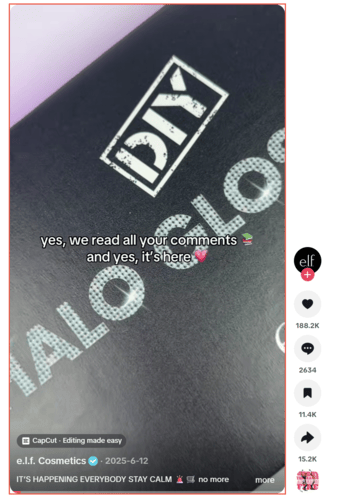
A prominent example is e.l.f. Cosmetics, which utilized social listening to identify an emerging consumer trend: users repurposing empty foundation bottles into oversized, custom lip glosses. Capitalizing on this community-driven movement, the brand launched a dedicated campaign that generated 85 million organic views, two million engagements, and over 1,000 user-generated videos, ultimately leading to a limited-edition DIY Halo Gloss Kit. Similarly, oat milk pioneer Oatly monitored surging demand for matcha lattes across Reddit, X, Instagram, and TikTok. Feeding these insights directly to its Research and Development teams resulted in the successful formulation and launch of a brand-new beverage product.
CRM and Business Intelligence Integrations
Integrating social audience intelligence with first-party customer data stored in CRM platforms—such as Salesforce or HubSpot—allows organizations to validate whether emerging social segments genuinely drive qualified leads, revenue, or long-term customer lifetime value. By connecting social activity with purchase history and support tickets, brands can easily separate passing internet trends from high-value growth opportunities.

Artificial Intelligence Analysis
Advanced artificial intelligence streamlines the heavy lifting of data classification through automated pattern detection across massive conversation volumes. Dedicated AI agents—such as Sprout Social’s Trellis—continuously monitor shifting engagement trends and sentiment anomalies, summarizing complex datasets into executive-ready insights without requiring manual tagging.
A Step-by-Step Framework for Building a Segmentation Strategy
- Define Clear Business Objectives: Align every segmentation effort with a definitive commercial goal, whether it is building top-of-funnel brand awareness, capturing high-intent leads, or driving immediate digital sales.
- Aggregate Social and Listening Data: Consolidate data streams from native platform analytics, listening tools, and third-party dashboards. Utilize AI-assisted queries to filter out high-volume noise and home in on relevant keywords.
- Identify Patterns and Listening Themes: Establish structured thematic buckets—such as competitor complaints, product misconceptions, or feature requests—to classify incoming signals with high precision.
- Validate Against Enterprise Data: Cross-reference social audience segments with CRM and business intelligence records to ensure findings align with verified customer behaviors and purchasing power.
- Activate Across Cross-Functional Teams: Route actionable segment insights directly into the workflows of customer experience, product development, and sales teams to improve customer retention and operational efficiency.
The Future of Enterprise Intelligence
When fueled by real-time behavioral data rather than static demographic assumptions, social media audience segmentation evolves from a basic marketing task into a dynamic, enterprise-wide intelligence engine. Organizations that successfully transition to treating segmentation as a live intelligence system will remain agile, resilient, and deeply relevant to an increasingly selective consumer base.