Achieving consistent results in professional photography often hinges on the ability to maintain technical precision under the volatile constraints of event timelines. Large-scale family portraits and wedding bridal party sessions frequently present significant logistical hurdles, requiring photographers to balance ambient environmental light with controlled artificial illumination. For professionals operating in high-pressure wedding or corporate event environments, the difference between an average result and a proficient, commercially viable image lies in the strategic selection and deployment of portable lighting equipment.
The Evolution of Event Photography Logistics
In the contemporary wedding and event industry, the "golden hour" or the strictly regimented cocktail hour creates a condensed window of time for group photography. Statistical data from industry surveys suggests that nearly 65% of wedding day complaints from clients involve delays during the formal portrait session. Consequently, the ability to rapidly deploy a reliable lighting rig is no longer merely a creative preference; it is an operational necessity.
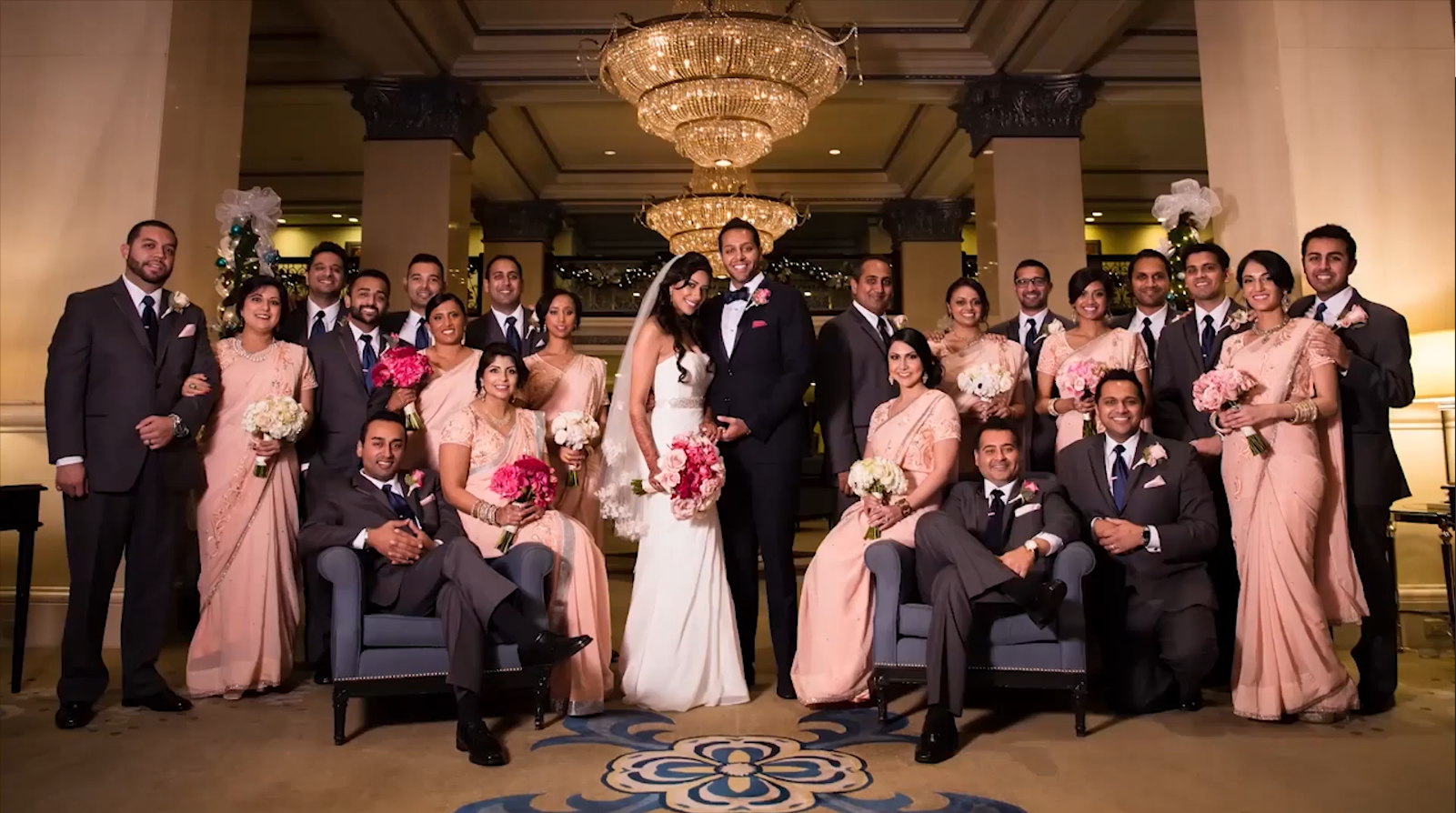
The standard procedure for capturing large groups requires a synthesis of ambient light management and flash output. Professionals have shifted away from bulky, studio-grade strobe kits in favor of high-performance speedlights, which offer a superior power-to-weight ratio. This shift is corroborated by market trends showing an increase in demand for lightweight, collapsible modifiers, such as the 43-inch optical white satin umbrella, which provide the wide, soft light spread necessary to cover groups of 15 or more individuals without creating harsh, localized hotspots.
Technical Chronology and Setup Methodology
The chronological sequence of executing a large group shot begins with an assessment of the environment. Before any equipment is deployed, the photographer must establish the ambient light baseline. This is typically done by adjusting the camera’s shutter speed to capture the natural light of the venue. In scenarios where the ambient light is insufficient, the integration of artificial light becomes mandatory.
The industry-standard setup involves a three-flash configuration. One flash is mounted directly to the camera’s hot shoe, serving as the primary radio trigger for the remaining two off-camera units. By utilizing full-feature flashes with built-in radio transceivers, photographers eliminate the need for cumbersome external triggers, reducing the margin for equipment failure and accelerating setup time.

The off-camera flashes are positioned on durable, lightweight stands—commonly referred to as "nano stands"—and raised to a height of approximately five to six feet. This elevation is critical; it prevents "campfire lighting," a phenomenon where light is directed upward from below the subject, creating unnatural, unflattering shadows under the eyes and chin. By positioning the lights slightly to one side of the camera and feathering them—angling the light source slightly away from the center of the group—the photographer ensures an even distribution of light across all participants, minimizing the risk of overexposure on those closest to the source.
Supporting Data on Exposure and Sensor Management
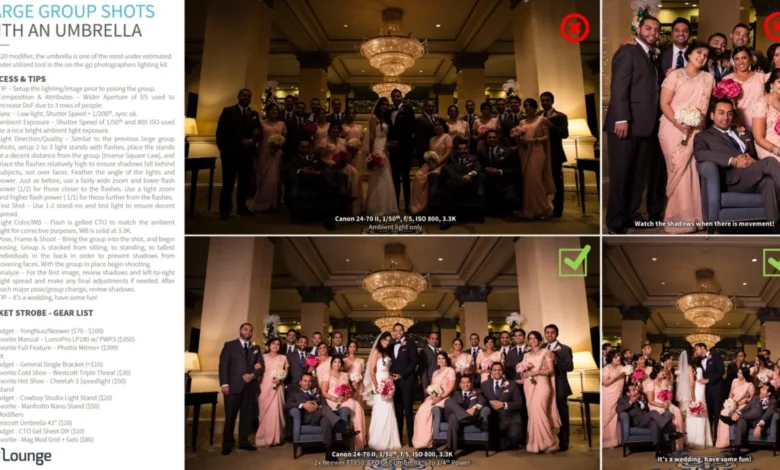
A common technical error in group photography is the failure to adjust for depth of field. When photographing three or more rows of people, an aperture of f/2.8 or f/4 is often insufficient to keep the front and back rows in sharp focus. Professional standards dictate an aperture of f/5.6 or higher to ensure the entire depth of the group is rendered clearly.
To compensate for the loss of light caused by narrowing the aperture, photographers must modulate their ISO and shutter speed. A standard baseline for indoor event photography is an ISO of 800, combined with a shutter speed of 1/50th of a second. This configuration effectively balances the ambient light without introducing excessive digital noise or motion blur.

The relationship between these variables is distinct: while aperture and ISO affect both ambient light and flash exposure, shutter speed is independent of flash power. Therefore, if a photographer needs to capture more ambient light to reveal the background, they can lower the shutter speed without necessitating a change in flash intensity. Conversely, if the group is moving, the ISO can be increased to allow for a faster shutter speed, thereby freezing action, provided the flash power is adjusted downward to prevent overpowering the subjects.
Industry Implications and Professional Standards
The use of color temperature orange (CTO) gels represents a significant component of professional color management. When the ambient environment—such as a reception hall with tungsten lighting—differs in temperature from the daylight-balanced output of a flash, the resulting images can appear disjointed. By applying CTO gels to the flashes and adjusting the camera’s white balance to match the ambient color temperature, photographers achieve a seamless integration between the foreground subjects and the environmental background.
The broader implication of these standardized techniques is the reduction of post-production labor. When a shot is correctly exposed and color-balanced on-site, the time required for image editing in post-production is reduced by an estimated 30% to 40%. For high-volume businesses, this efficiency translates directly into increased profitability and improved client turnaround times.

Analytical Overview of Light Modification
The choice of the 43-inch optical white satin umbrella as the primary modifier is based on its specific light-shaping characteristics. Unlike a softbox, which is designed for directional control and minimal spill, the umbrella’s convex, orb-like shape forces light to diffuse in a wide radius. While this reduces the photographer’s ability to isolate the subject from the background, it is ideal for large groups where uniform coverage is the primary objective.
From an analytical standpoint, the umbrella is a "forgiving" tool. In a fast-paced environment where the photographer may not have the luxury of perfectly measuring light fall-off, the umbrella ensures that even if the light stand is slightly misaligned, the coverage remains broad enough to prevent dark gaps in the group. This reliability is a cornerstone of the modern, mobile, professional photography kit.
Conclusion and Future Outlook
The transition toward high-efficiency lighting setups reflects a larger trend in the photography industry: the move toward minimalism and technical agility. As the demand for rapid, high-quality content continues to grow—fueled by social media and the instant gratification culture of modern weddings—the ability to master these fundamental lighting principles is essential.

While the equipment—the flashes, the stands, and the umbrellas—remains constant, the mastery of the technique is subjective to the photographer’s ability to read the light. Whether through formal education, such as advanced lighting workshops, or through field experience, the objective remains the same: to deliver technically superior images that meet the rigorous standards of modern professional output. As technology advances, the industry will likely see further refinements in flash technology, such as improved battery life and even more compact designs, but the core physics of light, shadows, and exposure will remain the bedrock of the craft. Photographers who prioritize these fundamentals, maintaining both the technical knowledge to troubleshoot in real-time and the organizational discipline to execute efficiently, will continue to distinguish themselves in an increasingly competitive marketplace.