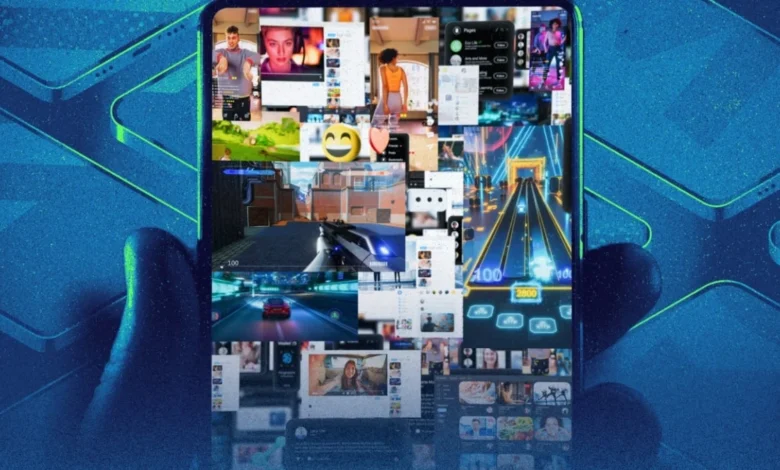
In an era defined by the algorithmic pursuit of user retention, the way we consume digital media has fundamentally shifted. Modern entertainment is no longer a passive experience but a high-speed, hyper-stimulating environment designed to provide immediate gratification. This behavioral evolution has prompted the emergence of a new piece of Japanese slang: "dopagaki." A portmanteau of the English word "dopamine" and the Japanese term "gaki"—a pejorative for a brat or a misbehaving child—the word has transcended its niche origins to become a defining descriptor of 2026 internet culture. It captures the essence of a generation—and an audience—conditioned to demand, and receive, constant psychological rewards.
The Linguistic and Cultural Origins of Dopagaki
The term "dopagaki" (ドーパガキ) serves as an abbreviation for "dopamine-addicted brat." It does not function as a clinical diagnosis but rather as a cultural shorthand for the restlessness that characterizes contemporary media consumption. While the term may sound like a modern iteration of the "iPad kid" phenomenon observed in Western societies, its trajectory is uniquely rooted in the specific landscape of Japanese digital discourse.
The term gained initial traction in late 2024, originating from a user on the platform X (formerly Twitter) who was critiquing the structural composition of the song "Lilac" by the rock band Mrs. GREEN APPLE. The user noted that the song was engineered to deliver rapid-fire melodic payoffs and energetic transitions, leaving the listener with little room to breathe or process the music. By applying the phrase "dopamine-addicted brat" to the musical arrangement, the critic highlighted a broader trend: the commercialization of neurochemistry. Entertainment is increasingly being engineered to bypass patience, feeding the user a steady stream of "highs" to prevent the brain from wandering to competing platforms.
A Chronology of a Digital Trend
The evolution of "dopagaki" from a critical observation of music production to a mainstream cultural label follows a distinct timeline:

- December 2024: The phrase first appears on social media, used to describe the "over-optimized" structure of pop music, which prioritizes constant stimulation over thematic development.
- Early 2025: The term undergoes linguistic reduction, becoming the punchier "dopagaki." It begins to migrate from music critique to broader discussions regarding short-form video consumption.
- June 2026: The Joshikosei Lab, a research entity focused on the trends of teenage girls in Japan, identifies "dopagaki" as a top-trending expression. It is categorized as a self-deprecating term used by youth to describe their own inability to focus on long-form content.
- October 2026: Further research indicates significant market penetration, with roughly 16 to 17 percent of surveyed high school students reporting frequent use or awareness of the term in their daily social interactions.
The Mechanics of Digital Consumption
The rise of "dopagaki" coincides with a measurable change in how we interact with technology. Data from 2026 indicates that the average adult spends over 19 hours per week on social media and video platforms. This consistent exposure has fostered an environment where "hook" culture—the practice of grabbing attention within the first three seconds of a video—is no longer an elective strategy for creators but a necessity for survival.
This shift is facilitated by features like YouTube’s video chapters, which allow users to bypass "boring" sections of content, and the rise of micro-dramas, which condense narrative arcs into bite-sized, high-intensity episodes. These tools, while convenient, reinforce the "dopagaki" mindset: the assumption that any piece of content that does not provide an immediate, consistent dopamine hit is a failure. Consequently, the user’s threshold for boredom has plummeted, and their tolerance for slow-paced, deliberate storytelling has withered.
Sociological Implications and the "Self-Awareness" Paradox
One of the most compelling aspects of the "dopagaki" phenomenon is its transformation into a self-referential label. Unlike many derogatory labels imposed by older generations onto younger ones, "dopagaki" is frequently embraced by the very people it critiques.
This suggests a high degree of cultural self-awareness. Young users are acknowledging that they are "addicted" to their devices, yet they are doing so with a layer of irony and detachment. This behavior serves as a coping mechanism for the collective anxiety regarding digital dependency. By turning their condition into a "meme" or a slang term, they neutralize the judgment of older observers. However, this self-identification does not necessarily lead to behavioral change; rather, it formalizes the acceptance of a high-stimulation lifestyle as the new baseline for human interaction.
Comparative Analysis: iPad Kids vs. Dopagaki
While the term shares conceptual DNA with the Western "iPad kid" trope, there are critical distinctions in how the two are applied. The "iPad kid" is typically used as a disparaging, third-person accusation—a critique of parenting and the developmental effects of screens on toddlers. It is an external judgment.

"Dopagaki," conversely, occupies a more liminal space. It is used as both an insult to others and a humorous, self-deprecating confession. Furthermore, while "iPad kid" focuses on the developmental age of the user, "dopagaki" focuses on the addiction of the user, regardless of age. As adults increasingly mirror the usage patterns of the youth—scrolling through feeds during work, meals, and even leisure time—"dopagaki" has proven to be a more inclusive term, describing a generational state of mind rather than a specific age group.
The Role of Platform Architecture
The persistence of the "dopagaki" mindset is not merely a failure of individual willpower but a result of intentional platform design. Algorithms on TikTok, Instagram, and YouTube are optimized for "Time Spent," which incentivizes the delivery of content that triggers the brain’s reward centers. When users are fed an endless loop of high-stimulation, low-effort content, the brain’s neuroplasticity adjusts to that pace.
Industry analysts point out that we have entered a feedback loop:
- Platform Design: Algorithms promote fast-paced, high-engagement content.
- Consumer Adaptation: Users grow accustomed to this pacing and lose interest in slower content.
- Creator Response: Creators accelerate their editing styles to meet the new, shorter attention spans.
- Reinforcement: The cycle repeats, further cementing the "dopagaki" behavior.
Conclusion: The Future of Attention
The emergence of "dopagaki" is a signal of a broader cultural turning point. As we continue to integrate digital consumption into the fabric of our daily lives, the distinction between our "online" and "offline" cognitive states continues to blur. Whether the term remains a passing linguistic fad or becomes a permanent fixture in the vocabulary of digital health, its existence confirms that society is beginning to grapple with the long-term effects of an economy built on attention.
For now, the term stands as a testament to our modern condition: we are hyper-connected, hyper-stimulated, and increasingly aware of the fact that, when it comes to the internet, we are all, to some extent, dopamine-addicted brats. Whether we choose to change those habits or simply continue to laugh at them remains the defining challenge of the current digital age.