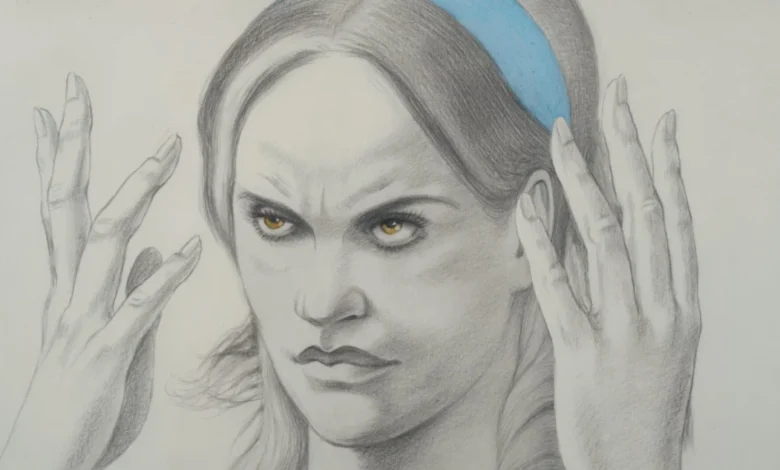
The animation world has been profoundly moved by the unveiling of Lysistrata, the final work of the legendary animator Richard Williams. As the 2027 Academy Awards season begins to take shape, this hand-drawn short has emerged as a significant contender, having qualified for consideration through a successful theatrical run at the Laemmle Glendale. For the animation community, the film represents more than just a potential Oscar nominee; it serves as a final, resonant chapter in the career of a man who spent his life defining the boundaries of the medium. Williams, who passed away in 2019, left behind an extensive body of work that culminates in this adaptation of Aristophanes’ ancient anti-war comedy.
The Evolution of a Final Vision
The story of Lysistrata is deeply intertwined with Williams’ own lifelong development as an artist. His fascination with the material began when he was a teenager, inspired by the illustrations of Australian artist Norman Lindsay in a 1926 edition of the play. While the themes of the piece—the futility of conflict and the power of collective non-violent resistance—struck a chord with him early on, Williams famously resisted animating the story until he felt his technical mastery was sufficient.
His career was characterized by this philosophy of perpetual learning. After directing the landmark 1971 adaptation of A Christmas Carol, which won an Academy Award, and serving as the animation director for Who Framed Roger Rabbit, Williams dedicated his later years to the pursuit of pure craft. He founded a London studio that became a sanctuary for the titans of the Disney and Warner Bros. Golden Age, such as Ken Harris and Art Babbitt, fostering an environment where traditional animation techniques were meticulously preserved and passed down. This culminated in his seminal book, The Animator’s Survival Kit, which remains the industry standard for character animation. Lysistrata stands as the practical application of the philosophies he codified in that text.
A Chronology of Artistic Persistence
The production history of Lysistrata is complex, spanning the final years of Williams’ life and the dedicated efforts of his estate following his death.
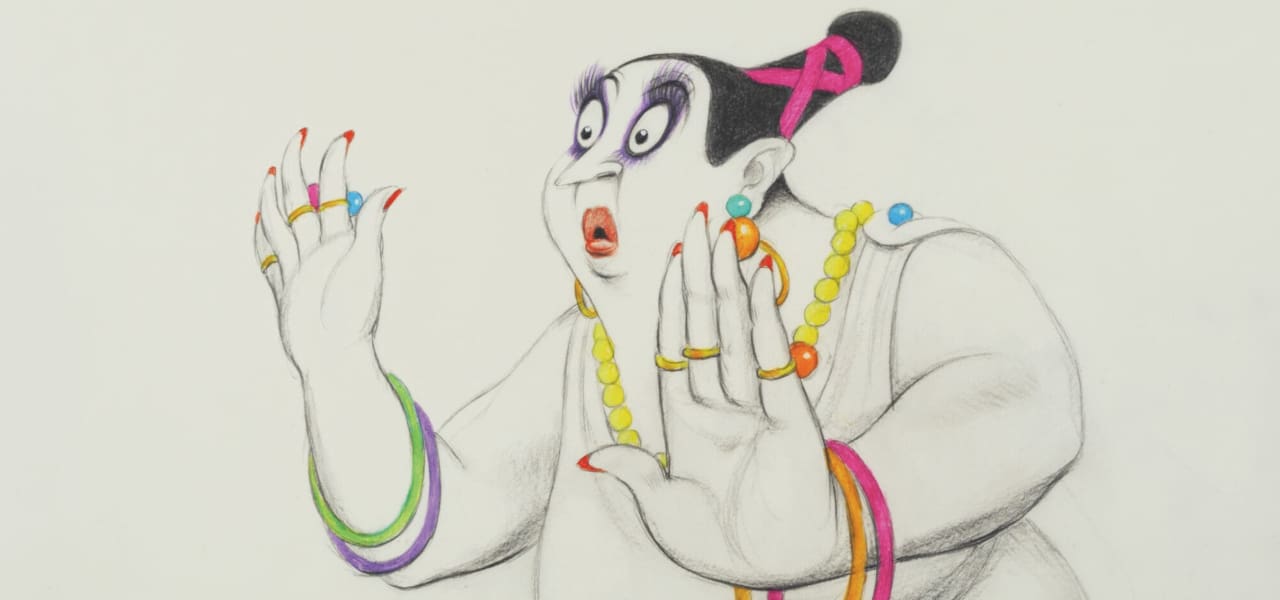
- 1950s–2010s: Williams maintains a lifelong interest in the Lysistrata text, collecting research and developing character designs while focusing on other major projects, including his unfinished magnum opus, The Thief and the Cobbler.
- 2015: Williams releases the short film Prologue, which serves as a technical proving ground for the aesthetic and stylistic choices he would later refine for Lysistrata.
- 2016–2019: Williams enters the primary production phase of Lysistrata. He works in his studio space at Aardman Animations, meticulously hand-drawing each frame. During this period, he also provides the voice for the character Kalonike.
- 2019: Richard Williams passes away at the age of 86. The status of his final project is initially uncertain, with thousands of drawings and test sequences left in various stages of completion.
- 2020–2026: A core team of collaborators, led by producer Imogen Sutton, undertakes the monumental task of organizing, editing, and finalizing the footage to ensure the finished film adhered to Williams’ specific timing and framing requirements.
- 2026: The completed film is released, qualifying for the 2027 Academy Awards.
Technical Execution and Preservation
The preservation of Williams’ vision was a logistical and creative challenge that required a deep understanding of his unique working method. Producer Imogen Sutton, alongside post-production supervisor Tom Barnes and sound designer Adrian Rhodes, acted as the stewards of this final output. The team prioritized the preservation of the original sync and dialogue tracks that Williams had recorded during his lifetime.
The technical team faced the delicate task of "finishing" a film without introducing modern, digital shortcuts that would detract from the tactile, hand-drawn nature of the work. Fernando Lechuga, the film’s compositor, noted that the objective was to maintain the "hand-made" feel, ensuring that the animation remained the central focus. The film features over 9,000 original drawings by Williams, a testament to his prolific output even in his final years. The decision to cast Meera Syal as the voice of Lysistrata was made to complement the existing audio tracks, providing a modern, professional anchor to the performance while honoring the tone Williams had established.
The Philosophical Weight of the Subject Matter
The adaptation of Aristophanes’ play is particularly relevant in the modern era. The narrative, which centers on women from Athens and Sparta organizing a sex strike to force their husbands to end a brutal war, is noted for its blend of bawdy, uproarious comedy and profound political commentary. Williams viewed the story as timeless. By animating both the serious and comic elements, he managed to capture the duality of the human condition. His own voice performance as Kalonike provided a sense of intimacy, with Williams famously noting in his later years that the character "tells me what to do."
Implications for the Animation Industry
The presence of a posthumous work of this caliber in the 2027 Oscar race has sparked discussions regarding the role of "legacy production" in the film industry. Unlike many posthumous projects that rely heavily on AI-assisted completion or heavy re-interpretation, the completion of Lysistrata is characterized by its adherence to the original creator’s intent and existing source material.
Industry analysts suggest that the film serves as a reminder of the enduring value of traditional 2D animation. In an era increasingly dominated by procedural generation and high-frame-rate 3D, the "tactile" quality of Williams’ work—evident in every line and brushstroke—offers a counter-narrative. The film’s qualification for the Oscars highlights the Academy’s continued recognition of shorts that represent the pinnacle of traditional technical skill.

Official Responses and Industry Reaction
The response from the animation community has been one of reverence. For many, the film is viewed as a "magnificent gift," a phrase used by several of Williams’ former colleagues. The surprise of the release—that an entirely new, substantial piece of work from a master animator was hidden in plain sight—has added a layer of historical significance to the 2027 awards cycle.
"Helping to bring Dick’s characters to life with sounds—giving them weight, character, and adding to the humor, but aiming never to distract from the beautiful fluidity of the drawings—was a privilege," stated Adrian Rhodes, the film’s sound designer. This sentiment is echoed by those who have viewed the early screenings, many of whom have remarked that the film does not feel like a "finished project" by others, but rather a direct extension of Williams’ own hand.
Conclusion
As the 2027 Academy Awards approach, Lysistrata stands as a defining entry in the category of animated shorts. It is a work that bridges the gap between the golden age of hand-drawn animation and the modern era, proving that the principles of timing, weight, and character performance remain as vital today as they were when Richard Williams first began his journey as a teenager in the mid-20th century. Whether or not it secures the golden statue, its place in the history of the medium is already assured. It is the final word from an artist who, even at the very end of his life, insisted that there was always more to learn and more to draw.
Related posts: