Recreating the Soviet Cosmos: Inside DNEG’s Visual Effects Mastery for Apple TV+ Sci-Fi Spinoff Star City

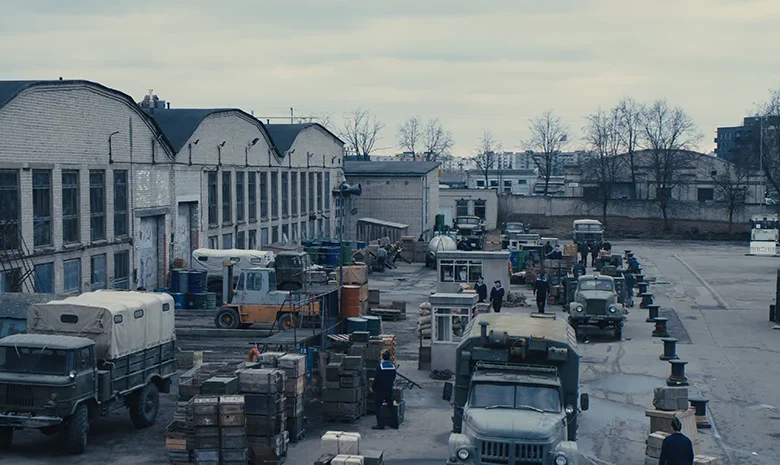
The landscape of alternative-history television continues to expand with ambitious world-building, and Apple TV+ has once again raised the bar for prestige science fiction through its latest offering, Star City. Serving as a narrative companion and direct spinoff to the critically acclaimed alternate-timeline drama For All Mankind, Star City pivots its focus eastward, exploring the high-stakes geopolitics and technological milestones of the Soviet space program. While its predecessor famously investigated a timeline where the United States lost the initial race to put a man on the moon, Star City explores the consequences of survival—specifically, imagining a scenario where visionary Soviet rocket engineer and spacecraft designer Sergei Korolev survives a fatal 1966 surgery. Under his continued guidance, the Soviet Union achieves the historic milestone of landing the first human on the lunar surface.
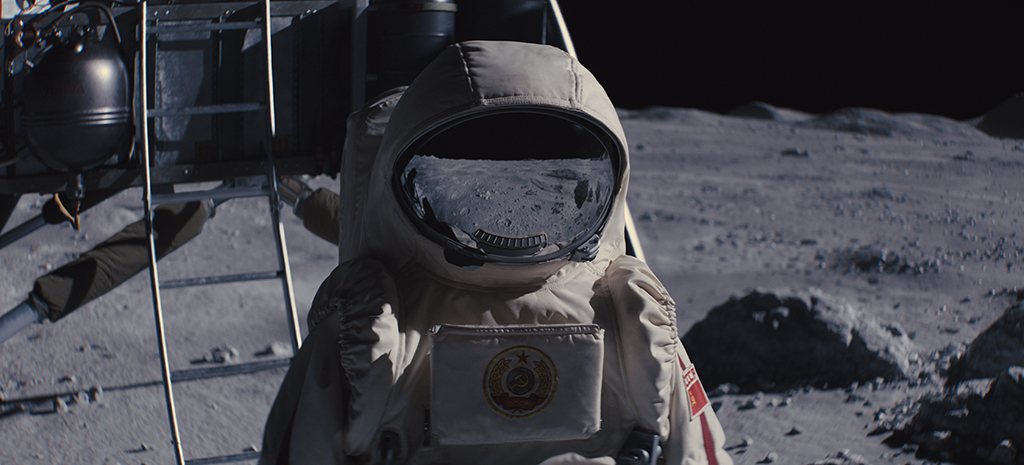
To bring this meticulous alternate history to life, production visual effects supervisors Jay Redd and Todd Perry turned to the award-winning visual effects house DNEG. Entrusted with crafting 131 complex visual effects shots distributed across 21 distinct sequences, DNEG faced the formidable challenge of blending rigorous historical realism with cinematic tension. The studio’s scope of work was extensive, encompassing two separate Soviet moon landings featuring both male and female cosmonauts, the harrowing atmospheric re-entries of Soyuz spacecraft pursued by a MiG-21 fighter jet, intricate orbital docking maneuvers, hyper-realistic orbital views of planet Earth, and a fully computer-generated nuclear submarine. Rather than leaning into clean, hyper-modern digital aesthetics, the series’ visual language deliberately evokes the gritty, shadow-drenched paranoia and psychological conspiracy thrillers of 1970s cinema.
Establishing the 1970s Spy Thriller Aesthetic and Vintage Lens R&D
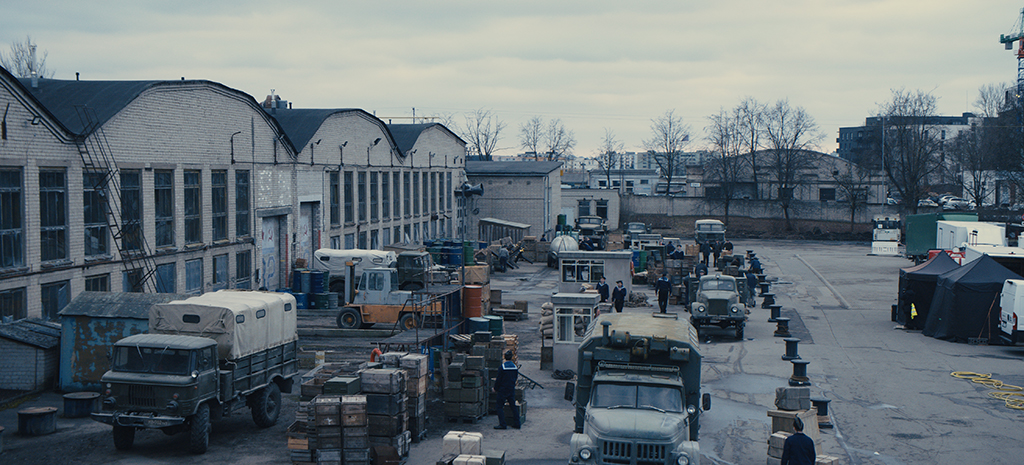
Achieving a period-accurate, grounded aesthetic required a deep collaborative effort between the live-action production teams and DNEG’s digital artists. According to Chris Keller, Visual Effects Supervisor at DNEG, the production itself laid the physical groundwork by utilizing vintage Soviet glass. This choice ensured that the physical plates captured by the cameras possessed the inherent optical characteristics, flares, and imperfections of Eastern Bloc lenses from that era.
To seamlessly merge the digital elements with these foundational elements, DNEG embarked on an extensive research and development phase aimed at replicating complex optical artifacts. The team went far beyond standard digital distortion and vignetting. By retooling an advanced defocus node sourced from open-source online communities, DNEG’s technical artists managed to replicate hypercomplex optical anomalies, including astigmatism, cat-eye effects, barn doors, and intricate chromatic aberrations embedded directly within the bokeh kernel. This meticulous attention to optical physics ensured that every computer-generated asset felt as though it had been captured through aging, high-end vintage glass under harsh historical conditions.
Furthermore, the visual effects pipeline had to honor the claustrophobic and tense atmosphere demanded by the narrative. Star City is heavily steeped in KGB spy drama, meaning that lighting choices, shadow placements, and grain structures were treated as narrative tools rather than mere aesthetic choices.
Reimagining the Soviet Moon Landings and Lunar Topography
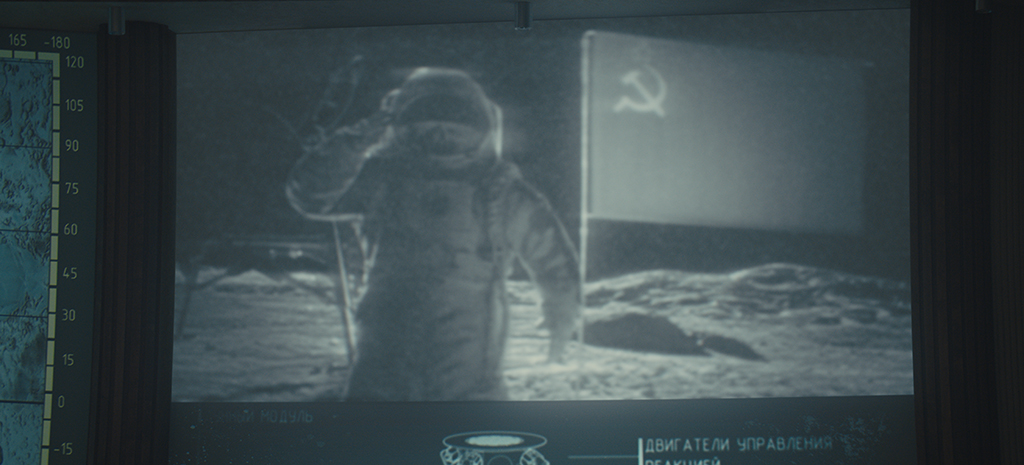
One of the most technically demanding tasks undertaken by DNEG involved expanding upon the initial Soviet lunar landing first teased in the inaugural season of For All Mankind. Because the production teams no longer possessed the original digital asset files from the 2019 shoot of For All Mankind Season 1, Keller and his team had to work backward using only surviving plate photography of the actors.
The team utilized archival plates of actor Alexei Leonov walking on the moon from Episode 101, employing advanced rotomation techniques to track the performer and integrate him into a completely new, full-CG lunar environment built from scratch. While certain narrative beats and visual angles matched the established continuity of the franchise, Star City introduced entirely new perspectives, slightly adjusted lunar lander models, and nuanced variations in terrain topography.
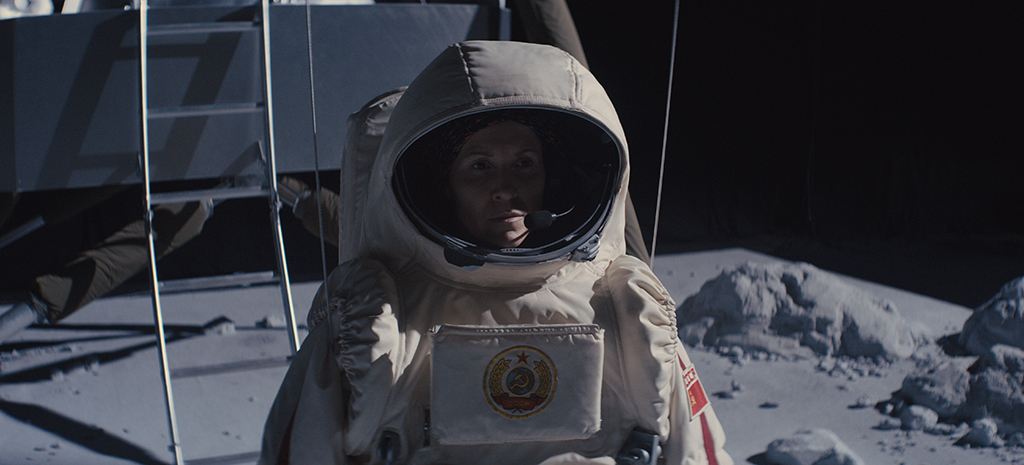
To construct the lunar landscape with absolute geological accuracy, DNEG leaned heavily on publicly available datasets provided by NASA. By analyzing high-resolution height maps, subsurface characteristics, and the unique reflective properties of lunar regolith—the fine, fragmental rock and mineral soil blanketing the moon—the studio established a photorealistic baseline for the surface. Artists built an extensive asset library containing procedural boulders, scattered rock formations, complex crater networks, and sharp mountain ridges. These assets were dynamically deployed on a shot-by-shot basis to maximize composition and dramatic impact.
Lighting on the lunar surface demanded careful calibration. Because the moon lacks an atmosphere to diffuse light, shadows are exceptionally harsh, deep, and unforgiving. DNEG deliberately avoided front-lighting setups, which tend to render lunar dust as a flat, unappealing gray mush. Instead, the team relied heavily on dramatic backlighting, casting long, stark shadows across the desolate landscape. In adherence to physical reality, the sky above the moon was rendered as a pristine, absolute black void completely devoid of visible stars. This uncompromising commitment to bleak isolation served as a crucial emotional backdrop for characters navigating the psychological toll of space exploration, particularly during key narrative sequences involving the character Anastasia in Episode 102.
Overcoming the Complexity of Helmet Visor Reflections
Among the most notoriously difficult technical hurdles in visual effects production is the rendering of reflective helmet visors in space suits. In Star City, DNEG made the bold decision to execute every single visor reflection entirely in computer graphics, even during shots that featured live-action plate photography of actors on set.
Because a curved astronaut helmet visor functions essentially as a convex mirror ball, the digital artists were forced to render a full 360-degree environment for every single close-up shot. However, physical accuracy often clashed with cinematic storytelling. In reality, a realistic horizon line reflecting off a convex visor would frequently cut awkwardly across an actor’s face—distorting features or cutting across the eyes in a way that obscured crucial emotional performances.
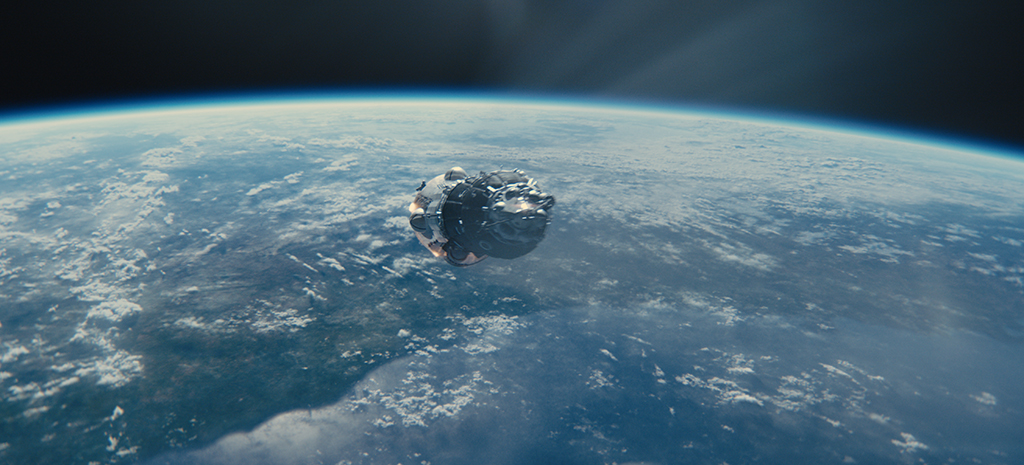
To resolve this, DNEG artists routinely cheated the layout of the reflected environment, subtly shifting horizons up or down depending on the camera angle. In many instances, the digital reflections were dynamically faded out in the center of the visor to ensure that the audience could maintain a clear view of the actor’s facial expressions without visual interference.
Simulating Orbital Dynamics, Plasma Re-Entry, and Atmospheric Violence
The scale of Star City extends far beyond the lunar surface, requiring complex simulations of orbital mechanics, atmospheric re-entry, and high-altitude combat. The re-entry sequences—featuring legendary Soviet hardware such as the Soyuz spacecraft and the Salyut-1 space station—demanded rigorous asset development. Due to the secretive nature of the historical Soviet space program, high-resolution photographic references for these vehicles were exceptionally scarce. DNEG artists scoured obscure digital archives to gather every available snapshot, meticulously modeling panel lines, structural welding seams, distinct metallic rivets, and subtle layers of space grime.
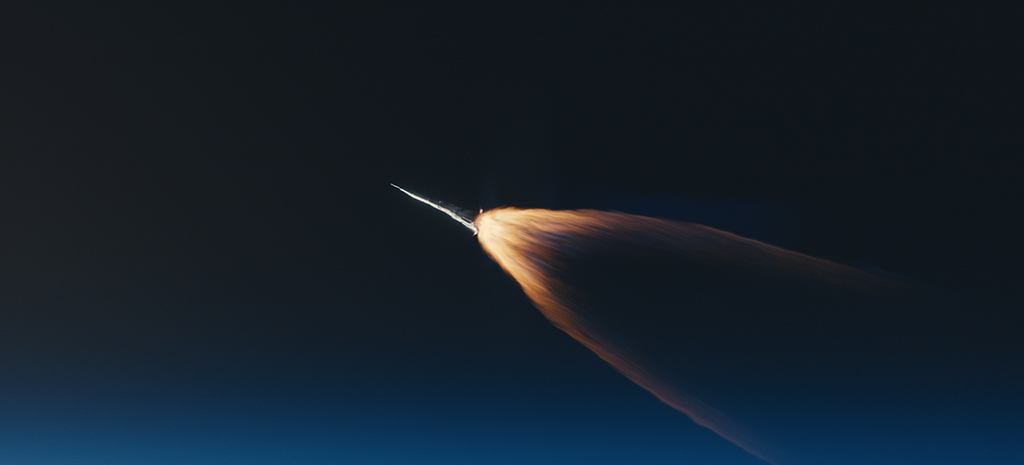
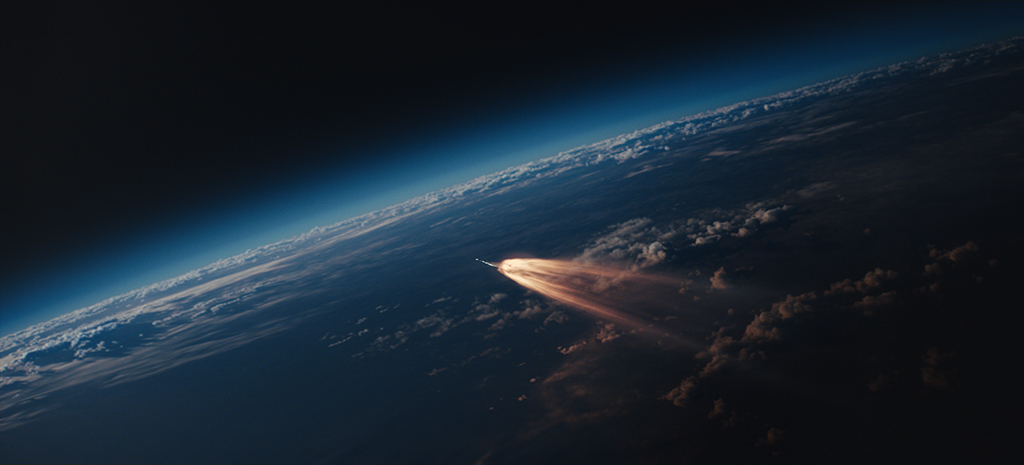
When these spacecraft hit the upper atmosphere, they trigger violent thermal phenomena. Referencing archival NASA animatics that detailed how heat sheaths form around descent modules, DNEG engineered a multi-layered plasma simulation pipeline. The resulting visual effect combined multiple tiers of simulated fire, leading-edge thermal spikes, short and long sparks, and dense volumetric smoke.
As the capsule descends through the thinning air pockets of the upper stratosphere, the thermal intensity evolves dynamically. Initial bursts of sparks give way to tongues of flame, eventually culminating in the spacecraft being completely engulfed in a roaring sheath of atmospheric plasma. As the capsule drops deeper into thicker atmospheric layers, intense air resistance chars and burns away external layers of protective Kevlar wrapping, exposing the scorched, oxidized metallic hull underneath.
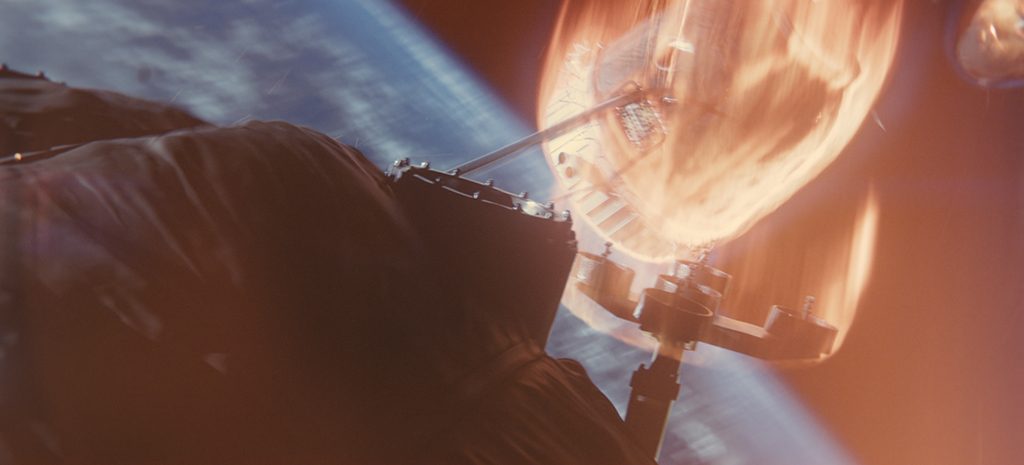
The danger escalates further when a computer-generated MiG-21 fighter jet enters the fray, pursuing descending Soyuz modules and firing heat-seeking missiles. Integrating the MiG-21 presented unique challenges; the aircraft’s polished, chrome-like skin acted as a giant reflective surface that was notoriously difficult to control under dynamic lighting conditions. The subsequent mid-air missile detonation alters the trajectory of the descent modules, requiring precise choreography between camera shake, aerodynamic buffeting, and explosive kinetic energy to ensure the action remained legible and visceral to the viewer.
Engineering a Novel Hybrid Workflow for Photorealistic Orbital Views of Earth
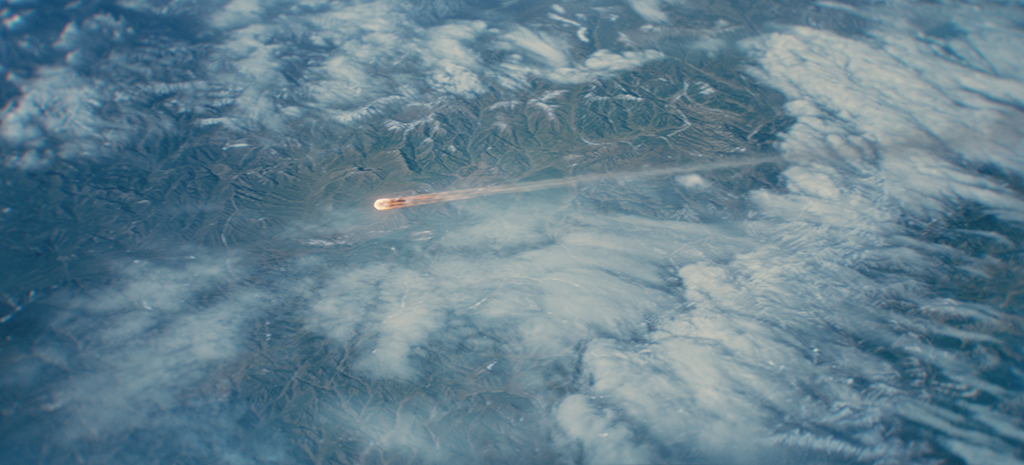
Perhaps the most technically innovative achievement of DNEG’s work on Star City lies in its portrayal of planet Earth from orbit. Rather than relying on traditional matte-painting approaches—which frequently suffer from inconsistent lighting resolutions and patchwork blending when sourced from multiple photographic plates—the visual effects team devised an advanced hybrid workflow.
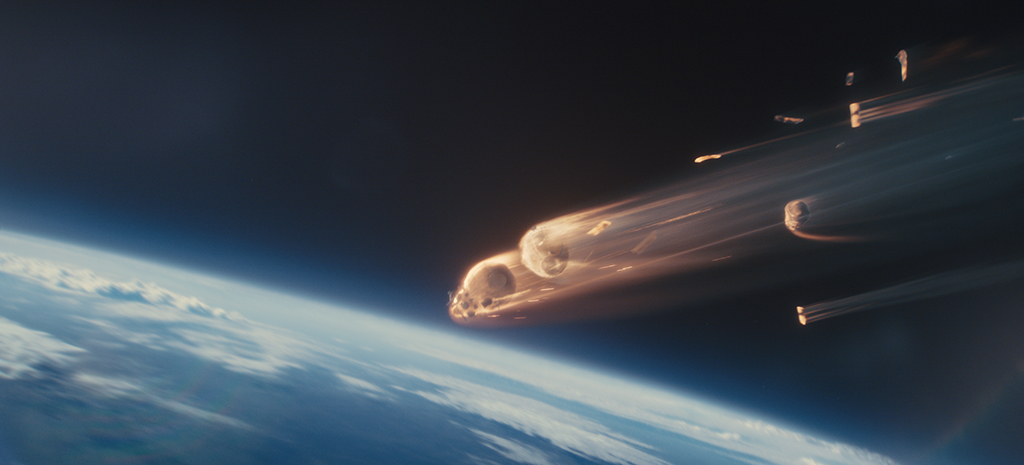
Recognizing that cloud formations are the primary visual anchor for planetary realism from space, DNEG compiled a comprehensive library of extracted cloud textures derived from authentic satellite observations of major weather systems. Instead of painting these textures onto flat digital canvases, artists mapped them directly onto a full 3D digital model of Earth for each individual shot. These textures were then utilized to drive a volumetric shader within Terragen, an advanced terrain and environment rendering software.
By processing all atmospheric elements through a unified shader network under identical lighting parameters, DNEG achieved unprecedented visual cohesion. This methodology culminated in stunning visual sequences during Episode 107, which features a serene, slow-paced orbital docking procedure between a Soyuz spacecraft and the Salyut-1 space station. Reminiscent of the deliberate, contemplative pacing of Stanley Kubrick’s 2001: A Space Odyssey, the sequence showcases motionless, crystal-clear camera framing, subtle thruster smoke dispersal in a vacuum, and unmatched fidelity in planetary cloud rendering.
Broader Implications and Industry Impact
The visual effects achievements realized by DNEG in Star City underscore a broader trend within contemporary streaming television: the blurring of lines between traditional cinematic feature films and episodic series production. By investing heavily in proprietary research and development—such as advanced vintage lens replication pipelines and hybrid volumetric planetary shaders—visual effects vendors are increasingly equipped to tackle complex historical fabrications with feature-film-tier fidelity.
As alternative-history narratives continue to captivate global audiences, the demand for uncompromising historical texture paired with speculative engineering will only grow. Through Star City, DNEG has not only expanded the fictional universe established by For All Mankind but has also set a formidable new technical benchmark for how television creators can visualize humanity’s most ambitious—and heavily guarded—technological frontiers.