Mastering Detailed 3D Environment Design: A Professional Workflow Guide for Atmospheric Landscapes

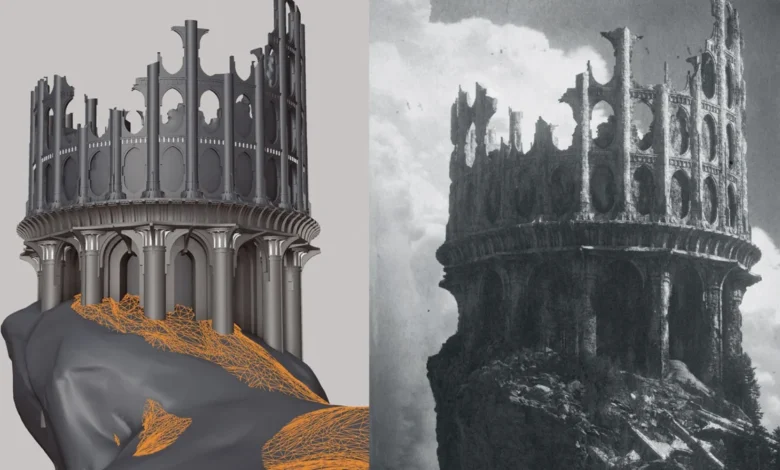
Creating expansive, highly detailed 3D environments requires a disciplined intersection of technical proficiency and artistic intuition. For professional 3D artists, the challenge lies not just in the software, but in managing the complexity of assets to ensure the final render maintains both visual impact and narrative coherence. This guide outlines a structured, industry-standard workflow for developing atmospheric, large-scale scenes, utilizing a pipeline that integrates Cinema 4D, ZBrush, Octane Render, and Adobe Photoshop.
The Foundation of Scene Architecture
The process begins long before the software is opened. Professional environment design relies heavily on the creation of a visual palette. This phase involves the systematic collection of reference imagery, which serves as the blueprint for architecture, lighting, composition, and mood. By curating a library of pre-built foliage scatter systems and modular material kits, artists can significantly reduce the technical overhead associated with individual projects. This "pre-prep" approach allows the artist to focus on the creative synthesis of the scene rather than the repetitive tasks of material creation or asset placement.
A common pitfall in 3D production is the "daunting task" syndrome, where the sheer scale of an environment leads to procrastination or technical fatigue. To mitigate this, successful production pipelines break the project into 20 or more granular, manageable tasks. By segmenting the workflow into distinct milestones—such as base geometry modeling, destruction modeling, terrain sculpting, and shader development—the artist maintains steady momentum.
Establishing the Compositional Framework
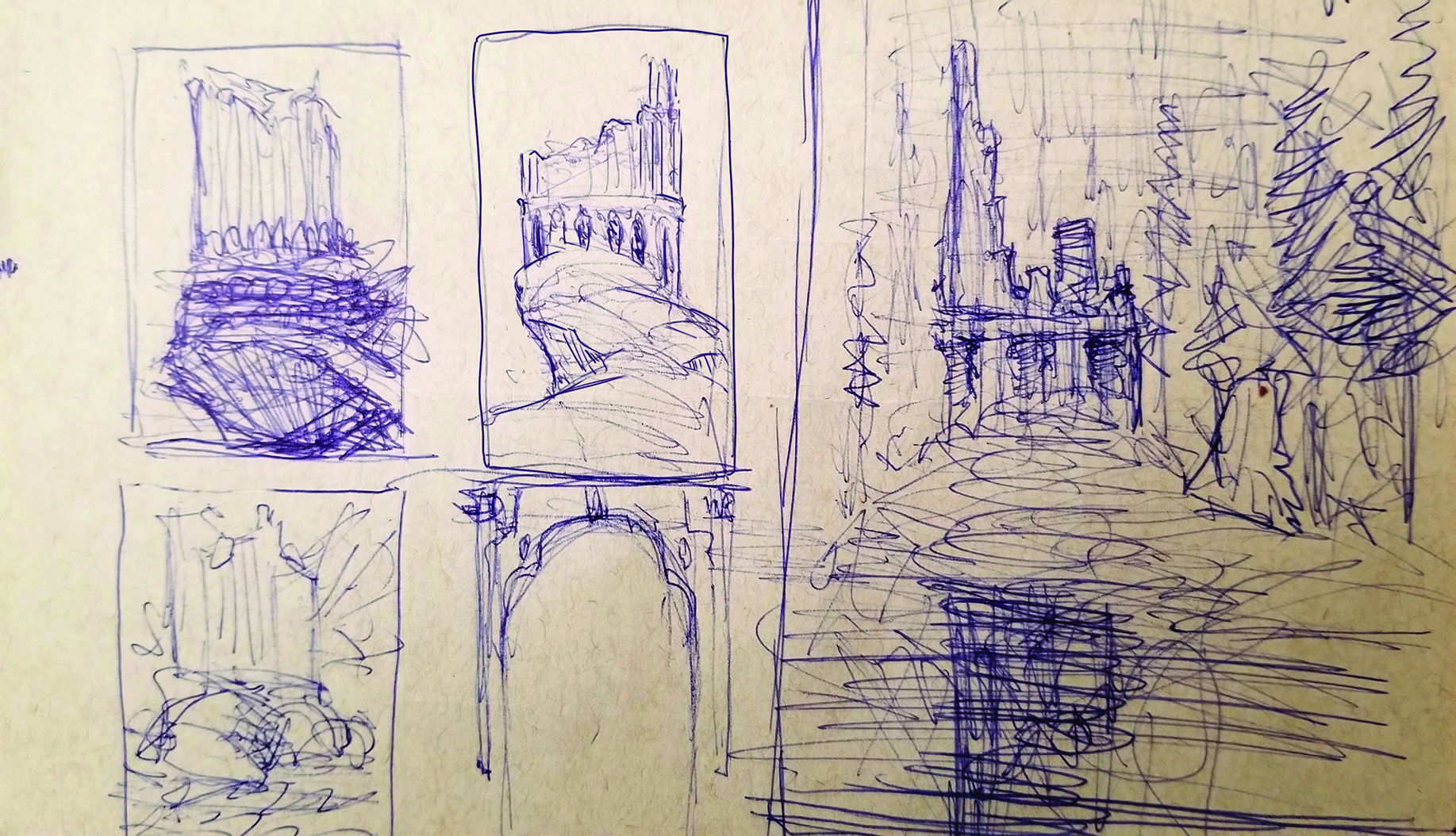
The development of a 3D scene typically begins with a thumbnail sketch. This is not merely a stylistic exercise but a critical step in testing compositional flow. For instance, in scenes featuring epic, forgotten architecture, the goal is to establish a sense of "lonely, ancient power." The thumbnail allows the artist to experiment with camera angles and focal points that would be too time-consuming to re-adjust once the geometry has been fully detailed.
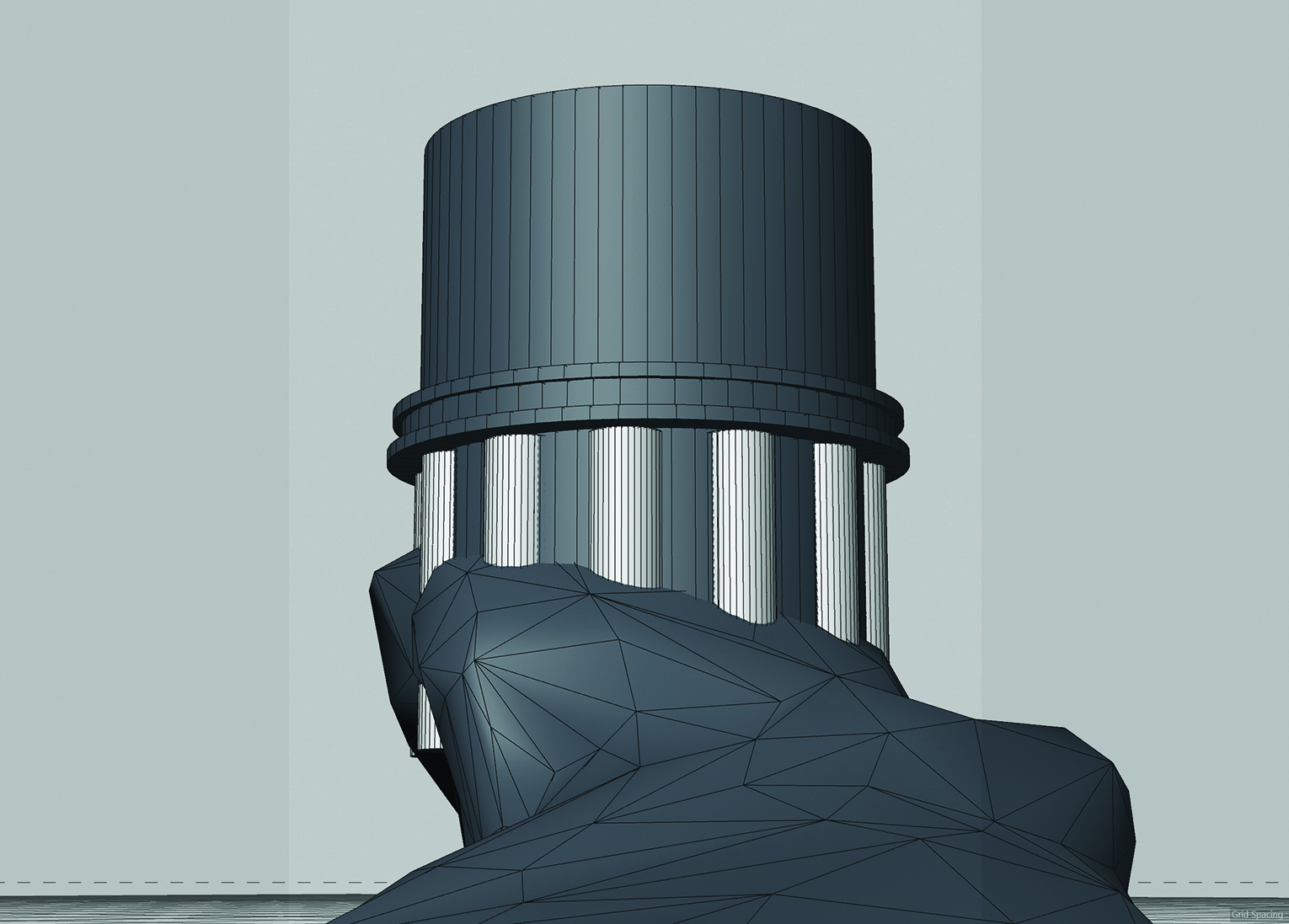
Once the sketch is finalized, the artist moves to block-out in Cinema 4D. This phase utilizes basic geometric primitives to define the landscape’s silhouette and the massing of the central structures. Locking the camera early is a mandatory step in this process. Once the camera is fixed, the artist can refine the geometry specifically for that frame, preventing wasted effort on areas of the scene that will remain outside the camera’s frustum.
Advanced Modeling and Procedural Destruction
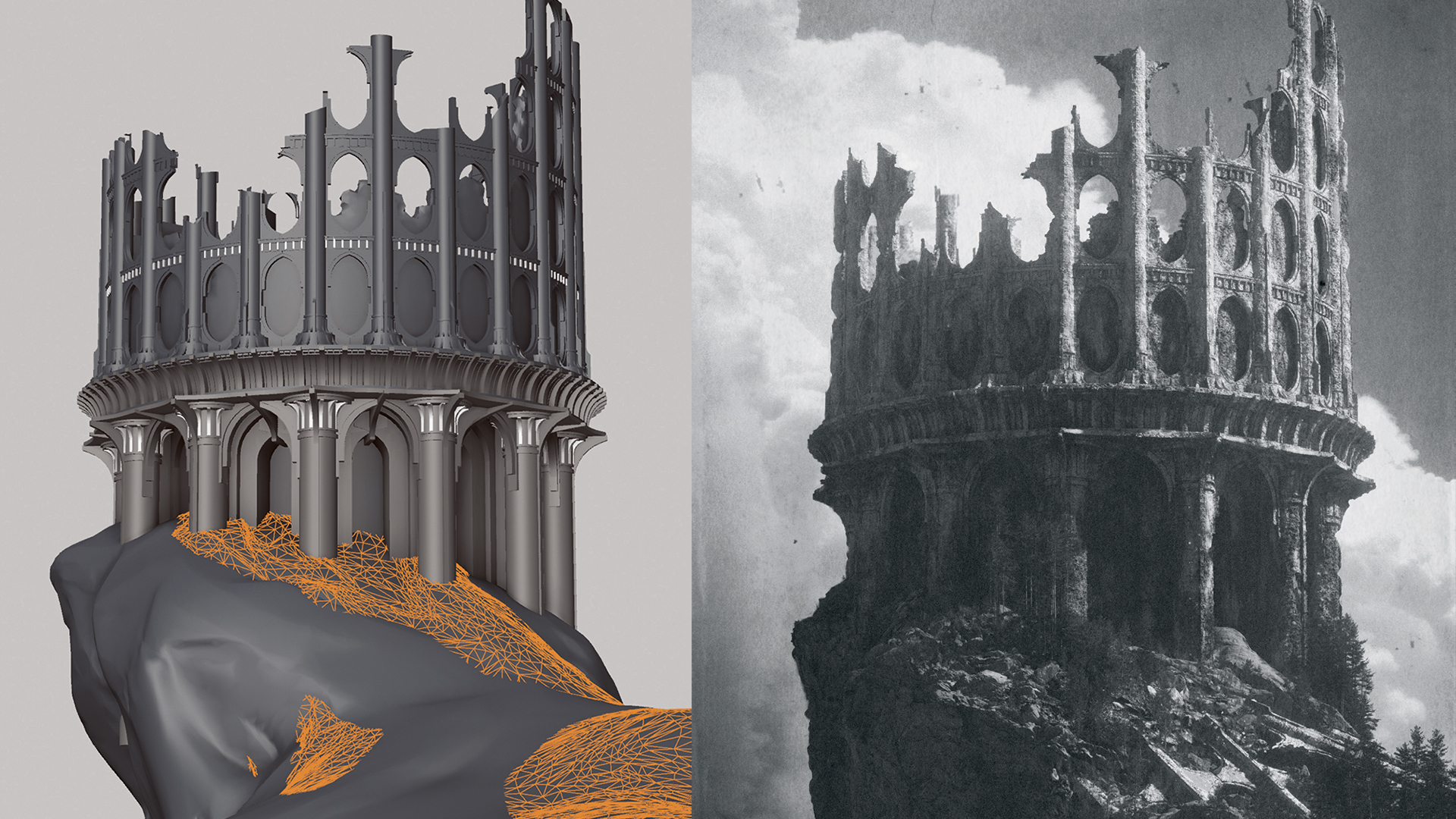
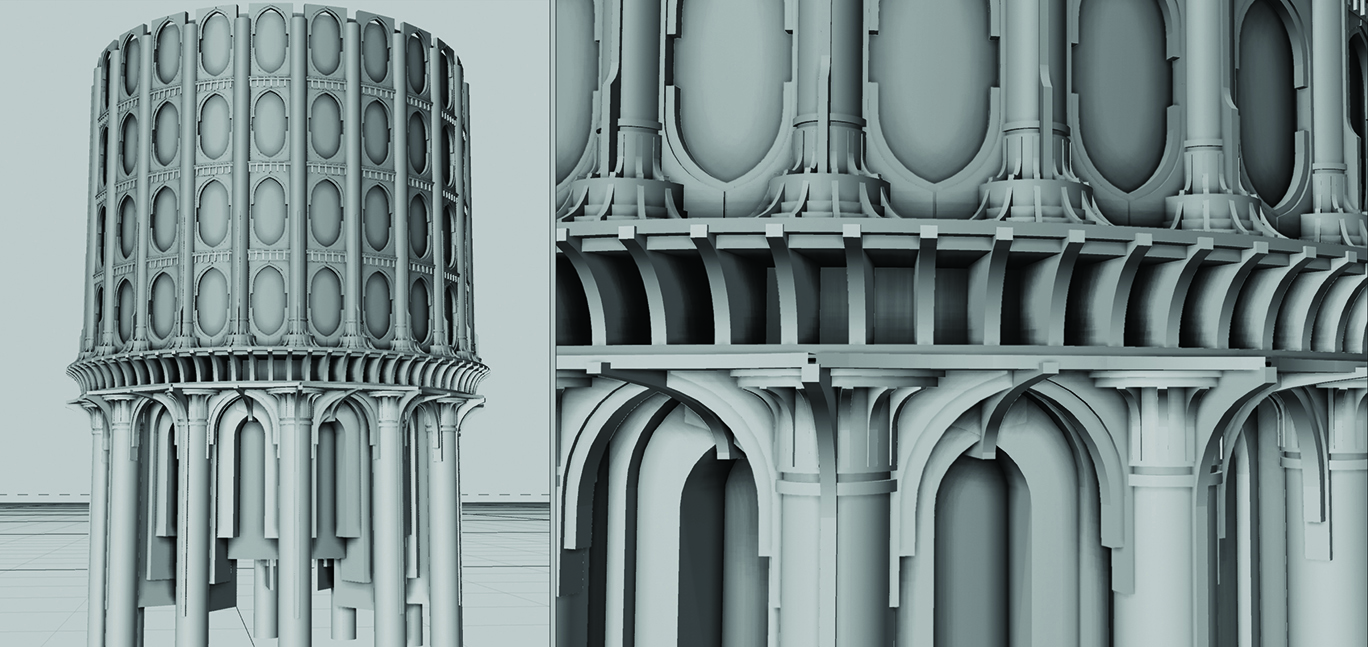
Building complex architectural elements, such as ancient towers, requires a balance between manual sculpting and procedural efficiency. Instead of modeling every brick by hand, artists leverage displacement textures applied to basic geometric shells. By utilizing symmetry tools for archways and radial cloners for structural pillars, an artist can create highly complex, intricate towers in a fraction of the time required for traditional modeling.
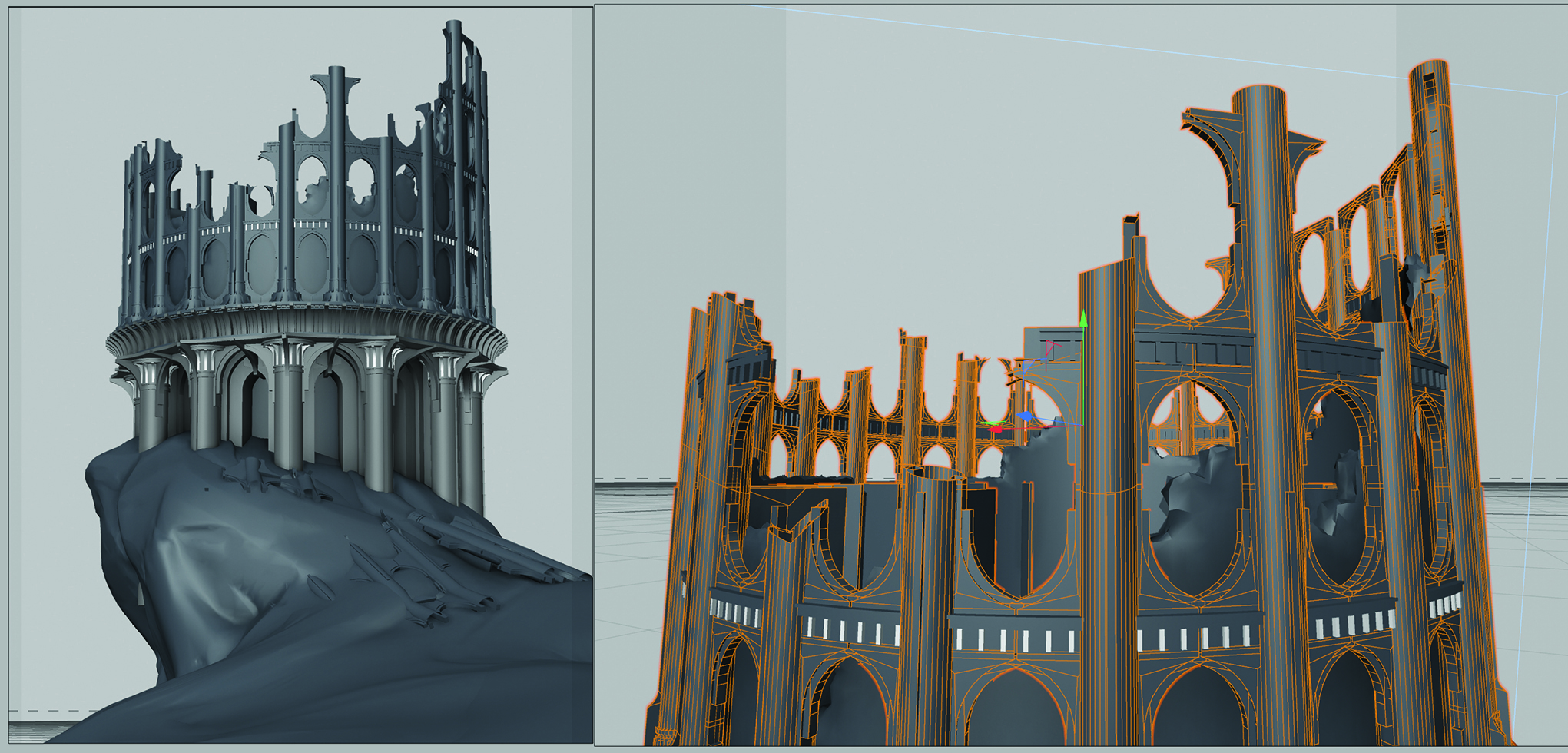
The "destruction" phase of the workflow is where the narrative of the scene is often cemented. Using tools like the Knife tool and Voronoi fracture, the artist introduces structural damage that follows the established sketch. This process requires a delicate touch; simply breaking the mesh is insufficient. The artist must perform targeted, lasso-based deletions to ensure the collapse feels gravity-driven and historically plausible. The goal is to make the environment feel as though it has been weathered by time, rather than randomly fragmented.
Sculpting and Texturing Terrain
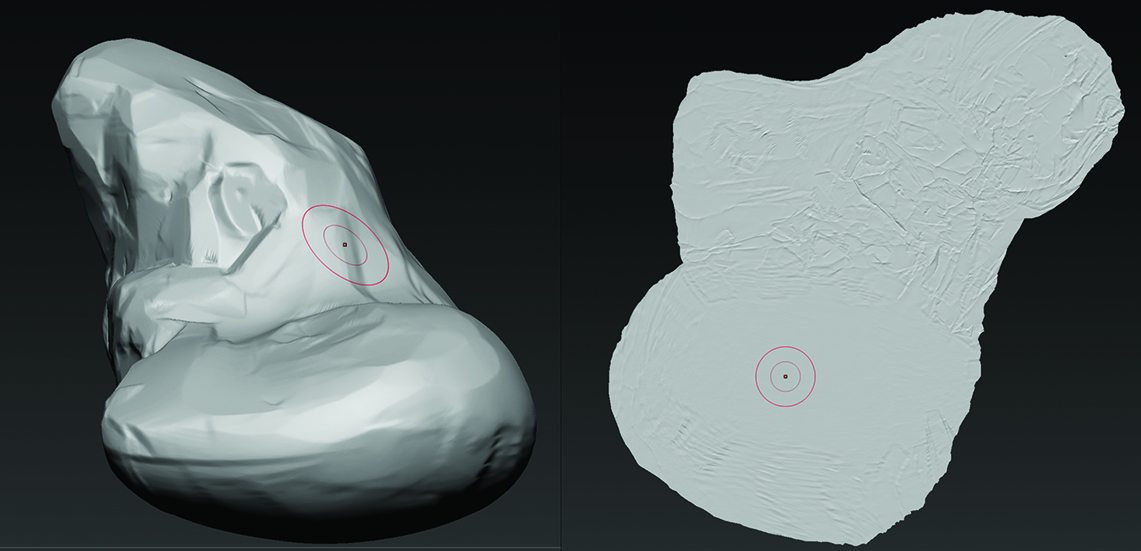
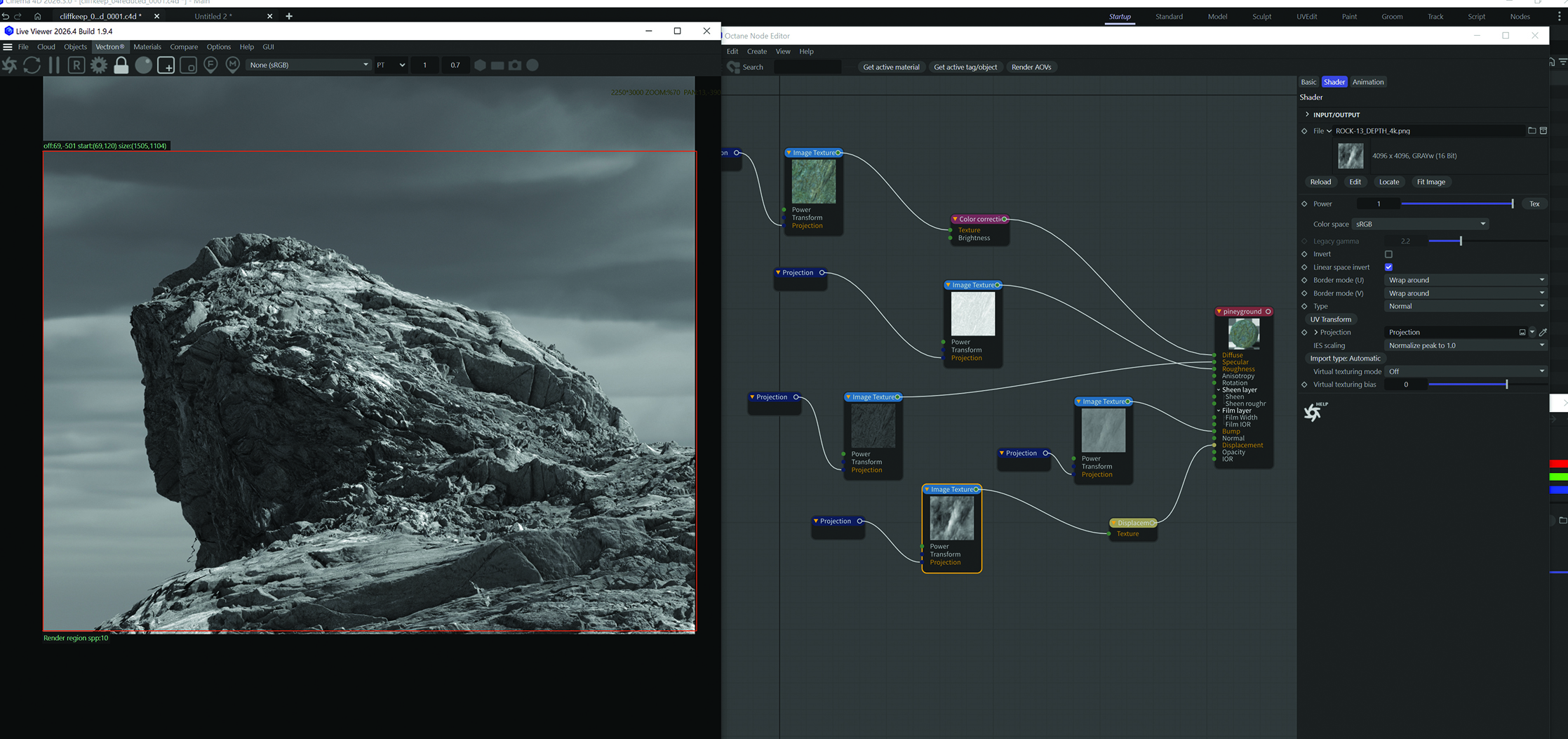
The realism of a 3D environment is often determined by the quality of its terrain. By exporting the base terrain geometry into ZBrush, artists can leverage high-poly sculpting tools to refine the ground’s forms, adding natural geological features such as erosion and rock formations. This sculpt is then re-imported into Cinema 4D.
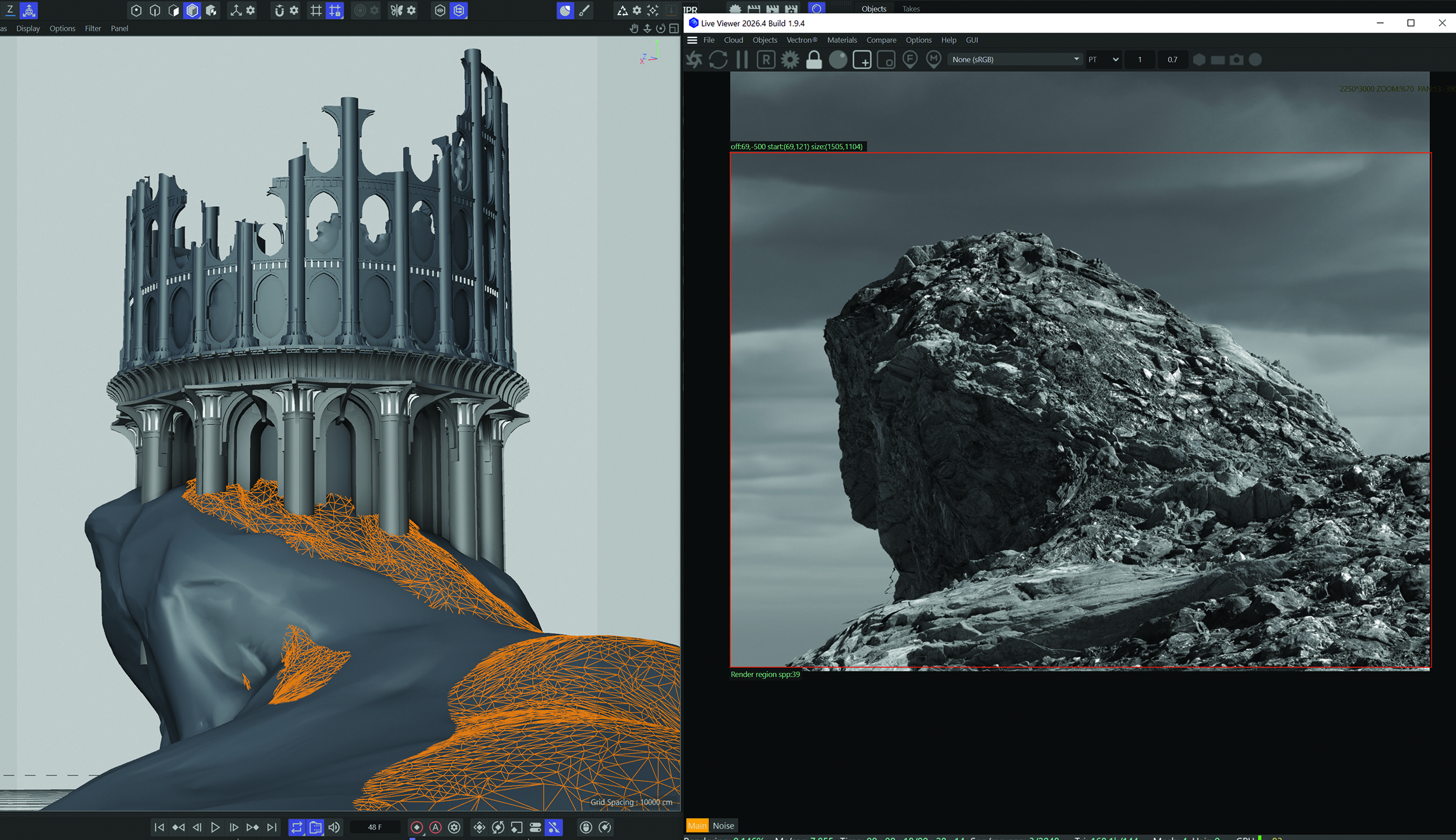
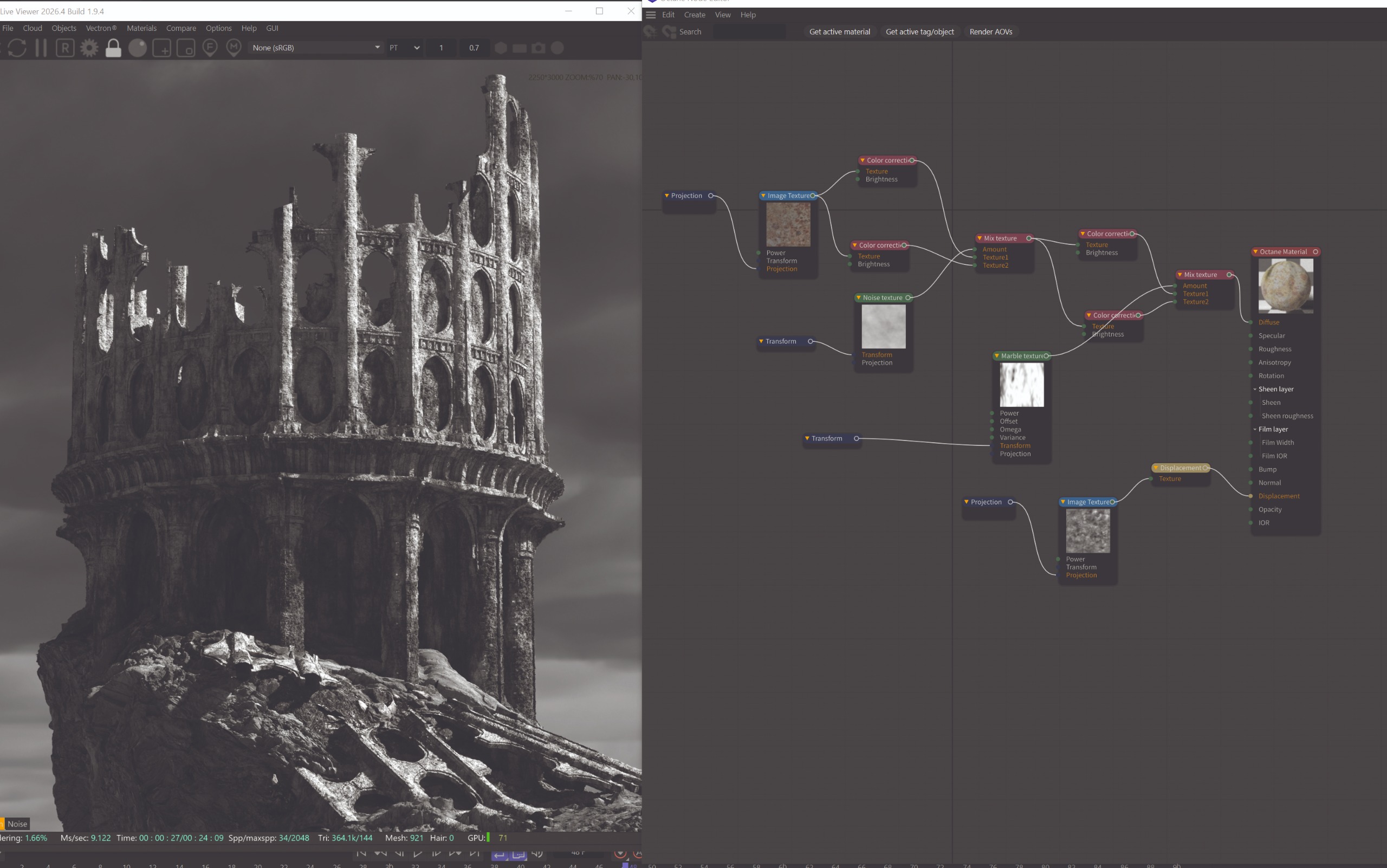
Texturing is the final stage of structural refinement. Using tileable, high-resolution photoscanned rock materials—such as those found in the Megascans library—the artist builds a complex shader. By adjusting the displacement scale and UV offsets, the artist adds immense depth to the terrain. A critical technique here is the use of material layering. By duplicating terrain geometry and applying different material types—such as a rocky cliff shader versus a soil-based ground shader—and blending them using vertex maps, the artist can create a seamless, natural transition between different ground types.
Lighting, Rendering, and Atmospheric Effects
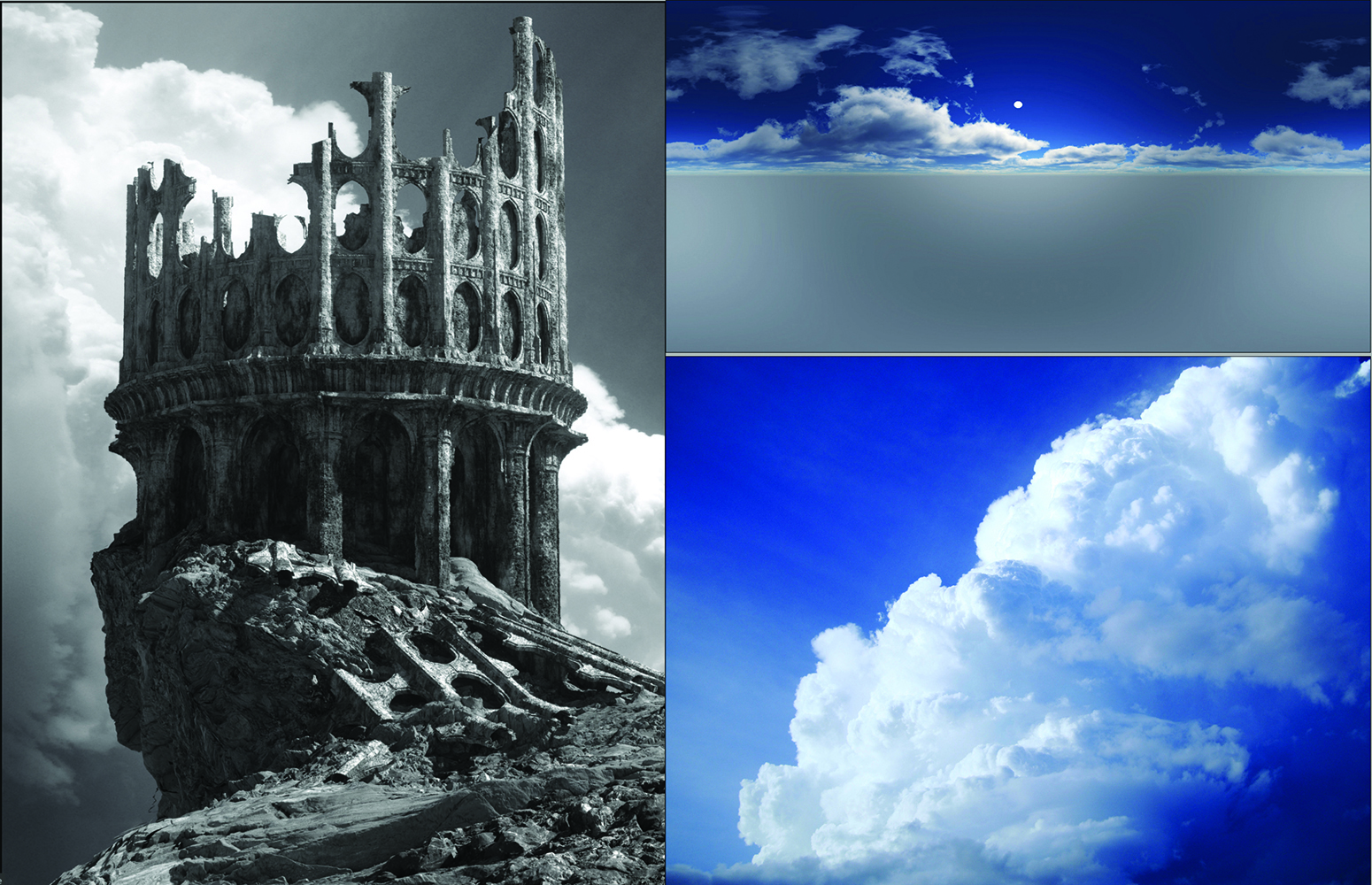
Lighting is the primary tool for directing the viewer’s eye. Lighting design is often conducted in tandem with texturing, as the two are inextricably linked. By incorporating High Dynamic Range (HDR) images, the artist can establish a global illumination scheme that creates high contrast between light and shadow. This contrast is essential for "readability"—the ability of the viewer to quickly understand the scale and depth of the scene.
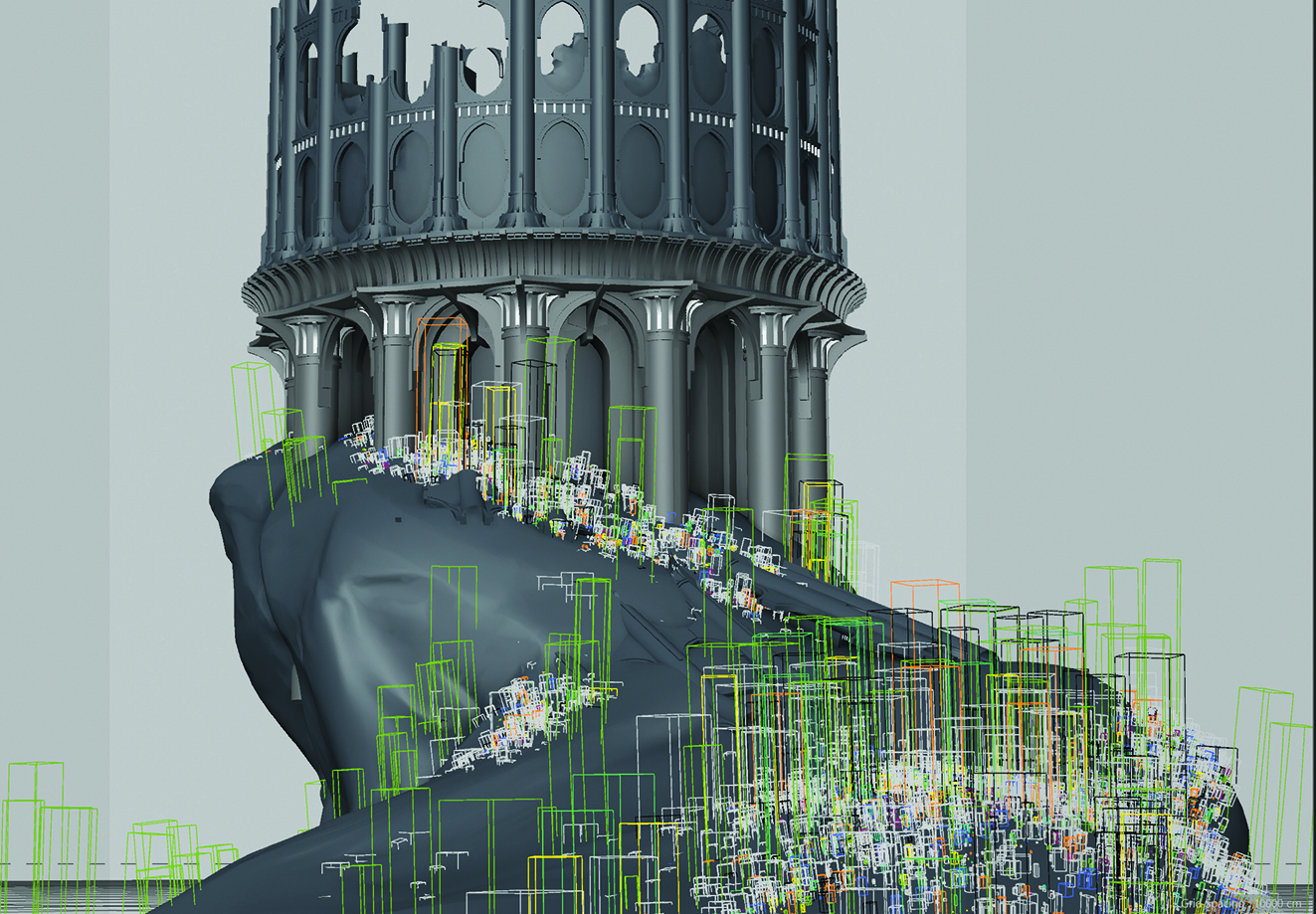
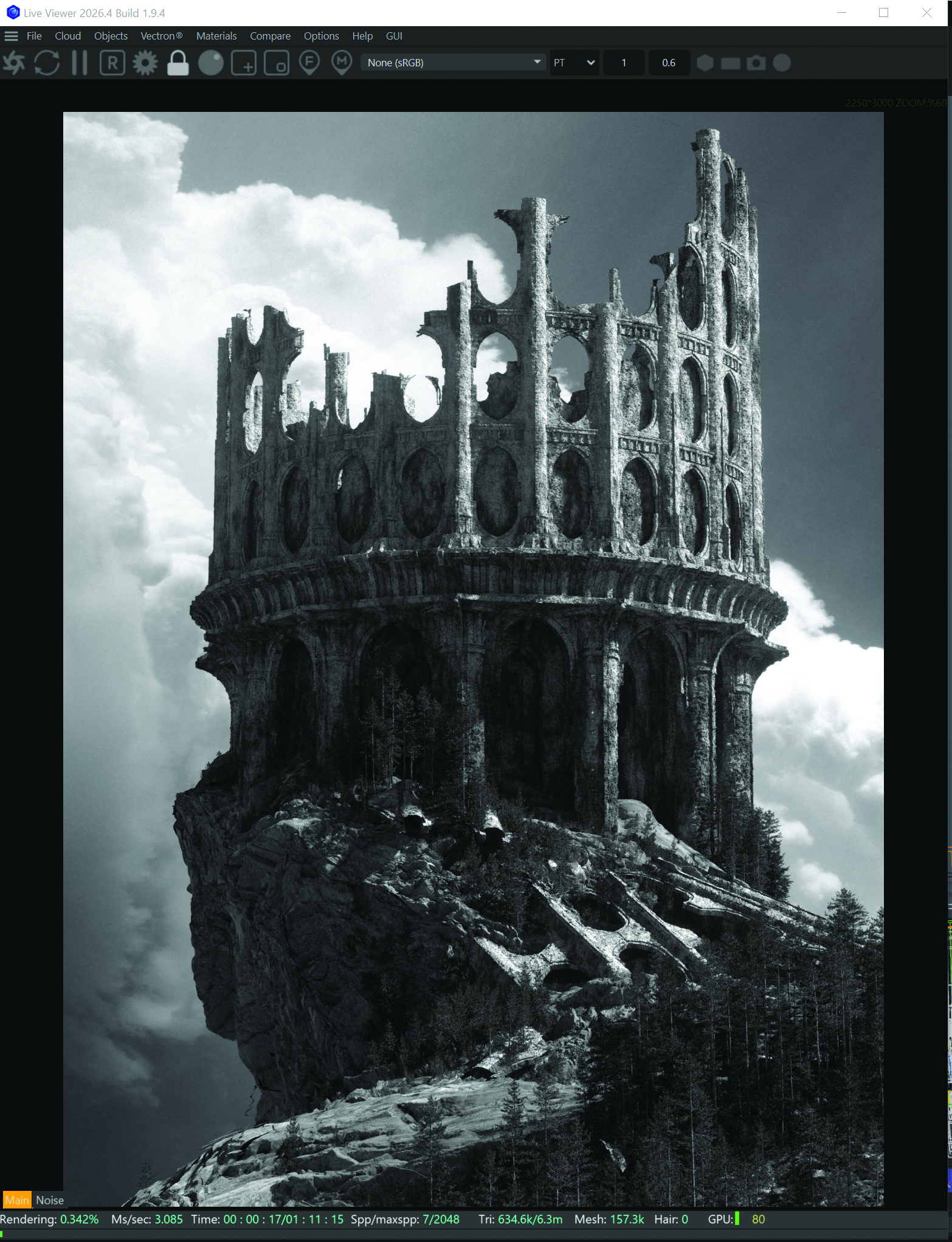
When rendering heavy, nature-dense scenes, performance optimization is key. Artists frequently use "partial rendering" to preview specific sectors of the scene. Furthermore, the render process must include multiple passes—specifically Z-Depth for atmospheric perspective, Bloom for light interaction, and Object ID for post-production masking.
The Role of Post-Production
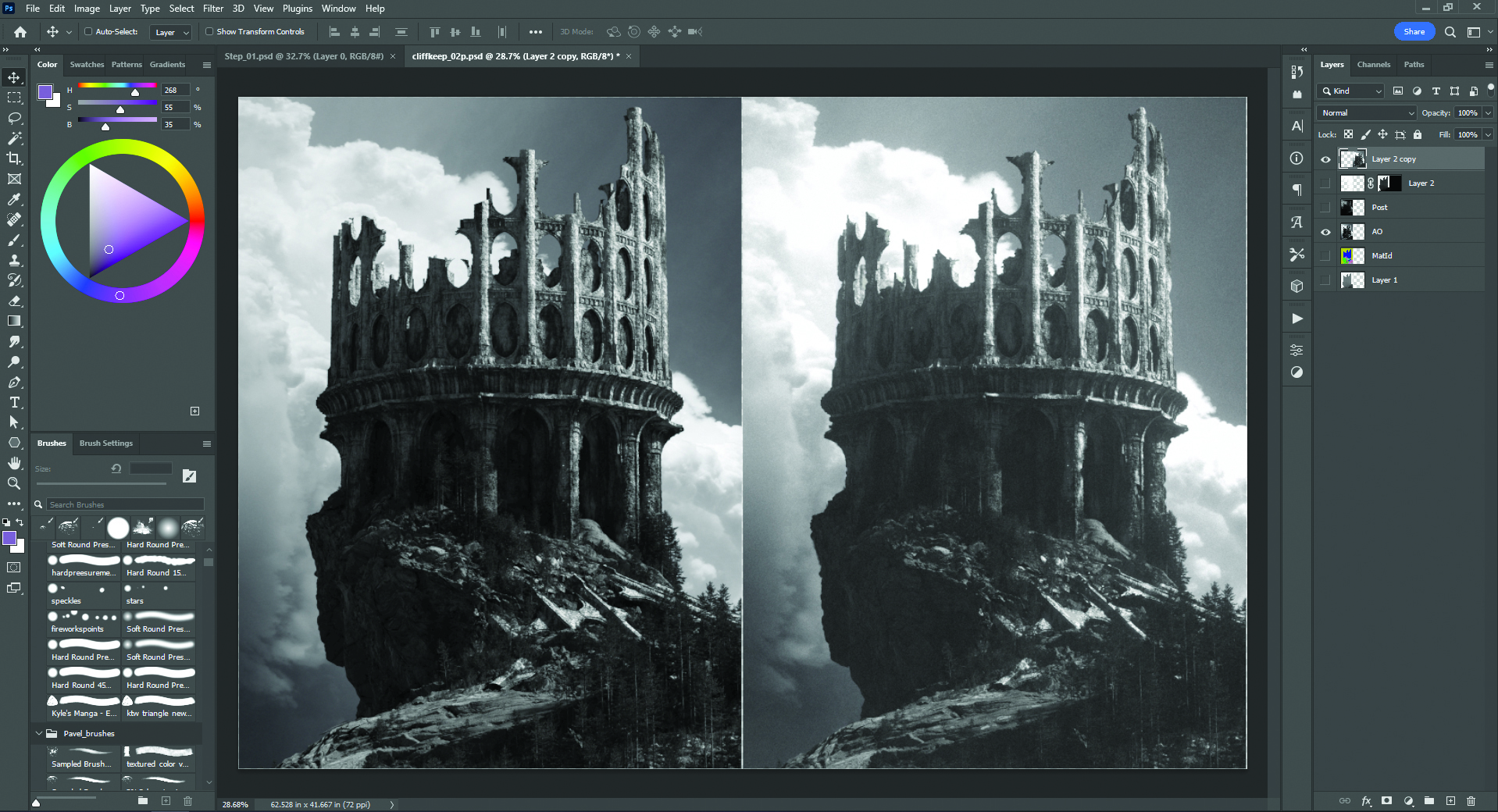
The final render out of the 3D software is rarely the final image. The post-production phase in Photoshop is where the "3D look" is stripped away. This involves:
- Artifact Correction: Using standard brushes to paint over technical errors or displacement artifacts that were not caught during the rendering phase.
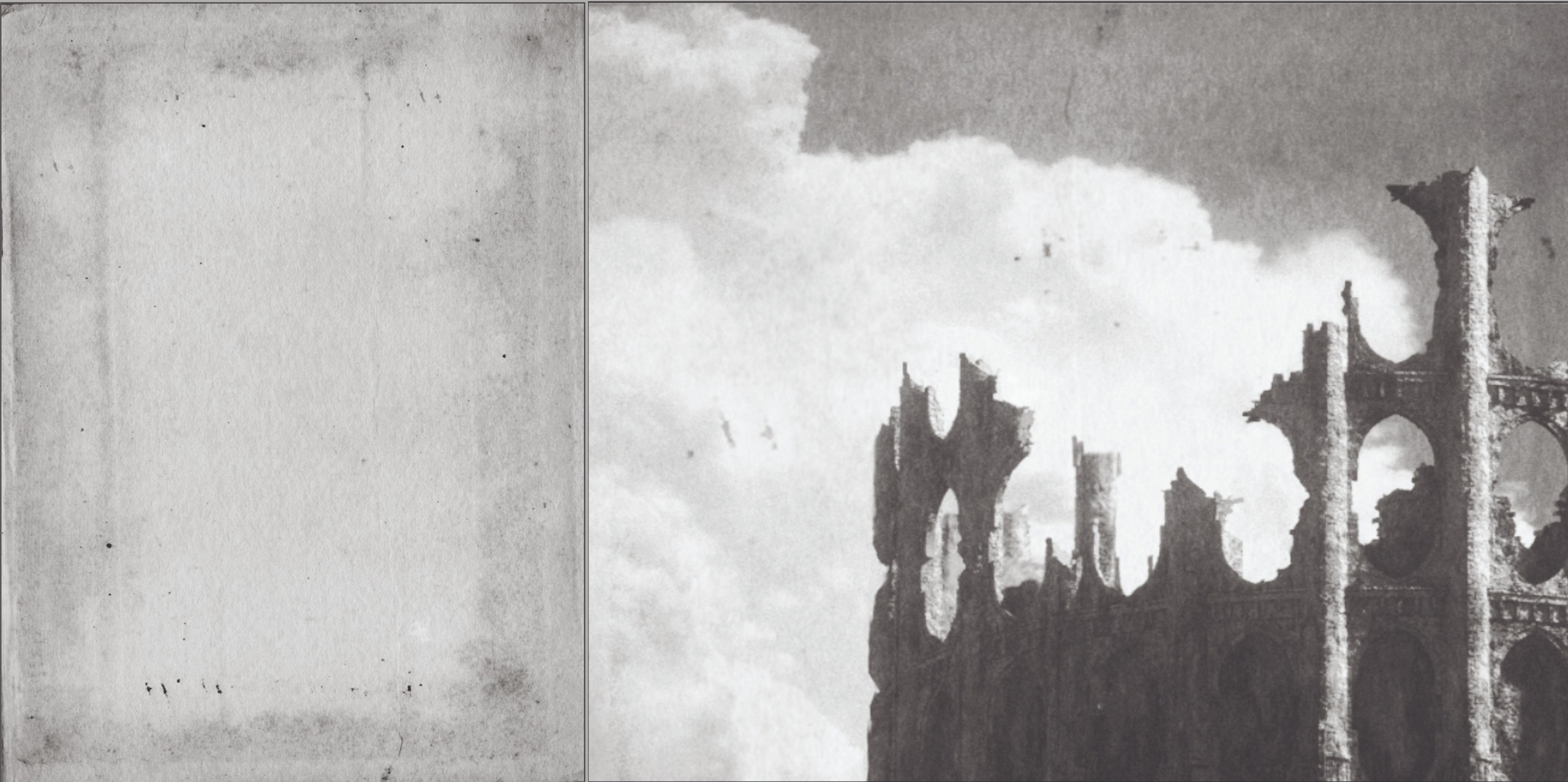
- Color Grading: Adjusting levels, exposure, and white balance to achieve specific aesthetic goals, such as an "old photo" or vintage film look.
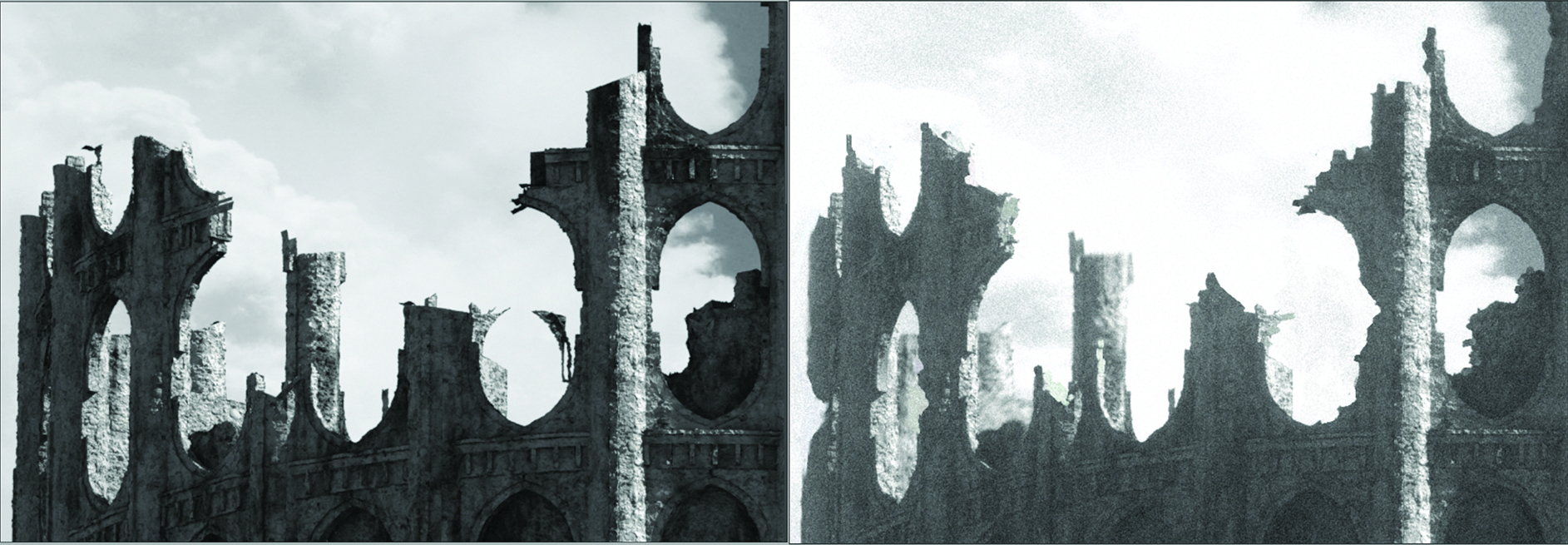
- Detail Enhancement: Manually painting in finer details, such as additional brickwork in the silhouette or subtle atmospheric blurring on background elements to create a sense of scale.
- Texture Overlays: Applying film grain and paper textures using blending modes like Multiply or Vivid Light. This adds a layer of organic noise that breaks the digital perfection of the 3D render.
Industry Implications and Context
The transition from manual modeling to procedural displacement and high-end scattering (using tools like Octane Scatter) represents a significant shift in how digital environments are produced. This workflow is now standard in film, game development, and architectural visualization. The ability to generate vast, detailed environments quickly is not just a convenience; it is a necessity in an industry where production deadlines are increasingly compressed.
Furthermore, the rise of powerful, consumer-accessible hardware—such as high-performance drawing tablets and robust workstations—has democratized the creation of high-end 3D art. Today, a freelance artist can produce cinematic-quality stills that would have required a small studio team a decade ago. As software continues to integrate machine learning and more advanced simulation tools, the focus for the 3D artist will continue to shift away from technical execution and toward art direction and storytelling.
Summary of Best Practices
To ensure success in complex 3D projects, professionals emphasize the following:
- Visual Research: Never skip the gathering of inspiration.
- Asset Libraries: Build and maintain your own library of scatter systems and materials.
- Divide and Conquer: Break every scene into small, achievable segments.
- Post-Process: Always budget time for painting and compositing in Photoshop; the render is only the base, not the final product.
By adhering to this methodical approach, artists can overcome the technical barriers to entry and produce work that is not only technically proficient but narratively evocative. The evolution of this workflow remains a testament to the ongoing synthesis of technology and artistic vision in the modern digital age.