Bridging Form and Form Function: Brianna Tell Debuts Les Tells and the Anatomy of Ergonomic Luxury

The global luxury accessories market has long prioritized rigid architectural geometry over human anatomy, often leaving consumers to contend with awkward angles, sharp hardware, and stiff leather silhouettes that push away from the body rather than embrace it. Challenging this status quo, emerging luxury brand Les Tells officially debuted its inaugural collection on November 3, introducing a fresh paradigm in high-end leather goods that merges experimental design with centuries-old Italian craftsmanship. Founded by designer Brianna Tell, the brand’s launch collection comprises six meticulously crafted pieces—including four distinct bags, a wallet, and a wristlet—engineered specifically to harmonize with the natural curves of the human silhouette. By rethinking the physical interaction between bag and body, Les Tells is positioning itself at the vanguard of a growing movement toward ergonomic luxury, proving that uncompromising aesthetics and physical comfort are not mutually exclusive.
The Genesis of an Ergonomic Vision: From Paris Streets to Lancaster Roots
The conceptual foundation of Les Tells is deeply rooted in Brianna Tell’s personal background and an epiphany experienced thousands of miles away from her hometown. Growing up in Lancaster, Pennsylvania, surrounded by horse farms and rural agricultural spaces, Tell developed an early, tactile familiarity with leather as a durable, organic medium. This foundational relationship with the material was later enriched during her professional studies and design experiences in Milan and Florence, Italy, where she immersed herself in the rich traditions of European leather-working ateliers.

However, the definitive spark for Les Tells occurred during a trip to Paris. While observing stylish Parisians navigating the urban landscape, Tell noted a distinct dissonance in how many high-end accessories interacted with their owners. While the clothing effortlessly draped and moved with the individuals, the handbags frequently stood apart, protruding awkwardly, creating physical friction, and breaking the natural lines of the wearers’ bodies.
This observation prompted a foundational design question: Why must luxury accessories function as foreign objects strapped to the body rather than natural extensions of it? This inquiry initiated a rigorous two-year development cycle aimed at creating silhouettes that could bridge the gap between high-concept artistic expression and human-centric ergonomics.

Challenging Convention: The Unconventional Prototyping Phase
Translating a fluid design philosophy into a physical product required an iterative and unorthodox approach to prototyping. Eschewing traditional computer-aided design (CAD) software initially, Tell began her creative process by constructing rudimentary paper models. These fragile mock-ups allowed her to physically test mobility, drape, and structural tension against various body types, identifying and eliminating potential points of friction before a single square inch of leather was cut.

This bootstrap methodology, however, was met with early skepticism from peers within the traditional fashion industry. Recalling the reception of her initial prototypes, Tell notes that contemporaries warned her that approaching high-end manufacturing with paper models lacked professional credibility. Undeterred by the warnings, she maintained absolute conviction in her tactile, kinetic approach to design. Driven by this self-belief, she traveled to Italy to pitch her concepts directly to heritage artisans, seeking out workshops capable of executing her unconventional geometries.
Her search led her to a family-run atelier nestled in Scandicci, just outside Florence—a region renowned globally for its master leather craftspeople. Far from dismissing the unconventional paper models, the generational artisans recognized the unique structural challenges and innovative geometry embedded in Tell’s designs. Their immediate validation confirmed that her intuitive approach to ergonomic luxury was not only viable but represented a genuinely fresh contribution to traditional leather craftsmanship.

Anatomy of the Collection: Engineering Comfort Without Compromise
Over a 24-month period of intensive refinement, Tell and her Italian manufacturing partners transformed the initial paper prototypes into a commercially viable, six-piece luxury lineup. The collection’s structural integrity relies heavily on organic curves and asymmetrical lines that distribute weight evenly and nestle naturally against the wearer.

Among the standout silhouettes is the Alexandras, a cylindrical bag featuring a detachable strap and a pronounced inward curve designed to nestle comfortably against the wearer’s hip. Thoughtful details abound: an embossed "Les Tells" interior leather tab cleverly doubles as a mechanical latch for the magnetic clasp securing the bag’s primary flap.
Another key piece is the Logans, an asymmetrical, oblong crossbody bag engineered to rest flush under the arm or trace the natural curvature of the spine. For those seeking a more traditional shoulder bag, the Kathleens offers a gentle structural curve that maintains generous interior capacity while housing a hidden strap extender and a custom microfiber case specifically designed to protect eyewear.

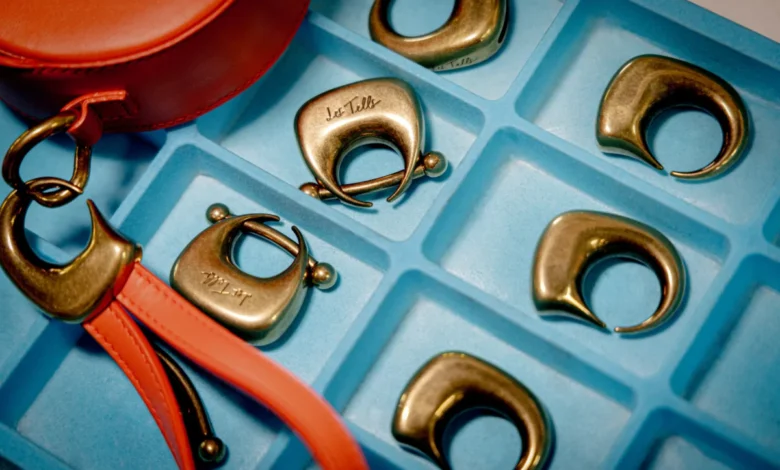
Complementing the leather goods are a series of polished, gold-tone metal hardware elements and jewelry pieces designed concurrently with the bags. These metallic accents echo the fluid, crescent-like forms of the primary leather silhouettes, creating a cohesive visual language across the entire collection. Offered in four distinct colorways, the line is priced starting at $350 and is available directly through the brand’s official e-commerce platform.
Redefining Gender Neutrality and Inclusivity in Luxury Accessories

Beyond ergonomic innovation, Les Tells has intentionally positioned its brand identity around inclusivity and gender neutrality. Historically, the luxury accessories market has rigidly categorized items along gender lines, offering structured briefcases or minimalist folios for men, and softer, highly stylized handbags for women. Tell sought to dismantle these traditional binaries through both the versatility of her designs and the inclusive nature of the brand’s visual campaigns.
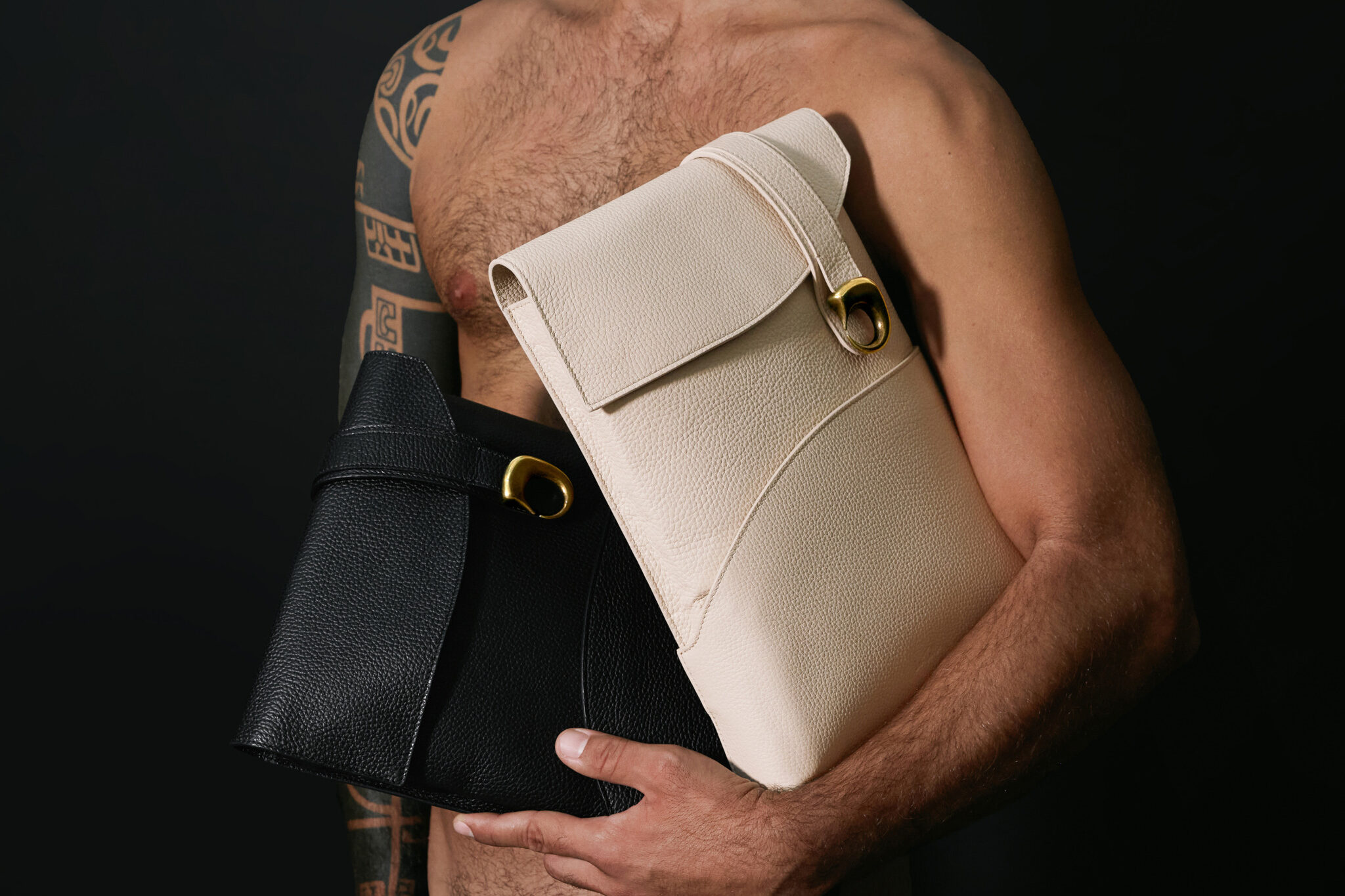
The promotional imagery for the debut collection prominently features diverse models spanning a wide array of genders, ages, and body types. By showcasing the bags against varied physical profiles—ranging from tattooed, shirtless male models to diverse female subjects—the brand emphasizes that utility and aesthetic appreciation are universal. According to Tell, the decision of who wears a specific piece should belong entirely to the consumer rather than being dictated by archaic industry categorization.

Furthermore, functional details such as adjustable straps, balanced weight distribution, and adaptable wear configurations ensure that the accessories perform reliably across different physiological structures, reinforcing the brand’s commitment to universal usability.
Market Implications and the Future of Ergonomic Fashion

The launch of Les Tells arrives at a critical juncture in the global luxury goods sector. As consumer preferences shift away from flashy, logo-driven merchandise toward quiet luxury, craftsmanship, and functional utility, brands that offer genuine innovations in comfort and wearability are finding a receptive audience. The intersection of ergonomic engineering and artisanal heritage represents a rapidly expanding niche, as modern consumers increasingly demand that their fashion investments accommodate active, dynamic lifestyles.
Industry analysts note that independent designers entering the accessories market face steep barriers to entry, dominated by legacy conglomerates with vast marketing budgets. However, by focusing sharply on a distinct gap in the market—specifically, the physical discomfort often associated with architectural bag design—Les Tells has carved out a defensible and compelling unique selling proposition.

With her debut collection successfully launched on November 3, Brianna Tell is already looking ahead to the future. She has officially commenced work on the brand’s second collection, once again returning to the humble paper models that initially drew skepticism from her peers. Armed with the validation of her manufacturing partners and the positive initial market reception, Tell approaches the next phase of development with absolute confidence. Having proven that intuition and unconventional prototyping can yield high-end results, Les Tells is well-positioned to expand its footprint in the luxury accessories landscape, proving that true elegance begins with how a piece moves in harmony with the human body.