Insta360 Revolutionizes Immersive Content Creation with the Launch of Spatial Capture for US Customers

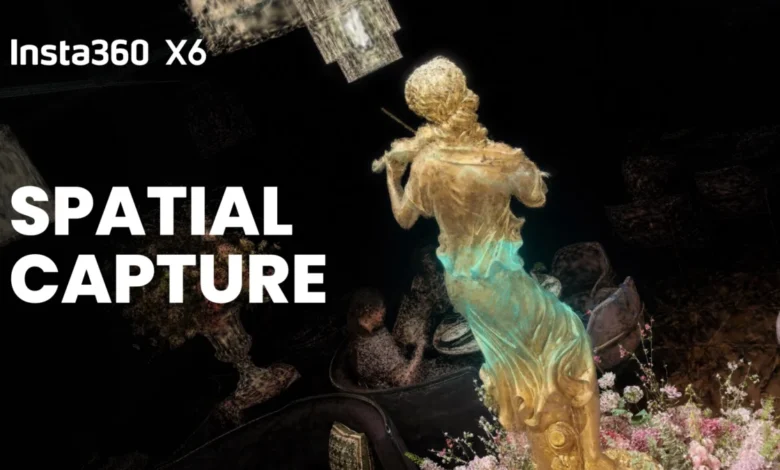
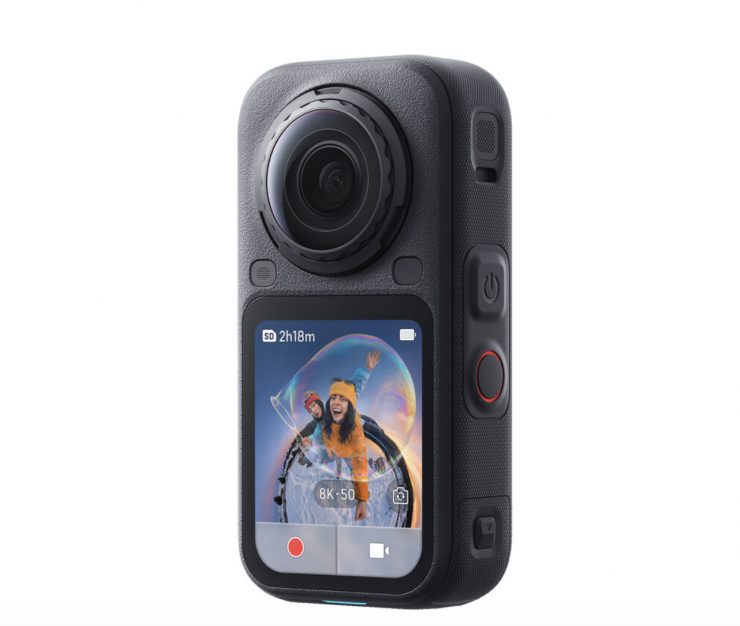
The landscape of digital content creation is undergoing a seismic shift as Insta360 officially introduces its "Spatial Capture" feature for United States customers, beginning September 28, 2026. This technological leap utilizes the company’s flagship 360-degree cameras—the X6, X5, and X4 Air—to democratize the creation of high-fidelity, explorable 3D environments. By leveraging the advanced capabilities of 3D Gaussian Splatting (3DGS), Insta360 is effectively removing the traditional barriers of entry that have long constrained 3D reconstruction to high-end studios equipped with expensive LiDAR scanners and complex photogrammetry software.
A New Era for 3D Reconstruction
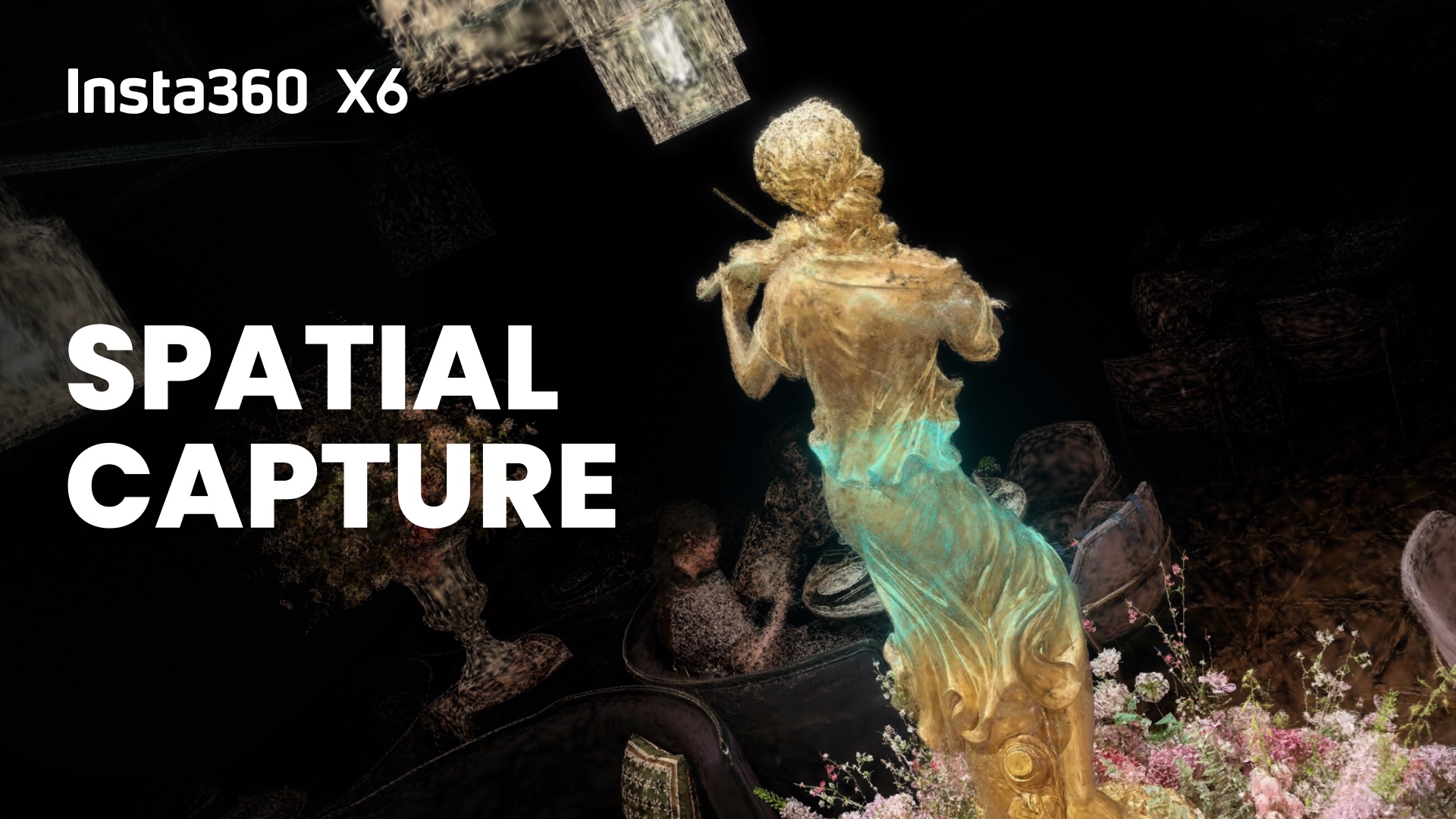
3D Gaussian Splatting has emerged as one of the most promising developments in computer vision over the last few years. Unlike traditional meshes or point clouds, 3DGS represents a scene as a collection of thousands—or millions—of "gaussians," which are essentially semi-transparent, three-dimensional blobs. When rendered, these gaussians coalesce to create photorealistic, view-dependent scenes that maintain high visual fidelity even when viewed from non-traditional angles.
Historically, achieving this level of realism required hours of meticulous image capture, where users had to systematically photograph every inch of a space from multiple perspectives, followed by days of GPU-intensive processing. Insta360’s new Spatial Capture feature simplifies this entire pipeline into an integrated workflow. Because the X6 and its predecessors capture a full 360-degree spherical field of view, the camera essentially gathers all necessary visual data in a single, fluid pass through a room.
Chronology of the Spatial Capture Rollout
The announcement on September 28, 2026, marks the culmination of a multi-year development cycle aimed at integrating AI-driven processing directly into the consumer camera ecosystem.
- Q1 2025: Insta360 begins internal R&D on cloud-based neural radiance field (NeRF) and Gaussian Splatting workflows.
- Q3 2025: Beta testing of 3DGS integration begins with a select group of professional creators, including industry veterans like Hugh Hou.
- August 2026: Insta360 announces the X6, teasing "future-proof" spatial recording capabilities.
- September 28, 2026: Official public launch of the Spatial Capture feature for the US market, with support for the X6, X5, and X4 Air models.
This rollout strategy demonstrates a clear focus on hardware longevity. By extending support to the X5 and X4 Air, Insta360 ensures that existing users are not forced into an immediate hardware upgrade to access cutting-edge software features, a move that is likely to bolster brand loyalty and long-term user retention.
Technical Workflow and Accessibility
The process for users is intentionally streamlined to minimize friction. A user records a 360-degree video of their environment, with a cap of two minutes per clip to ensure efficient cloud processing. If a recording exceeds this limit, the intuitive interface within the Insta360 app allows for easy trimming before submission.
Once the video is selected within the app and the "Generate" command is issued, the footage is uploaded to Insta360’s cloud servers. The conversion process, which transforms raw 360-degree video into a navigable 3DGS scene, typically concludes within one to two hours. Because the heavy computational lifting is offloaded to the cloud, users are not restricted by the hardware limitations of their smartphones, effectively granting even entry-level mobile devices the power to display complex 3D environments.
Once generated, the interactive scene can be manipulated via touch, virtual joysticks, or the device’s built-in gyroscope, providing a truly immersive "fly-through" experience. Furthermore, creators can insert custom camera paths, apply artistic filters, or share the scene via a browser-based link, eliminating the need for recipients to install proprietary software.
Economic and Practical Implications
The implications for various sectors are significant. For small businesses, particularly in real estate, retail, and hospitality, the ability to create professional-grade, 3D virtual tours of a storefront or listing at virtually no cost is a game-changer. Previously, such assets were the exclusive domain of companies that could afford specialized Matterport-style equipment or high-end photography contractors.
For artists and content creators, Spatial Capture provides a new medium for storytelling. The ability to "freeze" a location in 3D space and allow an audience to navigate it at their own pace moves beyond the passive consumption of flat video. It invites the viewer to become an active participant in the scene, which is likely to increase engagement metrics significantly for social media platforms and digital portfolios.
Regarding the cost structure, the initial offer of four free 3DGS scenes per month is a calculated move to incentivize adoption. This "freemium" model allows users to experiment with the technology without financial risk while creating a clear path for power users to subscribe to higher-tier service plans in the future.

Industry Context and Competitive Landscape
The move into 3DGS places Insta360 in direct competition with emerging spatial computing software developers and hardware manufacturers currently racing to dominate the VR/AR content pipeline. As consumer interest in spatial audio and video grows—fueled by the rise of headsets and spatial-capable smartphones—the demand for high-quality, easily generated 3D assets is skyrocketing.
While Apple and Google have introduced various AR-centric tools for spatial reconstruction, they often rely on LiDAR sensors embedded in high-end mobile devices. Insta360’s advantage lies in its camera-first approach. By utilizing a 360-degree camera, the company captures a wider, more consistent data set than a standard smartphone, which often struggles with depth-mapping in complex or low-light environments.
Expert Analysis and Future Outlook
Industry observers suggest that this launch represents a pivotal moment for the "Creator Economy." As noted by industry analysts, the ease with which a 360-degree video can now be transformed into a 3D scene effectively lowers the barrier to entry for spatial content creation.
"The hurdle for 3D content has always been the technical complexity," says one industry consultant. "By wrapping the entire 3DGS pipeline into a single app interface, Insta360 is treating 3D reconstruction as a utility rather than a specialty task. This will almost certainly lead to an explosion in user-generated 3D content over the next 18 to 24 months."

However, challenges remain. The reliance on cloud processing means that users require a stable internet connection for the generation phase. Additionally, the quality of the 3D output is inherently dependent on the quality of the initial 360-degree recording—factors like lighting, camera stability during the walk-through, and the complexity of the geometry in the scene will dictate the final results. Insta360 has already begun providing educational resources, such as the samples from creator Hugh Hou, to help users optimize their shooting techniques for the best possible 3D output.
Conclusion
As the digital and physical worlds continue to converge, the importance of capturing reality in three dimensions will only grow. With the introduction of Spatial Capture, Insta360 has signaled that it intends to lead this transition. By making 3D Gaussian Splatting accessible to the masses, the company is not just selling cameras; it is providing the infrastructure for a new language of visual communication. Whether for business, art, or personal archiving, the ability to turn a simple walk-through into a navigable 3D environment represents a major milestone in the evolution of consumer imaging technology. As the rollout proceeds throughout the United States, all eyes will be on how the creative community adopts this tool and the new forms of immersive content that will inevitably follow.