Advanced Post-Production Techniques Combat Aliasing in Action Camera Footage with FXAA Plugin

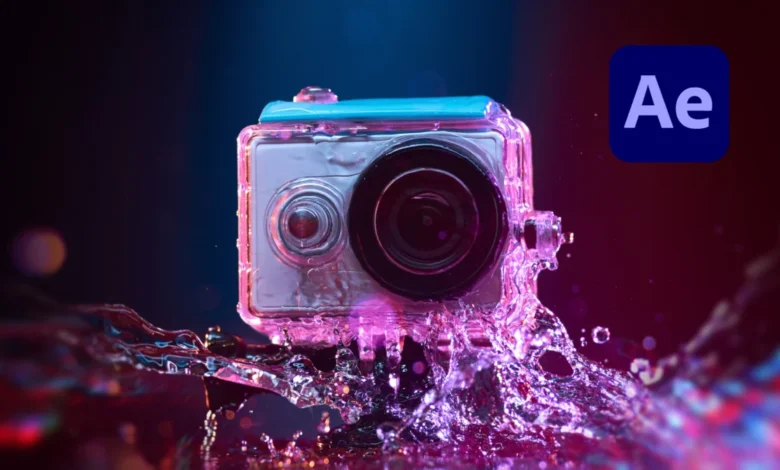
The persistent challenge of aliasing, a visual distortion artifact characterized by jagged or "stair-stepped" edges, has long plagued footage captured by action cameras, drones, and cell phones. A significant development in post-production offers a streamlined and highly effective solution: the free FXAA plugin for Adobe After Effects. This tool, developed by Plugin Everything, leverages an advanced edge detection algorithm to smooth out these undesirable artifacts, marking a notable improvement over traditional blurring methods. The emergence of such targeted solutions is particularly crucial as action cameras become ubiquitous, enabling a broader demographic of content creators to achieve professional-grade visual fidelity in their high-octane footage.
Understanding Aliasing: A Digital Distortion
Aliasing is fundamentally a sampling error that occurs when a continuous signal (like light entering a camera lens) is converted into a discrete digital signal (pixels) without sufficient sampling frequency. In video, this translates to noticeable distortions along diagonal lines, fine patterns, or intricate textures, causing them to appear pixelated, shimmering, or otherwise unnatural. This phenomenon is not unique to video; it’s a common issue in digital imaging and signal processing across various fields, from audio recording to computer graphics.
The visual manifestation of aliasing can range from subtle stair-stepping on a straight edge to complex moiré patterns in repetitive textures, or even a flickering effect (temporal aliasing) on moving objects or patterns. While some cameras employ optical anti-aliasing filters (AA filters) placed in front of the sensor to slightly blur incoming light and mitigate this issue at the hardware level, these filters can also reduce overall image sharpness. Consequently, many modern cameras, especially those prioritizing sharpness, either use weaker AA filters or none at all, shifting the burden of artifact reduction to post-production.
Why Action Cameras Are Especially Prone to Aliasing
Action cameras, alongside drones and smartphones, exhibit a heightened susceptibility to aliasing due to a combination of inherent design characteristics and operational considerations. Understanding these factors is key to appreciating the value of post-production solutions like FXAA.
Compact Sensor Size and Its Limitations:
The primary driver behind the compact form factor of action cameras is their small image sensors. While advancements in sensor technology have allowed these small sensors to capture increasingly high-resolution video (e.g., 4K, 5K), they still operate under fundamental physical constraints. Smaller sensors typically have smaller photosites (individual light-capturing elements), which can lead to increased noise in low light and a reduced ability to accurately resolve fine details. To compensate for these limitations and deliver what appears to be a sharp image, camera manufacturers often employ aggressive in-camera sharpening algorithms. This digital sharpening accentuates edges, but paradoxically, it also makes any underlying aliasing artifacts more prominent and visually distracting.

Aggressive Default Sharpening:
Many action cameras are designed for "point-and-shoot" simplicity, catering to users who want ready-to-share footage straight out of the camera. To meet this expectation, manufacturers pre-configure cameras with high levels of default sharpening. While this might make a static image appear crisp, when applied to dynamic, high-contrast scenes typical of action footage, it can exacerbate aliasing, turning subtle jagged edges into glaring visual anomalies. In many cases, users have limited or no control over these internal sharpening settings, or the available controls do not allow for sufficient reduction to mitigate the aliasing effectively.
Impact of Video Compression:
Another significant contributor to the problem is video compression. To manage file sizes and facilitate efficient storage and transmission, action cameras utilize lossy compression codecs (e.g., H.264, H.265). These codecs work by discarding less visually important information, which can include subtle details that help smooth out edges. When highly compressed, the information loss can make existing aliasing even more apparent, as the compression algorithm simplifies the data, potentially creating more pronounced "blocks" or "stairs" where smooth transitions should exist. The combined effect of small sensors, over-sharpening, and aggressive compression creates a perfect storm for aliasing artifacts.
The Evolution of Anti-Aliasing in Post-Production
Historically, addressing aliasing in video post-production has evolved significantly, driven by both technological advancements in software and the increasing demands for visual fidelity.
Early Approaches: The Broad-Stroke Blur:
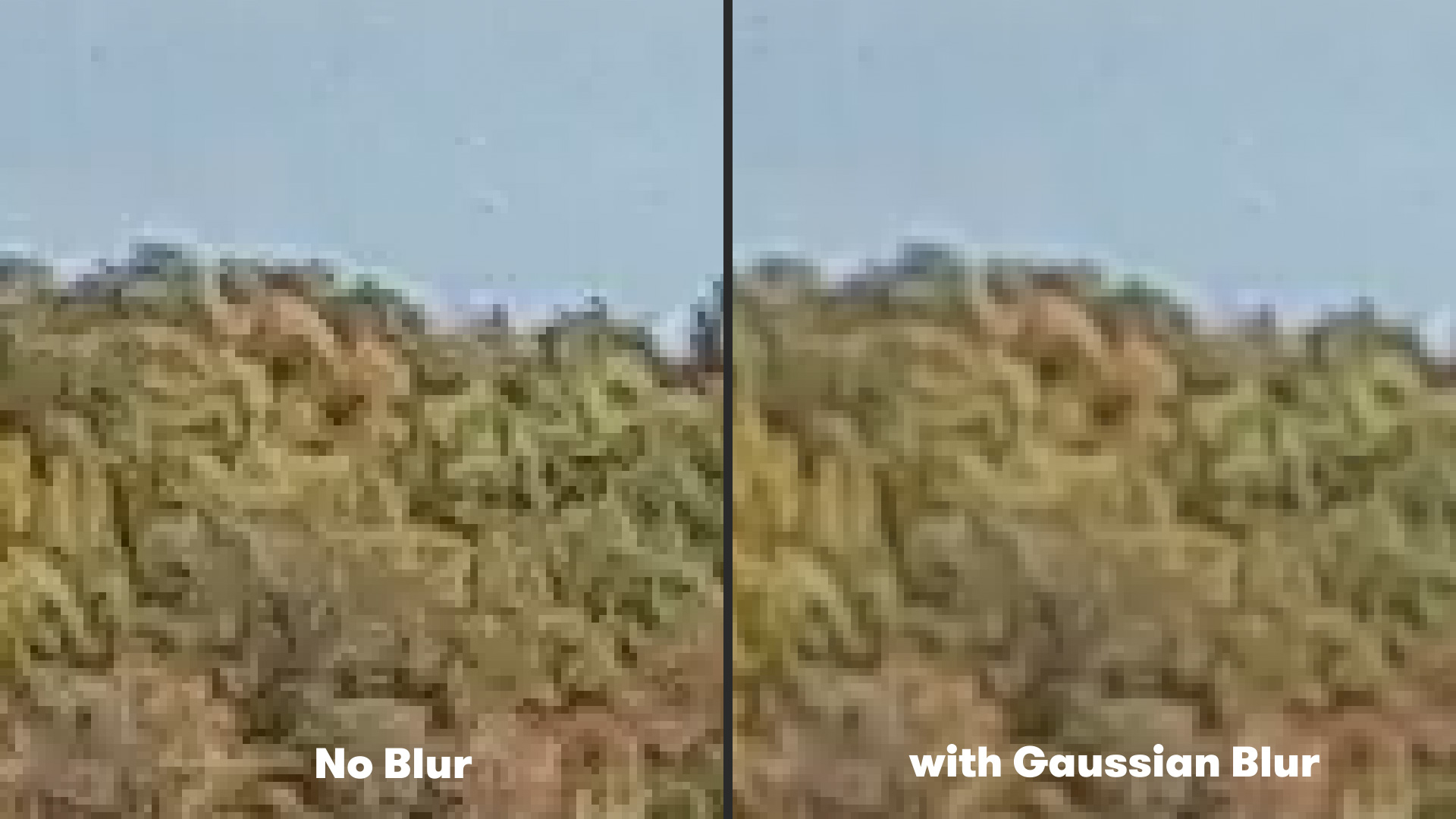
In the nascent days of digital video editing, when specific anti-aliasing algorithms for video were less common or computationally intensive, editors often resorted to general blurring techniques. The Gaussian Blur, a widely available effect in software like After Effects, was a common go-to. By applying a subtle blur to the entire shot, editors could effectively soften the jagged edges associated with aliasing. For instance, setting a ‘Blurriness’ amount of ‘2’ in Gaussian Blur could significantly reduce unwanted flickering. However, this method came with a notable drawback: it indiscriminately blurred all details within the frame, including those that were perfectly fine and contributed to the desired sharpness of the image. This global softening meant a trade-off between reducing artifacts and preserving overall image clarity, often leaving editors with footage that lacked crispness.
Influence from the Gaming Industry:
The major breakthroughs in real-time anti-aliasing techniques largely originated from the computer graphics and gaming industries. For years, game developers wrestled with the challenge of rendering smooth edges on 3D models and environments in real-time without crippling performance. Techniques like Multisample Anti-Aliasing (MSAA), Supersample Anti-Aliasing (SSAA), and Temporal Anti-Aliasing (TAA) were developed, each offering different balances of quality and performance. MSAA improved edge smoothness by sampling pixel coverage multiple times at the edges of polygons, while SSAA rendered the image at a higher resolution and then downscaled it. TAA leveraged information from previous frames to smooth current frames, effectively reducing temporal aliasing.
It was out of this rich innovation landscape that Fast Approximate Anti-Aliasing (FXAA) emerged. Developed by NVIDIA, FXAA was designed as a post-process shader that operates on the final rendered image, rather than during the rendering pipeline. This approach made it incredibly efficient, as it didn’t require extensive computational resources or modifications to existing game engines. FXAA quickly gained popularity in gaming for its ability to provide a noticeable improvement in visual quality with minimal performance impact, democratizing anti-aliasing for a wider range of hardware configurations.
Adaptation for Video Post-Production:
Recognizing the efficiency and effectiveness of FXAA, developers began adapting these gaming-centric algorithms for video post-production workflows. The principle remained the same: identify and smooth jagged edges in the final image. This marked a significant shift from the broad-stroke blurring methods, offering a more intelligent and targeted approach to artifact removal. As action camera resolutions soared, and the demand for polished, artifact-free footage grew, the adoption of such advanced, performant anti-aliasing solutions became increasingly vital for videographers.
FXAA Plugin: A Targeted and Efficient Solution
The FXAA plugin for After Effects represents a significant leap forward in addressing aliasing, particularly for the challenging footage produced by action cameras. Developed by Plugin Everything, this free tool brings the efficiency and effectiveness of real-time anti-aliasing from the gaming world directly into professional video editing suites.
How FXAA Works:
At its core, FXAA employs an advanced edge detection algorithm. Unlike traditional blurring methods that apply a uniform blur across the entire image, FXAA intelligently scans the footage pixel by pixel to identify high-contrast transitions that typically signify a jagged edge. Once these edges are detected, the plugin applies a subtle, localized blur or smoothing effect specifically to those identified areas. This selective application is its greatest strength, as it effectively smooths out the undesirable stair-stepping without significantly compromising the overall sharpness and detail of the rest of the image.
The "Fast Approximate" aspect of FXAA underscores its efficiency. Because it operates as a post-process on the final rendered image, rather than requiring complex calculations during the initial image generation, it renders remarkably quickly. This speed is a critical advantage in post-production, where time is often a premium. Videographers working with extensive action camera footage can apply FXAA without enduring lengthy render times, thereby streamlining their workflow considerably.
Practical Implementation in After Effects:
Using the FXAA plugin in After Effects is designed for simplicity. Once installed, users simply select their footage in the composition and navigate to the Effect menu. Under "Plugin Everything," they will find "FXAA." Applying the effect is a single click, and it immediately begins to process the footage, reducing visible aliasing artifacts. The plugin’s minimal user interface reflects its ‘set and forget’ efficiency; there are typically no complex parameters to adjust, ensuring accessibility for users of all skill levels.
For situations where aliasing is particularly severe, the plugin offers a straightforward enhancement strategy: stacking. Users can apply multiple instances of the FXAA effect to their footage. Each additional instance further refines the edge smoothing, allowing for a scalable approach to artifact reduction based on the specific needs of the shot. This iterative application ensures that even the most challenging footage can be significantly improved without resorting to more cumbersome or detail-destructive methods.
Advantages Over Traditional Methods:
The FXAA plugin offers distinct advantages over older, less targeted techniques like Gaussian Blur. While Gaussian Blur provides a general softening, FXAA’s intelligent edge detection ensures that only the problematic areas are treated. This preserves crucial image detail in non-aliased regions, maintaining the crispness and clarity that action camera users often desire. The result is a cleaner, more professional-looking image that retains its intended visual impact, making FXAA an invaluable tool for enhancing the quality of action camera, drone, and smartphone footage.
Broader Implications and Future Outlook
The availability and effectiveness of tools like the FXAA plugin have several broader implications for the content creation landscape and the ongoing evolution of video technology.
Democratization of Professional Quality:
The fact that FXAA is a free plugin democratizes access to professional-grade anti-aliasing. This empowers independent filmmakers, YouTubers, vloggers, and hobbyists who frequently rely on action cameras to produce high-quality content without investing in expensive software or complex, time-consuming techniques. It levels the playing field, allowing creators with modest budgets to achieve results previously only attainable with more advanced resources. This trend aligns with the broader movement towards accessible tools that enable wider participation in digital media production.
Streamlined Post-Production Workflows:
For professional videographers and post-production houses, FXAA significantly streamlines workflows involving action camera footage. The speed and efficiency of the plugin mean less time spent on manual artifact correction or rendering, freeing up resources for more creative aspects of the editing process. This efficiency is particularly valuable in fast-paced production environments where deadlines are tight. The ability to quickly clean up footage directly translates to increased productivity and cost-effectiveness.
Influence on Camera Technology:
The continuous development of sophisticated post-production solutions also indirectly influences camera manufacturers. While software can compensate for hardware limitations, the ultimate goal is often to minimize issues at the capture stage. As effective post-production anti-aliasing becomes standard, camera developers might be encouraged to refine their internal processing, perhaps by integrating more intelligent sharpening algorithms or offering more granular user control over image processing settings to reduce the initial incidence of aliasing. The ongoing convergence of computational photography (where algorithms enhance images directly in-camera) suggests that future action cameras might incorporate FXAA-like logic natively.
The Evolving Plugin Ecosystem:
The success of FXAA highlights the vibrant ecosystem of third-party plugins that augment core software like After Effects. These specialized tools often address niche but critical production challenges, providing targeted solutions that may not be built into the host application. This ecosystem fosters innovation, driven by developers like Plugin Everything, who are responsive to the evolving needs of content creators. It underscores the importance of a modular approach to software, allowing users to customize their toolset for specific tasks.
The Enduring Role of Post-Production:
Ultimately, the FXAA plugin reinforces the enduring and critical role of post-production in achieving optimal video quality. Even as camera technology advances, capturing raw footage is only the first step. The refining, correcting, and enhancing that occurs in post-production remains essential for delivering a polished, professional final product. Solutions like FXAA demonstrate that even seemingly minor technical artifacts can be effectively addressed, ensuring that the visual impact of dynamic action camera footage is never compromised by distracting digital distortions.
Industry experts widely acknowledge that while camera hardware continues to advance rapidly, post-production software and plugins remain indispensable in addressing inherent limitations, especially in specialized categories like action cameras. Developers at Plugin Everything have expressed their commitment to providing accessible, high-performance tools that solve common production challenges for a wide range of users. Professional videographers frequently highlight the value of targeted anti-aliasing solutions, noting that preserving overall image detail while eliminating artifacts is a significant workflow advantage, allowing them to focus on storytelling rather than technical glitches. As the demand for high-quality, immersive video content continues to grow, tools like FXAA will remain at the forefront of enabling creators to push the boundaries of visual excellence.
Related posts: