Higgsfield Integrates Advanced AI Video Generation into Blender Workflow to Bridge 3D and Generative Media

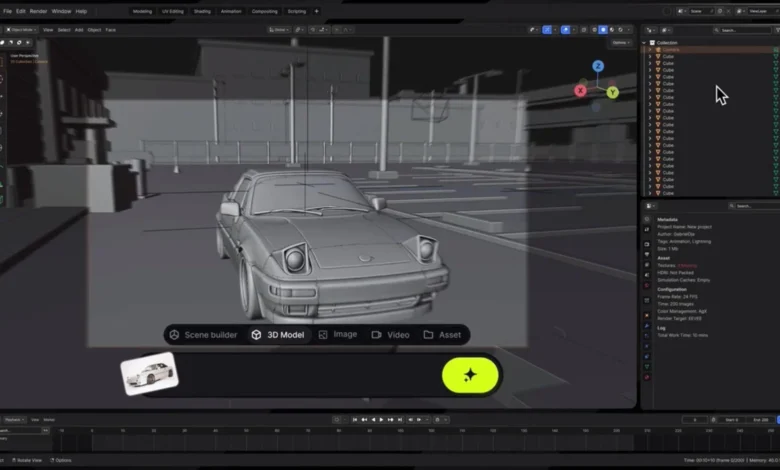
The landscape of professional digital content creation has undergone a seismic shift with the official release of the Higgsfield Blender add-on, a tool designed to integrate generative artificial intelligence directly into the open-source 3D production pipeline. By embedding AI-driven video, animation, and scene-building capabilities within the familiar Blender interface, Higgsfield is positioning its technology as a bridge between traditional 3D workflows and the rapidly evolving world of generative media. This integration represents a significant departure from standalone AI web platforms, moving the technology into the professional workstation environment where precision and scene control are paramount.
The core utility of this new plugin lies in its ability to leverage 3D output as a foundational reference for AI models. Historically, generative AI video tools have struggled with temporal consistency, spatial awareness, and the precise placement of characters within a frame. Higgsfield’s solution addresses these challenges by allowing artists to use 3D viewport data—such as camera movements, character skeletal positions, and object placement—as structural guides for AI-generated content. By providing the AI with a 3D framework, users can dictate complex actions and spatial relationships that are otherwise difficult to achieve through text-to-video prompts alone.
The Evolution of Generative AI in 3D Workflows
To understand the significance of this development, one must examine the broader timeline of generative AI’s infiltration into the creative sector. Over the past twenty-four months, the industry has moved from rudimentary text-to-image models to high-fidelity video generation. However, for 3D animators and VFX artists, these tools have remained largely external to their software ecosystems.
Early generative video models were primarily utilized as creative brainstorming tools or for rapid prototyping, often isolated from the rigorous technical requirements of production pipelines. The "AI-as-a-service" model, which relies on cloud-based web portals, created a disconnect between the artist’s 3D scene and the final generated output. Higgsfield’s integration marks a critical shift toward "in-app" AI, where the generative process is treated as a specialized rendering pass or a supplementary layer within the existing 3D software suite.
This trend follows similar integrations seen in other creative software platforms, such as Adobe’s Firefly integration into Creative Cloud or the proliferation of AI-assisted plugins for Unreal Engine. By moving the capability into Blender, Higgsfield is targeting a demographic that demands both high-level control and technical accuracy, aiming to minimize the "trial and error" phase that often plagues standard generative video workflows.
Technical Functionality and Workflow Integration
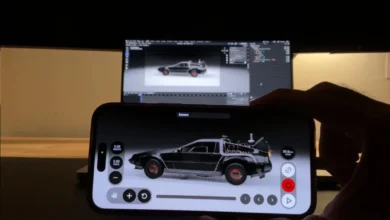
The Higgsfield Blender add-on functions by mapping the 3D environment’s metadata to the AI model’s latent space. In a standard workflow, an artist builds a scene in Blender, establishes a camera path, and places placeholder characters. Using the add-on, the user can feed this structural data into the Higgsfield engine, which then generates video content that adheres to the established camera movement and spatial logic.
This is particularly useful for pre-visualization (previs) and rapid concept development. In traditional pipelines, generating a high-quality previs sequence involves substantial time spent on character rigging, animation, and lighting. With the Higgsfield tool, an artist can iterate on the visual style and motion of a scene by refining the underlying 3D geometry and having the AI interpret the intent.
However, the transition from prototype to final production remains a subject of intense debate among industry professionals. The reliance on external server-side processing for these AI models introduces latency and dependency on the Higgsfield platform’s infrastructure. Users have reported that while the tool offers impressive creative agility, it consumes platform credits at a rate that may be prohibitive for smaller studios or independent creators engaged in high-volume production. This economic barrier highlights a broader industry concern: the cost of compute power in AI-integrated workflows.
Industry Implications and Economic Realities
The integration of generative AI into professional 3D pipelines carries significant implications for the future of animation and VFX. For decades, the industry has operated on a model where the artist manually defines every aspect of the frame—from texture mapping to skeletal animation. The Higgsfield approach suggests a future where the artist acts as a "creative director" of the AI, providing the structure and intent while the model handles the synthesis of complex visual elements.
From a market perspective, this shift could dramatically lower the barrier to entry for high-quality video production. Smaller studios, often hampered by limited budgets for render farms and character animation specialists, could theoretically produce content that matches the visual complexity of larger operations by utilizing AI-enhanced 3D workflows.
Despite these benefits, the industry remains cautious. The rapid depletion of credits for simple tasks is a frequent point of contention in community forums and technical reviews. This issue underscores the "black box" nature of current generative services, where users have little visibility into the compute cost or the underlying training data of the models they are utilizing. For professional production environments, where predictability and cost-control are essential, this volatility poses a challenge to widespread adoption.
Comparative Landscape and Competitive Positioning
Higgsfield is not alone in its pursuit of AI-integrated 3D workflows. The competition in this space is fierce, with various plugins for Blender and other 3D suites emerging to address the same pain points. Tools like the VFX Toolkit for Blender, the Edge Decal Generator, and various Edit Layer plugins represent the existing ecosystem of productivity-enhancing software that Higgsfield is attempting to disrupt.
The differentiator for Higgsfield is its focus on the "video generation" aspect, rather than just procedural generation or asset creation. While existing plugins primarily handle geometry or shading, Higgsfield’s focus on the final pixel-based output places it in direct competition with emerging video-to-video (V2V) workflows. By utilizing 3D data as a source, the company is attempting to solve the "flicker" and "temporal instability" issues that have historically plagued generative video by anchoring the AI to a stable, frame-accurate reference.
Future Outlook and Technical Challenges
Looking ahead, the success of the Higgsfield plugin will likely depend on three key factors: the accuracy of its 3D-to-AI mapping, the sustainability of its pricing model, and its ability to integrate with existing professional workflows (such as non-linear editing software and compositing tools like Nuke or After Effects).
Technically, the bridge between 3D space and latent AI space is still in its infancy. Current models often struggle with complex occlusions, character-on-character interaction, and strict adherence to specific character designs across different shots. As the technology matures, we can expect to see more sophisticated "control nets" that allow for greater precision in how 3D data influences AI output.
Furthermore, the legal and ethical landscape regarding AI-generated content remains complex. For studios operating under strict intellectual property guidelines, the use of third-party AI models—especially those that may have been trained on proprietary or copyrighted datasets—poses a significant risk. Professional adoption will require transparency regarding data provenance and robust licensing agreements that protect the studios from potential copyright infringement claims.
Concluding Analysis
The release of the Higgsfield Blender add-on is a landmark event in the democratization of high-end animation techniques. By providing a bridge between the precision of 3D software and the creative fluidity of generative AI, the platform offers a glimpse into the future of production. However, the current limitations—specifically the cost-to-performance ratio and the dependency on cloud-based infrastructure—indicate that the technology is currently in a "transitional phase."
For the average Blender user, the tool offers a powerful new way to experiment with concepts and iterate on visual ideas. For the industry at large, it serves as a proof of concept for a new way of working: one that balances the structural rigor of traditional 3D pipelines with the generative speed of artificial intelligence. As the tool evolves, its impact will be measured not by the novelty of its AI-generated imagery, but by its ability to integrate seamlessly and cost-effectively into the demanding requirements of professional film, television, and game development pipelines. The path forward for Higgsfield, and for the industry, will involve refining these generative tools to be as predictable, efficient, and reliable as the rendering engines that have powered the 3D industry for the last three decades.