Erica Synths Hardware FX Review: How Producer Eraldo Bernocchi Uses Nightverb, Echolocator, Xenodrive, and Rezonator for Unique Sound Design


The landscape of hardware signal processing has undergone a significant transformation over the past decade, driven largely by manufacturers willing to bridge the gap between traditional guitar stompboxes and sophisticated studio rack units. Among the most prominent innovators in this space is Latvia-based manufacturer Erica Synths. Following the commercial and critical success of the Zen Delay—a collaborative effort with 112dB that became a staple for live electronic musicians and studio producers alike—the company expanded its hardware ecosystem. Utilizing advanced Digital Signal Processing (DSP) technology developed in partnership with 112dB, Erica Synths introduced four specialized units designed to redefine real-time audio manipulation: the Nightverb, Echolocator, Xenodrive, and Rezonator.
Veteran producer and composer Eraldo Bernocchi, renowned for his extensive work across ambient, electronic, and experimental music, has incorporated these four hardware processors into his rigorous studio and live workflows. Offering a detailed breakdown of their operational capabilities, Bernocchi highlights how a unified design philosophy allows these distinct units to function not merely as background effects, but as primary performance instruments.
A Unified Hardware Philosophy and Design Language

The core engineering strategy behind the Erica Synths DSP hardware lineup relies on a standardized physical and operational architecture. All four units—Nightverb, Echolocator, Xenodrive, and Rezonator—share an identical form factor, a consistent layout of physical controls, and a standardized front-panel configuration. This design choice ensures ergonomic familiarity for musicians transitioning between units on a crowded desk or live performance rig.
Furthermore, the hardware shares comprehensive connectivity options, robust MIDI implementation, and deep internal settings menus. This standardization allows users to program continuous controllers, map parameters to external hardware sequencers, and route audio signals with precision. In professional audio environments where latency and clock synchronization are critical, the inclusion of high-resolution MIDI clock locking ensures that time-based effects remain tightly bound to a master tempo. According to Bernocchi, this level of tactile immediacy and deep customizability makes the units uniquely playable in real-time scenarios—a departure from traditional studio processors that are typically set and forgotten during tracking.
Nightverb: Transforming Spatial Audio Into Drone and Pad Generators
The first unit introduced in this product cycle, the Erica Synths Nightverb, establishes the sonic baseline for the series. Primarily functioning as a high-density reverb processor, Nightverb is engineered to handle complex spatial environments ranging from realistic physical spaces—such as metal chambers, plates, and halls—to expansive, infinitely modulating acoustic simulations.
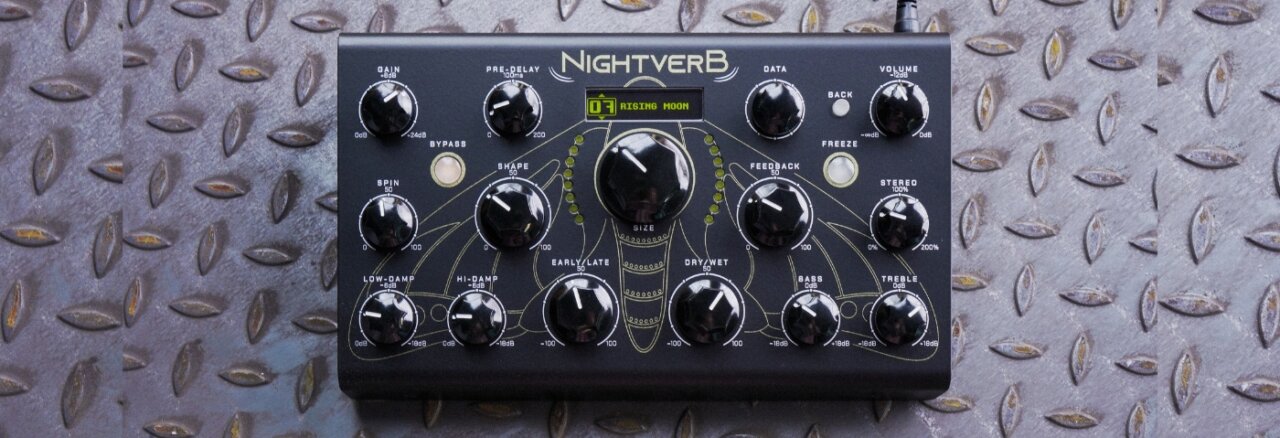
However, its most distinguishing feature for electronic music production and ambient composition is its MIDI-controlled signal freeze function. By capturing an incoming audio signal and suspending it indefinitely in a digital buffer, the unit instantly converts standard percussive or transient inputs into continuous ambient drones and pads. Musicians can subsequently route MIDI note data to the unit, playing the frozen reverb tail from a standard keyboard controller like an independent synthesizer voice.
In standard mix applications, Nightverb provides transparent depth. Vocals placed within its algorithm sit cohesively within dense arrangements, while transient-heavy sources like snare drums retain their initial punch without washing out the mix. The inclusion of a detailed configuration menu allows users to tailor modulation depth, pre-delay filtering, and decay characteristics to suit specific acoustic demands.
Echolocator: Advanced Delay and Real-Time Sampling Capabilities
Time-based effects are central to modern electronic music production, yet few standalone hardware processors offer the structural versatility of the Erica Synths Echolocator. Combining multiple delay topologies—including pristine digital algorithms, emulation of bucket-brigade device (BBD) circuits, tape echo degradation, and shimmering harmonic upshifts—the unit functions as a comprehensive delay workstation. Recent firmware expansions have further integrated frequency-shifting capabilities, broadening its palette into avant-garde sound design.
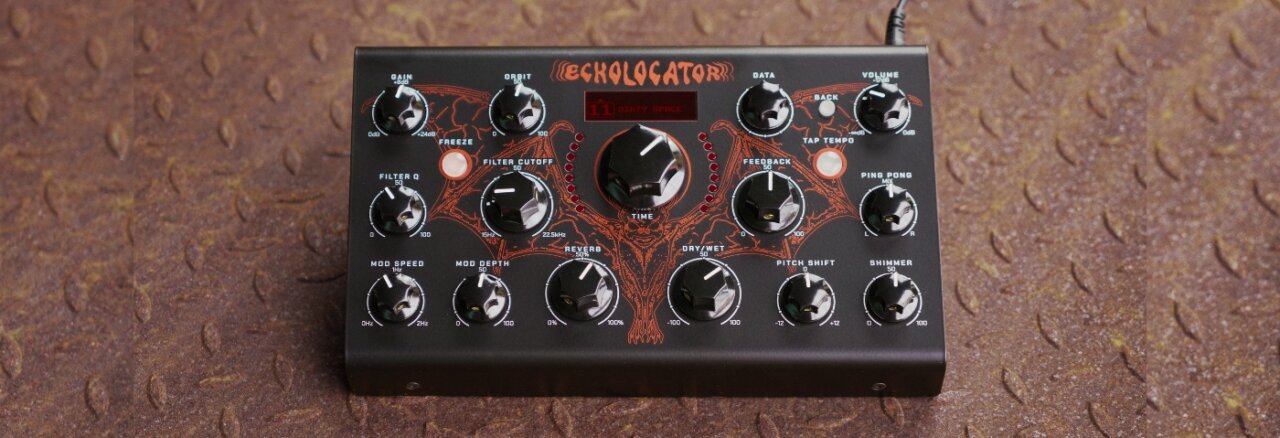
A defining operational characteristic of the Echolocator is its signal-looping functionality, which effectively transforms the delay processor into a real-time sampler. Operating in tandem with an exceptionally stable MIDI clock derived from the architecture of the original Zen Delay, the unit maintains strict synchronization across complex polyrhythmic arrangements.
The onboard analogue filter section can be positioned either pre- or post-delay, offering distinct creative applications. Placing the filter post-delay allows producers to generate classic techno rumble textures on the fly. By selecting specific rhythmic time divisions, freezing the delay buffer, and sweeping the filter cutoff frequency down, users can construct heavy bass walls and rhythmic foundations without relying on pre-rendered samples.
Xenodrive: Analogue Saturation and Micro-Mastering Architecture
While classified broadly under distortion, the Erica Synths Xenodrive operates more accurately as a multi-functional analogue channel strip. Built around discrete analogue circuitry, the unit is designed to provide dynamic range compression, harmonic saturation, tape-style warmth, and aggressive signal destruction within a compact hardware footprint.
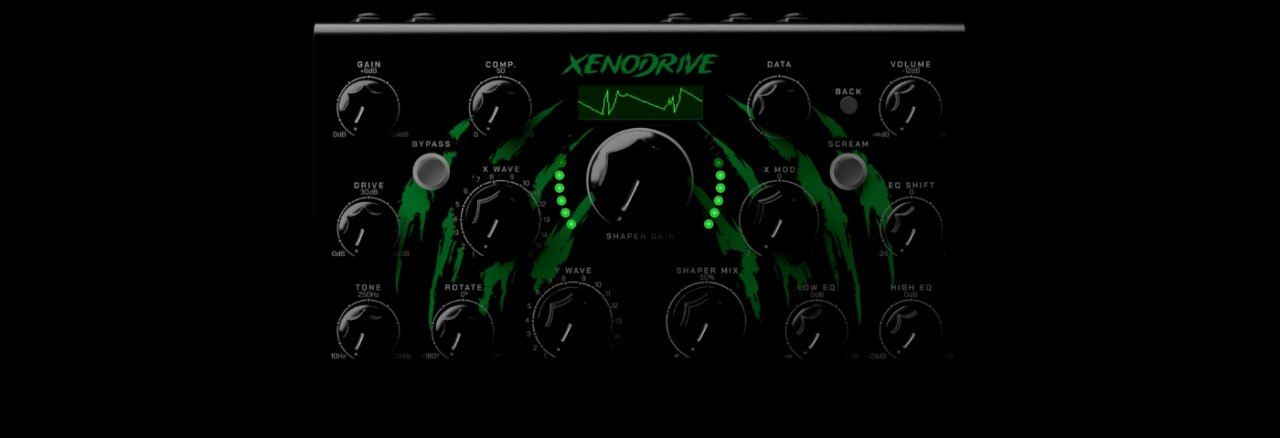
The unit’s compression stage is governed by a simplified single-knob macro control, making it efficient for tightening rhythmic grooves or adding body to vocal tracks. For frequency-specific sound design, the Pre control dictates which frequency bands are driven hardest into saturation, allowing producers to target low-end warmth or high-frequency bite independently.
Additionally, Xenodrive incorporates a wavefolding distortion circuit coupled with an amplitude-dependent envelope follower. This configuration yields complex harmonic overtones that respond dynamically to the input signal’s amplitude. To manage potential volume spikes and protect monitoring equipment from extreme feedback loops, an internal noise gate can be configured directly within the settings menu. An onboard equalizer featuring adjustable filter resonance (Q) further enhances the unit’s utility as a micro-mastering tool for shaping individual stems or master outputs.
Rezonator: Real-Time Harmonic Processing and Modal Synthesis
The most specialized processor in the quartet, the Erica Synths Rezonator, functions as a playable harmonic filter and resonator bank. Designed to manipulate the harmonic spectrum of acoustic and electronic instruments in real time, the unit excels when paired with harmonic-rich sources such as electric guitars, synthesized chords, and backing vocals.
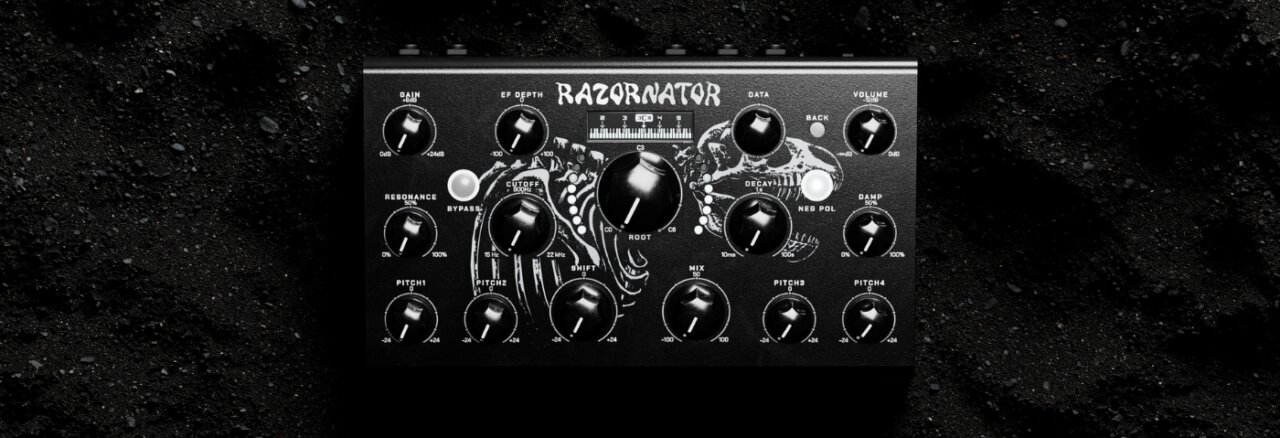
By utilizing resonant filter algorithms tuned to specific musical intervals, the Rezonator can transform a standard baritone guitar performance into a texture reminiscent of a traditional sitar within minutes. Chords can be programmed via MIDI, allowing the unit to track incoming musical data and generate complex harmonic layers or vocal harmonies on the fly.
In ambient and dub techno production, the Rezonator benefits from integration with external sequencers and modulation sources, such as the OXI Instruments E16. By assigning continuous controllers to sweep internal parameters over varied cycle lengths, producers can achieve organic, evolving filter movements that react dynamically to the underlying composition. Routing the output of the Rezonator into the Nightverb creates a lush, highly atmospheric signal chain suited for cinematic soundscapes.
Comparative Analysis and Industry Context
In the broader market of hardware signal processors, few manufacturers target the specific intersection of high-end DSP capabilities and deep real-time physical control pursued by Erica Synths. Premium multi-effects units such as the Eventide H90 and Strymon’s pedal lineup offer extensive algorithmic libraries, but are traditionally optimized for guitar-centric workflows or static studio automation. Similarly, devices like the Elektron Analog Heat provide robust saturation and filtering options, but lack the specific multi-effects architecture and performative depth found across the Erica Synths range.
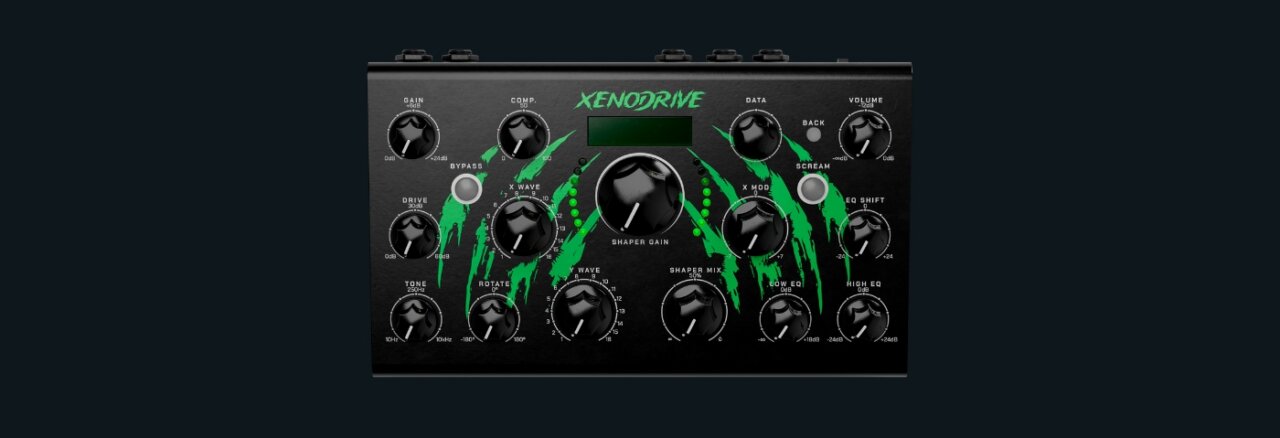
The primary critique leveled against the Erica Synths FX lineup concerns its visual design choices. The bright front-panel graphics depart from the company’s classic, utilitarian aesthetic, favoring a more stylized appearance that may not appeal to all studio aesthetics. However, industry consensus regarding their sonic fidelity, build quality, and operational reliability remains uniformly positive.
Market Implications and Professional Adoption
The introduction of the Nightverb, Echolocator, Xenodrive, and Rezonator reflects a growing demand for hybrid studio tools that function equally well in stationary mixing environments and dynamic live performance rigs. As electronic music producers increasingly move away strictly in-the-box workflows toward hardware-hybrid setups, the market value of tactile, highly programmable effects processors has risen correspondingly.
While the financial investment required for these units places them in a professional tier rather than an entry-level category, their multi-role functionality—acting variously as delays, loopers, saturation units, and synthesizers—justifies their cost for working composers and touring artists. By prioritizing deep MIDI integration, rugged construction, and immediate physical control, Erica Synths has established a benchmark for modern hardware signal processing, cementing its reputation as an industry leader in specialized electronic instrumentation.