Ehsan Bayat releases significant updates to the Animo animation toolkit for Autodesk Maya to streamline professional workflows

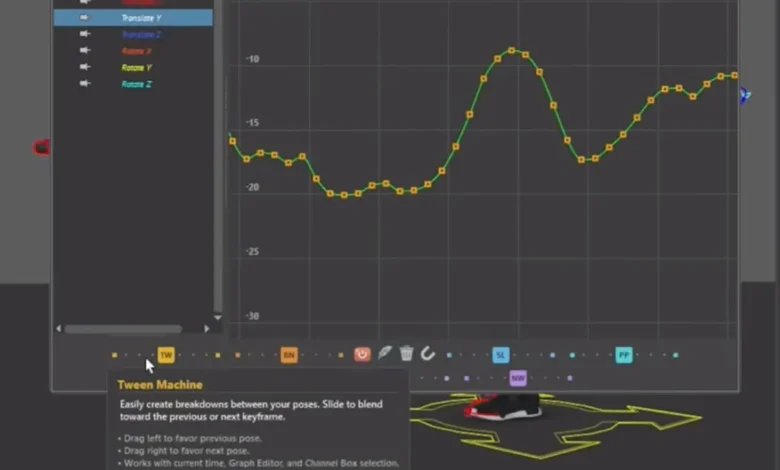
The landscape of 3D animation production is undergoing a rapid evolution, driven by the increasing demand for high-fidelity content in gaming, film, and immersive media. At the center of this production ecosystem, Autodesk Maya remains the industry standard for character animation, rigging, and simulation. To address the complexities of modern animation pipelines, developer Ehsan Bayat has released a series of updates to his free toolkit, Animo. Designed to bridge the gap between complex technical constraints and creative efficiency, Animo provides a suite of specialized tools that automate repetitive tasks, allowing animators to focus on performance and timing rather than technical overhead.
The Evolution of Maya Toolkits and Procedural Animation
For decades, Maya has relied on its robust MEL (Maya Embedded Language) and Python API to allow developers to build custom workflows. As the complexity of character rigs has increased—incorporating advanced muscle systems, cloth simulation, and real-time engine integration—the need for lightweight, modular tools has become critical. The development of Animo is part of a broader industry trend where independent developers and technical directors create "quality of life" scripts that eventually become indispensable to studio pipelines.
Historically, animators working in high-pressure environments often faced bottlenecks when performing mundane tasks such as managing keyframe interpolation, handling complex constraints, or exporting data to external game engines like Unreal Engine or Unity. By consolidating these functions into a unified interface, Animo aims to mitigate the "menu fatigue" that often plagues professional artists, reducing the number of clicks required for standard operations and providing a more intuitive UI/UX experience within the Maya viewport.
Chronology of the Animo Development Cycle
The development of Animo reflects the iterative nature of modern software engineering within the creative industries. The project began as a repository of personal scripts utilized by Ehsan Bayat during his professional tenure as a technical animator. Recognizing a gap in the market for a free, high-quality, and accessible collection of tools, Bayat transitioned the project into a public-facing utility.
- Initial Conception: The foundational logic of Animo was drafted to address common pain points in character rigging and motion cleanup.
- Beta Phase: Through initial releases on platforms like Gumroad, the toolset underwent rigorous stress testing by a community of early adopters, primarily comprised of junior and mid-level animators seeking to optimize their workflow.
- Version Stabilization: Following the feedback loop from the community, the toolset reached a level of stability that allowed for widespread integration into freelance pipelines.
- Current Iteration: The latest release represents a refinement of core features, focusing on stability, compatibility with newer versions of Autodesk Maya (2023–2025), and performance optimization for heavy scene files.
Technical Analysis: Bridging Workflow Gaps
The primary value proposition of Animo lies in its ability to manipulate animation data in ways that standard Maya tools either lack or implement in a cumbersome fashion. A core feature of the update is the enhancement of the toolkit’s procedural animation capabilities. By utilizing mathematical algorithms to influence keyframe behavior, Animo allows animators to apply secondary motion—such as overlaps, follow-through, and subtle oscillations—without manually adjusting every frame of an animation curve.
Data analysis of common animation workflows suggests that animators spend approximately 30% to 40% of their production time on "cleanup" or "technical polish." Tools like those found in the Animo collection target this specific window of time. By automating the cleanup process, the toolkit effectively increases the throughput of an individual artist, a factor that is particularly valuable in small-to-medium-sized studios where budgets are tighter and timelines are accelerated.
Furthermore, the toolkit’s integration of custom constraint managers simplifies the management of complex parent-child relationships. In professional character animation, switching constraints (e.g., a character picking up an object) is a notoriously error-prone process. Animo provides a visual interface for managing these switches, reducing the risk of "popping" or orientation errors that frequently occur when working with standard Maya constraint nodes.
Industry Implications and User Adoption
The release of free, high-performance toolkits like Animo signals a shift in how software tools are distributed within the CG (Computer Graphics) community. Traditionally, such specialized software would be sequestered within proprietary studio pipelines. The democratization of these tools allows individual freelancers to compete on a technical level with larger studios that possess dedicated pipeline departments.
From an institutional perspective, the adoption of community-developed tools presents both opportunities and challenges. While the efficiency gains are undeniable, studios must weigh the benefits against the risks of long-term support and software compatibility. However, given that Animo is built upon standard Python libraries, it is inherently modular, making it easier for technical directors to audit the code and integrate it into a larger, company-wide framework.
"The industry is moving toward a model where the artist is expected to be part-animator and part-technical artist," says an industry analyst specializing in visual effects pipelines. "Tools like Animo are not just helpful; they are essential for keeping up with the velocity of modern production. By removing the friction of manual tool-building, Bayat is essentially raising the floor for the quality of animation that a single artist can produce."
Assessing the Broader Animation Pipeline
The impact of Animo must also be viewed in the context of the current transition toward real-time rendering. With the advent of technologies like Unreal Engine’s Sequencer and MetaHuman, the pipeline between Maya and game engines has become a two-way street. Animators are no longer just exporting "baked" animation; they are frequently working in environments where data needs to remain dynamic and editable.
The Animo toolkit’s focus on clean data structures and efficient keyframe management makes it a strong candidate for studios utilizing "Live Link" technologies. By ensuring that the animation curves generated in Maya are clean and properly indexed, Animo reduces the common issues encountered during the import/export process, such as gimbal lock or interpolation mismatch between the Maya viewport and the game engine renderer.
Looking Ahead: Community-Driven Innovation
As Ehsan Bayat continues to support the Animo project, the roadmap for the toolkit appears to be heavily influenced by user feedback. This collaborative model—often referred to as "open-core" development—has become a hallmark of the most successful tools in the 3D industry. By maintaining the toolkit on Gumroad, Bayat provides a centralized hub for updates, bug reports, and community discussion.
The success of the toolkit highlights a fundamental shift in the relationship between software developers and end-users. Unlike large-scale software corporations that follow rigid, multi-year update cycles, individual developers can respond to the immediate needs of the community in a matter of weeks. This agility is perhaps the greatest strength of the Animo ecosystem.
Conclusion and Access Information
The continued refinement of the Animo toolkit serves as a testament to the power of community-driven development in the creative arts. By providing professional-grade utilities for free, Ehsan Bayat is contributing to a more capable and efficient global animation workforce. For studios and independent artists seeking to improve their workflow, the toolkit offers a viable path toward increased productivity without the financial burden of high-cost software licensing.
Interested parties, including technical directors, character animators, and pipeline developers, can access the latest iteration of the toolkit via the official Gumroad portal. The platform provides comprehensive documentation, installation instructions, and access to support forums where users share best practices for integrating Animo into their specific production environments. As animation technology continues to evolve, tools that emphasize efficiency, accessibility, and technical precision—like those provided by the Animo collection—will remain at the forefront of the industry’s digital transformation. Access to the current version and future updates is available at https://ehsanbayat.gumroad.com/l/Animo.
Related posts: