Carl Palmer Reflects on the Golden Era of Emerson Lake and Palmer Ahead of Works Live Reissue

Carl Palmer, the legendary drummer of the progressive rock powerhouse Emerson, Lake & Palmer (ELP), has offered a candid retrospective on the band’s most triumphant years as the group prepares for the reissue of their seminal live document, Works Live. Scheduled for release on July 24, 2026, through BMG, the reissue serves as a sonic monument to a period when the trio—comprising keyboard virtuoso Keith Emerson, vocalist/bassist/guitarist Greg Lake, and Palmer—reigned supreme over the global rock landscape. In a recent discussion, Palmer revisited the mid-1970s, a decade defined by the band’s unprecedented commercial success, technical grandiosity, and the polarized critical reception that often shadowed their achievements.
For a period of approximately four years, Emerson, Lake & Palmer were arguably the most ambitious musical act on the planet. "We had three years of being the biggest band you could ever imagine," Palmer noted, acknowledging the intensity and scale of their peak. "We didn’t sustain it for long enough, but for three, maybe four years, the band was at an incredibly high level. There’s no doubt about that." This era was characterized by sold-out stadium tours, millions of album sales, and a level of production that pushed the boundaries of what was considered possible in a live rock setting.
The Formation and Rise of a Progressive Supergroup
The genesis of Emerson, Lake & Palmer in 1970 marked the arrival of the first true "supergroup" of the progressive rock genre. Each member brought an established pedigree: Keith Emerson had revolutionized the use of the Hammond organ and Moog synthesizer with The Nice; Greg Lake had provided the iconic voice and bass for King Crimson’s debut; and Carl Palmer had demonstrated prodigious drumming skill with Atomic Rooster and The Crazy World of Arthur Brown.
The trio’s debut at the Isle of Wight Festival in 1970 immediately signaled their intent. Combining classical transcriptions with aggressive, jazz-inflected rock and experimental electronic textures, ELP occupied a unique space in the music industry. Throughout the early 1970s, albums such as Tarkus (1971), Pictures at an Exhibition (1971), and Brain Salad Surgery (1973) solidified their reputation for virtuosity. By the mid-70s, they had become a commercial juggernaut, bridging the gap between high-art complexity and arena-rock spectacle.
The Magnitude of California Jam 1974
One of the most significant milestones in the band’s career occurred on April 6, 1974, at the California Jam. Held at the Ontario Motor Speedway, the event was a pivotal moment in rock history, drawing an estimated 250,000 fans. ELP co-headlined the festival alongside Deep Purple, sharing a bill that included Black Sabbath, the Eagles, and Earth, Wind & Fire.
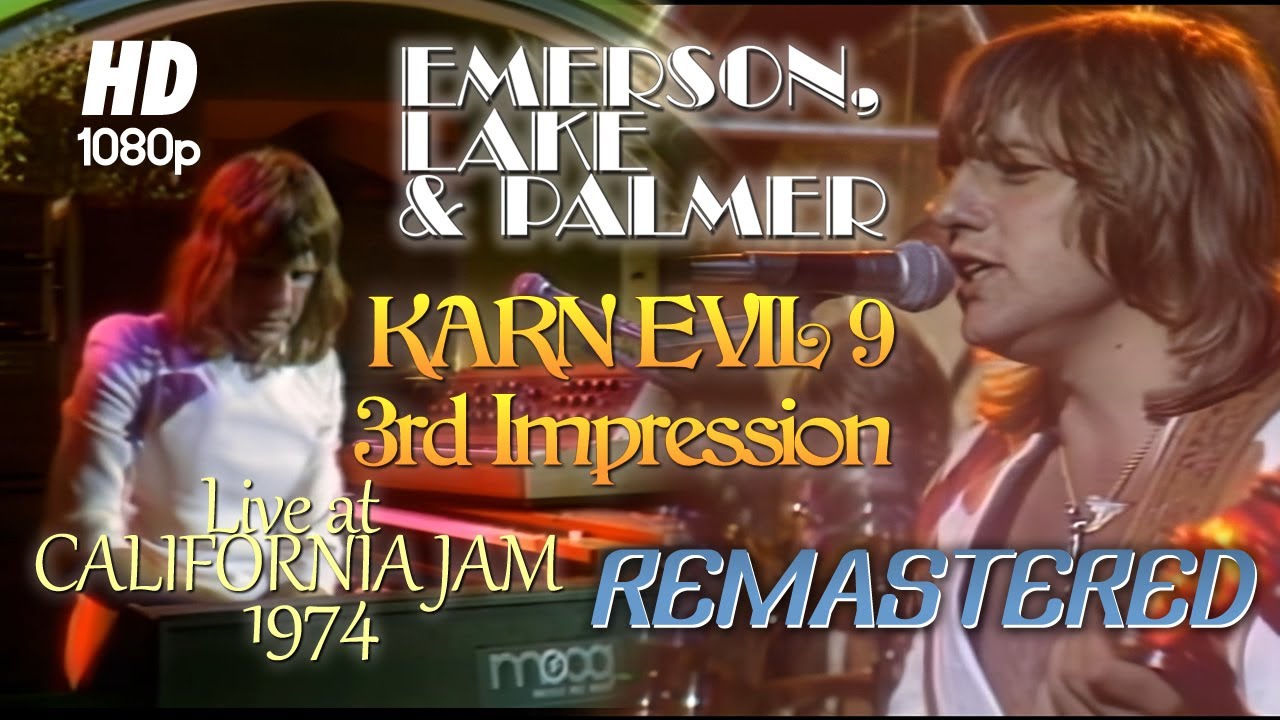
Palmer recalls the sheer scale of the event as a testament to the band’s drawing power. "When we played California Jam, I think 120,000 people paid, and another 100,000 smashed down the fences and broke their way in," Palmer said. The performance was notable not only for its music but for its technological innovation; the festival utilized a massive 54,000-watt voice reinforcement system, the most powerful ever assembled at the time. ELP’s set, which famously featured Keith Emerson playing a rotating piano suspended in mid-air, became a definitive image of the era’s rock-and-roll excess and ingenuity.
The Works Era and the 1977 North American Tour
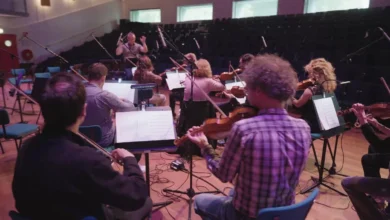
Following a brief hiatus in the mid-70s, the band returned with the ambitious Works project, which included the double album Works Volume 1 and the subsequent Works Volume 2. To support these releases, the trio embarked on a massive North American tour in 1977. This tour is remembered primarily for the band’s decision to travel with a full 70-piece orchestra, a move that was artistically acclaimed but financially devastating.
The tour’s climax took place on August 26, 1977, at the Olympic Stadium in Montreal, Canada. Performing to a crowd of over 78,000 people, the band recorded the set that would eventually form the basis of the 1979 live album In Concert. This recording was later expanded and rebranded as Works Live in 1993, providing a more comprehensive look at the Montreal performance. The upcoming 2026 reissue aims to bring this high-fidelity experience to a new generation of listeners, capturing the band at the height of their orchestral ambitions.
The Frozen Production of Fanfare For The Common Man
The association with Montreal extended beyond the concert itself. During the winter preceding the 1977 tour, the band rehearsed in the bowels of the Olympic Stadium. This rehearsal period led to the creation of one of the most iconic music videos in the history of progressive rock: the visual accompaniment for their hit arrangement of Aaron Copland’s "Fanfare For The Common Man."
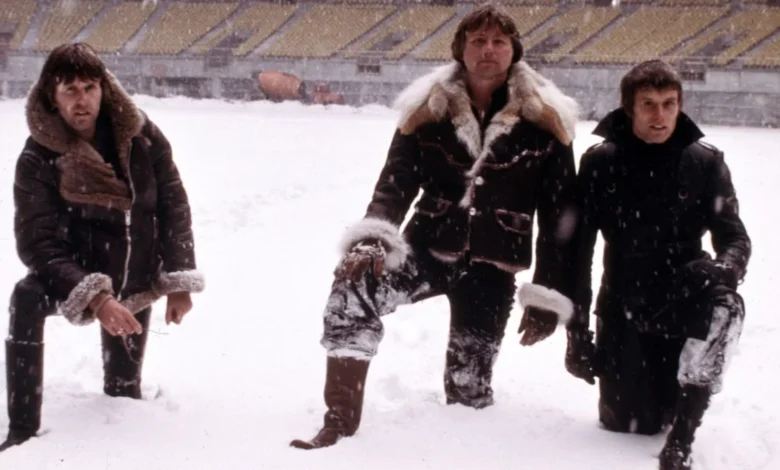
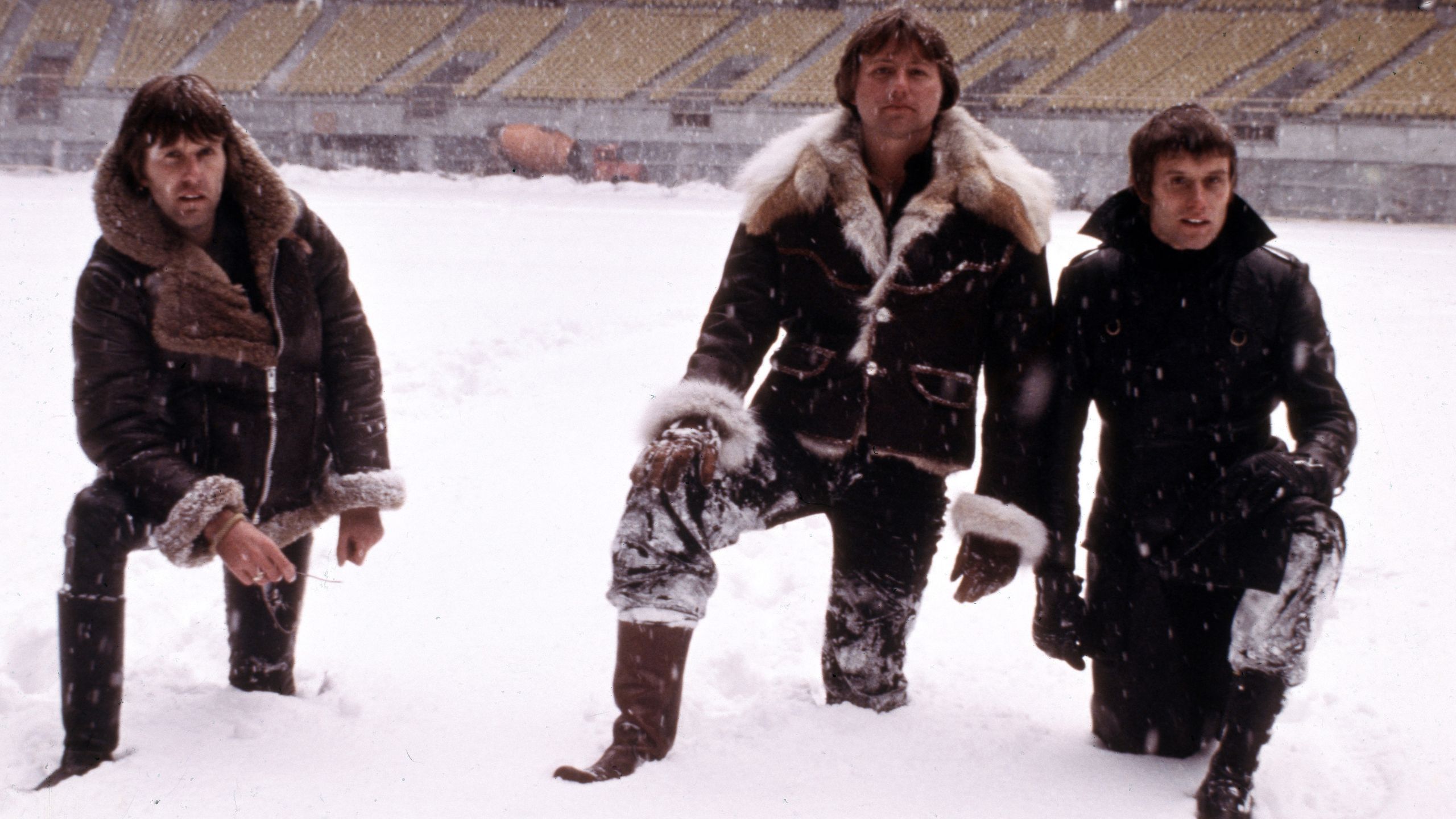
Palmer detailed the grueling conditions of the shoot, which took place in the empty, snow-covered stadium. "We were rehearsing in Montreal and we got to know one of the people that represented the Olympic Stadium, and he was a big fan of ELP," Palmer explained. "We said, ‘Would it be at all possible if we could shoot a video in the stadium when there’s no one there and there’s six feet of snow?’"
Despite the unconventional request, the stadium management agreed. The resulting video shows the trio performing in the center of the massive, open-air structure amidst sub-zero temperatures. "We didn’t actually play the song physically. It’s a mime," Palmer admitted. "We had the song blasting through the speakers and we just played away as if we were doing it live… we could only do it those four times because we were absolutely freezing. I think it was about 30 below at the time."
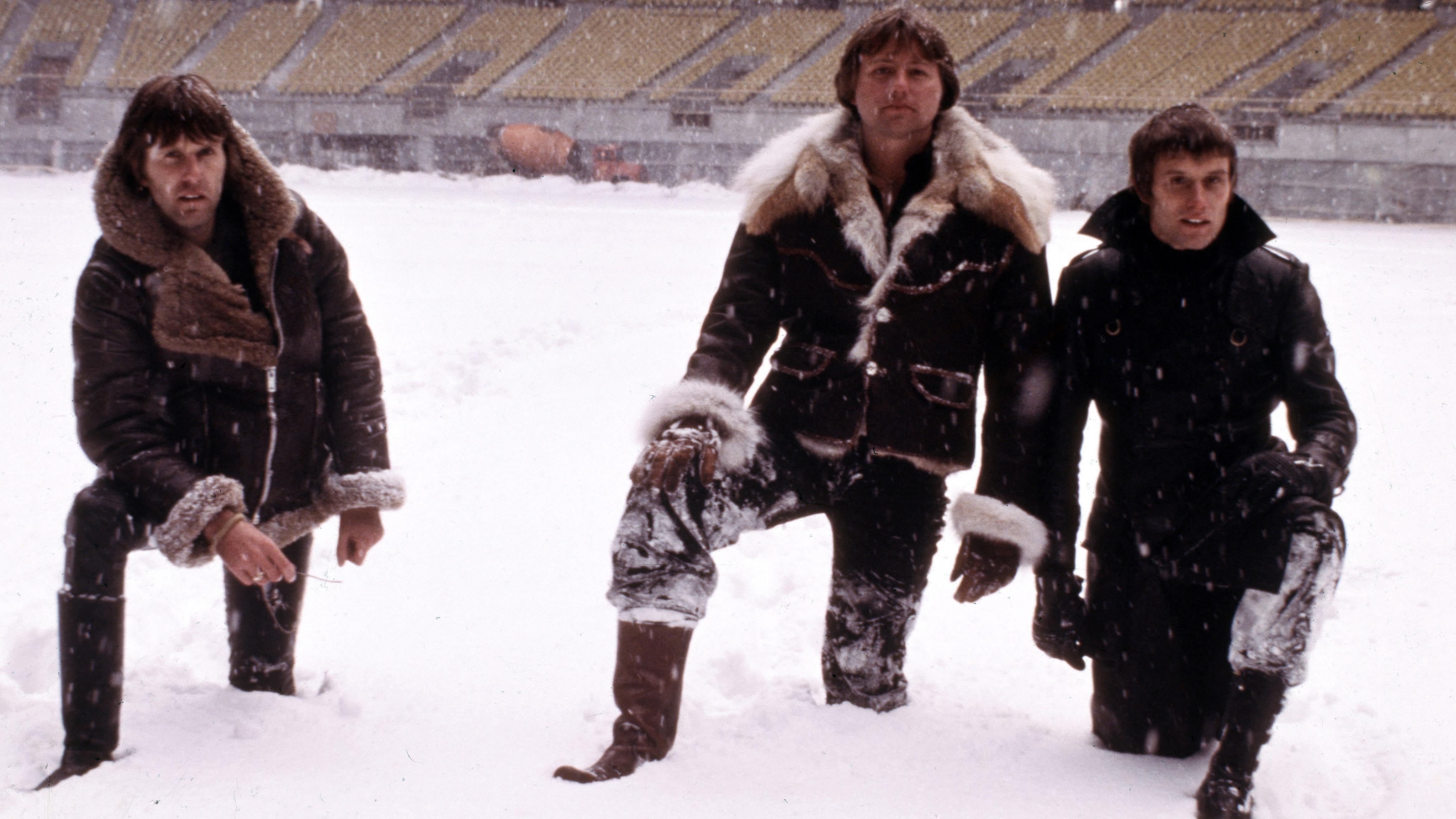
The effort proved worthwhile. "Fanfare For The Common Man" became a massive hit, reaching Number 2 on the UK Singles Chart and becoming a staple of classic rock radio. Palmer noted that the clip was "one of the first classic rock ’n’ roll videos," predating the MTV era by several years.
Navigating Critical Backlash and the Rise of Punk
Despite their massive popularity, Emerson, Lake & Palmer were often the primary targets of music critics, particularly in their native United Kingdom. As the mid-70s progressed, the burgeoning punk rock movement began to take aim at the perceived "dinosaur" acts of the previous generation. ELP, with their complex time signatures, classical influences, and expensive stage shows, were frequently cited as the antithesis of punk’s DIY aesthetic.
"We got slammed really hard," Palmer recalled. "The Americans didn’t hate us but we really got slammed in the UK. They said we were overblown, pretentious, sabre-rattling."
However, historical analysis of the period suggests that the critical narrative did not always align with public sentiment. While critics championed the minimalism of the Sex Pistols and The Damned, ELP continued to sell out arenas and move millions of units. The band’s "pretentiousness" was viewed by fans as a commitment to excellence and a refusal to settle for the three-chord simplicity of standard rock. The upcoming reissue of Works Live highlights this technical mastery, showcasing a band that refused to compromise its artistic vision in the face of changing trends.
Technical Innovation and Legacy
The legacy of ELP is inextricably linked to their role as technological pioneers. Keith Emerson’s use of the Moog modular synthesizer brought electronic music into the mainstream, while Carl Palmer’s custom-built stainless steel drum kit—which famously included gongs and a rotating platform—set new standards for percussionists.
The 2026 reissue of Works Live serves as a reminder of these innovations. The album features quintessential performances of tracks such as "C’est La Vie," "Knife-Edge," and the epic "Karn Evil 9." By revisiting these recordings, listeners can appreciate the intricate interplay between Emerson’s aggressive keyboard work, Lake’s melodic sensibilities, and Palmer’s polyrhythmic drive.
Sadly, both Keith Emerson and Greg Lake passed away in 2016, leaving Carl Palmer as the sole surviving member and the custodian of the band’s legacy. Palmer has spent much of the last decade keeping the music alive through his "Carl Palmer’s ELP Legacy" tours, which often utilize digital technology to allow Emerson and Lake to "perform" alongside him via archival footage.
Reissue Details and Broader Impact
The BMG reissue of Works Live is part of a broader effort to preserve the ELP catalog for the digital age. The announcement emphasizes the band’s role in defining the scale of progressive rock, noting their "spectacular blend of virtuoso musicianship, classical reinterpretation and arena-scale rock performance."
The reissue is expected to feature remastered audio, providing greater clarity to the 1977 Montreal recordings. For collectors and historians, the release represents a crucial piece of the progressive rock puzzle, capturing the exact moment when the genre reached its maximum possible expansion before the industry shifts of the late 1970s forced a contraction in scale.
As the music industry continues to see a resurgence in interest for physical media and high-fidelity vinyl, the return of Works Live ensures that Emerson, Lake & Palmer’s most ambitious era remains accessible. For Carl Palmer, the reissue is less about nostalgia and more about validating the work they did during those "golden years." Despite the cold of the Montreal winter and the heat of the critical fire, the music of ELP remains a testament to a time when rock and roll dared to be as big as the stadiums it inhabited.
Related posts: