BRAINROT Takes Aim at Modern Digital Culture in a Solo-Crafted Retro Sci-Fi Short


In an era increasingly dominated by generative artificial intelligence and rapid technological acceleration, animator Alex Semenov has chosen a distinctly analog path to address one of contemporary society’s most pervasive psychological phenomena. Operating under the creative moniker Lazy Square, Semenov has released BRAINROT, a retro science-fiction animated short film that offers a biting, darkly comedic satire of modern internet consumption, perpetual connectivity, and the compulsion of doomscrolling. Narrated by comedian and actor Thomas Middleditch, the project stands out not only for its incisive cultural critique but also for its uncompromising production methodology: the entire piece was conceived, written, directed, animated, edited, and sound-designed by a single individual without the assistance of artificial intelligence generation tools.
The release of BRAINROT arrives at a critical juncture in the animation and technology industries, where debates regarding the ethical and creative implications of AI-generated imagery continue to dominate public discourse. By deliberately eschewing synthetic shortcuts in favor of traditional, meticulous craftsmanship, Semenov has delivered a visual commentary on the digital age that mirrors its message through its very creation. The short film uses a distinctive retro aesthetic to examine a thoroughly modern malady, suggesting that humanity’s crowning technological achievements—originally designed to expand intellectual horizons—may now be actively eroding the cognitive faculties that define human intelligence.
Main Facts and Production Overview
At its core, BRAINROT is a one-person auteur project helmed by Alex Semenov, whose work as Lazy Square has previously garnered acclaim for its distinctive visual style and sharp social observations. The narrative of the short film revolves around the hypnotic, recursive nature of modern information consumption, personifying the compulsion to continuously scroll through distressing, trivial, or hyper-stimulating digital content.
Lending his distinct vocal talents to the project is Thomas Middleditch, best known for his starring role in the technology-centric comedy series Silicon Valley. Middleditch’s narration guides viewers through a kaleidoscopic journey that juxtaposes historical epochs with futuristic anxieties, providing a deadpan, frantic energy that complements Semenov’s visual pacing.
Crucially, the production stands as a testament to independent animation resilience. In an industry increasingly pressured to adopt automated workflows to reduce overhead and turnaround times, Semenov completed every frame, sound effect, and editorial cut independently. The production timeline, while executed largely behind closed doors, culminated in a public rollout across major digital platforms, including YouTube and Instagram, accompanied by official portfolio updates on the creator’s dedicated website.

Chronology of the Digital Age and the Genesis of BRAINROT
To understand the cultural resonance of BRAINROT, it is necessary to examine the chronological evolution of digital connectivity and the psychological toll of continuous information streams over the past three decades.
The widespread commercialization of the internet in the mid-1990s introduced a novelty phase characterized by static web pages and dial-up latency. By the late 2000s, the advent of high-speed mobile broadband and smartphone technology fundamentally altered human behavior, shifting the internet from a destination to an omnipresent environment. The introduction of infinite-scroll mechanics—pioneered by design ethicist Aza Raskin in 2006—eliminated natural stopping cues in digital interfaces, laying the groundwork for compulsive usage patterns.
Throughout the 2010s, social media algorithms evolved from chronological feeds to engagement-optimized recommendation engines. This period saw the normalization of hyper-targeted content delivery designed to maximize user retention by leveraging emotional triggers, particularly anxiety, outrage, and novelty-seeking.
By the early 2020s, global events including the COVID-19 pandemic catalyzed a heavy reliance on digital communication, locking populations into prolonged periods of online isolation. This era popularized the term "doomscrolling"—the act of obsessively scrolling through social media feeds to read negative news. Concurrently, the rapid emergence of generative artificial intelligence in 2022 and 2023 flooded digital spaces with synthetic media, accelerating the erosion of media literacy and attention spans.
It was against this backdrop of compounded technological fatigue that Alex Semenov conceptualized BRAINROT. Drawing on years of observation regarding changing human habits in the digital workspace and public square, Semenov began mapping out the storyboard for the short. Eschewing the fast-paced, automated production trends of the mid-2020s, the artist committed to a painstaking, manual animation process that mirrored the painstaking, cyclical nature of the digital behavior he sought to critique.
Supporting Data and Psychological Context
The themes addressed in BRAINROT are supported by a growing body of psychological, sociological, and economic data regarding human-computer interaction in the twenty-first century.

According to data compiled by digital analytics firms such as DataReportal and global media intelligence agencies, the average global daily internet user spent approximately six hours and forty minutes online daily. A significant portion of this time is allocated to short-form video platforms and social media feeds engineered for rapid context-switching.
Neuroscientific research indicates that intermittent variable rewards—the exact mechanism utilized by slot machines and social media notification systems—release dopamine in the human brain, reinforcing compulsive habits. Prolonged exposure to this cycle has been linked by clinical psychologists to reduced attention spans, heightened anxiety levels, and diminished capacities for deep, focused cognitive work. A study published by the American Psychological Association noted a marked increase in self-reported feelings of mental exhaustion and burnout among demographics with high daily screen-time averages, particularly young adults and adolescents.
Furthermore, economic models underpinning the modern internet rely heavily on the "attention economy," wherein human attention is treated as a finite commodity to be monetized through targeted advertising. In this ecosystem, sensationalism and polarizing narratives consistently outperform nuanced information, creating an environment ripe for the satirical lens applied in Semenov’s animated short.
Critical Reception and Industry Implications
The release of BRAINROT has sparked widespread discussion among animation professionals, digital artists, and technology critics. Industry observers have praised the project not only for its artistic merit but as a moral and philosophical statement regarding the current state of digital media creation.
In interviews and public discussions surrounding independent animation, creators frequently note the immense economic pressures to adopt generative AI tools to remain competitive in a saturated market. Against this backdrop, Semenov’s choice to craft the entire project by hand serves as a powerful counter-narrative. By demonstrating that high-concept, visually rich satire can still be executed through traditional solo animation methods, BRAINROT challenges the inevitability of automated content production.
Cultural commentators have also highlighted the irony inherent in distributing a critique of internet culture through the very platforms that facilitate it. By releasing the short on YouTube and Instagram—ecosystems governed by the algorithmic feeds the film critiques—Lazy Square engages in a form of artistic subversion, inserting a mirror directly into the digital stream of consciousness.

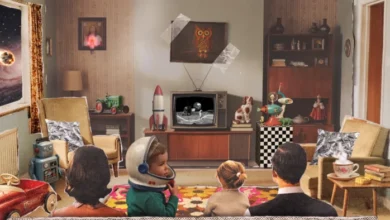
Thomas Middleditch’s involvement has added mainstream visibility to the project. Known for his comedic timing and familiarity with tech-industry tropes, Middleditch’s narration elevates the script’s dark humor, transforming abstract sociological critiques into visceral, entertaining storytelling. Reviewers have noted that the synergy between Semenov’s retro-futuristic art style—reminiscent of mid-century educational films and classic sci-fi illustration—and Middleditch’s frantic, articulate delivery creates a jarring yet cohesive viewing experience.
Broader Impact on the Future of Animation and Digital Satire
The long-term implications of projects like BRAINROT extend far beyond immediate viral metrics or art-house acclaim. As the boundaries between authentic human expression and synthetic media become increasingly blurred by technological advancements, works that explicitly center human labor and creative friction are likely to assume heightened cultural significance.
The animated short suggests a growing appetite for art that diagnoses contemporary malaise rather than simply participating in it. While tech companies continue to refine recommendation algorithms and push generative AI integration across consumer software, independent creators are carving out a distinct niche characterized by critical introspection and artisanal production values.
Moreover, BRAINROT contributes to a vital ongoing conversation about digital hygiene and cognitive sovereignty. By framing excessive internet consumption not merely as a harmless personal habit but as a systemic threat to human cognitive evolution, the film prompts viewers to reevaluate their relationship with personal devices. Whether the project will inspire a broader movement toward hand-crafted, anti-algorithmic art remains to be seen, but its immediate reception confirms that audiences are receptive to media that holds a mirror up to the digital age without relying on the tools that created it.
As the digital landscape continues to evolve at a relentless pace, works such as Alex Semenov’s BRAINROT ensure that creative resistance remains part of the dialogue, proving that humor, traditional artistry, and sharp critical observation still hold significant power in an increasingly automated world.
Related posts: