Ilija Brunck and the Evolution of Immersive Storytelling: From Experimental Animation to the Las Vegas Sphere

Ilija Brunck occupies a singular position in the contemporary digital arts landscape, acting as a bridge between the rigorous discipline of traditional animation craft and the volatile, high-stakes world of modern experiential media. As the CEO and partner of Woodblock, the studio he co-founded alongside Uli Staiger, Brunck has spent nearly two decades navigating the transition from student-led experimentalism at the Filmakademie Baden-Wuerttemberg to the helm of a globally recognized production powerhouse. His career trajectory serves as a case study for the maturation of CG production, tracing a path from boutique short-form storytelling to the deployment of 12K, real-time cinematic environments.
The Foundation of a Visual Language
The roots of Woodblock’s current success are deeply embedded in the collaborative environment of the Filmakademie Baden-Wuerttemberg. In the mid-2000s, this institution became a crucible for a specific type of German animation—one that prioritized conceptual depth over mere technical flash. Brunck’s early work, characterized by titles such as 458nm, Loom, and Bye Bear, established a thematic template that persists in his work today: the use of controlled, high-fidelity visual design to explore existential themes of mortality, transience, and the human condition.
These early short films were not merely academic exercises; they functioned as proofs of concept for a studio philosophy that valued the "emotional resonance" of a frame above all else. By blending haunting musical scores with meticulous character design, Brunck and his collaborators garnered significant international recognition. The receipt of a Golden Nica at the Ars Electronica Festival and a Best in Show nod at SIGGRAPH validated this approach, signaling to the commercial market that there was a hunger for narrative-driven, visually sophisticated content that transcended standard advertising tropes.
Chronology of Expansion: Scaling the Studio
The transition from experimental short films to high-end commercial production was swift. Throughout the 2010s, Woodblock solidified its reputation by working with major corporate entities, including Nike, Microsoft, Netflix, and Apple. However, the studio’s growth strategy remained distinct from industry peers; rather than scaling into a massive, bloated agency, Brunck emphasized a model of agility.
A timeline of key developments includes:
- 2006–2010: The formative years at Filmakademie, yielding award-winning shorts like Loom and the establishment of the Woodblock ethos.
- 2011–2018: Strategic expansion into the global commercial sector, refining production pipelines for high-profile clients while maintaining the artistic core of the studio.
- 2019–2022: A pivot toward real-time rendering and large-format digital installations, setting the stage for immersive work.
- 2023–Present: Deep-tier involvement in the Las Vegas Sphere, cementing the studio’s position as a leader in spatial, large-scale cinematic projection.
The Sphere and the New Frontier of Immersive Media
The most recent chapter in Brunck’s career—his move into the architectural-scale digital canvas of the Las Vegas Sphere—represents a fundamental shift in how audiences consume media. The Sphere, an architectural feat of engineering featuring a 160,000-square-foot interior LED display, requires a level of visual fidelity and spatial awareness that standard film production cannot provide.
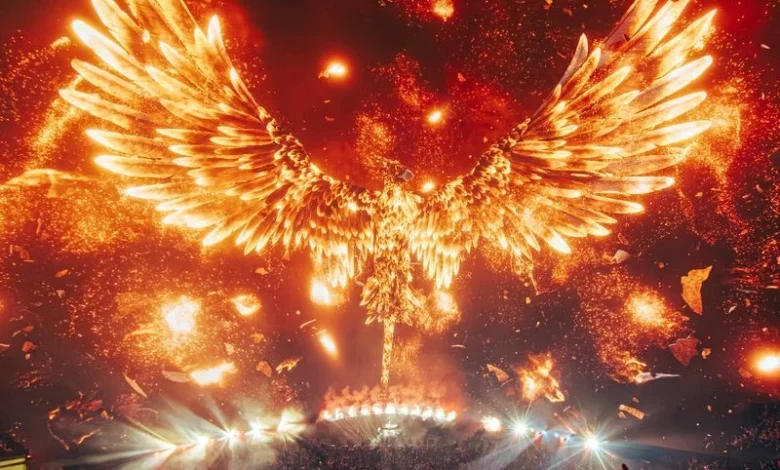
In the case of the Anyma: The End of Genesys project, Brunck and his team were tasked with translating traditional CG workflows into a full-dome, immersive format. This required a re-evaluation of camera language, focal depth, and viewer immersion. The challenge was not just to project an image, but to craft a sense of scale that felt natural to the human eye while being viewed in a hyper-artificial, colossal environment.
This was further realized through the Odyssey project by Illenium. This 90-minute production stands as a benchmark for modern CG cinematic experiences. By collaborating with industry giants such as Sphere Entertainment Co., The Third Floor, and Silent House, Woodblock helped execute a seamless, 12K-resolution narrative that surrounds the audience in every direction. The production duration, spanning nearly a year, highlights the extreme technical demands of "large-format" storytelling. In this context, the role of the director evolves; Brunck acts less as a traditional filmmaker and more as an environmental architect, guiding the viewer through a continuous, 360-degree emotional arc.
Industry Implications and Sustainable Production
A core component of Brunck’s public advocacy is the concept of "lean" production. In an era where digital content is often criticized for being overly reliant on massive technical "bloat"—the practice of adding unnecessary complexity that slows down pipelines and dilutes creative focus—Brunck has remained a proponent of small, highly skilled teams.
His philosophy argues that clarity of vision is the only antidote to the technical complexities of modern rendering. By keeping teams agile, Woodblock maintains a direct line between the original artistic intent and the final frame. This approach has significant implications for the future of the animation industry. As production costs for large-scale immersive projects climb, studios that can maintain high quality without the overhead of massive headcount will likely gain a competitive advantage.
Furthermore, Brunck’s continued involvement in education through the Filmakademie underscores a commitment to institutional knowledge transfer. By maintaining ties with academia, he ensures that the next generation of artists is trained not just in software proficiency, but in the conceptual rigor required to sustain a career in an industry prone to rapid technological turnover.
Analysis: The Convergence of Craft and Scale
The success of Woodblock’s transition to the Sphere offers a clear takeaway for the future of digital media: the audience’s appetite for "spectacle" is evolving. While the initial novelty of the Sphere’s technology is high, long-term success for such a venue depends on the quality of the narrative.
Brunck’s work succeeds because it does not treat the 12K canvas as a gimmick. Instead, he applies the same principles of "controlled visual design" that he utilized in his early shorts. Whether it is a two-minute experimental film or a 90-minute concert cinematic, the focus remains on the emotional core. By grounding the technological marvel of the Sphere in the principles of traditional storytelling, Brunck is successfully shaping the standard for what audiences will expect from future immersive entertainment.
Future Trajectories
As we look toward the remainder of the decade, the integration of real-time engines, AI-assisted workflows, and massive-scale displays will continue to blur the lines between film, installation art, and live performance. Ilija Brunck’s career, moving from the intimate scale of a laptop screen to the massive internal architecture of the Sphere, suggests that the most successful artists will be those who can maintain a consistent visual "voice" across shifting mediums.
For those looking to understand the evolution of contemporary animation, the work of Woodblock is indispensable. It provides a roadmap for how a studio can remain artistically authentic while successfully scaling to meet the demands of the most complex display environments ever built. The ongoing work of Brunck and his team continues to challenge the boundaries of how we define a "film" in the 21st century, proving that even in the age of 12K resolution, the most powerful tool remains the artist’s ability to tell a compelling story.