Blueprint Textural Sax Fracture Sounds Expands Free Cinematic Library with New Polyphonic Tenor Saxophone Instrument

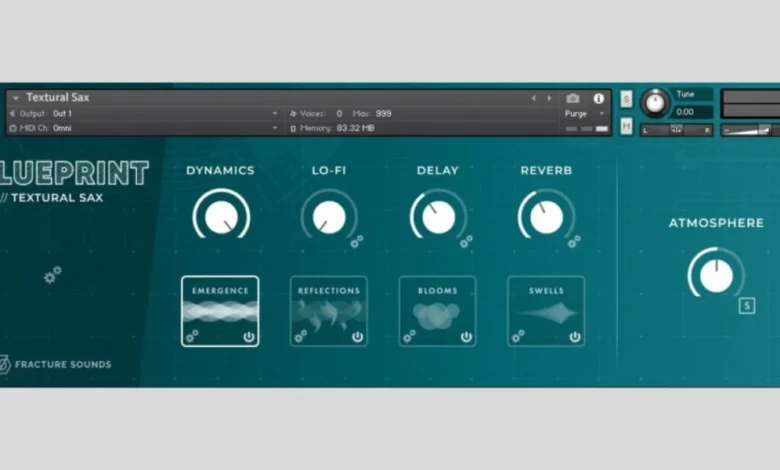
Fracture Sounds has officially announced the latest addition to its critically acclaimed Blueprint series, introducing Blueprint: Textural Sax. This new entry represents a significant expansion of the company’s "Textural" cinematic sub-category, offering composers and sound designers a specialized tool that prioritizes atmospheric character and experimental sound design over traditional, literal instrument recreation. Following the established format of the Blueprint collection, the library is released as a free instrument compatible with the industry-standard Kontakt Player by Native Instruments.
The release of Blueprint: Textural Sax marks a strategic move by Fracture Sounds to provide high-quality, boutique-level sounds to the broader music production community without the barrier of entry typically associated with premium sample libraries. While many saxophone libraries focus on jazz soloing or orchestral doubling, Textural Sax utilizes the fundamental timbral qualities of the tenor saxophone to create lush, evolving soundscapes and polyphonic pads. This approach allows the instrument to function more as a synthesizer derived from organic sources rather than a traditional woodwind emulation.
Technical Evolution and Sound Design Philosophy
The core philosophy behind Blueprint: Textural Sax lies in its departure from monophonic performance. In standard woodwind sampling, instruments are typically recorded to be played one note at a time to mimic the physical limitations of a human player. Fracture Sounds has bypassed this limitation, designing Textural Sax as a polyphonic instrument. This allows users to play chords and complex harmonic structures while maintaining the distinct "breath" and warm, initial texture associated with a tenor saxophone.
According to technical specifications provided by the developer, the library is derived from a larger, premium offering titled Trails II. By distilling the essential elements of the full-scale product into the Blueprint format, Fracture Sounds provides a functional "taster" that remains a powerful standalone tool. The sound design process involved blending the natural resonance of the tenor saxophone with experimental recording techniques, including the use of contact microphones and resonant surfaces, to create a hybrid sonic identity that sits between an acoustic instrument and an atmospheric synthesizer.
Detailed Breakdown of Articulations
Blueprint: Textural Sax features four distinct articulations, each designed to serve a specific role within a cinematic or ambient composition. These articulations allow for a variety of emotional expressions, ranging from subtle background tension to emotive melodic leads.
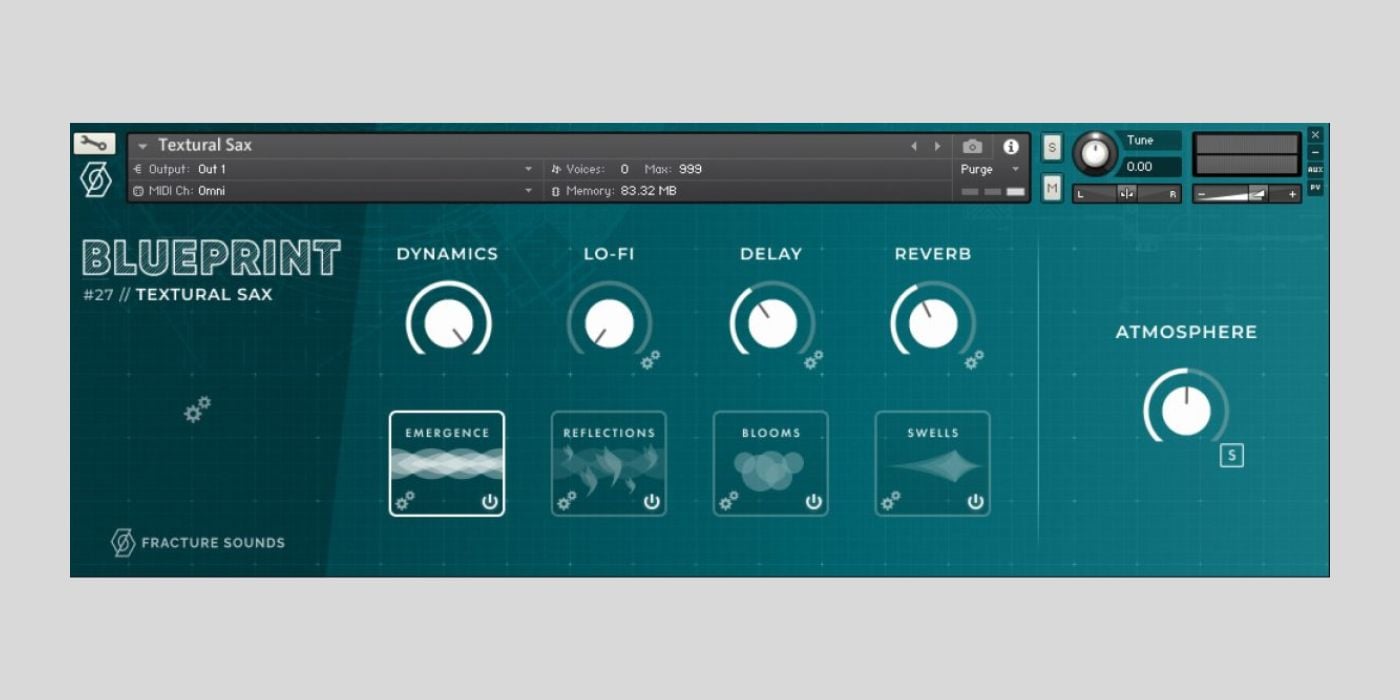
- Emergence: This articulation emphasizes the traditional character of the tenor saxophone while introducing a wavering, unstable texture. It is specifically designed for cinematic "beds"—the underlying sonic layers that provide mood and movement without distracting from on-screen dialogue or primary melodies.
- Reflections: Modern and rhythmic in nature, the Reflections setting provides a pulsing quality. This articulation is noted for its emotive resonance, making it suitable for contemporary scores that require a sense of momentum and "human" imperfection.
- Blooms: Described as highly contextual, Blooms offers a somber and evolving quality. The sound expands over time, mimicking the natural "blooming" of a sustained note, which is effective for minimalist arrangements and melancholic themes.
- Swells: Unlike the more ambiguous textures of the other articulations, Swells provides a more defined dynamic arc. This allows composers to establish clear harmonic choices and transitions, providing structure within more freeform or experimental soundscapes.
The Atmosphere Layer and Experimental Recording
A defining feature of the Blueprint series is the inclusion of an "Atmosphere" layer, which acts as a secondary sound source that can be blended with the primary samples. In the case of Textural Sax, this layer was created using an unconventional method: attaching contact microphones to a "thunder sheet"—a large, thin sheet of metal often used in theater and film sound effects to simulate the sound of thunder.
When played through the Kontakt engine, this thunder sheet resonance takes on a choral, almost ethereal quality. Users have the option to solo this layer or blend it with the saxophone articulations to add a metallic, resonant depth that traditional reverb units cannot replicate. This layer is further enhanced by the inclusion of multiple microphone positions, including close, room, and resonant contact mixes, providing users with significant control over the spatial placement of the sound.
Integrated Effects and Expression Controls
To facilitate further sound manipulation, Fracture Sounds has integrated a streamlined set of four effects within the instrument’s user interface. These controls are designed to be intuitive while offering enough depth for professional sound design:
- Dynamics: This parameter is the primary tool for expression, allowing the user to control the intensity and volume of the performance in real-time, typically mapped to a MIDI controller’s mod wheel.
- Lo-Fi: This effect introduces subtle tape-style saturation and frequency degradation. It is designed to add a "vintage" or "worn" feel to the samples, making them sit more organically in a mix.
- Delay and Reverb: These spatial effects are tailored to the cinematic nature of the library, offering high-quality algorithms that help transform the saxophone source into expansive, washed-out atmospheres.
Context within the Blueprint Series and Market Impact
The Blueprint series has established itself as a significant resource for independent composers. By offering these libraries for the free Kontakt Player (rather than requiring the full, paid version of Kontakt), Fracture Sounds has lowered the financial threshold for high-quality orchestral and cinematic sampling. Previous releases in the series have covered a wide range of instruments, from pianos to electric guitars and mallets, all unified by a "textural" aesthetic.
The release of Textural Sax coincides with a broader trend in the virtual instrument industry where "found sound" and "organic textures" are becoming increasingly popular in film and television scoring. Composers for shows like Succession or The White Lotus have popularized the use of traditional instruments played in non-traditional ways, a niche that Fracture Sounds is actively filling with its Blueprint and Trails series.
Chronology of Recent Fracture Sounds Releases
The launch of Blueprint: Textural Sax follows a busy period for the UK-based developer. In mid-2026, the company updated its product roadmap to focus on "playable textures," moving away from purely static pads.

- July 21, 2026: Announcement of the Trails II library, the premium parent-instrument to Textural Sax.
- July 22, 2026: Official release of Blueprint: Textural Sax as a free download.
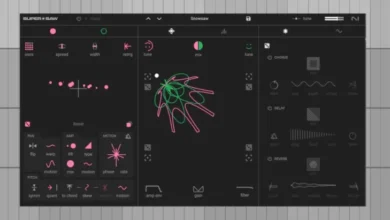
- Ongoing (until July 26, 2026): A cross-promotion period where related tools, such as Baby Audio’s Super VHS, are offered at significant discounts to complement the "lo-fi" capabilities of the new library.
Industry Implications and User Reception
Early reactions from the sound design community highlight the utility of a polyphonic saxophone. While traditional woodwind libraries are often criticized for sounding "robotic" when played in chords, the textural approach of this library avoids the "uncanny valley" by leaning into the abstract. Analysts suggest that this release will likely increase the user base for Fracture Sounds’ premium products, serving as an effective "gate-way" instrument.
The inclusion of NKS (Native Kontrol Standard) compatibility also ensures that the library is fully integrated with Native Instruments hardware, such as Komplete Kontrol keyboards and Maschine. This level of integration is rare for free products and underscores Fracture Sounds’ commitment to professional-grade standards across their entire catalog.
Conclusion
Blueprint: Textural Sax stands as a testament to the evolving landscape of digital music production, where the boundaries between acoustic instruments and synthesized textures continue to blur. By providing a specialized, high-quality tool for free, Fracture Sounds not only supports the creative community but also pushes the expectations for what a "free" instrument can achieve in terms of sound quality and technical depth. As the Blueprint collection continues to grow, it is becoming an essential toolkit for composers looking to add unique, organic character to their sonic palette.
For composers currently utilizing the library, the integration of the Atmosphere layer and the polyphonic nature of the tenor sax samples provide a versatile foundation for everything from somber ambient tracks to tense cinematic underscores. With its low system requirements and high expressive potential, Blueprint: Textural Sax is positioned to become a staple in the digital workstations of modern media composers.
Related posts: