Blackmagic Design announces its 7th order Ambisonic Microphone for true spatial audio

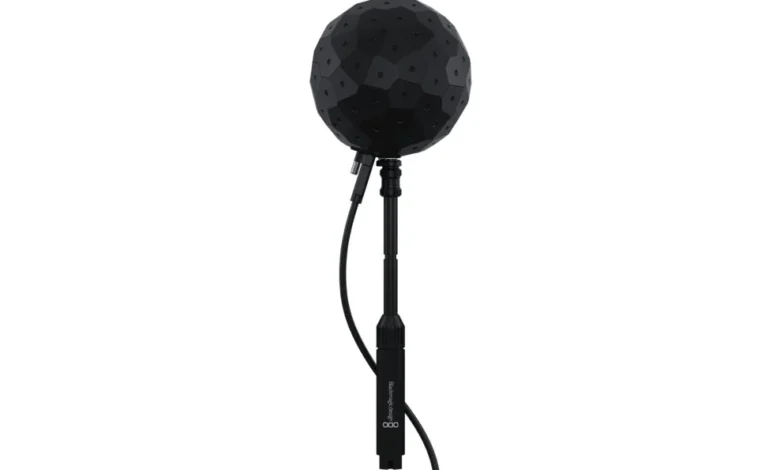
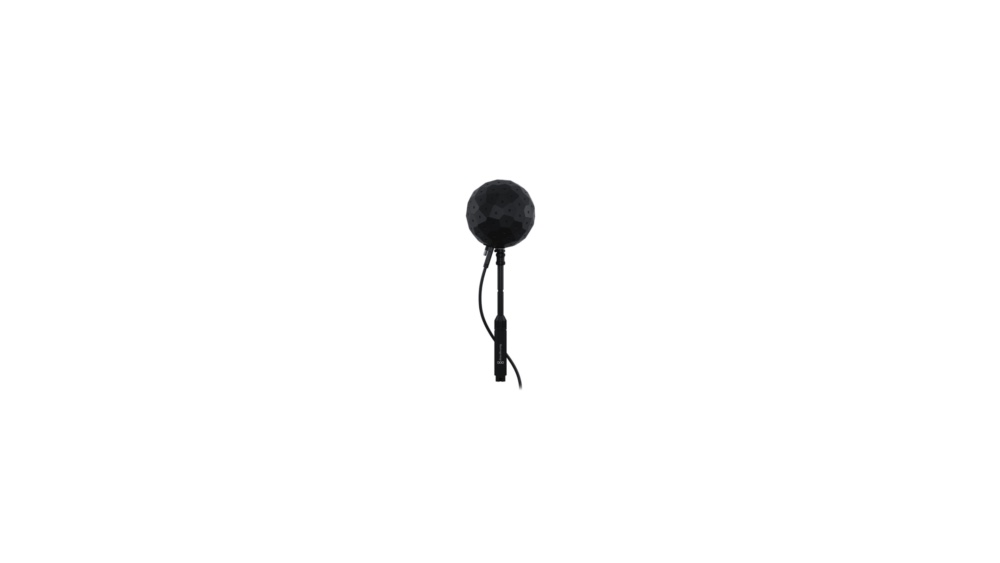
Blackmagic Design has officially unveiled its latest innovation in professional audio technology, the 7th order Ambisonic Microphone, a compact yet highly sophisticated device designed to redefine how spatial audio is captured for immersive media. Slated for a global release in December 2026 with a retail price of US$1,695, the microphone represents a significant leap forward in accessibility for professional-grade spatial recording. By integrating 108 individual MEMS (Micro-Electro-Mechanical Systems) microphones into a palm-sized, faceted metal chassis, Blackmagic has created a solution that eliminates the historical barriers of complexity and high costs traditionally associated with high-order ambisonics.
Technical Architecture and Design Philosophy
The core of the Blackmagic Ambisonic Microphone lies in its density and processing power. While standard professional ambisonic microphones typically utilize four to eight capsules to capture a first-order sound field, this new device employs 108 digital MEMS microphones. This high density is essential for achieving 7th-order ambisonics, a level of resolution that provides pinpoint spatial accuracy, enabling the listener to distinguish the exact direction and distance of sounds within a 360-degree environment.
The device is built to survive the rigors of professional field production. The faceted metal body serves a dual purpose: it provides the necessary structural rigidity to protect the array while ensuring the MEMS capsules are positioned with mathematical precision. Despite its robust build, the unit is compact enough for mounting directly atop a camera, most notably the Blackmagic URSA Cine Immersive. This integration is designed to streamline the workflow for cinematographers creating content for Apple Vision Pro and other spatial computing platforms.
The internal processing engine is perhaps the most notable technical achievement. By embedding advanced encoding filters—developed in collaboration with Apple—directly into the microphone, Blackmagic has removed the need for external breakout boxes or post-production software suites that typically require significant computational overhead. The device performs real-time conversion from the raw MEMS data to the 7th-order ambisonic format, outputting a finished spatial audio stream via a single USB-C connection. This class-compliant interface ensures immediate compatibility with various hardware, including professional cinema cameras, iPhones running the Blackmagic Camera app, and workstations utilizing Fairlight Live for real-time mixing.
The Evolution of Spatial Audio
To understand the significance of this launch, one must look at the trajectory of immersive media. Over the last decade, spatial audio has transitioned from a niche academic interest to a centerpiece of consumer entertainment. Early attempts at "surround sound" often relied on channel-based systems (like 5.1 or 7.1), which were tethered to specific speaker configurations. Ambisonics, by contrast, is scene-based; it captures the entire sound field at a single point, allowing the audio to be rendered correctly regardless of the listener’s playback hardware.
Historically, 7th-order ambisonics were restricted to high-end research facilities and specialized post-production studios due to the immense cost of arrays and the lack of standardized encoding protocols. By commoditizing this technology, Blackmagic Design is signaling a shift in the production landscape. This aligns with the broader industry movement toward "Immersive" as a native format rather than an afterthought. As VR/AR headsets become more prevalent, the demand for audio that matches the visual fidelity of 3D video has become acute. The collaboration between Blackmagic and Apple is a testament to this shift, as it ensures that the audio capture process is perfectly synced with the immersive video formats now being pioneered by major tech conglomerates.
Strategic Timeline and Integration
The development of this microphone follows a specific roadmap initiated during the early research and development phases of the Blackmagic URSA Cine Immersive camera. The timeline of this project highlights a tightening synergy between camera hardware manufacturers and spatial computing developers.
- Early 2024: Conceptualization and licensing negotiations regarding array geometry and encoding filters.
- Late 2025: Prototype testing and integration of the 108-MEMS array architecture.
- December 2026: Scheduled market release, marking the beginning of a new standard for high-fidelity spatial recording in the field.
The decision to offer a USB-to-SMPTE-2110 converter for this microphone is a strategic move aimed at the broadcast industry. SMPTE ST 2110 is the standard for professional media over IP, and by providing a bridge for this microphone, Blackmagic is enabling live spatial broadcasting—a frontier that has previously been almost impossible to achieve without massive, cumbersome rigs.
Official Commentary and Industry Implications
Grant Petty, CEO of Blackmagic Design, highlighted the transformative nature of this development during the product announcement. "This microphone started when we were collaborating with Apple on the Blackmagic URSA Cine Immersive camera. I heard a high-resolution spatial audio capture for the first time and it was like hearing an acoustic reality; I was totally blown away," Petty remarked. He further clarified the depth of the partnership, noting that Apple licensed their specific array geometry and ambisonic encoding filters to Blackmagic, effectively handing off the engineering and industrial design to the Australian firm.
Industry analysts suggest that this partnership could effectively set the "Gold Standard" for spatial audio production. By standardizing the encoding filters, Blackmagic and Apple are ensuring that content creators can move seamlessly from capture to playback without the "interpretive drift" that often plagues proprietary audio formats.
Broader Impact on the Creative Workflow
For the independent filmmaker and the professional production house alike, the implications of this release are profound. Previously, capturing high-order ambisonics required a "sound guy" with a dedicated recorder, a massive microphone array, and an extensive post-production workflow to map the audio to the image.
With the Blackmagic Ambisonic Microphone, that workflow is reduced to a single cable. This "plug-and-play" simplicity is likely to trigger an increase in the production of immersive content. As spatial audio becomes easier to capture, it will become more common in documentary filmmaking, live concert recording, and high-end narrative cinema.
Furthermore, the integration with the Blackmagic Camera app for iPhone introduces the possibility of "prosumer" spatial recording. As more users begin to capture 3D content on mobile devices, the availability of a portable, high-order ambisonic microphone will likely encourage a new wave of user-generated immersive content that meets professional standards.
Economic and Market Considerations
Priced at US$1,695, the microphone occupies a middle ground. It is significantly more expensive than standard stereo microphones, yet it is orders of magnitude cheaper than the bespoke, custom-built microphone arrays previously required for 7th-order capture. This price point suggests a target market of mid-to-large scale production companies, freelance cinematographers, and educational institutions looking to incorporate spatial audio into their curricula.
The requirement for USB-C and the reliance on class-compliant drivers underscore a move toward a "laptop-first" or "camera-first" ecosystem. By bypassing traditional audio interfaces and XLR preamps, Blackmagic is effectively cutting the cord on the traditional analog-to-digital audio chain, opting for a pure digital pathway that preserves the integrity of the 108 individual MEMS signals.
Looking Ahead
The launch of the Blackmagic Ambisonic Microphone in December 2026 will be watched closely by the audio engineering community. While the technical specifications are impressive on paper, the real-world performance in varying acoustic environments—from wind-swept outdoor locations to highly reverberant indoor spaces—will determine its long-term success.
As we move toward a future where "flat" media feels increasingly obsolete, tools like the Blackmagic Ambisonic Microphone serve as the bridge between current production standards and the next generation of immersive, spatial computing. By lowering the barrier to entry for 7th-order ambisonics, Blackmagic Design is not just releasing a new piece of hardware; they are helping to define the sound of the digital world to come. With its robust build, advanced internal processing, and seamless integration with the broader Blackmagic ecosystem, this device is positioned to become an essential component in the kits of those tasked with recording the reality of our increasingly three-dimensional world.
Related posts: