Inside the evolution of orchestral sampling: an interview with ProjectSAM | Native Instruments Blog

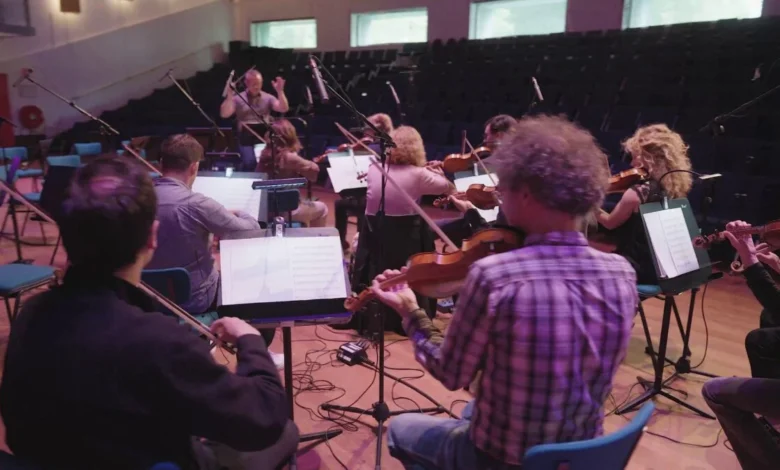
The landscape of virtual orchestration has undergone a profound transformation over the past two decades. Gone are the days of rigid, sterile sample blocks that required endless hours of manual tweaking and heavy artificial reverberation to sit convincingly in a mix. At the forefront of this evolution stands ProjectSAM, a developer that has spent more than twenty years redefining how composers bring cinematic acoustic spaces directly into their digital audio workstations. Pioneering an ensemble-recording philosophy that captures the natural, breathing resonance of a physical hall, the Dutch developer has consistently pushed the boundaries of what is possible in sample-based music production.
With the recent expansion of their acclaimed Lineage Series—moving definitively from cinematic percussion into complex, deeply articulated string libraries—we sat down with co-founders Vincent and Maarten to discuss their foundational philosophy, the technical hurdles of modern software development, how the Native Kontrol Standard (NKS) is fundamentally transforming accessibility, and the ways in which intelligent features are reshaping the day-to-day workflow of modern media composers. Furthermore, this technological leap coincides with Native Instruments’ ongoing Big Partner Sale, providing producers worldwide with a limited-time opportunity to acquire world-class orchestral textures at significantly reduced prices before the promotion concludes on June 30.
The Foundations of Acoustic Realism: From GigaSampler to Kontakt 8
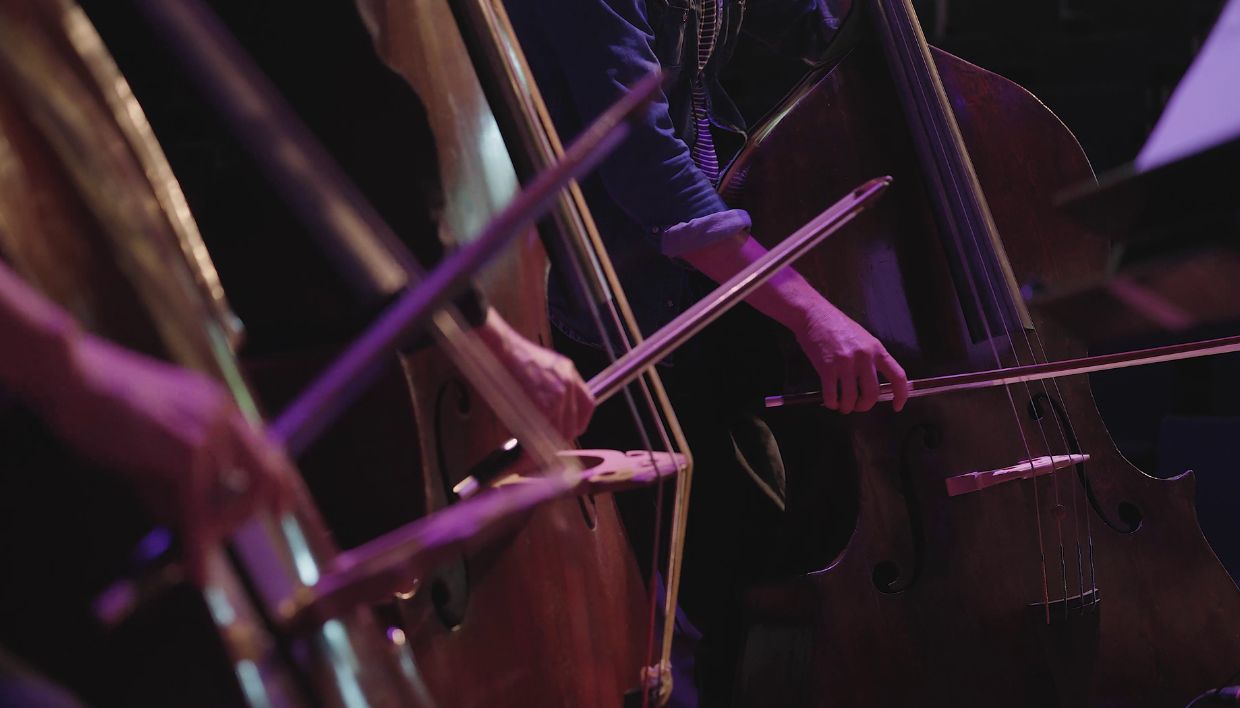
To understand where ProjectSAM is heading with groundbreaking releases like Lineage Strings, one must first look back at the company’s origins in 2001. At the turn of the millennium, the virtual instrument market looked drastically different. The industry standard relied heavily on close-microphone techniques, yielding dry, isolated recordings that demanded extensive post-production processing. Composers were forced to drench their tracks in artificial reverb to fake a sense of space, often resulting in a muddy, unnatural acoustic image.
ProjectSAM challenged this convention from day one. Their core philosophy centered on capturing the natural acoustic perspective of an orchestra from a distance, preserving the organic interaction between the instruments and the hall. To test this hypothesis, the founders recorded a free proof-of-concept demonstration utilizing local conservatory players. The resulting audio response was so overwhelming that the traffic nearly crashed their academic institution’s web server, validating a demand for natural room acoustics that would eventually shape industry standards through landmark products like True Strike and the genre-defining Symphobia series.
However, the technological underpinnings required to deliver these sounds have evolved beyond recognition. In the early days of products like SAM Horns, software development was primarily focused on simple preset collections for early samplers like GigaSampler and early versions of Kontakt. Physical distribution presented logistical nightmares, with developers battling buggy multi-format DVD installations. Today, modern virtual instruments demand extensive coding architectures, advanced scripting engines, and sophisticated user interface (UI) design. Since 2008, ProjectSAM has focused exclusively on the Native Instruments Kontakt ecosystem, culminating in Lineage Strings, their first library developed entirely for Kontakt 8. This single-platform dedication allows the engineering team to concentrate all their resources on maximizing audio fidelity and playability.

Bridging the Accessibility Gap Through NKS and NKS2
One of the most significant paradigm shifts in modern virtual instrument design is the integration of standardized hardware-software communication protocols, most notably Native Instruments’ Native Kontrol Standard (NKS) and its recent iteration, NKS2. Historically, software developers approached instrument interfaces with a mouse-centric mindset. While seasoned keyboardists could easily trigger notes, the myriad of secondary controls, articulation switches, and microphone mixing options remained largely inaccessible to specific communities—most notably blind and visually impaired musicians who rely heavily on hardware controllers and tactile feedback.
The adoption of NKS completely revolutionized ProjectSAM’s internal design workflow. During the development of Lineage Strings and Lineage Percussion, visual interface controls and NKS hardware layouts were mapped simultaneously to ensure absolute functional parity. This dual-track approach presented unique engineering challenges, particularly regarding hardware implementation like Native Instruments’ Light Guide. For instance, advanced features such as Smart Lookahead delay introduced a complex philosophical question for the developers: when a note is triggered with lookahead compensation, should the keyboard’s Light Guide illuminate the key at the exact moment of physical depression, or precisely when the sample engine actually fires the audio? Through rigorous testing with an active beta community comprising diverse users, the team successfully ironed out these synchronization nuances, proving that deep technological integration can simultaneously improve advanced production workflows and broad accessibility.
Expanding the Cinematic Universe: Symphobia Versus the Lineage Series
The conception of the Lineage Series was born out of a desire to expand upon the sonic universe established by Symphobia while offering a distinct compositional workflow. While Symphobia revolutionized media scoring by focusing on pre-orchestrated ensembles, fast-scoring cinematic combinations, and macro-textures designed for instant inspiration, the Lineage Series adopts a traditional orchestral architecture.
By providing isolated individual sections and granular control over traditional orchestration, Lineage gives composers the detailed flexibility required for intricate, counterpoint-heavy arrangements. Crucially, however, ProjectSAM managed to retain the core ease of use and rapid workflow speed that made Symphobia a household name among film, television, and game composers. The result is a dual-product ecosystem where creators can move seamlessly between macro-level cinematic inspiration and micro-level compositional precision without sacrificing realism or playability.
Under the Hood: Adaptive Phrasing and Intelligent Arranging
At the heart of Lineage Strings are two major technological advancements designed to alleviate the technical fatigue of modern MIDI orchestration: Adaptive Phrasing (featuring Smart Lookahead) and the Intelligent Arranger module.
In previous libraries like Pandora and Lineage Percussion, ProjectSAM introduced Adaptive Sync to intelligently match recorded rolls and swells to arbitrary project tempos and note lengths. With Lineage Strings, this philosophy expands to encompass nearly all recorded articulations. Utilizing the Smart Lookahead delay algorithm, the instrument’s underlying engine actively analyzes incoming MIDI data to differentiate between sustained notes, tenutos, and staccatos, automatically selecting the most musically appropriate articulation on the fly. It can even detect subtle nuances such as grace notes and trills, liberating the composer from the tedious, momentum-killing process of manual keyswitch programming.

Concurrently, the Arranger module functions as an advanced compositional assistant. By analyzing real-time chord input—including inversions, root keys, and slash chords—the module intelligently distributes the harmonic voices across the five distinct string sections. This tool functions as an immediate out-of-the-box orchestration partner, allowing creators to rapidly sketch realistic string accompaniments either through fully automated voice-leading or by manually assigning specific voices to targeted orchestral subsections.
The Horizon of Intelligent Instruments: AI, Latency, and Human Expression
As artificial intelligence and machine learning permeate every sector of software engineering, the virtual instrument industry faces unique philosophical and technical hurdles. ProjectSAM co-founders emphasize that machine learning does not inherently align with the demands of real-time, low-latency live performance.
For an algorithmic system to intelligently select the correct musical phrasing or articulation, it requires a mandatory lookahead buffer—a delay of several hundred milliseconds to analyze incoming MIDI data streams. While these predictive systems will undoubtedly grow faster and more sophisticated, software cannot truly anticipate human creative intent; it can only react to historical data already transmitted to the buffer. Consequently, while automated engines yield remarkably convincing results, they occasionally misinterpret the expressive micro-intentions of the composer.

For this reason, ProjectSAM views machine learning and intelligent scripting not as replacements for human artistry, but as powerful assistants. By handling technical friction and tedious MIDI routing, these tools streamline the production pipeline, allowing composers to retain absolute authority over the nuanced emotional delivery that defines a truly great musical performance.
The Big Partner Sale and Availability
ProjectSAM’s continuous refinement of virtual orchestration—ranging from their early multi-microphone room captures to the highly optimized, accessible NKS architecture found in Kontakt 8—demonstrates a steadfast commitment to serving the modern composer’s creative flow. By balancing cutting-edge algorithmic assistance with the organic warmth of traditional hall recordings, the Lineage Series ensures that technology remains an enabler of art rather than a technical barrier.
For producers and composers looking to elevate their sonic palette, Native Instruments is currently hosting its major seasonal promotion. The Big Partner Sale offers substantial discounts on hundreds of NKS-compatible instruments, sound libraries, and production bundles developed by industry leaders, including ProjectSAM. Prospective buyers are encouraged to visit the official Native Instruments online store to explore the promotions and acquire Lineage Strings before the limited-time sale concludes on June 30.