The Rise of South African Design: Inside the 2026 Maison and Objet Rising Talent Awards

The global design landscape constantly seeks fresh narratives, shifting its gaze from traditional Western epicenters to emerging creative powerhouses across the globe. Nowhere is this dynamic more evident than at Maison&Objet, the twice-annual international design fair held on the outskirts of Paris. For decades, the massive trade exposition has served as an essential barometer for interior architecture, product design, and material innovation. Amid the overwhelming scale of the overarching exhibition halls, the fair’s "Rising Talent" showcase provides a vital, highly curated focal point. In past editions, these dedicated country spotlights have introduced the world to breakthrough aesthetics from nations like Italy, the United Kingdom, Japan, and Lebanon.
For the September 2026 edition, the spotlight turned firmly toward South Africa. Brought together through a landmark collaboration between Maison&Objet and Decorex Africa, a cohort of seven standout designers and multidisciplinary studios presented a collective vision rooted in the nation’s rich cultural heritage, intricate craftsmanship, and contemporary materiality. Spanning major urban centers from Johannesburg and Cape Town to Durban and Port Elizabeth, the selected group showcased an impressive array of furniture, textiles, lighting, and decorative objects. These works were defined not merely by visual novelty, but by architectural rigor, personal family histories, environmental consciousness, and sharp material experimentation.
A New Chapter for African Design on the Global Stage
The inclusion of South Africa as the focal point of the 2026 Rising Talent Awards marks a watershed moment for the continent’s design economy. Historically, African craftsmanship has been commodified or viewed strictly through an ethnographic lens by international markets. However, the generation of designers featured at Paris in September 2026 firmly rejects this reductive framing. Instead, they position traditional techniques and indigenous narratives as sophisticated, contemporary methodologies that can stand toe-to-toe with any European or North American counterpart.

The selection process for this prestigious showcase was overseen by a distinguished jury of African design leaders, including Alan Hayward and Garreth Van Niekerk, co-artistic directors of Decorex Africa and 100% Design Africa; interior architect and academic Juliet Kavishe; acclaimed furniture and lighting designer Thabisa Mjo; and interior designer Donald Nxumalo, former creative director of Design Joburg. This curatorial panel sought out practitioners whose work bridges the gap between historical craft and modern utility, ensuring the showcase offered international buyers, journalists, and architects a comprehensive cross-section of South Africa’s creative velocity.
Meetlo Studio: Ancestral Wisdom and In-House Autonomy
Representing Johannesburg, Oageng Manana and Tshegofatso Ramothibe of Meetlo Studio immediately captured attention with their ability to translate familiar household objects—such as wine racks and side servers—into culturally resonant sculptural forms. The studio’s very name is derived from a word meaning "customs and traditions," setting a clear conceptual framework for their output.

"We try to express our work through our African narrative and our cultural customs," Manana explained during the fair. "Our inspiration is drawn from how our indigenous people used to do things, and also the environment that is around us."
A prime example of this philosophy is the Abadimu server, whose moniker translates to "for the ancestors." While the piece draws heavily upon historical wisdom and elaborate, symbolic carvings, Meetlo Studio maintains a strict adherence to functional integrity. Uniquely, the studio executes all carving and manufacturing processes entirely in-house. This complete vertical integration grants the founders absolute control over their output, ensuring that their creative narrative remains uncompromised and distinctly authentic as it is introduced to international markets.

Studio Lloyd: Scaling Craft into Residential Markets
Operating out of Cape Town, Ashleigh Lloyd of Studio Lloyd arrived in Paris with a strategic shift in focus. While Lloyd has built a formidable reputation domestically and internationally for large-scale, high-impact installations tailored to the luxury hospitality sector—including sprawling safari lodges and coastal resorts—her Maison&Objet presentation marked a deliberate pivot toward the residential market.
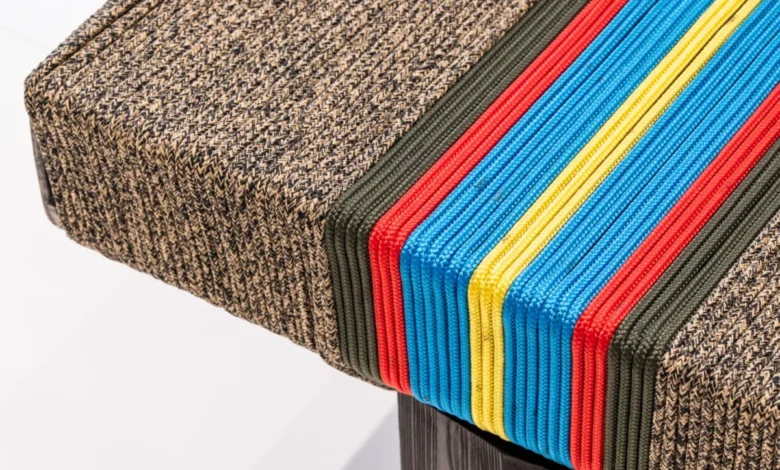
Lloyd’s signature aesthetic relies on robust, weather-resistant materials such as stainless steel, aluminum, and UV-protected synthetic rope. Yet, the physical manifestation of these materials is dictated by a deeply human, tactile process: crochet. Traditionally marginalized as domestic "women’s work," crochet is elevated by Lloyd into monumental, sculptural forms.

"Crochet, through its natural flexibility, tactile quality, and almost meditative rhythm, offers a deeply human counterpoint to the rigidity of architectural lighting," Lloyd noted. By scaling down her techniques to present limited-edition table lamps and pendant fixtures in Paris, Studio Lloyd successfully bridged the gap between rugged durability and intimate domestic luxury.
Simphiwe Mlambo: Honoring Intergenerational Domesticity
Simphiwe Mlambo’s path to the global stage is underpinned by technical proficiency and a lifelong immersion in the built environment. An interior design graduate of the Durban University of Technology with familial roots in the construction industry, Mlambo founded his independent studio in 2019, quickly expanding across residential, commercial, and hospitality sectors.

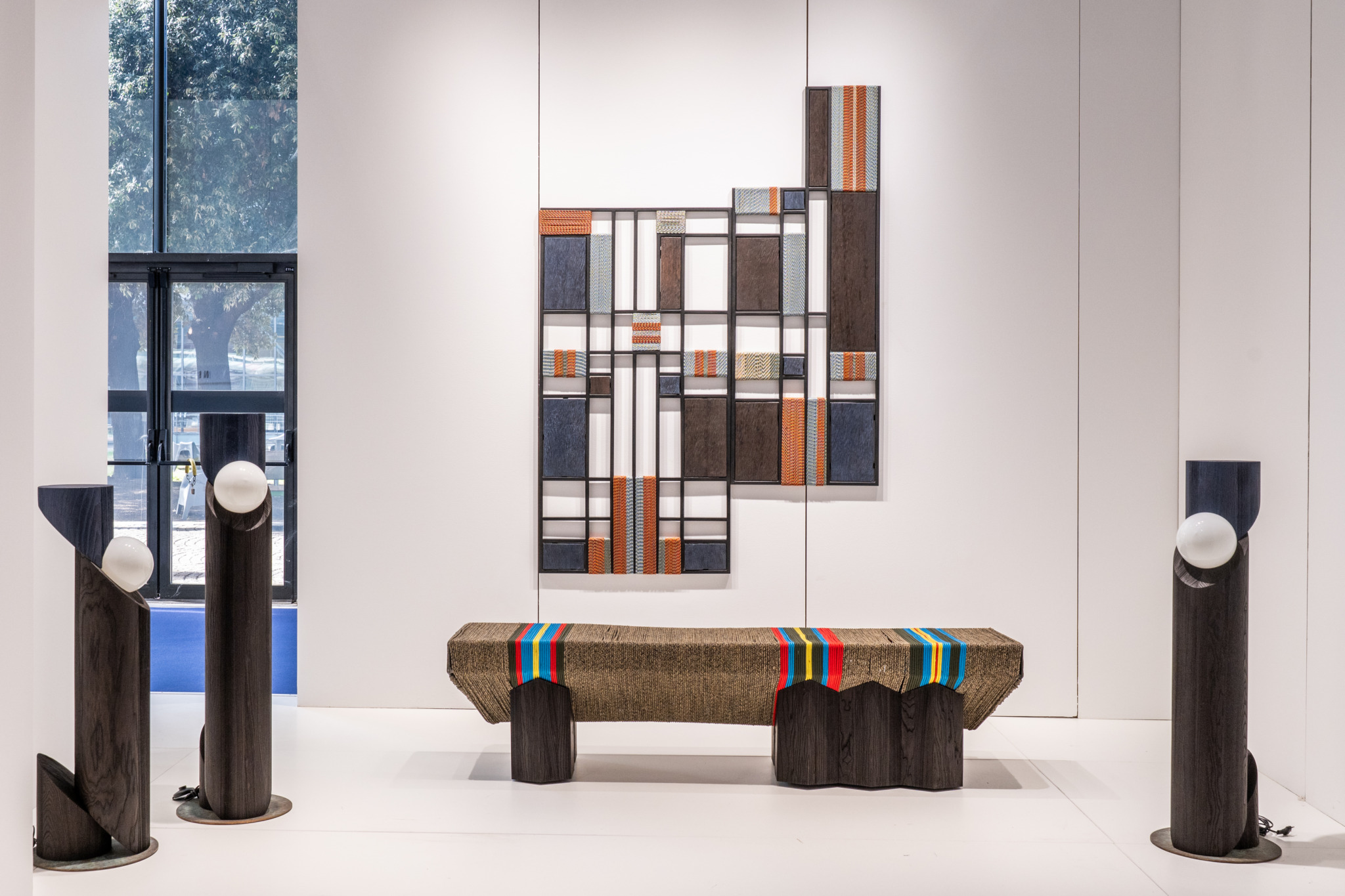
For his Maison&Objet debut, Mlambo drew deeply personal inspiration from the grass mats meticulously woven by his grandmother. This domestic memory was translated into a striking collection of furniture and accessories: a modern bench that echoes the mechanics of her loom, wall panels that mimic the texture and composition of the mats, and lighting fixtures that recall the specific quality of illumination she utilized while working.
"The whole idea is to take personal experiences and traditional techniques and translate them into a modern context," Mlambo stated. Maintaining a traditional color palette adapted for a contemporary sensibility, his pieces successfully preserve an undeniable sense of cultural identity. "It still has that texture. It still has that African-ness. It still has that feeling of home for me, of course."

NISH: The Choreography of Materiality
Tanisha Neill’s journey into design is as unconventional as it is poetic. Having initially trained and worked as a professional dancer, Neill channels her foundational understanding of spatial choreography, rhythm, and perspective into her Cape Town-based studio, NISH.
"My material definitely drives my design, and understanding the capabilities and sometimes its restrictions is where the beauty of creation and my ideas come from," Neill explained.

This philosophy was vividly demonstrated in Paris through a newly developed rug that doubles as a striking vertical wall hanging. To create the piece, Neill collaborated with a collage artist who tore and layered vintage magazine imagery. Eschewing a predetermined outcome, Neill allowed the physical properties of the material to guide the translation from 2D collage to 3D textile. Hand-tufted in rich wool and silk, the final rug utilizes varying pile heights to capture the illusion of depth, revealing an emergent landscape of mountains and birds. Her work underscores a vital design ethos: the necessity of listening to the medium and allowing prototypes to organically evolve.
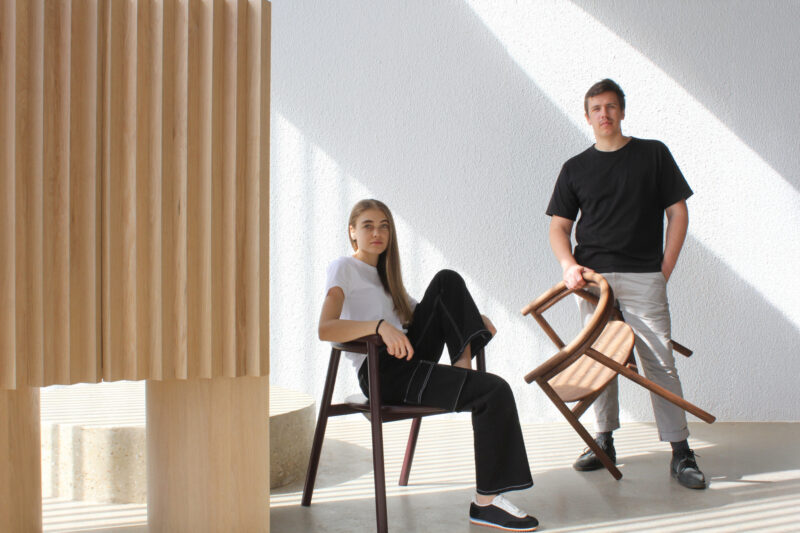
DEFT Studios: Architectural Rigor Meets Self-Taught Carpentry
The economic and professional disruptions of the COVID-19 pandemic forced creative pivots across the globe. For Martin Tallie and Zani Alberts, the founders of Port Elizabeth-based DEFT Studios, the global health crisis served as a catalyst to transition from traditional architecture to bespoke furniture design.

"A lot of our influences were stolen from architecture, and we were self-taught in woodworking," Tallie noted. "Our unique vantage point is that we didn’t have a mentor teaching us."
This lack of formal traditional instruction liberated DEFT Studios to explore pure geometries and simple architectural volumes executed through intricate, highly demanding joinery. Their featured piece at Maison&Objet, the Étagère brune et claire, exemplified a commitment to creating singular, heirloom-quality objects. Operating with a small, close-knit team that handles production entirely in-house, Tallie and Alberts maintain rigorous quality control while remaining firmly grounded in the physical act of making. As Tallie affirmed, "We love working with our hands. We are designers, but we are definitely makers."
Karlien van Rooyen: Translating Marine Anatomy into Brutalist Form
Balancing a scientific background in neuroscience with a passion for free diving, Karlien van Rooyen brings a wholly distinct perspective to contemporary ceramics and woodwork. Based in Cape Town, van Rooyen crafts organic objects that blur the lines between human anatomy and marine biology.
"Some of them look like lungs or neurons from the brain, but they also look like mushrooms or coral at the same time," she explained.

While her ceramic pieces are meticulously hand-built from stoneware clay before undergoing glazing and firing, her wooden sculptures involve an intensive collaborative process with traditional woodworkers. Beginning with a two-dimensional sketch, the design is scaled up into three dimensions and carved out of African teak—a dense hardwood renowned for the reddish sap it releases when freshly cut. Fusing multiple blocks of this timber together before carving away vast quantities of material, van Rooyen achieves results that she aptly describes as resembling "brutalistic monuments."
Pinda Interior Design: The Geometry of Cultural Heritage
Siyanda Mbele’s transition from an engineering background into spatial and interior design forms the bedrock of Pinda Interior Design, based in Durban. The studio’s name originates from the isiZulu word phinda, meaning "again," serving as a conceptual nod to the mathematical repetition and rhythmic patterns inherent in his work.

Mbele’s creations draw heavily from South African Nguni, Zulu, and Ndebele visual cultures, where pattern and volume exist in a state of constant, mutual feedback. This symbiotic relationship was prominently displayed in Paris through a large-scale textile and wall hanging featuring a precise geometric arrangement of triangles and diamonds rooted in Zulu tradition.
Detailing the cultural significance of these motifs, Mbele noted, "The triangle is masculine; the diamond is feminine. When married, the symbols will be stacked. The shapes are made into beaded bracelets, and a woman will give one to a suitor she is interested in. He will wear the bracelet to prove he accepts and wants to spend his life with her."

Implications for the Global Design Economy
The triumphant reception of South Africa’s Rising Talent cohort at Maison&Objet 2026 signals a permanent shift in how international trade shows curate and value non-Western design markets. By moving beyond tokenistic representation and offering a platform grounded in rigorous craftsmanship, cultural agency, and material innovation, the exhibition has set a new standard for international showcases.
For the participating designers, the exposure in Paris transcends mere commercial success; it establishes a sustainable bridge between localized heritage production and global architectural specifications. As global interior architects, luxury developers, and high-end residential buyers increasingly demand authentic narratives coupled with uncompromising quality, South Africa’s design vanguard has proven that it is not merely rising—it has firmly arrived.