Snapchat Enter the Event Planning Space with the Launch of Snapchat Plans to Capture the Gen Z In-Person Social Economy

Snapchat has officially announced the rollout of a comprehensive event-management suite titled "Snapchat Plans," signaling a strategic pivot from purely digital communication to facilitating real-world, in-person interactions. Unveiled on Thursday, the new feature set is designed to streamline how users organize, manage, and attend social gatherings ranging from informal weekend hangouts and study groups to birthday celebrations and sporting events.
By integrating invitation creation, real-time tracking, and attendee management directly into the core user interface, Snapchat is diving headfirst into the burgeoning digital invitation market. The move places the social media giant in direct competition with established platforms like Partiful—which was named Google’s best app of 2024—as well as Apple, which launched its own custom invitation application, Invites, last year.
The launch reflects a profound shift in consumer behavior, particularly among Generation Z, who are increasingly moving away from passive digital consumption and chaotic group chats in favor of structured, intentional in-person socializing.
Core Mechanics of Snapchat Plans
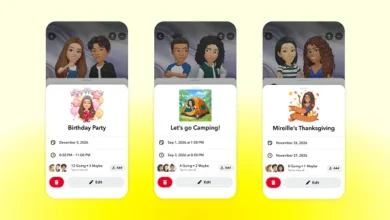
At its technical core, a "Snapchat Plan" allows individual users to initiate, customize, and distribute event details seamlessly within the app’s native ecosystem. To create an event, a host simply assigns a title, selects a definitive date and time, specifies a location, and chooses up to 200 friends to invite.
Unlike traditional calendar invitations or fragmented group chat threads—where critical logistics are frequently buried under endless streams of text messages and media—Snapchat Plans centralizes all logistical data. Once an event is generated, invitations are dispatched directly via one-on-one direct messages to each chosen participant.
Recipients can respond immediately utilizing a standard three-tier RSVP system: "Going," "Maybe," or "Can’t Go." Furthermore, the application provides built-in flexibility, allowing guests to modify their RSVP status at any given time. Hosts retain complete administrative control over their events, granting them the ability to track the live guest list, invite additional participants as plans evolve, and update core event parameters on the fly.
To ensure high attendance rates and minimize forgetfulness, the system triggers automated reminders to all confirmed guests exactly one hour before the scheduled start time.
Profile Integration and User Experience
To maximize visibility and prevent event details from fading into the background of a crowded chat history, Snapchat has introduced a dedicated "My Plans" hub located directly on user profiles. This repository serves as a centralized dashboard where individuals can review their historical, current, and upcoming itineraries at a glance.
Additionally, the social network has woven event transparency into its user profile architecture. When a user taps on a friend’s profile, the interface highlights any upcoming events or shared plans that both individuals have in common. According to official company disclosures, all Snapchat Plans remain strictly private and strictly invite-only, addressing ongoing consumer sensitivities regarding data privacy and digital footprint management.
In an official corporate blog post accompanying the release, the company emphasized the user-centric motivation behind the feature, stating, "No more missed get-togethers because of buried messages, lost details, or forgetting to create an invitation. Snapchat Plans make it easier to organize these special in-person moments with your friends."

Chronology of the Digital Invitation Market
The introduction of Snapchat Plans does not occur in a vacuum; rather, it is the latest milestone in a rapidly evolving market for digital event coordination tools.
Over the past three years, the landscape of social event planning has undergone a structural transformation. For decades, informal gatherings were coordinated via fragmented text-message threads, sprawling Facebook event pages, or ad-hoc group chats across platforms like WhatsApp and iMessage. However, the friction inherent in these legacy methods—such as tracking RSVPs manually or scrolling endlessly through message history to find an address—paved the way for dedicated micro-networking platforms.
Platforms like Partiful captured the zeitgeist by offering hyper-styled, aesthetically pleasing digital invite links that resonated heavily with younger demographics. Recognizing this whitespace in the consumer software market, major technology conglomerates quickly moved to capture market share. Apple entered the fray by launching its standalone "Invites" application, giving ecosystem users native tools to generate bespoke invitations.
Now, by baking similar capabilities directly into a multi-hundred-million-user social network, Snapchat is attempting to bypass the friction of getting users to download a separate, dedicated utility app. By meeting Gen Z where they already communicate daily, Snapchat hopes to dominate the event-planning lifecycle from inception to execution.
Broader Impact: The Gen Z Shift Toward IRL Socializing
The strategic timing of Snapchat Plans aligns directly with broader macroeconomic and sociological trends regarding youth culture. Sociologists and market analysts have noted a definitive cultural correction away from passive screen time and endless social media scrolling—often colloquially termed "doomscrolling"—toward active community building and tangible real-world interaction.
Recent cultural movements, sometimes labeled by trend forecasters as "community-maxxing," highlight a widespread fatigue with purely digital relationships. Across multiple demographic studies, Gen Z consumers consistently report a craving for authentic, in-person experiences. This behavioral shift has forced consumer tech companies, dating applications, and entertainment platforms to pivot their product roadmaps toward real-world activation. For instance, legacy dating platforms have increasingly expanded their physical, in-person singles events into dozens of new metropolitan areas, while music streaming giants report that younger demographics prioritize live cultural experiences above passive digital consumption.
By evolving from a platform focused primarily on ephemeral media and digital messaging into an infrastructure for real-world coordination, Snapchat is positioning itself as an indispensable tool for physical socialization.
Industry Analysis and Strategic Implications
From an industry perspective, the launch of Snapchat Plans represents a low-risk, high-reward engagement strategy. Social media platforms constantly battle for user attention and daily active usage metrics. By anchoring real-world social plans within its app, Snapchat effectively bridges the digital-physical divide, ensuring that conversations initiated on the platform manifest in physical reality—and subsequently return to the app via shared stories, snaps, and location updates.
However, the feature faces notable challenges. Competitors like Partiful have built robust communities by leaning heavily into niche aesthetic customization, meme culture, and unique social features that appeal directly to college students and young urban professionals. Furthermore, privacy expectations remain paramount; as platforms introduce deeper integration between user profiles and real-world event tracking, maintaining airtight privacy controls will be vital to retaining user trust.
Ultimately, Snapchat Plans highlights a mature recognition by tech executives that the future of social media is not confined to the smartphone screen. As the demand for authentic, in-person community experiences accelerates, tools that reduce the administrative friction of gathering friends together will likely become standard fixtures of the modern social software ecosystem. Whether Snapchat can successfully capture this market from specialized startups and hardware giants will depend entirely on how seamlessly its massive global user base adopts the feature into their daily routines.
Related posts: