A New Creative Advantage: How Community Intelligence and AI are Reshaping Marketing Success, According to Warc and TikTok

A groundbreaking report, "The New Creative Advantage: How Community Intelligence is Reshaping Creative Success in the Age of AI," recently published by marketing strategy group Warc in partnership with TikTok, sheds critical light on the evolving landscape of marketing in the era of artificial intelligence. The study delves into how AI tools are influencing marketing workflows and, crucially, how marketers can effectively integrate real-time cultural insights to optimize AI outputs and significantly enhance overall campaign performance. This collaboration between a leading marketing intelligence firm and a dominant social media platform underscores a growing consensus in the industry: while AI offers unparalleled efficiency, true creative success still hinges on a deep understanding of human culture and community dynamics.
The AI Revolution in Marketing: A Contextual Overview
The advent of generative artificial intelligence has undeniably marked a pivotal moment in the marketing industry. Tools like ChatGPT, Midjourney, and others have rapidly transitioned from speculative concepts to practical applications, promising to revolutionize content creation, audience targeting, and campaign optimization. This surge in AI capabilities has placed unprecedented pressure on marketing teams to accelerate content production, iterate faster, and expand their creative output. Businesses are keen to leverage AI to gain a competitive edge, streamline operations, and reach consumers with greater precision and scale.
However, the rapid adoption of AI has also ignited a complex debate about the future of creativity, authenticity, and human intuition in marketing. Many industry observers initially speculated that AI could largely automate creative processes, potentially reducing the need for human input in various stages of content development. The Warc and TikTok report, however, offers a more nuanced perspective, suggesting that the most effective path forward involves a synergistic relationship between advanced AI tools and human-led cultural intelligence. Warc, known for its comprehensive marketing intelligence and effectiveness guidance, brings a data-driven analytical lens to this partnership, while TikTok, a platform synonymous with cultural trends and viral content, offers invaluable insights into community dynamics and real-time cultural shifts. The timing of this report, likely released around mid-2026, aligns with a period of intense experimentation and adaptation for marketers grappling with the full implications of rapidly advancing AI technologies.
Methodology: A Global Perspective on Marketer Sentiment
To capture a broad and representative understanding of the industry’s evolving sentiment, the study incorporated feedback from 400 marketers spanning four key global markets: the United Kingdom, the United States, Australia, and Brazil. These markets were strategically chosen for their diverse digital economies, varying cultural nuances, and mature advertising landscapes. The inclusion of marketers from both developed Western markets (UK, US, Australia) and a rapidly expanding emerging market (Brazil) provides a comprehensive view of how generative AI’s rise is impacting the creative advertising sector globally. This wide geographical scope ensures that the findings are not skewed by regional idiosyncrasies but rather reflect a more universal set of challenges and opportunities faced by marketing professionals worldwide. The survey likely utilized a mix of quantitative and qualitative methods, probing marketers on their current AI usage, perceived benefits, challenges, and future expectations regarding the technology.
Beyond Volume: The Paramountcy of Relevance
One of the report’s most significant findings challenges a common misconception about AI’s ultimate utility: the notion that success in content creation is simply about generating the largest volume of assets. Instead, the study emphatically concludes that the key content trend of the moment is relevance, not sheer volume. This insight is particularly salient in an age of information overload, where consumers are bombarded with an unprecedented amount of digital content daily. In such an environment, generic, mass-produced content often fails to cut through the noise, leading to consumer fatigue and disengagement.
The report highlights that AI tools, in their current state, cannot fully replicate the nuanced understanding required to achieve deep cultural relevance. While AI excels at pattern recognition, data synthesis, and rapid content generation based on existing datasets, it often struggles with the subtle, ephemeral, and often counter-intuitive elements that define genuine cultural resonance. This limitation underscores the irreplaceable role of human creativity and insight in discerning what truly matters to a target audience at any given moment. A brand might produce hundreds of AI-generated social media posts, but if they lack authentic connection or fail to tap into current cultural zeitgeists, their impact will be minimal compared to a single, highly relevant, human-crafted piece of content.
Cultural Intelligence: The Human Element in AI’s Equation
Elaborating on this critical distinction, Andy Yang, TikTok’s Global Head of Creative and Brand Ads, articulated a powerful concept in the report: "The brands winning today are not the ones generating the most content… They are the ones learning fastest from the people they serve. That speed of learning is what we call cultural intelligence: the ability to read what a community values, in the moment it is forming that value, and to respond with something that feels native rather than inserted."
This definition positions cultural intelligence as the indispensable human counterpoint to AI’s algorithmic power. It’s about understanding the subtle shifts in language, humor, values, and aesthetics that define a community’s current mindset. This isn’t static data; it’s a dynamic, ever-evolving phenomenon. Humans possess the capacity for empathy, intuition, and divergent thinking—qualities essential for grasping the emotional undercurrents and unstated desires of an audience. Cultural intelligence enables marketers to identify emerging trends before they become mainstream, to understand the nuances of irony and satire, and to craft messages that feel organic and authentic rather than algorithmically engineered. This capability is what allows a brand to "feel native" within a community, rather than appearing as an outsider trying to force a connection. Without this human-led intelligence, AI-generated content risks being technically perfect but emotionally hollow.
AI as an Enabler: Workflow Acceleration and Efficiency Gains
Despite its limitations in generating profound relevance independently, the report clearly acknowledges the significant value AI tools bring to the marketing workflow. The expanded push for content production, driven by the demands of multi-channel marketing and the perpetual need for fresh material, has put immense pressure on marketing teams. AI has emerged as a powerful ally in this regard, facilitating faster and expanded workflows.
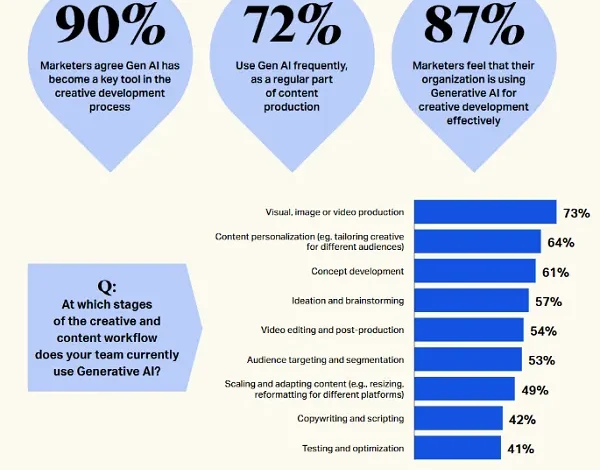
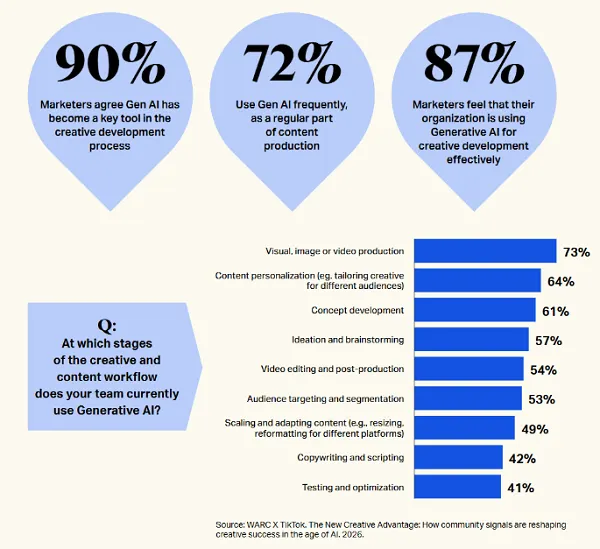
The survey revealed that the vast majority of marketers found AI tools exceptionally useful for accelerating production. Specifically, AI excels at tasks such as generating multiple variations of ad copy for A/B testing, creating basic image assets or background elements, drafting initial video scripts, and personalizing existing content at scale. These capabilities allow marketers to significantly reduce the time spent on repetitive or low-level creative tasks, freeing up human talent to focus on higher-order strategic thinking and culturally informed creative direction. Most marketers surveyed agreed that AI has become an integral and key part of their creative process, particularly for boosting efficiency and enabling them to produce a greater quantity of varied assets within shorter deadlines. This efficiency gain is crucial for navigating the fast-paced digital marketing environment.
The Unscripted Challenge: AI’s Struggle with Originality and Nuance
However, the report also highlighted specific areas where AI’s value proposition diminishes considerably, underscoring the enduring need for human intervention. For tasks requiring deep creative originality, nuanced understanding of brand voice, and emotionally resonant storytelling, such as advanced copywriting and scripting, the perceived utility of AI tools was notably lower on marketers’ lists. This suggests that while AI can support and facilitate the generation of new ideas or provide initial drafts, simple automation systems cannot undertake the entire creative process without significant human oversight and refinement.
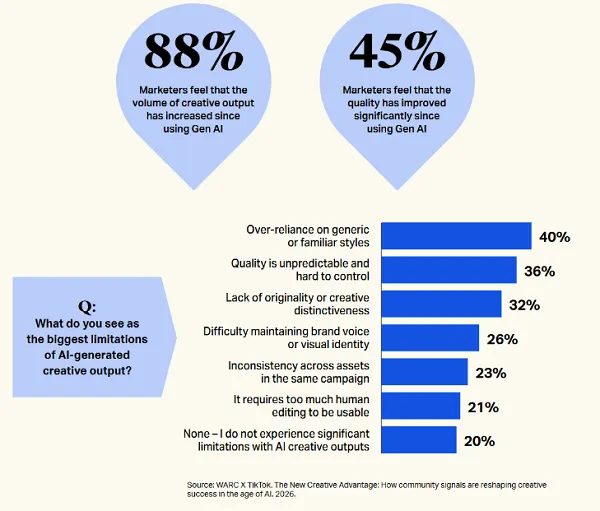
Concerns regarding AI’s inherent lack of creative originality were a recurring theme. Marketers often observed that AI-generated content, while technically proficient, can sometimes feel generic, formulaic, or derivative. AI learns by analyzing vast datasets of existing content, and its output, therefore, tends to be a recombination or extrapolation of what has already been created. True originality, which involves breaking conventions, forging new emotional connections, or expressing unique artistic vision, remains largely a human domain. The "uncanny valley" effect, where AI-generated content is almost human-like but subtly off-putting, is particularly problematic in sensitive creative fields like copywriting, where tone, subtext, and emotional resonance are paramount. This limitation reinforces the idea that AI is best utilized as a co-pilot, a powerful tool that augments human creativity rather than replacing it.
Bridging the Gap: Infusing AI with Cultural Insights
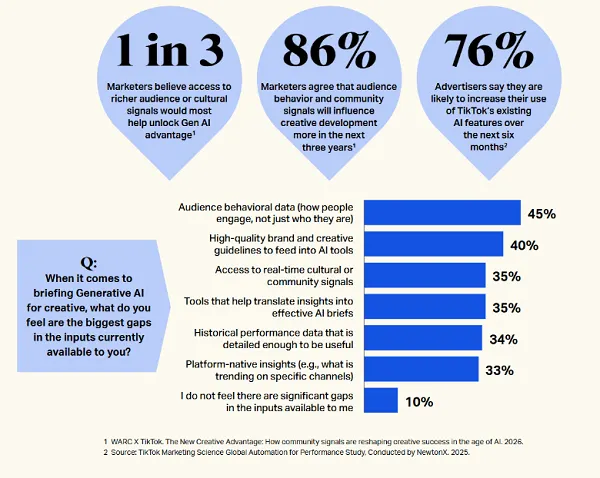
Recognizing these inherent weaknesses, marketers in the survey expressed a strong desire for solutions to address AI’s limitations, particularly its perceived lack of creative originality and relevance. A clear consensus emerged: marketers believe that more cultural insights could significantly help improve the relevance and impact of AI outputs. This isn’t just about feeding AI more data; it’s about providing it with the right kind of data—data imbued with human understanding of cultural context, trends, and community values.
The feedback loop envisioned here involves humans acting as the primary source of cultural intelligence, interpreting complex social signals, and then feeding these insights into AI models through refined prompts and parameters. By understanding what resonates within specific communities, marketers can guide AI to generate content that aligns with current trends, speaks to specific subcultures, and avoids cultural missteps. For example, knowing a particular meme is gaining traction or a specific style of communication is popular within a target demographic allows marketers to prompt AI to incorporate these elements, thereby making the output feel more timely and authentic. This approach transforms AI from a mere content generator into a powerful tool for scaling culturally informed creativity.
TikTok’s Role: A Nexus for Real-Time Cultural Intelligence
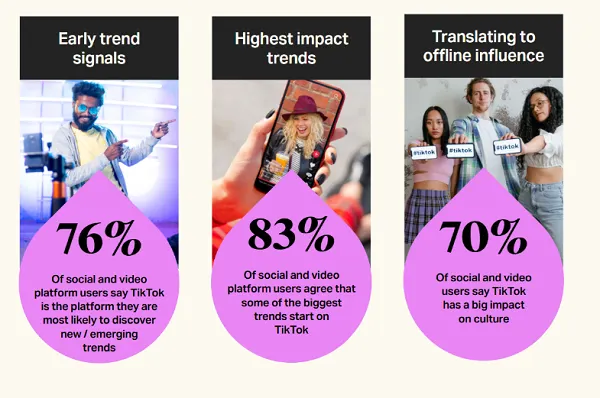
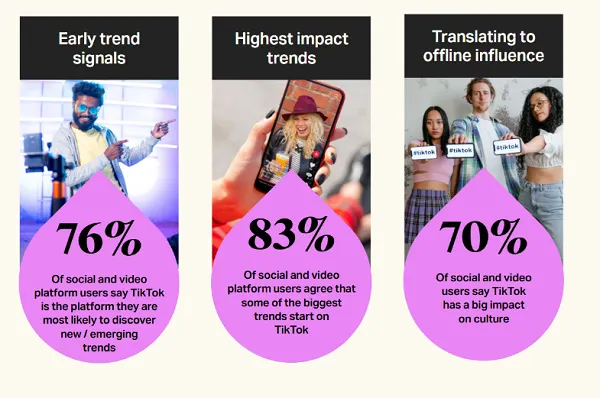
This is precisely where TikTok positions itself as a crucial partner in the evolving marketing ecosystem. The report explicitly highlights TikTok’s unique capacity to provide the necessary cultural influence to guide creative approaches. The platform’s highly dynamic nature, driven by user-generated content, viral sounds, and a sophisticated recommendation algorithm, makes it an unparalleled barometer of what’s gaining traction at any given moment.
TikTok’s cultural influence stems from several factors:
- Algorithmic Power: Its "For You Page" algorithm is renowned for its ability to surface highly relevant content to users, creating rapid trend cycles and fostering niche communities.
- User-Generated Content (UGC): The platform thrives on authentic, often unpolished, user-created content, which organically reflects current cultural sentiments and emerging forms of expression.
- Sound-Driven Trends: Viral sounds often serve as the backbone of TikTok trends, providing a unique cultural shorthand that marketers can tap into.
- Community Formation: TikTok facilitates the rapid formation and evolution of subcultures and communities around shared interests, aesthetics, and humor.
By understanding these real-time trends and applying them to their creative approaches, marketers can significantly improve their alignment with target audiences. This process allows brands to create content that not only resonates deeply but also sparks conversations, encourages engagement, and fosters a sense of community around their messaging. TikTok, therefore, isn’t just a distribution channel; it’s a living, breathing database of cultural intelligence that, when leveraged effectively, can provide the contextual data needed to make AI-generated content truly impactful.
Implications for Modern Marketing Strategy
The report’s findings have profound implications for how modern marketing strategies should be formulated and executed. Using the framework of combining cultural insights with AI capabilities, the data showed that marketers could refine their creative briefs to better align with what’s genuinely working in the cultural zeitgeist. This means briefs will become less about generic demographic targeting and more about specific cultural touchpoints, trending narratives, and community values.
Simultaneously, AI tools, when fed these refined, culturally rich inputs, can interpret key signals and drive improved creative choices. For instance, an AI might be prompted to generate ad copy that leverages a specific tone popular in a TikTok trend, or design visual assets that align with a current aesthetic movement. This synergistic approach allows human marketers to maintain creative control and strategic direction, while AI handles the heavy lifting of execution, iteration, and scaling. The "human-in-the-loop" model emerges as the most effective paradigm, where human creativity and cultural acumen provide the vision, and AI acts as the powerful, efficient executor. This model also suggests a competitive advantage for brands that can effectively integrate these two elements, distinguishing themselves in a crowded marketplace.
The Evolving Marketer: Skill Sets for the AI Era
This shift naturally necessitates an evolution in the skill sets required for marketers. The future marketer will need to be proficient not only in traditional marketing principles but also in areas such as:
- Cultural Literacy: A deep and continuous understanding of diverse cultural landscapes and emerging trends.
- Data Interpretation: The ability to analyze cultural signals and translate them into actionable insights for AI.
- Prompt Engineering: Crafting precise and effective prompts to guide AI tools towards desired, culturally relevant outputs.
- Critical Evaluation: The capacity to discern high-quality, relevant AI-generated content from generic or off-brand material.
- Strategic Oversight: Maintaining overall creative vision and ensuring brand consistency, regardless of AI’s involvement.
This emphasizes a move towards a more strategic, analytical, and culturally attuned role for marketers, where they act as curators and conductors of AI, rather than being replaced by it. The focus will shift from purely manual content creation to guiding and optimizing intelligent systems.
Future Outlook: A Synergistic Path Forward
In conclusion, the Warc and TikTok report paints a clear picture of the future of marketing: AI is not a standalone solution, nor is it a threat to human creativity, but rather a powerful, complementary component that can significantly enhance community connection. However, its effectiveness is directly proportional to the quality and relevance of the context it receives. Without the right cultural insights, AI tools risk producing content that is technically proficient but emotionally disconnected and ultimately ineffective.
Platforms like TikTok, with their inherent ability to capture and reflect real-time cultural dynamics, are uniquely positioned to provide this crucial context. By bringing together the analytical power of AI with the intuitive, empathetic understanding of human cultural intelligence, marketers can unlock a new level of creative advantage. This synergistic approach promises not only more efficient workflows but, more importantly, the creation of advertising and content that truly resonates with audiences, sparks genuine conversations, and builds lasting brand connections in an increasingly complex and fragmented media landscape. The ongoing evolution of AI will undoubtedly bring new capabilities, but the enduring power of human creativity, informed by deep cultural understanding, will remain the cornerstone of effective marketing.