The definitive guide to selecting the best vocal microphones for professional and home studio recording

The global demand for high-fidelity audio capture has surged in recent years, driven by the rapid expansion of the podcasting industry, the rise of home-based music production, and the normalization of remote professional broadcasting. As recording technology becomes more accessible, the marketplace has become saturated with hardware, leaving both amateur creators and seasoned audio engineers to navigate a complex landscape of price points, technical specifications, and acoustic applications. Selecting the appropriate microphone is no longer merely a matter of brand preference; it is a critical technical decision that influences the clarity, character, and professional viability of recorded content.
The Evolution of Vocal Capture Technology
The history of microphone development is a narrative of increasing sensitivity and nuanced frequency response. Early 20th-century radio broadcasting relied heavily on ribbon microphones, which provided a smooth, natural tone that mimicked human hearing. However, the subsequent invention of the condenser microphone in the mid-1900s revolutionized the studio environment, offering high-frequency detail and rapid transient response.
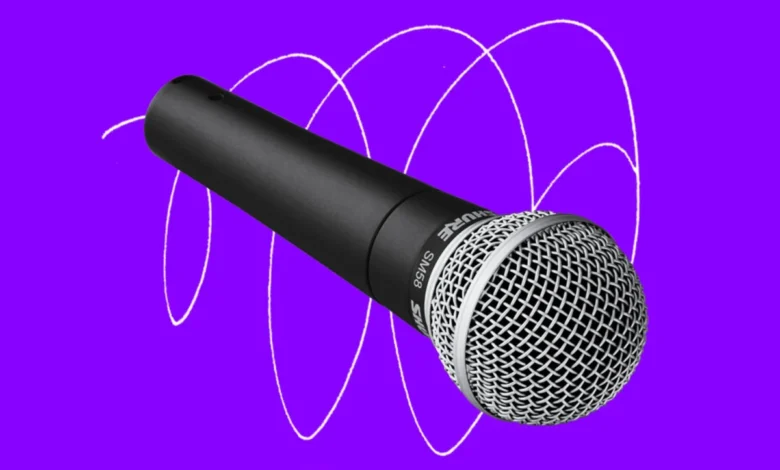
By the 1960s, the introduction of durable dynamic microphones, such as the Shure SM58, transformed the landscape of live performance. These rugged devices, capable of withstanding high sound pressure levels (SPL) and the rigors of touring, became the industry standard for live vocals. Today, the modern studio is often a hybrid space, utilizing high-end condenser mics for precise vocal tracking and robust dynamic mics for podcasting and high-gain recording.
Categorization by Economic Investment
Industry experts categorize microphones into four primary tiers based on their retail price, which often correlates with the quality of components, the precision of the manufacturing process, and the intended application.
Entry-Level Systems (Under $100)
At this price point, the market is dominated by workhorse dynamic microphones. The Shure SM57 and SM58 remain the most ubiquitous tools in the audio industry. Their design philosophy—focused on durability and rejection of off-axis noise—makes them essential for home studios that lack professional acoustic treatment. By minimizing the capture of room reflections, these microphones provide a cleaner signal in challenging environments. Similarly, the MXL 990 offers an affordable entry into large-diaphragm condenser technology, providing a relatively neutral frequency response that serves as a versatile starting point for vocalists and voice-over artists.
Mid-Range Solutions ($100 to $500)
This bracket represents the "sweet spot" for serious content creators. The AKG P220 and the Equitek CAD E100Sx provide higher sensitivity and a more refined "sparkle" in the high-frequency range, appealing to users who require more air and detail in their recordings. In this range, specialized microphones like the Shure SM7B have gained cultural significance. Originally designed for broadcast, the SM7B features advanced internal shock isolation and a tailored frequency response that is particularly effective at smoothing out harsh sibilance, making it a staple for hip-hop vocalists and professional podcasters alike.
Professional and High-End Hardware ($500 to $1,500)
When budgets exceed $500, the focus shifts toward specialized engineering and superior signal-to-noise ratios. The Telefunken TF11 combines the classic "Austrian" sonic character with modern FET technology, providing a crisp, fast transient response. The AKG C414 XLII is widely regarded as a mandatory fixture in professional mic lockers; its nine switchable polar patterns offer unprecedented flexibility, allowing an engineer to adapt to almost any recording scenario, from solo vocals to ensemble performances. The Neumann TLM 103, meanwhile, serves as a high-fidelity, transformer-less standard that prioritizes low self-noise, ensuring that vocals cut through dense digital mixes with minimal processing.
Elite Tier (Above $1,500)
For top-tier recording studios, the Neumann U87 remains the global benchmark. Since its introduction, it has maintained its status as the most recorded vocal microphone in history. Its reputation for "linearity with character" ensures that it faithfully captures the nuances of a performance while imparting a desirable sonic warmth. At the absolute peak of the market, the Neumann M49 V reissue represents the pinnacle of tube-microphone engineering. By utilizing a continuously variable directional pattern and vacuum tube circuitry, these devices offer a level of harmonic richness that is largely unattainable through digital modeling or entry-level hardware.
Technical Considerations for Vocalists
Selecting a microphone requires an objective assessment of the recording environment. Engineers often differentiate between microphones based on their transducer type:
- Dynamic Microphones: Best suited for high-volume sources and acoustically untreated rooms. Their lower sensitivity prevents the capture of background noise, such as air conditioning hum or street traffic.
- Condenser Microphones: Require phantom power and are highly sensitive to delicate acoustic nuances. They are the preferred choice for controlled, sound-treated studio environments where capturing the "air" and detail of a voice is paramount.
- Ribbon Microphones: These are specialized tools that offer a vintage, smooth sound. Due to their fragile internal ribbons, they require careful handling and are generally reserved for professional studio environments.
Industry Trends and Future Implications
The integration of professional-grade audio software, such as the recent collaboration between Splice and Pro Tools, underscores a broader trend: the digitization of the signal chain. As software becomes more adept at simulating vintage studio environments, the physical microphone remains the critical "first point of contact" in the signal chain.
Market analysis indicates that the rise of high-quality, budget-friendly hardware has lowered the barrier to entry for independent artists. However, data suggests that while processing power is effectively democratized, the physical microphone remains a bottleneck. A high-quality signal captured through an inferior transducer cannot be fully reconstructed by software, reinforcing the industry-wide consensus that hardware investment remains the most impactful decision a producer can make.
Strategic Selection Criteria
To determine the optimal microphone, potential users should evaluate their specific operational needs:
- Environment: If the recording space has significant echoes or external noise, a dynamic microphone is statistically more likely to yield a usable result.
- Voice Profile: For vocalists with naturally bright or harsh timbres, microphones with a flatter or darker frequency response are generally preferred to avoid an overly "brittle" sound.
- Versatility: For singer-songwriters who intend to use the same microphone for both voice and acoustic instruments, a multi-pattern condenser microphone offers the greatest return on investment.
- Integration: Consideration must be given to the preamp and interface compatibility. High-end ribbon and some dynamic microphones require significant clean gain, necessitating a high-quality external preamp to avoid adding noise to the signal.
As audio technology continues to advance, the distinction between "studio-grade" and "home-grade" gear continues to blur. While the Neumann M49 V or the U87 remain the standard-bearers for professional fidelity, the accessibility of reliable, mid-tier equipment ensures that the quality of recorded vocals is now higher than at any point in history. Ultimately, the best microphone is one that minimizes the distance between the artist’s intent and the final recorded output, serving as a transparent bridge in the creative process.
Related posts: