The Making of a Monster Anthem: How Beastie Boys Created (You Gotta) Fight For Your Right (To Party!)

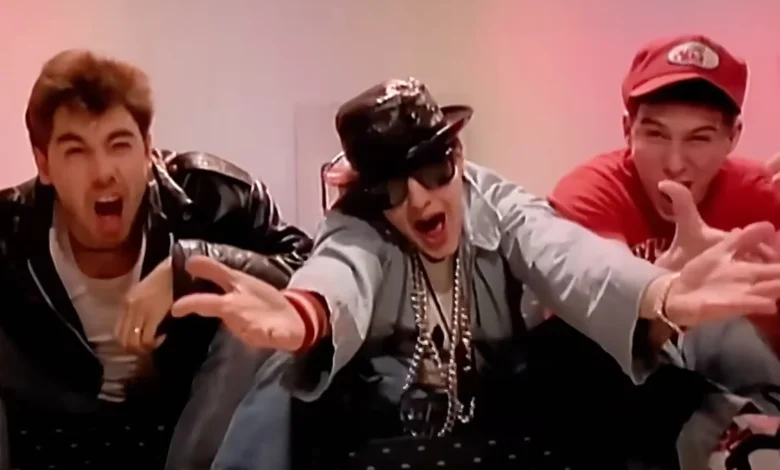
Released during the holiday season in December 1986, (You Gotta) Fight For Your Right (To Party!) permanently altered the trajectory of modern popular music, transforming from a quick studio experiment into the definitive signature anthem of the Beastie Boys. As the fourth single issued from the trio’s groundbreaking debut studio album, Licensed To Ill, the track eventually climbed to No. 7 on the US Billboard Hot 100 chart in March 1987. It stands in music history as the group’s highest-charting single and their only appearance in the coveted top 10 of the chart. Beyond its commercial success, the track served as a bridge connecting traditional hip-hop with the raw aggression of heavy metal and punk rock, fostering an attitude of teenage anarchy that resonated globally. However, the track’s history is far more nuanced than its mainstream reputation suggests, rooted in a satirical critique of hedonistic youth culture that was frequently misinterpreted by the very audiences who embraced it.
Origins and Songwriting Genesis
The conceptual foundations of Fight For Your Right trace back to Brooklyn, New York, emerging from a project spearheaded by founding rapper Adam “MCA” Yauch alongside his friend Tom “Tommy Triphammer” Cushman, who later made a cameo appearance in the accompanying music video. The initial lyrical direction was conceived as a satirical commentary on the rampant party culture of the mid-1980s, specifically mocking the glorified hedonism and excess frequently broadcast by MTV and mainstream media outlets.
The recording process itself was remarkably rapid. Reflecting on the song’s creation in a hotel room, rapper Michael “Mike D” Diamond recalled that the track was written in approximately five minutes. Working alongside producer Rick Rubin inside the Michael Todd Room at the Palladium, the trio fueled their session with vodka and grapefruit juice. Determined to accomplish their writing goals, they scribbled the lyrics onto paper napkins spread across decorative tables, setting a frantic pace that would define the raw energy of their early material.
Rick Rubin, Heavy Metal, and the Slayer Connection
The fusion of rap verses with heavy rock instrumentation was heavily orchestrated by producer Rick Rubin. Fresh off his monumental success co-producing Run-DMC’s collaborative version of Aerosmith’s Walk This Way in 1986, Rubin recognized the vast commercial and cultural potential of blending hip-hop beats with hard-rock guitar riffs. This philosophy influenced the entirety of Licensed To Ill, an album that prominently featured unauthorized and authorized samples from legendary rock acts including Black Sabbath, Led Zeppelin, AC/DC, and The Clash.
To achieve an authentic heavy metal sound on the record, Rubin enlisted members of the thrash metal band Slayer, who were recording in a nearby studio down the hall. Rubin initially approached Slayer guitarist Jeff Hanneman to perform the guitar leads, but the request was turned down because it did not align with Hanneman’s artistic identity. Rubin then turned to Slayer’s other guitarist, Kerry King, who agreed to participate largely for financial reasons.
In subsequent interviews, King noted the stark contrast between the two scenes recording under the same roof. He recalled receiving a modest fee of $200 for his studio contribution, remarking that a struggling touring musician could easily find use for the money. Approaching the session, King recognized that the Beastie Boys’ track was fundamentally a parody of the heavy metal genre. Rather than attempting to craft a traditional, virtuosic heavy metal solo, King deliberately constructed a tongue-in-cheek lead part that parodied both his own style and the broader conventions of the metal community. Despite the satirical nature of the collaboration, King ultimately participated because he correctly anticipated that the mainstream exposure would prove beneficial for Slayer’s career.
Musical Composition and Studio Execution
Musically, Fight For Your Right was built on a foundation of straightforward, heavy-hitting rock instrumentation. The rhythm guitars were tuned a half-step down, relying heavily on basic, driving power chords played across the third and fifth frets to establish a heavy, menacing groove underneath the vocal delivery.
Kerry King’s eventual guitar solo diverged significantly from the hyper-speed, frenetic thrash solos that defined his work with Slayer. Instead, the solo adopted a more restrained, blues-inspired melodic approach. However, King injected his unmistakable signature style into the recording by utilizing an extreme whammy-bar dive-bomb on the opening two notes of the solo—a stylistic trademark that immediately linked the track to the cutting edge of 1980s extreme metal.
The Irony of Mass Appeal and Fan Misinterpretation
Despite the tongue-in-cheek intentions of the Beastie Boys—consisting of Mike D, MCA, and Adam “Ad-Rock” Horovitz—the song was frequently misinterpreted by its target demographic. As the track gained heavy rotation on radio stations and MTV, it was eagerly adopted by college fraternities and high school party circuits as an unironic anthem celebrating reckless teenage behavior.
By 1987, the members of the group expressed public discomfort regarding how the song had been co-opted by the exact subcultures they intended to mock. Mike D candidly addressed the phenomenon in interviews, explaining that the group’s personal values were entirely opposed to the frat-boy ethos the song came to represent. He admitted that it was disheartening to see audiences singing along with complete obliviousness to the underlying satire, proving that irony is frequently lost on mass commercial audiences.
A Cinematic Milestone: The Music Video
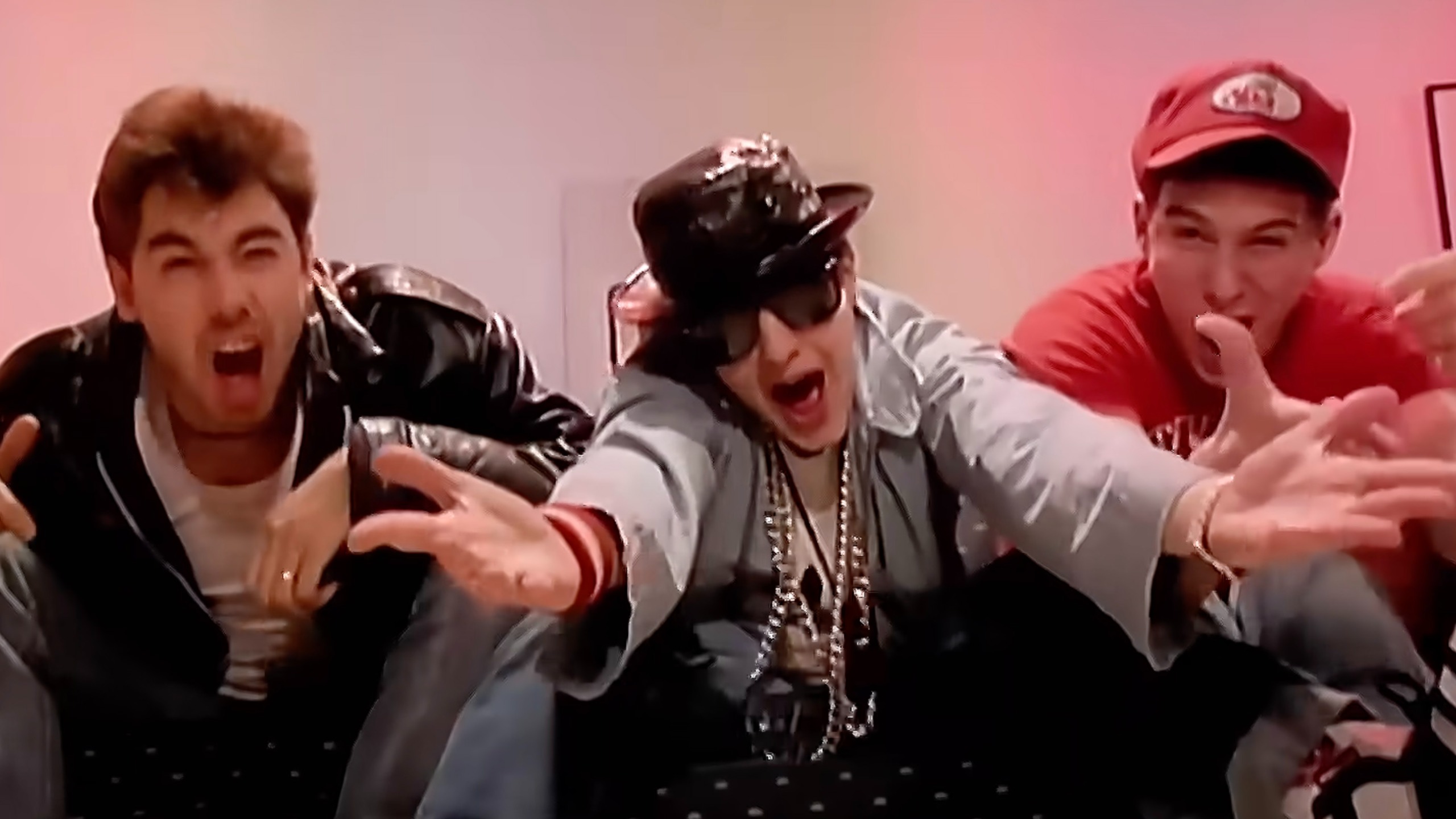
The cultural longevity of Fight For Your Right is inextricably linked to its iconic music video, directed by Ric Menello and Adam Dubin. The visual narrative establishes a classic suburban sitcom trope: a mother and father depart their home, sternly warning their two well-dressed sons to avoid trouble and refrain from making a mess while they are away.
Promptly after their parents leave, the brothers decide to host a party, inviting friends over for "soda and pie" with the earnest hope that "no bad people show up." Chaos ensues when the three members of the Beastie Boys forcefully kick the front door in, dragging a collection of rowdy, unconventional partygoers into the pristine suburban home. The ensuing sequence features slapstick violence, indoor skateboarding, smashed household objects, and an escalating food fight. The video concludes with the mother returning home to find the house completely destroyed and taking a direct pie to the face.
Featuring a cameo appearance by Tabitha Soren—who would later achieve prominence as an accomplished MTV and broadcast journalist—the video production relied on resourceful budgeting. Soren revealed in retrospective interviews that the whipped cream utilized for the massive pie-fight sequences was gathered from supermarket waste dumpsters to cut production costs. As a result, the ambient smell inside the enclosed set filled with rotting, discarded dairy products resembled rotten eggs, creating a thoroughly unpleasant olfactory environment for the cast and crew.
Legacy and Enduring Cultural Impact
Decades after its initial release during the 1986 holiday shopping season, (You Gotta) Fight For Your Right (To Party!) remains a towering achievement in the evolution of popular music. By dismantling the rigid genre boundaries that separated hip-hop from rock and roll, the Beastie Boys—alongside producer Rick Rubin—paved the way for the alternative rock and rap-rock explosions of the 1990s and 2000s.
The song’s cultural footprint is further evidenced by a long list of high-profile cover versions and reinterpretations by diverse artists spanning multiple musical genres, including Mötley Crüe, Coldplay, N.Y.C.C., and Cara Quici. While the artists themselves initially chafed at the song’s misinterpretation by mainstream audiences, history has cemented the track as the definitive 1980s ode to teenage rebellion, youthful defiance, and anti-authoritarian anarchy.