Native Instruments Unveils Super*Saw Synthesizer in Collaboration with PC Music Founder A.G. Cook

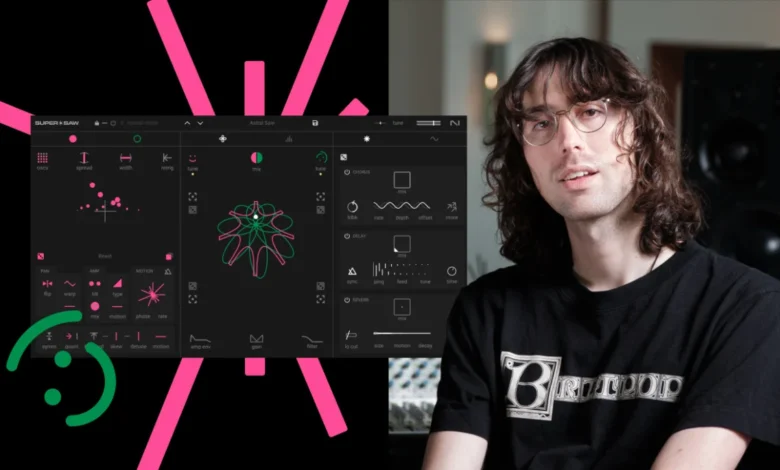
The electronic music and sound design landscape has long been defined by a select few instantly recognizable timbres, chief among them the stacked sawtooth wave. Emerging from the digital and virtual analog synthesis revolution of the 1990s, the "supersaw" quickly became the foundational sonic element for euphoric pop anthems, underground rave culture, and dense, wall-of-sound club productions. Continuing this lineage, Native Instruments has officially introduced Super*Saw—phonetically pronounced "SuperStarSaw"—a brand-new software synthesizer co-designed and engineered alongside visionary producer, artist, and PC Music founder A.G. Cook.
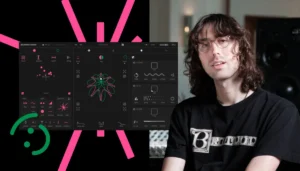
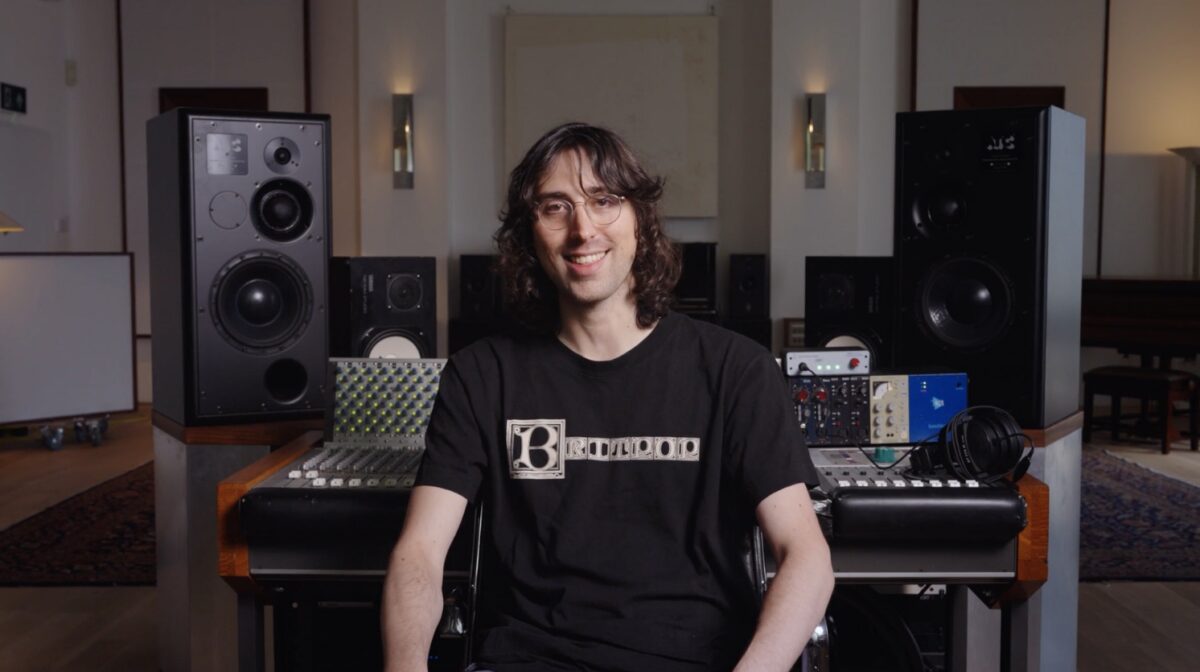
To mark the global commercial release, Native Instruments convened with Cook at the historic Baltic Studios in London. The resulting discussions yielded deep insights into Cook’s idiosyncratic production philosophy, his ongoing push to find the absolute boundaries of digital instruments, and the technical engineering behind Super*Saw, an instrument built specifically to condense complex, multi-layered stacking workflows into a single, highly expressive interface.
Main Facts and Instrument Architecture
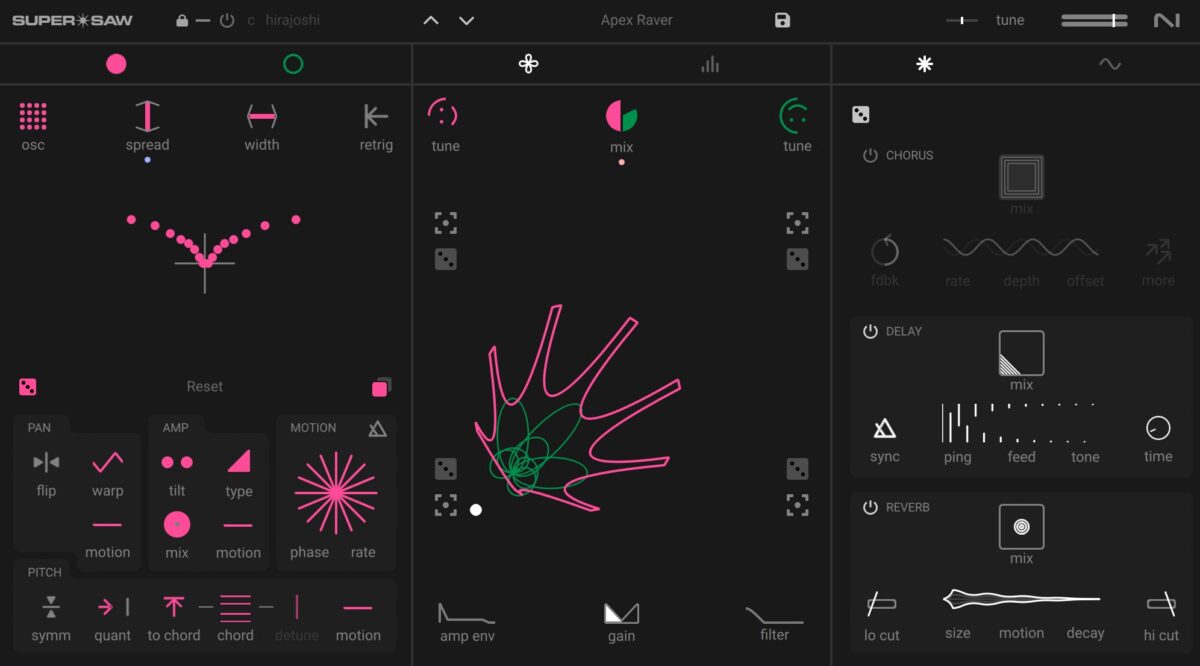
Super*Saw is built around a singular, uncompromising constraint: a dual 8-voice sawtooth oscillator system. Rather than attempting to be an all-encompassing workstation synthesizer, the instrument confines its architecture strictly to sawtooth waves, forcing both novice and professional producers to explore the maximum creative potential of wave-stacking, detuning, and spatial modulation.
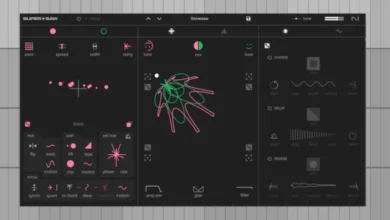
The plugin’s user interface is divided into two distinct, color-coded visual and sonic layers: pink and green. This dual-system approach allows producers to assign disparate behaviors to each layer, operating similarly to a rhythmic or harmonic duo. While one layer can be tuned to provide a grounded, low-end fundamental bassline, the other can be modulated to execute erratic, wide-spreading chord progressions or razor-sharp lead lines.
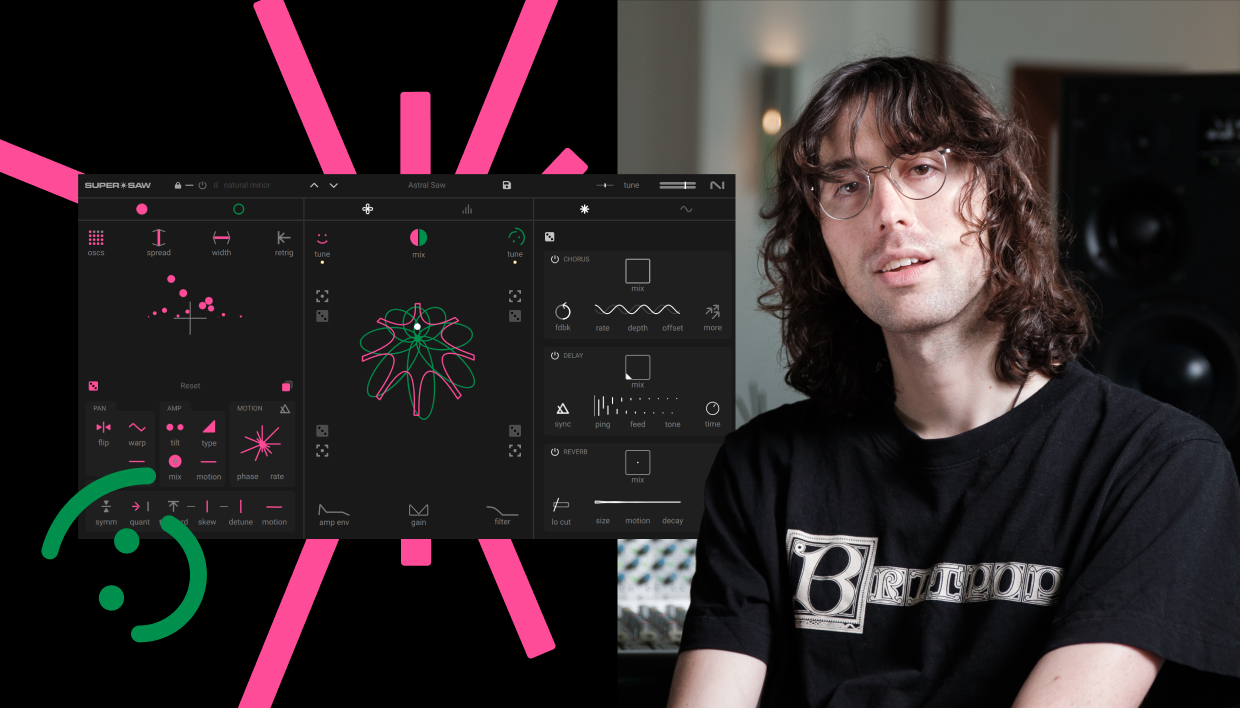
Furthermore, Super*Saw incorporates a 4-corner Morpher, a real-time performance tool designed to eliminate the need for static automation lanes within Digital Audio Workstations (DAWs). By manipulating the Morpher, users can fluidly transition between distinct chord shapes, varied detune rates, and complex modulation states on the fly. Additional features include a star-shaped modulator that can be dynamically mapped to panning, amplitude, or pitch, alongside a randomization function designed to spark unexpected sound design paths during active sessions.
Chronology and Development Background
The conceptual origins of SuperSaw stretch back across A.G. Cook’s decade-long career of boundary-pushing electronic and pop production. As a central figure in modern electronic music—best known for his founding role in the influential PC Music label, extensive collaborative output with superstar Charli XCX, and acclaimed solo projects such as 7G, Apple, and the record Britpop*—Cook frequently utilized stacked supersaw waves to achieve his signature hyper-digital aesthetic.
However, prior to the development of this dedicated hardware-software crossover, achieving these massive, morphing textures required exhaustive technical workarounds. In standard studio sessions, producers aiming for Cook’s signature sound were forced to duplicate tracks across a DAW, manually write meticulous automation for fine-tuning, and layer multiple disparate plugins to achieve movement and harmonic depth.
Reflecting on the tedious nature of past sessions, Cook pointed to tracks like "Stargon," where the creation of a single evolving chord progression required wrestling with competing plugin architectures and misaligned detune functions. According to Cook, the process often felt mechanical and tedious rather than musical or interactive. The conceptualization of Super*Saw began as a back-burner ambition to codify these complex workflows into a unified, dedicated instrument, culminating in a collaborative development cycle with Native Instruments that bridges the technical gap between 1990s virtual analog nostalgia and modern software flexibility.
Supporting Data and Production Methodology
The mathematical and acoustic properties of the sawtooth wave make it uniquely suited for the kind of aggressive experimentation championed by Cook. A single, raw sawtooth wave is inherently bright, harmonically rich, and sharp due to its inclusion of both even and odd harmonics. When multiple voices of these waves are stacked and detuned against one another, phase cancellations and constructive interferences create a massive, wide frequency spectrum.
In Cook’s discography, this technique is pushed to physical and sonic extremes. On his track "Superstar," arrangements famously pivot from intimate, delicate piano balladry into towering, heavily detuned supersaw layers. Similarly, on his expansive collection 7G, tracks like "Mad Max" push stacked saw waves past the threshold of traditional harmony.
"The supersaws get so thick that they’re essentially percussion," Cook explained during his interview at Baltic Studios. "At that point, it stops even being audible as a chord, and you just hear it as a block of sound."
By encapsulating this methodology into Super*Saw, Native Instruments has digitized a specific subset of modern sound design history. The inclusion of instant layer duplication, independent voice scaling, and one-click randomization tools (represented visually by a digital die) democratizes a workflow that previously required advanced routing knowledge.
Broader Impact and Industry Implications
The release of Super*Saw arrives at a time when software instrument manufacturers are increasingly moving away from sprawling, catch-all romplers and toward hyper-focused, ideologically driven plugins. By narrowing the creative scope entirely to the sawtooth wave, Native Instruments and A.G. Cook have produced an instrument that prioritizes immediate tactile engagement over endless preset browsing.
For the broader music production community, Super*Saw represents an official institutional nod to the hyperpop and internet-incubated electronic genres that have steadily bled into mainstream commercial pop, hip-hop, and club music over the past ten years. What was once viewed as an abrasive, underground subversion of 90s trance aesthetics has now been codified into a standardized professional production tool.
For Cook, the plugin serves as a definitive artistic milestone. Describing the project not merely as a utility, but as an extension of his broader catalog, he notes that the instrument functions as a coda or epilogue to his previous solo albums. Rather than releasing a static sample pack of his established sound design presets, creating an interactive instrument allows a new generation of producers to inherit, dismantle, and rebuild the sonic architecture of the 1990s virtual analog revival.
Super*Saw is available now through the official Native Instruments distribution network, marking a new chapter in the evolution of digital sound design and the enduring legacy of the supersaw wave.
Related posts: