Image-Line Releases FL Studio 2026 Featuring Redesigned FLEX Plugin and Integrated Cloud Backup Solutions

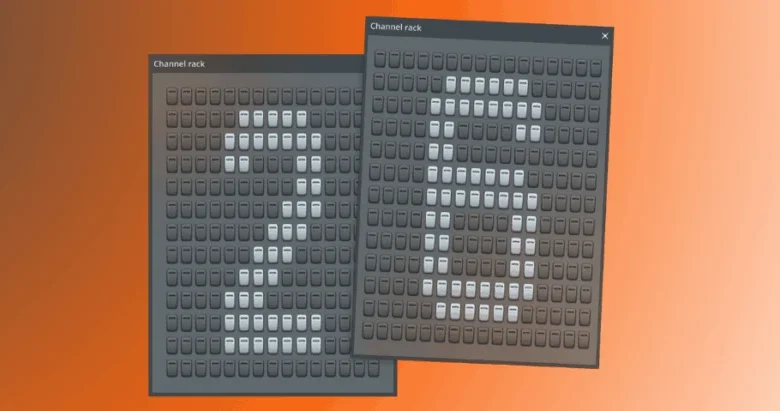
The Belgian software developer Image-Line has officially launched FL Studio 2026, marking the latest milestone in the evolution of one of the world’s most popular digital audio workstations. Released on July 8, 2026, this update is provided at no additional cost to existing license holders, adhering to the company’s landmark "Lifetime Free Updates" policy—a business model that has defined the software’s relationship with its user base for over a quarter of a century. The 2026 edition represents a strategic shift for the platform, moving beyond simple feature additions to focus on deep-level workflow optimizations, cloud-integrated security, and a complete overhaul of its internal instrument architecture.

The Strategic Evolution of FL Studio
Since its inception as FruityLoops in the late 1990s, FL Studio has transformed from a basic MIDI step sequencer into a comprehensive production suite favored by industry leaders in hip-hop, EDM, and pop music. The 2026 release arrives at a time when the digital audio workstation (DAW) market is increasingly competitive, with rivals such as Ableton Live, Logic Pro, and Bitwig Studio frequently updating their feature sets to include artificial intelligence and cloud-based collaboration.
Image-Line’s response in the 2026 version is multifaceted. Rather than chasing purely generative AI features that have sparked controversy in creative circles, the company has focused on "workflow intelligence." This is most evident in the expansion of Gopher, the built-in workflow assistant, and the integration of FL Cloud Project Backup. These tools are designed to mitigate the technical friction that often interrupts the creative process, such as session management, complex routing, and file redundancy.

Integrated Security: FL Cloud Project Backup
One of the most significant additions to FL Studio 2026 is the introduction of an integrated, encrypted project backup system powered by FL Cloud. This feature addresses a long-standing pain point for digital producers: the risk of data loss due to hardware failure, file corruption, or accidental overwriting.
The system allows users to automate the backup process, syncing their project files to the cloud every time a save command is executed. To address modern privacy concerns, Image-Line has clarified that these backups are fully encrypted and private. Crucially, the company has stated that user project data stored in FL Cloud is not utilized to train machine learning or artificial intelligence models, a move that distinguishes it from several other tech firms currently facing scrutiny over data usage.

The storage capacity for this service is structured across the existing FL Cloud subscription tiers:
- Free Tier: 500 MB of encrypted storage.
- Plus Tier: 5 GB of encrypted storage.
- Pro Tier: 1 TB of encrypted storage.
By embedding this functionality directly into the DAW’s save architecture, Image-Line provides a seamless safety net that eliminates the need for third-party cloud services like Dropbox or Google Drive, which often require manual file management and lack DAW-specific versioning tools.

Gopher: Enhancing Workflow Through Action-Oriented Assistance
The 2026 update significantly expands the capabilities of Gopher, the platform’s internal assistant. While earlier iterations of Gopher acted primarily as a help desk or search tool, the new version can execute complex "In-Project Actions." This allows producers to use natural language or simplified commands to perform tedious administrative tasks.
According to technical specifications released by Image-Line, Gopher can now:

- Organize and color-code tracks within the playlist.
- Automatically route multiple mixer channels to buses.
- Adjust plugin parameters and set initial gain stages.
- Generate content within the Piano Roll based on user-defined scales.
- Highlight specific parts of the user interface to guide new users through complex workflows.
This development places FL Studio in direct competition with the "Extensions" recently introduced in Ableton Live. However, Image-Line’s approach emphasizes navigation and session "hygiene" over pure MIDI generation, aiming to help producers spend less time on technical setup and more time on actual composition.
Rebuilding the FLEX Instrument Architecture
FLEX, the preset-based synthesizer introduced in 2019, has received its first major redesign in the 2026 release. FLEX was originally designed to provide high-quality sounds with minimal CPU overhead, becoming a staple for producers who require immediate access to production-ready patches.

The 2026 redesign introduces a more robust browser system, allowing for universal searches across all installed packs. Users can now filter sounds by genre, timbre, and mood, significantly reducing the time spent scrolling through libraries. Furthermore, the internal engine of FLEX has been optimized to improve performance on modern multi-core processors.
To coincide with this architectural update, Image-Line has released the "Core Series," a collection of eight free sound packs available to all users. These packs are intended to showcase the new engine’s capabilities, offering improved fidelity and lower latency during live performance and recording sessions.

New Tools for Sound Design: Transmitter and Audio Logger
For advanced sound designers, FL Studio 2026 introduces "Transmitter," a plugin included in the All Plugins Edition. Transmitter utilizes a transient-sustain decomposition algorithm, allowing users to split an incoming audio signal into its percussive (transient) and tonal (sustain) components.
This capability is highly valued in modern mixing and sound design. For example, a producer can apply heavy distortion to the sustain of a bass guitar while keeping the initial "pluck" or transient clean and punchy. Similarly, it allows for surgical EQing of drum hits, where the "snap" of a snare can be processed independently of its ringing tail.

Another practical addition is the "Audio Logger." This utility constantly monitors the master output, maintaining a rolling 60-second buffer of audio. If a producer happens to play a sequence or stumble upon a unique sound during a jam session without having pressed "record," they can use the Audio Logger to retrieve that audio and drag it directly into the playlist. This "retroactive recording" for audio mirrors the DAW’s existing "dump score to piano roll" feature for MIDI.
Chronology of FL Studio Development (2024–2026)
The release of version 2026 follows a period of rapid iteration for Image-Line. The timeline below illustrates the progression leading to the current release:

- Late 2024: Introduction of the initial FL Cloud services, focusing on royalty-free samples and mastering tools.
- Early 2025: Version 24 updates focused on "Stem Separation," utilizing AI to split mixed tracks into vocals, drums, and instruments.
- Late 2025: The "Workflow Update" introduced enhanced MIDI tools and the first iteration of the Gopher assistant.
- July 8, 2026: Official launch of FL Studio 2026, integrating cloud security and the FLEX overhaul.
Industry Implications and Market Analysis
The release of FL Studio 2026 reinforces Image-Line’s position as a consumer-friendly alternative in an industry increasingly dominated by subscription-only models. While companies like Avid (Pro Tools) and Waves have faced backlash for moving toward mandatory subscriptions, Image-Line continues to leverage its "Lifetime Free Updates" as its primary marketing strength.
Industry analysts suggest that the integration of FL Cloud Project Backup is a strategic move to increase the "stickiness" of the platform. By providing a secure, integrated ecosystem for project files, Image-Line makes it more difficult for users to migrate to other DAWs, as their entire project history becomes hosted within the FL Studio environment.

Furthermore, the focus on transient splitting and CPU optimization suggests that Image-Line is paying closer attention to the professional mixing market. While FL Studio has historically been viewed as a "composition-first" tool, the 2026 features provide the surgical precision required for high-end post-production and professional engineering.
Conclusion and Availability
FL Studio 2026 is available for download immediately via the Image-Line website. As per the company’s policy, the update is free for all existing customers. New users can choose from several editions, ranging from the entry-level Fruity Edition to the comprehensive All Plugins Edition.

By balancing the needs of its core demographic—bedroom producers and electronic musicians—with the requirements of professional engineers, Image-Line has delivered an update that is both innovative and practical. The 2026 release does not attempt to reinvent the DAW; instead, it refines the existing experience, ensuring that FL Studio remains a central fixture in the global music production landscape for the foreseeable future. With its emphasis on data security, workflow automation, and sound design precision, FL Studio 2026 sets a high bar for what a modern, user-centric DAW update should look like.
Related posts: