The Legacy of Terror: Don Bluth and the Art of Animation Trauma Forty Years After An American Tail

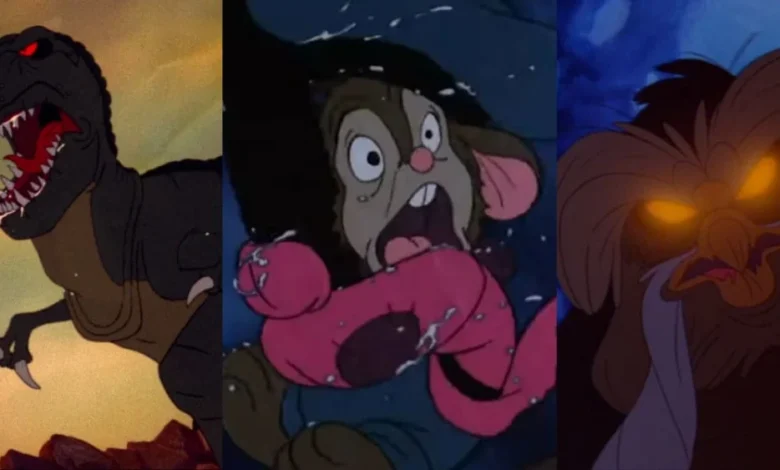
November 21, 2026, marks the 40th anniversary of the theatrical release of Don Bluth’s An American Tail, a milestone that invites a retrospective examination of the director’s distinct impact on the animation landscape. Throughout the 1980s and 1990s, Bluth distinguished himself from his contemporaries at Disney by injecting his features with a signature blend of hand-drawn technical mastery and a willingness to confront audiences with visceral, often unsettling, imagery. While modern animation studios often prioritize a cohesive emotional arc, Bluth’s work frequently employed abrupt tonal shifts, using darkness and peril to heighten the impact of his protagonists’ eventual triumphs.
The Architect of Animation Dissent
The origins of Bluth’s unique stylistic trajectory can be traced to his departure from Walt Disney Productions. During the 1970s, Bluth served as a key animator on features such as Robin Hood (1973) and The Rescuers (1977), and directed the acclaimed short The Small One (1978). However, by 1979, Bluth and a contingent of like-minded animators—including Gary Goldman and John Pomeroy—grew disillusioned with the studio’s creative direction, which they perceived as becoming stagnant.
In September 1979, the group staged a high-profile walkout, effectively signaling a shift in the industry’s power dynamic. They established Don Bluth Productions, a studio committed to a "return to excellence" characterized by the lush, labor-intensive hand-drawn techniques reminiscent of the Golden Age of animation. Their early experiments, such as Banjo the Woodpile Cat (1979), established a baseline for their visual language: high-contrast lighting, complex character expressions, and a persistent, underlying threat of danger that would define the studio’s output for decades.
The Secret of NIMH and the Spielberg Partnership
Bluth’s feature-length debut, The Secret of NIMH (1982), stands as a definitive case study in his artistic philosophy. The film utilized sophisticated painted backgrounds and a score by Jerry Goldsmith to create a dark, atmospheric fantasy world. Unlike the more sanitized narratives common in family entertainment of the era, NIMH featured sequences of medical experimentation, psychological torment, and existential dread.
Despite its critical acclaim, the film faced significant commercial headwinds, ultimately being overshadowed at the box office by Steven Spielberg’s E.T. the Extra-Terrestrial. Recognizing the technical brilliance of Bluth’s work, Spielberg facilitated a partnership that would define the mid-1980s. Encouraging Bluth to marry his visual artistry with broader commercial appeal, Spielberg produced An American Tail, which premiered on November 21, 1986. The film was a resounding success, outperforming Disney’s The Great Mouse Detective that same year and securing its place as a classic of the era.
Historical Context and the Pogroms
An American Tail is notable not only for its technical execution but for its willingness to integrate historical tragedy into its narrative framework. The film’s opening sequence, depicting a raid on a Russian-Jewish village, draws direct inspiration from the pogroms of 1881. By depicting these events—including the displacement of families and the systemic violence following the assassination of Tsar Alexander II—Bluth introduced younger audiences to the harsh realities of historical trauma. This approach would later reappear in Anastasia (1997), where the fall of the Romanov dynasty served as the backdrop for a story involving supernatural elements and political unrest.
The Conflict of Creative Vision
As the partnership between Bluth and his financiers evolved, so did the friction regarding content. The production of The Land Before Time (1988) serves as the most prominent example of this creative tension. Executive producers George Lucas and Steven Spielberg insisted on the removal of over ten minutes of footage, primarily involving the "Sharptooth" predator, fearing that the intensity of the scenes would alienate families and lead to negative reception.
The loss of this footage—much of which was fully animated—remains a point of contention among animation historians. The disagreement eventually led to the dissolution of the collaboration. The irony of the situation is often noted: Spielberg would go on to direct Jurassic Park (1993), a film that utilized similar prehistoric threats for a wider audience, while Bluth continued to explore the limits of PG-rated intensity.
Tonal Instability as a Narrative Device
Throughout the 1990s, Bluth’s films—including All Dogs Go to Heaven (1989), Rock-A-Doodle (1991), and Thumbelina (1994)—often struggled to balance his inclination toward the macabre with the demands of a family-friendly market. Rock-A-Doodle is frequently cited for its "dream logic" and erratic tonal shifts, where musical numbers are punctuated by sudden, violent outbursts.
Analysis of these films suggests that Bluth’s commitment to "full animation"—the practice of drawing every frame to ensure fluidity—often created a sense of reality that made the disturbing moments more impactful. When a character in a Bluth film faces a threat, the animation quality ensures that the danger feels tactile and immediate. This stands in stark contrast to the more stylistic, simplified animation movements that would gain popularity in the later decades of the 20th century.
Broader Implications and Legacy
The legacy of Don Bluth’s filmography is marked by a divergence from the standard "happily ever after" formula. His films operate on the principle that the journey to safety must be earned through the navigation of genuine, often terrifying, obstacles. As Bluth himself famously noted, the "salvation moment" is only as sweet as the threat that preceded it.
This philosophy has left an indelible mark on the generation of viewers who grew up in the 1980s and 1990s. While modern studios have largely moved toward a more controlled and predictable emotional spectrum, Bluth’s films continue to be studied for their refusal to shield audiences from the darker aspects of storytelling.
Chronology of Major Features
- 1982: The Secret of NIMH – Establishes the dark, hand-drawn fantasy standard.
- 1986: An American Tail – Commercial breakthrough; introduces historical realism into animation.
- 1988: The Land Before Time – Marked by significant studio-mandated cuts to reduce the intensity of the antagonist.
- 1989: All Dogs Go to Heaven – Continues the exploration of supernatural and existential themes.
- 1997: Anastasia – A critical and financial comeback that bridged historical fiction with dark fantasy.
- 2000: Titan A.E. – A final foray into mature-themed, high-stakes science fiction.
The Enduring Impact of the "Bluthian" Style
The persistence of these films in cultural memory is a testament to the effectiveness of the director’s approach. By treating animation as a medium capable of conveying complex, often traumatic human experiences, Bluth elevated the genre. Even as his later works faced criticism for erratic pacing or disjointed narratives, the core "Bluthian" elements—the gesticulating characters, the ominous musical scores by collaborators like James Horner, and the willingness to let protagonists face authentic despair—remain influential.
As the industry continues to advance through digital animation and generative techniques, the physical, hand-drawn nature of the 1980s Bluth era serves as a benchmark for aesthetic ambition. The 40th anniversary of An American Tail is more than a nostalgic event; it is a reminder of a period in cinema where the boundaries of "family entertainment" were pushed to their absolute limits, ensuring that the stories told were as haunting as they were memorable. The debate surrounding his work—whether it was too dark for children or appropriately challenging—continues to define his status as one of the most provocative figures in the history of the medium.