The Future of Animation in the Age of Artificial Intelligence: Experts Weigh In at the Ottawa International Animation Festival

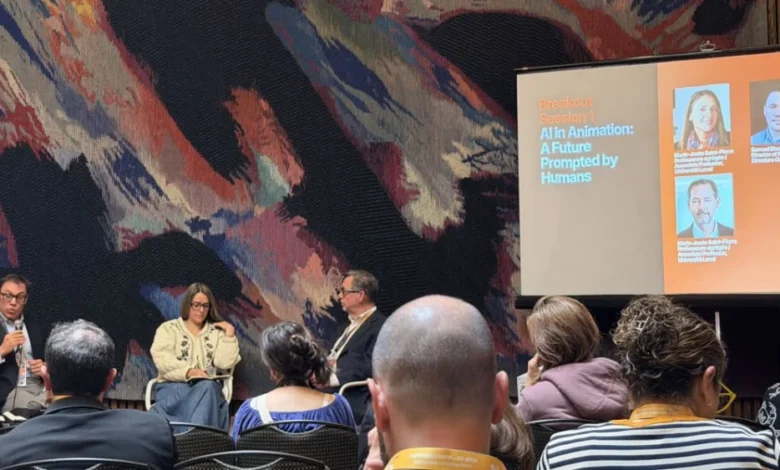
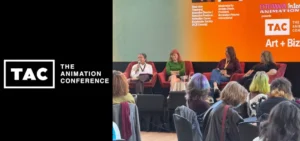
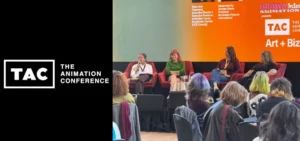
The rapid integration of generative artificial intelligence into the animation industry has sparked a profound existential debate regarding the preservation of human craft, the integrity of artistic authorship, and the sustainability of the talent pipeline. These critical concerns took center stage at the 2026 Ottawa International Animation Festival (OIAF), where industry leaders gathered for The Animation Conference (TAC) to grapple with the technological transformation currently reshaping the landscape of global media production.
Contextualizing the AI Shift in Animation
The OIAF, recognized as one of the world’s most prestigious animation events, has become a primary forum for discussing the intersection of art and technology. This year’s panel, moderated by entertainment lawyer Mark Edwards, centered on three fundamental inquiries: the fate of entry-level animation roles, the distinction between AI as a tool versus a creative substitute, and the urgent necessity for regulatory or ethical boundaries.
The urgency of these questions is underscored by the current economic climate in the entertainment industry. Following the 2023 Hollywood labor strikes, which were largely driven by concerns over AI’s role in screenwriting and performance, the animation sector has faced its own reckoning. While high-end visual effects (VFX) and feature animation have utilized machine learning for years—primarily for rotoscoping, frame interpolation, and noise reduction—the emergence of generative models capable of creating entire assets from text-based prompts has fundamentally altered the discourse.
The Erosion of the Junior Talent Pipeline
A recurring theme during the TAC discussion was the potential for AI to automate the very tasks that historically served as the training ground for junior animators. Marie-Josée Saint-Pierre, a professor at Université Laval and an acclaimed animator, emphasized that the industry’s long-term health depends on the preservation of these entry-level positions.
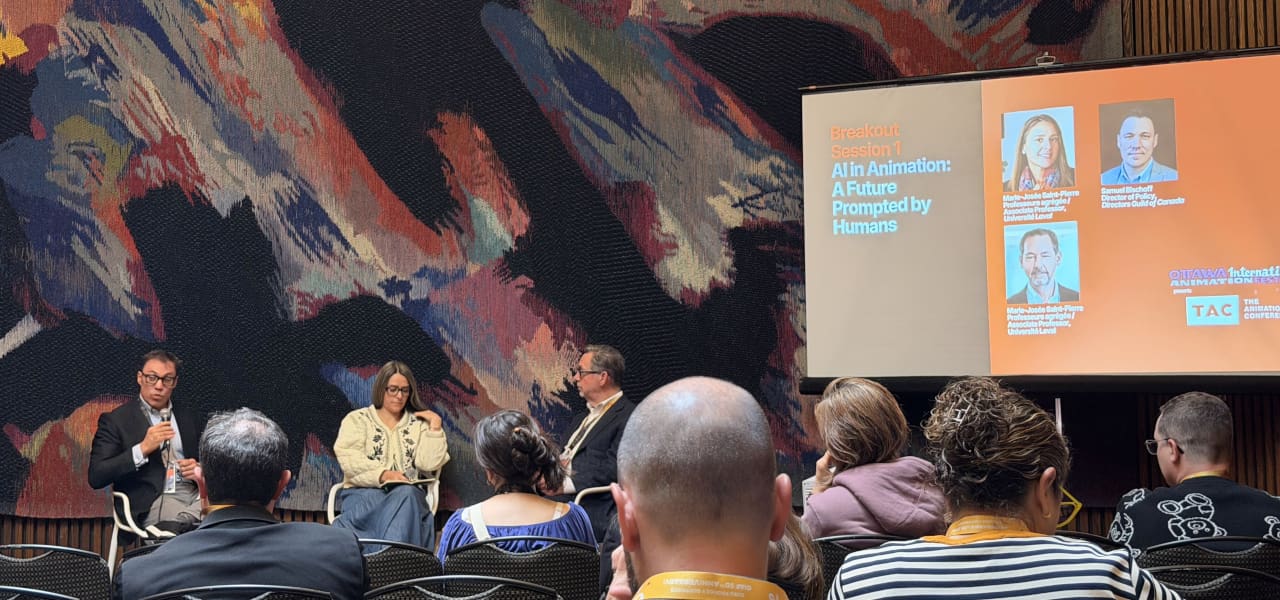
"We always need to approach the question of which AI we are using and for what purpose," Saint-Pierre noted. She argued that the "in-betweening" and clean-up tasks, often the first assignments for junior artists, are essential for developing the nuanced understanding of motion, timing, and weight required for senior-level work. If these tasks are outsourced to automated systems, the industry risks creating a "skills gap" where a generation of artists never develops the foundational expertise necessary to supervise complex productions. "If we wipe out the juniors, who is going to be our senior artist in ten years?" she asked.
Guild Perspectives and the Spectrum of Anxiety
The Directors Guild of Canada (DGC) has been at the forefront of documenting how different creative professionals are experiencing this technological disruption. Samuel Bischoff, the DGC’s policy director, highlighted a dichotomy among guild members. While some creators view AI as a threat to their livelihood, others have integrated it into their workflows for administrative efficiency or storyboarding.
"Some members respond by saying they do not feel at risk," Bischoff explained. "Others say it is existential and we need to act now." This internal tension reflects the varying impact of AI across different job categories. For instance, concept artists and illustrators are currently feeling the brunt of generative AI’s ability to produce finished images rapidly, while directors and showrunners are more concerned with the intellectual property (IP) and copyright implications of the tools.
Defining Human-Centric Artistry
A pivotal segment of the conference focused on the definition of "human-created" work. As software automates more of the production pipeline, the industry faces the challenge of maintaining transparency. The DGC suggests that the primary issue is not the use of technology itself, but the disclosure of that usage.
"Did you choose to use AI? Is that your own decision when you started using it?" Bischoff asked, framing consent and authorship as the new benchmarks for ethical production. This sentiment echoes broader industry standards currently being developed by labor unions and guild organizations, which advocate for "AI-assisted" labeling rather than "AI-generated" branding.
.png)
Saint-Pierre further refined this point by differentiating between technical automation and artistic decision-making. "Is AI helping me to execute my artistic intention? Or is it going to determine the style? Is it going to determine the animation, the movement?" she asked. According to this framework, an artist who uses software to speed up a workflow while retaining control over every creative decision remains an artist; however, an artist who allows the model to dictate the aesthetic or motion choices is effectively outsourcing their creative agency.
The "Shittification" of Large Models and the Ethical Pivot
Perhaps the most provocative insight from the panel came from Saint-Pierre, who warned of the diminishing returns associated with large-scale, proprietary AI models. She introduced the concept of the "shittification" of AI—a phenomenon where the quality of output from large, black-box models degrades over time as they become more expensive and less reliable.
Saint-Pierre advised that creators should move away from massive, generic models and toward smaller, ethically sourced datasets. By training models on material with transparent origins—material the artist has the rights to—creators can maintain a clear line of authorship. This approach, she argued, not only mitigates the risk of copyright litigation but also ensures that the resulting work retains the soul and intentionality that define human artistry.
Industry Implications and Future Outlook
The discussion at TAC highlighted that the industry is in a state of rapid flux, with no easy solutions on the horizon. Several key takeaways emerged from the panel:
- Educational Adaptation: Educational institutions must pivot to teach students how to evaluate and curate AI output rather than merely teaching them how to use specific software. Judgment and critical thinking are becoming more valuable than raw technical speed.
- Regulatory Frameworks: There is an urgent need for industry-wide standards regarding the disclosure of AI usage in finished works. Broadcasters and distributors are likely to impose their own rules, but a unified industry stance could prevent a fragmented landscape.
- The "Content" vs. "Art" Distinction: Bischoff’s concluding remark—"Art is not content"—serves as a rallying cry for those worried about the commodification of animation. The industry must find ways to value the human experience behind the screen, distinguishing high-craft, author-driven animation from the high-volume, automated "content" produced by machines.
As the industry moves toward 2027, the challenge will be to balance the efficiency of new tools with the necessity of protecting the human conditions required for creativity. The consensus at the Ottawa festival was clear: AI is not a singular force that will simply replace animators, but rather a complex set of tools that, if left unregulated, threatens to undermine the very craftsmanship that makes animation a distinct and celebrated art form. The future of the industry will likely be defined by those who learn to harness these tools while strictly maintaining the human core of their creative intent.
Related posts: