Cartoon Brew Weekly Digest: Industry Shifts, Creative Milestones, and Global Market Challenges

The animation industry stands at a critical juncture in the autumn of 2026, balancing the profound creative output of legendary auteurs against the harsh economic realities of a contracting international market. As major players navigate the integration of generative AI and shifting distribution models, the landscape is defined by a tension between legacy craftsmanship and the necessity of rapid structural evolution.

Expert Insights into Pitching and Development
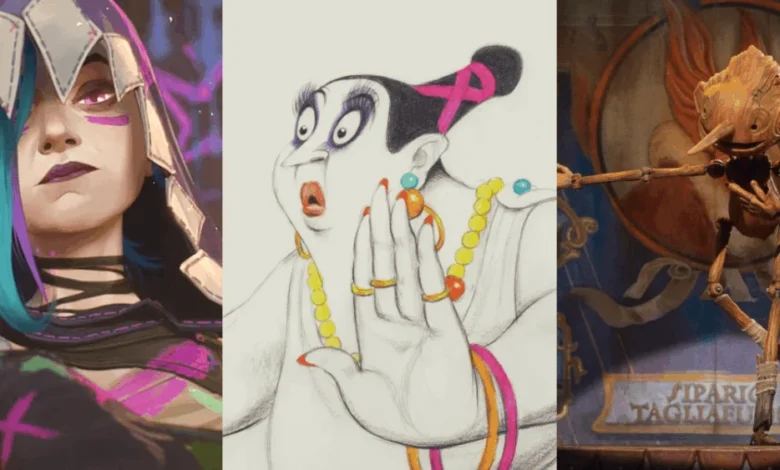
Dominique Bazay, a seasoned executive formerly of Netflix, recently provided a comprehensive masterclass on the nuances of project development. Drawing from her tenure overseeing high-profile successes such as the critically acclaimed Arcane and the beloved children’s series Hilda, Bazay emphasized that the "pitch" is not merely a presentation of a concept, but a demonstration of long-term viability and character-driven stakes.
Bazay’s analysis included a candid reflection on "the one that got away"—the Peppa Pig project—which serves as a cautionary tale regarding the unpredictability of intellectual property acquisition. Her advice to creators hinges on the importance of "structural empathy," or the ability to communicate how a narrative will sustain audience engagement over multiple seasons, rather than relying solely on the strength of a pilot episode. This guidance is particularly salient as streaming platforms continue to recalibrate their commissioning budgets, moving away from "volume over quality" strategies toward more targeted, brand-defining content.
.png)
The Legacy of Richard Williams
The animation world is currently observing the release of Lysistrata, the final project from the late animation legend Richard Williams. Following a well-received world premiere at the Annecy International Animation Film Festival earlier this summer, the film’s arrival in Los Angeles theaters this weekend marks a poignant conclusion to a career that defined the standards of traditional animation for generations.
Williams, best known for his meticulous work on Who Framed Roger Rabbit and his lifelong pursuit of the unfinished The Thief and the Cobbler, brings his signature kinetic energy and rigorous draftsmanship to Lysistrata. Industry analysts view the film not only as a creative swan song but as a benchmark for the endurance of hand-drawn techniques in an era increasingly dominated by procedural automation. The release provides a moment for the community to reflect on the transition from the "Golden Age" of celluloid to the digital frontiers of the 21st century.

Generative AI and the Future of Authorship
The discourse surrounding artificial intelligence in animation reached a new inflection point this week following comments from filmmaker Guillermo del Toro. During a recent industry panel, del Toro articulated a strong stance on the creative erosion he believes accompanies the adoption of generative AI tools. He argued that the "soul" of animation is derived from the artist’s idiosyncratic choices—the minor imperfections and deliberate stylistic deviations that occur during the iterative process.
Del Toro’s perspective echoes a broader anxiety among creative guilds and unions, which have spent the last two years negotiating the boundaries of AI-assisted labor. While proponents argue that AI can streamline expensive post-production tasks, critics like del Toro maintain that the wholesale automation of conceptual work threatens to homogenize the aesthetic diversity of the medium.

South Park’s Emmy Milestone
In a departure from the industry’s more serious debates, South Park secured its first Emmy Award in 13 years. The creative team, led by Trey Parker and Matt Stone, utilized their acceptance speech to maintain their reputation for irreverent social commentary, specifically targeting Donald Trump. The win highlights the enduring relevance of the long-running satirical series, which has evolved from a cable television disruptor to a cornerstone of adult animation. The award acknowledges the show’s ability to maintain a sharp, reactive cultural pulse, proving that even after three decades, the format remains a potent vehicle for political critique.
European Market Contraction and the French Animation Sector
Economic data released this week confirms a sobering trend in the European animation sector: French animation exports have suffered a further 30% decline. This contraction reflects the broader international volatility, characterized by reduced licensing deals, the consolidation of global streamers, and a general tightening of credit in the independent film sector.

Despite this downward trend, some firms are choosing to double down on growth. Stim, the service studio noted for its work on the ill-fated Coyote vs. Acme, has announced an ambitious expansion strategy across Europe. By pivoting toward diversified service contracts and seeking new co-production partners outside the traditional US-centric model, Stim is attempting to insulate itself from the current market stagnation. Their expansion is viewed by industry observers as a "high-stakes bet" on the resilience of European production pipelines during a period of reduced liquidity.
Global Showcases: From Brazil to Singapore
As the industry prepares for the upcoming festival circuit, the international slate is showing remarkable geographical diversity. Brazilian filmmaker Otto Guerra is set to debut his raucous road movie, Son of a Bitch, at the Ottawa International Animation Festival. The film, which explores themes of existential fatigue through a gritty, non-traditional lens, has already garnered attention for its raw visual style and refusal to conform to mainstream tropes.

Furthermore, anticipation is building for the TIFFCOM market in Tokyo. Five animated features have been highlighted as "must-see" projects for international buyers, including the Fukushima-based drama Peace Particle and the horror anthology Banquet for Hungry Ghosts. The latter, produced by the Singaporean studio behind the acclaimed The Violinist, suggests a growing appetite for mature, genre-specific animation originating from Southeast Asian markets.
Implications for the 2026-2027 Season
The convergence of these events paints a complex picture for the coming year. The decline in European exports and the caution surrounding generative AI suggest that the industry is in a period of "correction." Producers are increasingly looking to regional hubs—such as those in Singapore, Brazil, and France—to find cost-effective but creatively distinct content that can compete on a global stage.

The success of Arcane and the enduring interest in auteur-driven projects like those of Richard Williams demonstrate that audiences continue to value high-craft, high-narrative-density content. However, the commercial hurdles facing independent studios remain steep. The focus for 2027 will likely be on "smart co-production," where studios leverage international subsidies and collaborative technical teams to offset the rising costs of production.
Conclusion
As the industry moves into the final quarter of 2026, the focus remains on balancing the demands of a volatile global economy with the preservation of artistic integrity. From the masterclasses of seasoned executives to the raw, experimental output of independent directors, the animation sector continues to reinvent itself. While the technological shift toward AI presents a challenge to traditional workflows, the persistence of human-centric storytelling, as evidenced by the work of Williams and the continued impact of creators like Del Toro, ensures that the medium will continue to evolve rather than be replaced. The coming months will be decisive for those studios, like Stim, that are choosing to invest during a downturn, as their success—or failure—will likely dictate the investment landscape for the remainder of the decade.
Related posts: