Maxon Unleashes Redshift 2026.9: Advanced Real-Time Rendering, OCIO 2.5 Integration, and Extended Pipeline Support

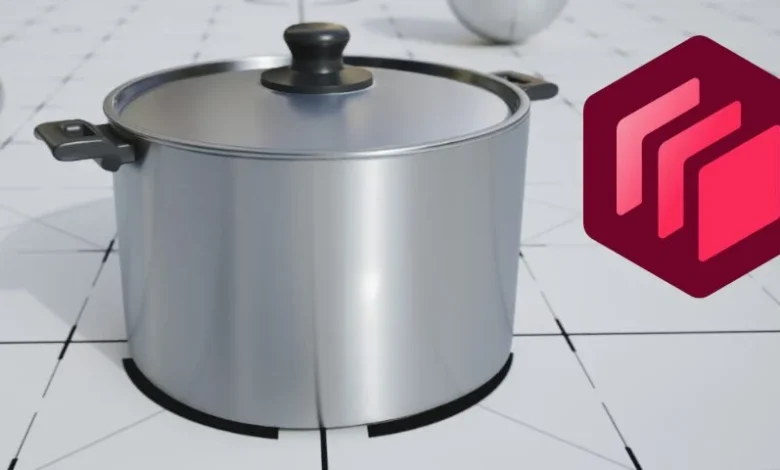
The computer graphics industry witnessed another major milestone on Thursday, September 10, 2026, as Maxon officially announced the global release of Redshift 2026.9. As the latest iteration of the company’s flagship GPU-accelerated production renderer, this update delivers critical performance upgrades, expanded industry-standard color management protocols, and enhanced interoperability across a multitude of major Digital Content Creation (DCC) suites. Aimed primarily at professionals working within visual effects (VFX), high-end motion graphics, architectural visualization, and game cinematics, Redshift 2026.9 continues Maxon’s aggressive push toward seamless, real-time feedback loops and robust pipeline integration.
Core Architecture Upgrades: Refining Redshift Live and Color Management
At the heart of the Redshift 2026.9 release are profound upgrades to its core architecture, with a particular focus on the evolution of Redshift Live. Initially introduced earlier in the year as Redshift 2026.4—which effectively replaced the legacy Redshift RT engine—Redshift Live has rapidly matured into an essential tool for artists demanding immediate visual feedback without sacrificing production-quality ray tracing.
In this latest version, Maxon has significantly enhanced Redshift Live by integrating comprehensive support for high-dynamic-range (HDR) compression and material anisotropy. The inclusion of anisotropy is a particularly welcome addition for surfacing artists and look-development specialists. Previously, previewing complex, directionally dependent reflections—such as brushed aluminum, fine-grain satin finishes, or specialized automotive paints—often required switching back to the primary bucket or progressive rendering engines. With Redshift 2026.9, artists can now accurately evaluate these intricate material properties directly within the real-time viewport, drastically reducing iteration times during client reviews and artistic exploration.
Simultaneously, the overarching renderer has been upgraded to fully support OpenColorIO 2.5 (OCIO 2.5). As color pipelines grow increasingly complex across modern film, television, and commercial workflows, adherence to established standards is paramount. OCIO 2.5 is a core component specified within the current VFX Reference Platform, ensuring that studios can maintain strict color fidelity from look-development through final compositing. By adopting this version, Maxon guarantees that lighting and surfacing artists can seamlessly plug Redshift into standardized facility pipelines without encountering color-space mismatches or conversion bottlenecks.
Expanded Plugin Capabilities and Pipeline Interoperability
Beyond core rendering enhancements, Redshift 2026.9 delivers substantial workflow improvements tailored to specific DCC applications, most notably Autodesk Maya and SideFX Houdini.
For Maya users, the update introduces sophisticated support for instances of Universal Scene Description (USD) and Alembic proxies. Furthermore, the integration now extends native support for USD proxies directly into Maya’s widely used nParticles system. This capability allows technical directors and particle artists to populate massive, data-heavy scenes with complex simulated geometry—such as debris, smoke-driven instancing, or dynamic flora—while maintaining high viewport performance and reliable render-time evaluation. By bridging the gap between heavy proxy workflows and particle systems, Maxon has streamlined the execution of large-scale environmental effects.
Concurrently, Houdini pipelines receive a vital update to ensure full compatibility with SideFX Houdini 22. Given Houdini’s dominant role in procedural geometry generation, fluid simulation, and complex effects work, maintaining day-one or rapid alignment with major software revisions is critical for facility adoption. The updated integration ensures that procedural assets, volumes, and heavy point clouds generated within Houdini 22 translate flawlessly into the Redshift rendering engine, minimizing friction during cross-departmental handoffs.
Background Context and Chronological Evolution of Redshift
To understand the strategic significance of the Redshift 2026.9 release, it is necessary to examine the rapid evolutionary trajectory of Maxon’s rendering ecosystem over recent years. Acquired by Maxon in late 2019, Redshift has transitioned from a specialized, biased GPU renderer beloved by architectural visualizers and independent motion designers into an industry-standard production workhorse deployed on blockbuster feature films and AAA game cinematics.
The year 2026 has proven to be a particularly transformative period for the platform. The foundational groundwork was laid earlier in the year with the deployment of Redshift 2026.4, which marked the deprecation of the older Redshift RT system in favor of the newly engineered Redshift Live architecture. This structural overhaul was designed to leverage modern hardware ray-tracing accelerators—such as dedicated RT cores found in contemporary graphics processing units—thereby narrowing the gap between interactive viewport previews and final-pixel output.
Subsequent minor and major point releases throughout 2026 have systematically built upon this foundation. By focusing iterative updates on targeted pipeline pain points—such as USD adoption, particle instancing, and standardized color science—Maxon has systematically addressed the demands of large-scale VFX facilities transitioning entirely to USD-centric, non-destructive pipeline frameworks.
Industry Implications and Market Analysis
The release of Redshift 2026.9 arrives at a time of fierce competition within the computer graphics rendering market. Studios and independent creators alike face mounting pressures to deliver photorealistic content on tighter schedules and compressed budgets. In this economic climate, rendering efficiency and pipeline agility are paramount.
Industry analysts note that Maxon’s ongoing refinement of real-time rendering technologies directly addresses the industry-wide demand for fluid, unencumbered creative workflows. By bridging the traditional divide between interactive previewing and final production rendering, tools like Redshift Live empower artists to make critical creative decisions earlier in the production pipeline. This early-stage certainty minimizes costly downstream revisions during the lighting and compositing phases.
Moreover, the robust integration of open standards such as OCIO 2.5 and USD instancing underscores Maxon’s commitment to interoperability. In modern pipelines, proprietary software silos are increasingly being replaced by open-source, collaborative frameworks. By ensuring that Redshift plays well with complex multi-app pipelines—spanning Maya, Houdini, Cinema 4D, and beyond—Maxon positions its rendering technology as an adaptable solution capable of scaling from boutique design studios to massive multi-facility VFX operations.
Pricing, System Requirements, and Availability
Redshift 2026.9 is available immediately to active subscribers and trial users. Maxon maintains a strict rental-only licensing model for the software, with subscriptions priced at $49 per month or $289 annually, providing flexible scalability for freelancers and studio environments alike.
From a hardware and operating system perspective, Redshift 2026.9 requires robust computing infrastructure to leverage its GPU-accelerated feature set. The renderer is officially compatible with Windows 10 and newer operating systems, Linux distributions running glibc 2.28 or higher, and macOS 14.0 (Sonoma) or later, accommodating Apple Silicon architectures as well as traditional discrete GPU setups.
Plugin integration spans a broad spectrum of industry-standard DCC applications. The Redshift plugins officially support Autodesk 3ds Max (2018 and newer), Maxon Cinema 4D (2023 and newer), SideFX Houdini (19.0 and newer), Foundry Katana (5.0 and newer), Autodesk Maya (2018 and newer on Windows, 2022 and newer on Linux), Autodesk Revit (2024 and newer), Vectorworks (2026.4 and newer), and Pixologic ZBrush (2023 and newer).
Detailed release notes, technical documentation, and community troubleshooting forums for version 2026.9 can be accessed directly through Maxon’s official Redshift portal for registered users. As studios continue to adopt these new tools, the broader impact of Redshift 2026.9 on upcoming cinematic releases and commercial motion graphics projects will become increasingly apparent across the digital media landscape.
Related posts: