Solo Developer Releases Sisir a New Free Standalone Hair Grooming Tool for 3D Character Artists

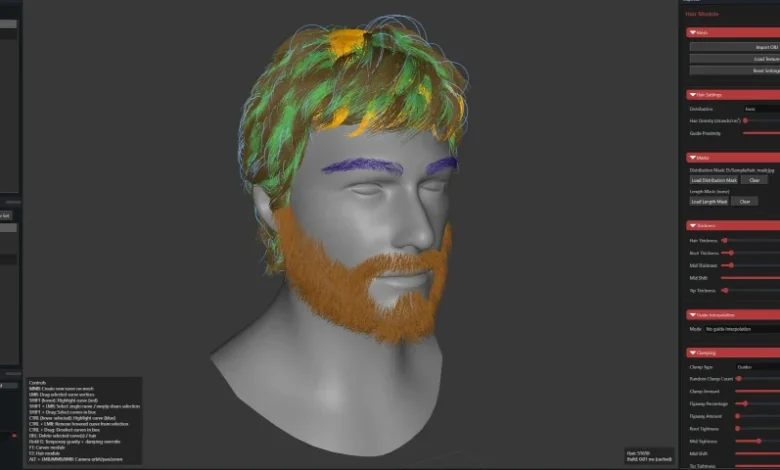
Sisir, a groundbreaking standalone hair grooming tool developed by a solo creator, has officially entered the digital content creation (DCC) market, offering a lightweight yet powerful alternative for 3D artists, animators, and game developers. The software, which derives its name from the Indonesian word for "comb"—and serves as a phonetic play on the English word "scissor"—represents a significant shift in the accessibility of high-end character grooming technology. Designed to streamline the traditionally labor-intensive process of creating realistic hair and fur, Sisir provides a guide-based workflow that allows users to draw, style, and render hair procedurally within a dedicated environment. As the industry continues to move toward more specialized, modular tools that can integrate into diverse production pipelines, the release of Sisir marks a notable moment for independent developers and professional studios alike seeking cost-effective solutions for high-fidelity character assets.
A New Paradigm in Standalone Grooming Solutions
Historically, high-quality hair and fur grooming have been the domain of expensive, integrated plugins or native tools within major 3D suites. Software such as Ephere’s Ornatrix or the XGen system within Autodesk Maya have long set the standard for professional results, but they often come with steep learning curves and significant licensing costs. Sisir enters this space as a streamlined, standalone application that focuses exclusively on the grooming process, removing the overhead often associated with full-scale 3D modeling packages.
The software is structured around a three-module architecture: Guides, Hair, and Render. This logical progression mirrors the professional workflow found in major VFX houses. In the Guides module, users import character meshes in the ubiquitous OBJ format. From there, the tool allows for interactive drawing directly onto the 3D surface. A standout feature of this initial phase is the integration of real-time physics; as guides are drawn, they settle naturally under the influence of simulated gravity, ensuring that the foundation of the groom adheres to physical reality from the outset. This "physics-first" approach reduces the need for manual tweaking later in the process, allowing artists to focus on the aesthetic flow of the hairstyle or fur pattern.
Procedural Styling and Layered Control
Once the primary guides are established, the software’s Hair module takes over to generate dense strands based on the guide interpolated data. This procedural generation is controlled through a series of intuitive sliders and masks, giving artists granular control over the physical properties of the hair. Key parameters include strand length, thickness, clumping, frizz, and separation. The ability to paint masks directly onto the mesh to control distribution ensures that hair density is placed exactly where needed, preventing unnecessary computational overhead on hidden or sparse areas of the character.
Furthermore, Sisir supports a layered approach to grooming. Artists can organize hair into distinct "sets" or layers, each with its own material properties and procedural modifiers. This is particularly useful for complex characters that require different types of hair—such as fine facial peach fuzz, coarse beard hair, and long scalp hair—on a single model. The software also includes a "groom transfer" feature, which is a vital asset for production environments. This functionality allows artists to transfer a completed groom from one character to another, regardless of differences in topology or UV layouts. In a studio setting, this means a library of hairstyles can be built and applied to a variety of background characters or updated hero models with minimal manual intervention.
Integration with Professional Production Pipelines
One of the primary concerns for any standalone tool is how well it communicates with the rest of a production pipeline. Sisir addresses this by utilizing industry-standard file formats for both input and output. The software supports the export of hair guides in the PLY format and the generated hair strands in the Alembic (ABC) format. Alembic is the de facto standard for exchanging complex, animated, or high-density geometry between different 3D applications, making Sisir compatible with virtually every major DCC tool on the market.
To further facilitate this integration, the developer has provided dedicated import and export scripts for 3ds Max, Blender, and Maya. These scripts ensure that the data exported from Sisir retains its structural integrity and can be easily assigned shaders or physics simulations in the host application. For game developers, the Alembic support is particularly relevant for modern engines like Unreal Engine 5, which features robust support for Alembic grooms. While the current version of Sisir focuses on strand-based hair, the developer has confirmed that support for card-based hair—a necessity for optimized real-time performance on lower-end hardware—is currently in the development roadmap.
High-Fidelity GPU Rendering and Visualization
To allow artists to see the results of their work without constantly jumping between applications, Sisir includes a built-in, physically based GPU renderer. This renderer is surprisingly sophisticated for a lightweight tool, featuring advanced lighting models such as dual scattering, which is essential for the realistic translucency and light behavior seen in human hair. The rendering engine also incorporates melanin-based color controls. Rather than simply picking a color from a wheel, artists can adjust melanin levels to simulate natural hair pigmentation, ranging from blonde and red to deep brunette and black.
The visualization suite is rounded out by support for skin subsurface scattering (SSS) and various post-processing effects. This ensures that the hair is viewed in the context of a realistic skin surface, which is critical for judging how the groom interacts with the character’s face and body. By providing a high-quality preview environment, Sisir allows for faster iteration cycles, as artists can make artistic decisions based on a final-frame quality preview rather than a simplified viewport representation.
Chronology of Development and Future Licensing
The development of Sisir has been a journey of iterative improvement, largely driven by the solo developer’s engagement with the digital art community. Initially teased as a personal project to solve specific grooming bottlenecks, the tool quickly gained traction on social media and specialized forums.
- Initial Beta Launch: The software was first released as a public beta, allowing the developer to gather bug reports and feature requests from a global pool of testers.
- Pipeline Enhancement Update: Following the initial release, a significant update was pushed to include the Alembic export functionality and the dedicated scripts for Maya and Blender, moving the tool from a "hobbyist" experiment to a "production-ready" utility.
- Community Expansion: The establishment of a dedicated Discord server has allowed for a direct feedback loop between the creator and the user base. It is through this channel that the developer recently addressed the most pressing question from the community: commercial usage.
Currently, Sisir is free for personal use. However, acknowledging the professional interest in the tool, the developer has stated that they are in the process of updating the licensing agreement to permit commercial projects. In a statement on the official Discord, the developer noted that while commercial use will soon be allowed, there are no immediate plans to transition the software into a paid model, choosing instead to rely on community donations via platforms like Ko-fi to fund ongoing development.
Analysis of Market Impact and Implications
The release of Sisir comes at a time when the "indie-fication" of the VFX and gaming industry is at an all-time high. As solo developers and small teams attempt to create cinematics and games that rival AAA quality, the demand for specialized, accessible tools has skyrocketed. Sisir fills a specific niche: it provides a high-end grooming solution that does not require a subscription to a massive software ecosystem.
From a technical standpoint, the move toward standalone tools like Sisir reflects a broader trend in software architecture where "micro-tools" perform specific tasks exceptionally well, rather than "monolith" applications attempting to do everything. This modularity allows artists to build a bespoke "best-of-breed" pipeline. For example, an artist might model in ZBrush, groom in Sisir, and then bring everything together in Unreal Engine or Blender for final rendering.
The implications for the education sector are also noteworthy. Students and aspiring character artists often struggle with the high cost of professional plugins. By providing a free, high-quality grooming environment, Sisir lowers the barrier to entry for learning a complex skill set. This could lead to a surge in high-quality character work coming from the independent sector over the next several years.
Technical Requirements and Accessibility
Sisir is currently available exclusively for the Windows operating system. While this may limit its adoption among some macOS-based design houses, it aligns with the dominant hardware environment for the 3D and gaming industries. The software’s reliance on a GPU-based renderer means that a modern graphics card is recommended for the best experience, particularly when working with high-density grooms consisting of hundreds of thousands of individual strands.
The developer continues to actively update the software, with recent patches focusing on UI improvements and stability. As the tool moves toward its official commercial release, the industry will be watching closely to see how it competes with established players. For now, Sisir stands as a testament to the power of solo development in the modern era, offering a sophisticated, production-ready tool to the masses for the price of a voluntary donation.
Conclusion and Looking Ahead
Sisir represents more than just a new piece of software; it is a signal of the democratizing power of modern development tools. By focusing on a guide-based, procedural workflow and ensuring compatibility with industry standards like Alembic, the developer has created a tool that is as functional in a professional studio as it is in a home office. As the licensing evolves to support commercial work and features like card-based hair are added, Sisir is poised to become a staple in the toolkit of character artists worldwide. The 3D community’s response has been overwhelmingly positive, suggesting that the future of character grooming may just be a little more accessible, a little more lightweight, and a lot more creative.