Ottawa International Animation Festival celebrates 50 years of artistic innovation and industry evolution as it returns for its landmark 2026 edition

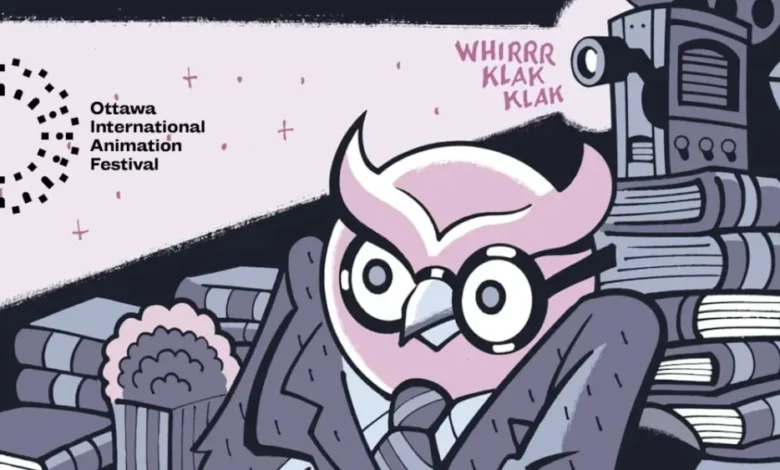
The Ottawa International Animation Festival (OIAF) officially marks a half-century of cultural influence this September 23–27, solidifying its status as the premier hub for the global animation community. Founded in 1976, the festival has evolved from a niche gathering into a cornerstone of the North American animation circuit, serving as both a prestigious competitive showcase for independent auteurs and a vital engine for industry networking. As the 2026 edition unfolds, the event brings together more than 200 films, an extensive roster of industry-leading talks, and a deep-dive retrospective into the history of Canadian animation that has defined the festival’s identity over the last five decades.
A Legacy of Excellence: The Chronology of OIAF
To understand the significance of the 2026 festival, one must look at the trajectory of the event since its inception. Launched by the Canadian Film Institute in 1976, the OIAF was conceived as a platform to provide Canadian animators with a bridge to the international market. Over the decades, it survived shifts in technology—from the transition from analog cel animation to digital workflows—and maintained its independence as a non-profit entity.
By the late 1990s and early 2000s, the festival began to expand its scope, incorporating The Animation Conference (TAC), which transformed the event into a dual-purpose gathering: a celebration of art and a pragmatic business forum. Today, it stands as the largest animation festival in North America, consistently attracting thousands of attendees, including studio heads, independent directors, and educators. This year’s anniversary program is not merely a celebration of the past; it is a synthesis of the festival’s commitment to high-concept art and the realities of modern media distribution.
The Competitive Landscape: 2026 Feature Film Lineup
The heart of the OIAF remains its competitive programming, which this year balances established names with emerging global voices. Seven feature films have been selected to compete for the festival’s top honors, representing a diverse array of narrative styles and technical approaches.
Among the high-profile entries is Kenji Nakamura’s Mononoke the Movie: Chapter III — The Curse of the Serpent, a testament to the continued dominance of Japanese animation in the global festival circuit. The selection also includes Leah Nelson’s Tangles, a project that has garnered significant attention for its distinct visual language, and Christopher Sullivan’s The Orbit of Minor Satellites. Completing the field are Kohei Kadowaki’s We Are Aliens, Xi Chen’s Girlfriends of Father, Sun Xun’s Magic Atlas, and the collaborative Brazilian feature Son of a Bitch, directed by Erica Maradona, Tania Anaya, Otto Guerra, and Sávio Leite.
The inclusion of these works highlights the festival’s commitment to "independent landscape" storytelling, providing a platform for films that prioritize creative risk over mass-market conventions. The scheduled collective discussion among these directors on September 26 at the Animation Exposé serves as a rare opportunity for audience members to witness a dialogue between creators who are currently pushing the boundaries of what animation can achieve.
Short-Form Innovation and Artistic Continuity
While the features draw the headlines, the short-film competition remains the lifeblood of the festival. This year’s selection process was notoriously rigorous, culling from thousands of submissions to highlight the most evocative works in the medium. The lineup features luminaries such as Don Hertzfeldt, whose work Paper Trail is highly anticipated, and Niki Lindroth von Bahr, returning with The End.
Further grounding the program in historical excellence are new works from Georges Schwizgebel, whose The Picture of Dorian Gray brings a classical sensibility to contemporary animation, and Stacey Steers with The Stars Watch from Long Ago. The presence of these veteran filmmakers alongside fresh voices like Anna Mantzaris (PLEASE), Honami Yano (Eri), and Sarina Nihei (Five Orphans) underscores the OIAF’s role as an intergenerational meeting ground. By maintaining dedicated categories for student films, commissioned work, and platforms-based content, the festival ensures that it remains an accurate barometer of current industry trends and experimental techniques.
Animation Exposé: Bridging the Gap Between Craft and Commerce
The 2026 Animation Exposé, held at the National Arts Centre, serves as the festival’s primary public-facing component. This year, the organizers have curated a program that emphasizes the technical and creative processes behind major upcoming features.
A significant highlight is the presentation by Brad Bird, who will provide a retrospective and technical analysis of the production of Ray Gunn. Joined by Cinesite’s Adel Abada and Jason Ryan, as well as Skydance Animation’s Neysa Bové, the panel is expected to offer a masterclass in modern character animation and visual effects design. Similarly, the DreamWorks presentation on Forgotten Island—featuring director Januel P. Mercado and his core production team—will offer an inside look at the pipeline of one of the world’s largest animation studios. These sessions are critical for the professional development of attendees, as they bridge the gap between abstract artistic vision and the industrial realities of studio production.
Fifty Years of Canadian Animation
A pivotal component of this year’s anniversary is the "50 in 50" initiative, a curated screening program of 50 Canadian animated shorts selected from over 700 films shown throughout the festival’s history. This retrospective acts as a cultural time capsule, illustrating the evolution of Canadian storytelling, from the early experimental work of the National Film Board (NFB) to the avant-garde movements of the present day.
.png)
The companion panel, "50 Films. 50 Years. Too Many Animators on One Stage," invites legendary figures like Cordell Barker and Janet Perlman to share the stage with newer voices such as Terril Calder and Winston Hacking. Beyond the screen, the Ottawa Art Gallery’s "Frame by Frame" exhibition provides a historical lens on the city’s role in the animation industry, tracing the local influence of the NFB between 1939 and 1956. This institutional focus serves to legitimize animation as a significant element of Canadian cultural heritage.
Economic and Strategic Implications
Beyond the artistic celebrations, the Animation Conference (TAC) provides a vital economic pulse for the festival. As the industry faces ongoing challenges related to financing, the rise of original IP, and the shifting landscape of streaming platforms, TAC provides a necessary space for producers and distributors to negotiate the future of the medium.
The "Pitch THIS!" competition and the "Fast Track" meetings remain essential for emerging creators seeking to secure funding or distribution. Furthermore, the "Art + Biz Day" on September 25, which focuses on community roundtables and career-focused mentorship, addresses the need for sustainable career paths in an increasingly competitive global market. The festival’s ability to foster these industry connections while maintaining its artistic integrity is the primary reason it has remained relevant for half a century.
As the OIAF reaches its 50th year, it does so from a position of strength. By balancing the demands of the global industry with the needs of the independent artist, the festival continues to set the standard for animation events worldwide. For those in attendance, the 2026 edition represents not just a celebration of a milestone, but a roadmap for the next fifty years of the medium. Through its rigorous programming, support for new talent, and its deep commitment to the history of the art form, the Ottawa International Animation Festival remains an essential destination for anyone invested in the future of animation.