IZotope Photon powered by 12 machine-learning models marks a transformative leap in desktop audio processing and intelligent stem separation.

In the rapidly evolving landscape of digital audio workstations (DAWs) and post-production workflows, the demand for high-fidelity, real-time audio manipulation has reached a fever pitch. iZotope, a long-standing authority in intelligent audio software, has officially entered a new era of collaborative innovation by launching Photon, a robust desktop application designed to streamline stem separation and advanced denoising. Powered by an engine utilizing 12 custom-trained machine-learning models, Photon represents the first major technical synergy between iZotope and Boris FX, two industry titans that have spent years defining the standards for professional creative software.
The Technological Genesis of Photon
The development of Photon arrives at a time when machine learning (ML) has moved from experimental novelty to a foundational requirement for audio engineers. Historically, isolating individual components of a mix—such as vocals, drums, or dialogue—required manual EQ carving, phase cancellation, or complex compression techniques that often left artifacts behind. Photon shifts this paradigm by moving the heavy lifting to local GPU processing. By leveraging the immense parallel processing capabilities of modern graphics cards, Photon achieves what was once considered impossible: high-fidelity, multi-stem separation that runs entirely on the user’s hardware.
This local-first approach serves two critical functions. First, it eliminates the latency and security concerns associated with cloud-based AI processing, ensuring that sensitive project files never leave the creator’s local machine. Second, it provides the speed necessary for high-pressure production environments, such as film editing suites or busy recording studios, where waiting hours for an upload to a server is simply not feasible.
Chronology and the iZotope-Boris FX Partnership
The announcement of Photon is the culmination of a strategic alignment between iZotope and Boris FX. While both companies have maintained a presence in the creative technology ecosystem for decades, their collaboration signifies a broader trend of consolidation among professional-grade software developers.
The timeline of this integration began with the recognition that audio and video workflows are increasingly converging. As content creators move toward hybrid roles—where a single editor is expected to manage both color grading and audio mixing—the friction between disparate software ecosystems has become a bottleneck. By combining iZotope’s research in spectral processing with Boris FX’s expertise in high-performance rendering and visual integration, the Photon project sought to solve the "dialogue isolation" problem that has plagued videographers and podcasters since the advent of digital media. Following months of internal testing and refinement of the 12 proprietary models, Photon is now being positioned as an essential utility for both music producers and film editors.
Decoding the 12 Machine-Learning Models
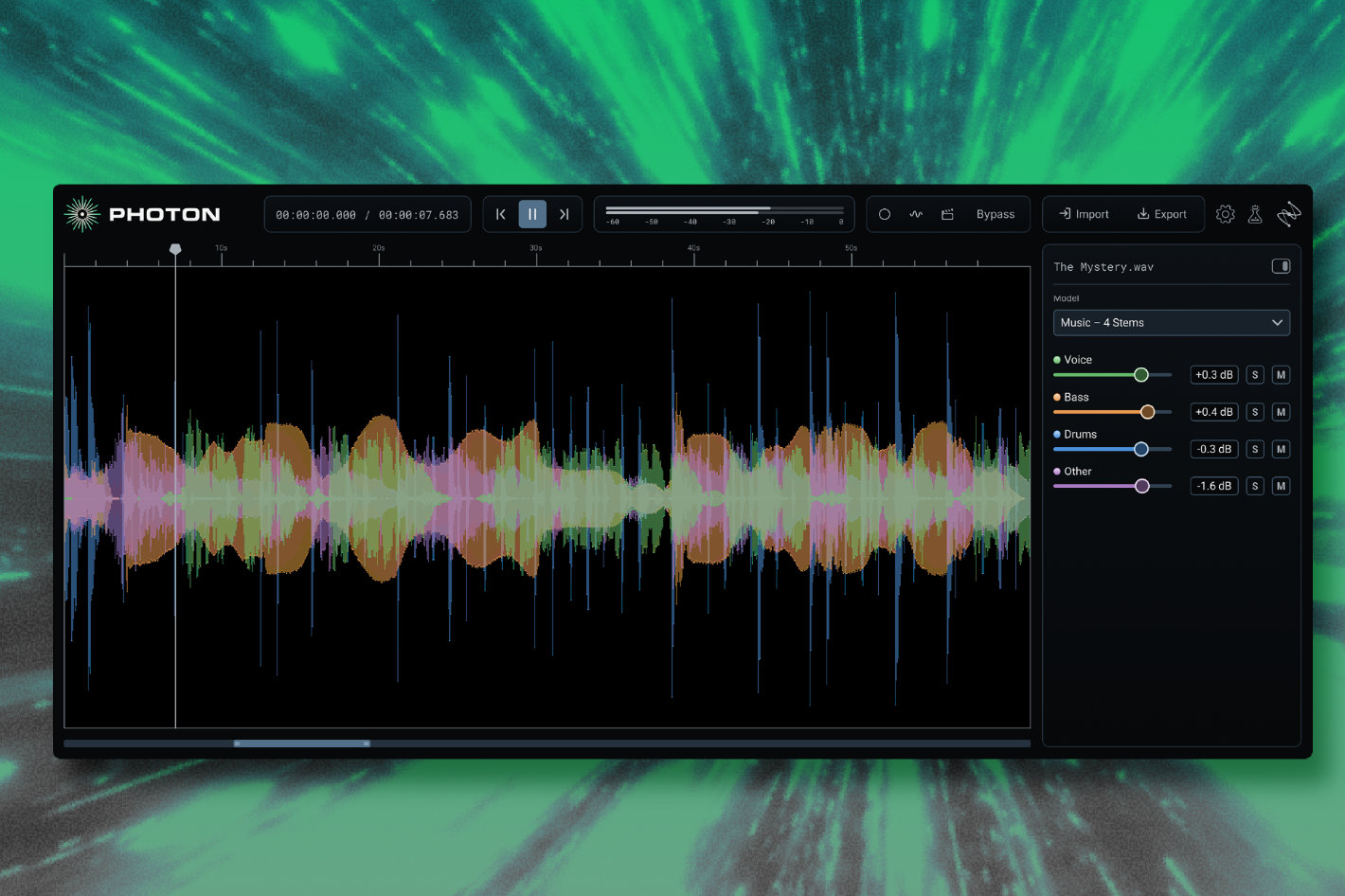
Photon’s utility is defined by its modular architecture. The 12 included models are categorized into two primary domains: Demixing and Denoising.
Demixing: Precision Separation
The Demixing suite is designed for surgical precision. It includes:
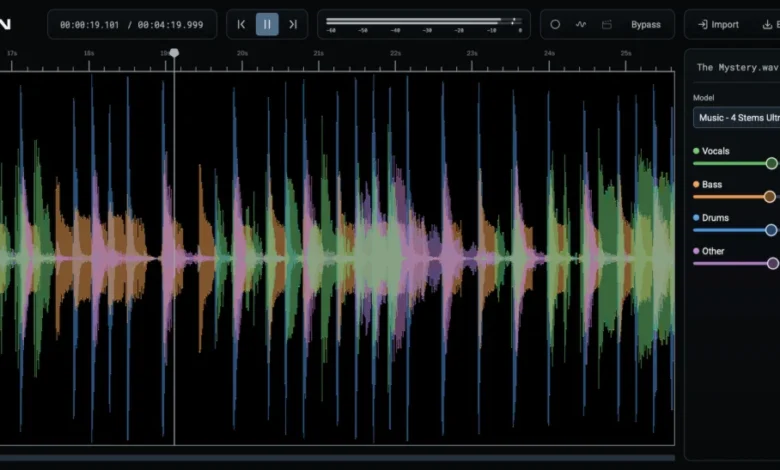
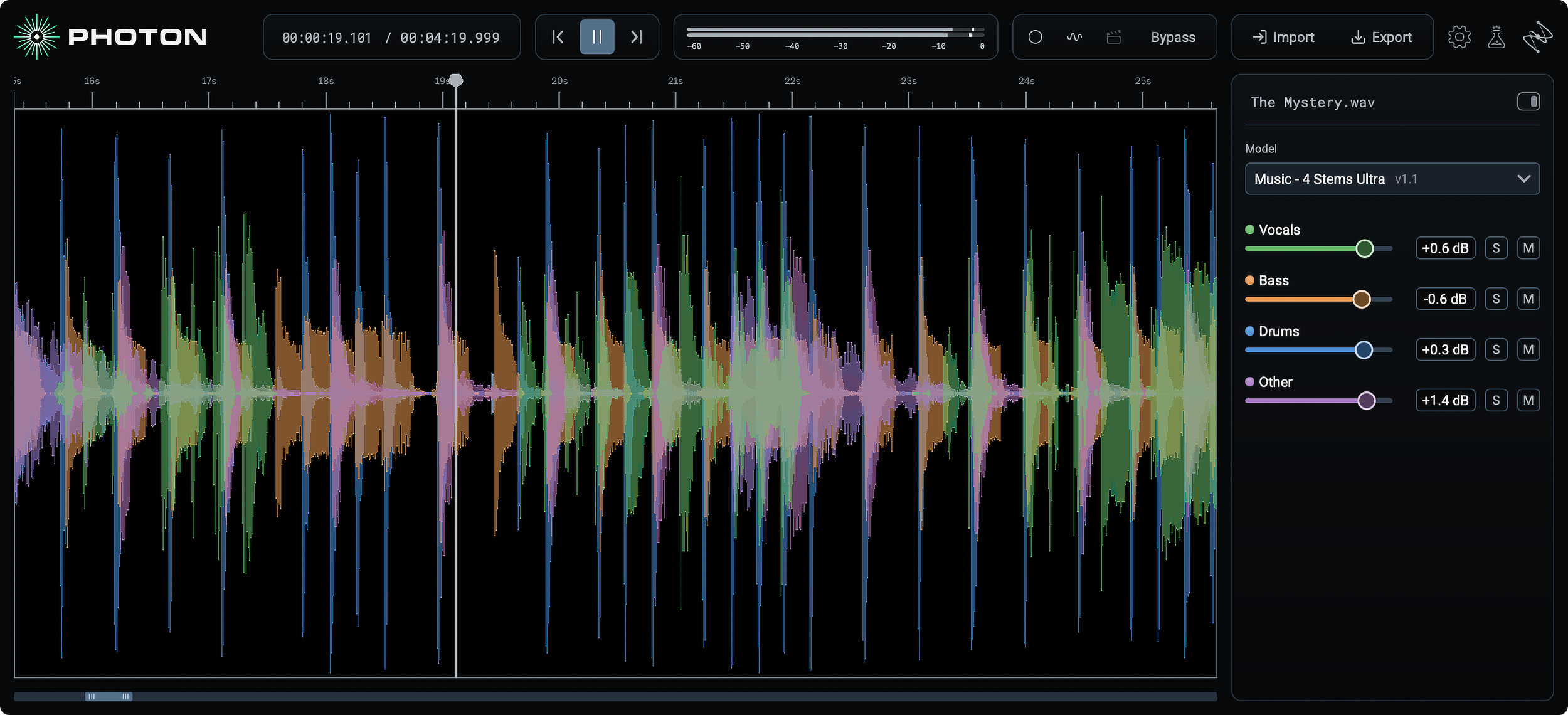
- Music – 4 Stems Ultra: A refined model specifically trained to parse complex stereo mixes into vocals, drums, bass, and "other," with minimal phase smearing.
- Drums – 5 Stems: This model allows users to isolate individual kit components. This is a game-changer for producers looking to re-balance a dry drum mix or extract a kick drum for use in a sample library.
- Voice Separator: Capable of isolating up to six distinct speakers, this tool is poised to revolutionize the podcast and documentary industry, where interviews are frequently recorded in less-than-ideal acoustic environments.
- Voice – 2 Stems: Optimized for the classic vocal/instrumental split, essential for rapid remixing and acapella creation.
- Cinema – 4 Stems: A sophisticated model that parses audio into dialogue, music, sound effects, and ambient background noise. This is particularly valuable for archival restoration and re-mixing legacy film content.
Denoising: The Restoration Arsenal
The denoising capabilities represent a significant evolution of iZotope’s RX technology. These models include:
- Voice Restore: An all-in-one cleanup tool that addresses common issues like harsh mic tone, room reverb, and uneven gain levels.
- Indoor / Indoor Noisy: These models are specifically tuned to combat the "roominess" of uncontrolled recording spaces, such as home offices or living rooms.
- Outdoor / Outdoor Traffic / Outdoor Wind: These models use advanced noise-cancellation logic to filter out the specific frequencies associated with urban environments, providing a "studio-quiet" finish to location-recorded dialogue.
Operational Workflow and DAW Integration
One of the most notable features of Photon is its implementation as an ARA (Audio Random Access) plugin. Unlike traditional real-time plugins that process audio as it plays, the ARA protocol allows Photon to communicate directly with the DAW, analyzing the entire audio file simultaneously. This integration is crucial for professional workflows; it allows users to make balance adjustments or cleanup decisions without the destructive rendering process that was once standard.
The software also features a "Model Manager," which ensures that as new training data becomes available, the user can update their library without a full re-installation. This commitment to long-term software health suggests that Photon is designed to be a permanent fixture in the professional toolkit rather than a one-off utility. Furthermore, the ability to preview results from any point in a clip—combined with flexible export options (WAV, FLAC, MP3)—ensures that the transition from editing to final delivery is seamless.
Analysis of Industry Impact
The arrival of Photon highlights a growing shift in the professional audio market. With the democratization of recording technology, the barrier to entry has lowered, but the standard for "broadcast quality" has remained rigid. By automating the cleanup and separation processes, Photon allows professionals to focus on creative intent rather than technical remediation.
From an economic perspective, the move toward GPU-accelerated local processing is a clear response to the rising costs of cloud computing. By utilizing the user’s existing hardware, companies like iZotope can offer high-performance AI tools without the recurring overhead of server-side inference, potentially leading to more stable pricing models for the end-user.
However, the implications go beyond mere convenience. The ability to easily extract high-quality stems from existing masters challenges the traditional intellectual property landscape. As stem separation becomes more accurate and accessible, the need for master-track preservation and the legal nuances of "remixing" will likely require further discussion within the music industry.
Official Response and Future Outlook
While official statements from the iZotope and Boris FX research teams emphasize the "magic" of the software, the underlying reality is one of rigorous scientific research. The focus has been on minimizing the "computational artifacts" that often plague AI-driven audio tools. By training these 12 models on massive, diverse datasets, the team has successfully mitigated the "underwater" sound often associated with aggressive noise reduction.
Industry analysts suggest that Photon is likely the first of many collaborative efforts between these two companies. As machine learning models continue to improve in their ability to understand context—distinguishing, for instance, between a musical instrument and a sound effect in a busy cinematic mix—the role of the audio engineer will continue to pivot toward that of a curator and creative director.
Photon is currently available for purchase, with iZotope providing promotional pricing through early December 2026. For the average user, the ability to access such powerful, GPU-driven tools at the desktop level marks the end of an era where professional-grade audio cleanup was exclusively the domain of large-scale post-production houses with massive hardware budgets. By bringing these 12 models to the home studio, iZotope has effectively democratized one of the most complex aspects of audio engineering, ensuring that the next generation of creators has the tools necessary to compete at the highest level of production quality.