Buffer Insights: A Comprehensive Data Analytics Evolution for Modern Social Media Management


The landscape of social media management has undergone a significant transformation over the past decade, shifting from simple posting schedules to complex, data-driven ecosystems. Buffer, a long-standing player in the social media management space, has officially launched Buffer Insights, a new analytics suite designed to unify performance tracking across a fragmented digital environment. The platform provides centralized reporting for eleven major social networks, including Instagram, Facebook, X, LinkedIn, TikTok, Pinterest, Threads, Substack Notes, Bluesky, YouTube, and Mastodon. This launch marks a strategic pivot for the company, moving beyond mere scheduling to address the increasing demand for granular performance data in an era of multi-platform distribution.
The Evolution of Social Media Analytics
In the early 2010s, social media marketing was largely characterized by trial and error, with metrics often confined to native platform dashboards that lacked cross-channel consistency. As marketers expanded their presence across multiple channels, the need for a singular "source of truth" became apparent. According to industry reports, the average enterprise now manages content across at least six distinct social platforms. This fragmentation has created a "data silo" problem, where marketers struggle to correlate performance metrics like engagement rates and reach across disparate networks.
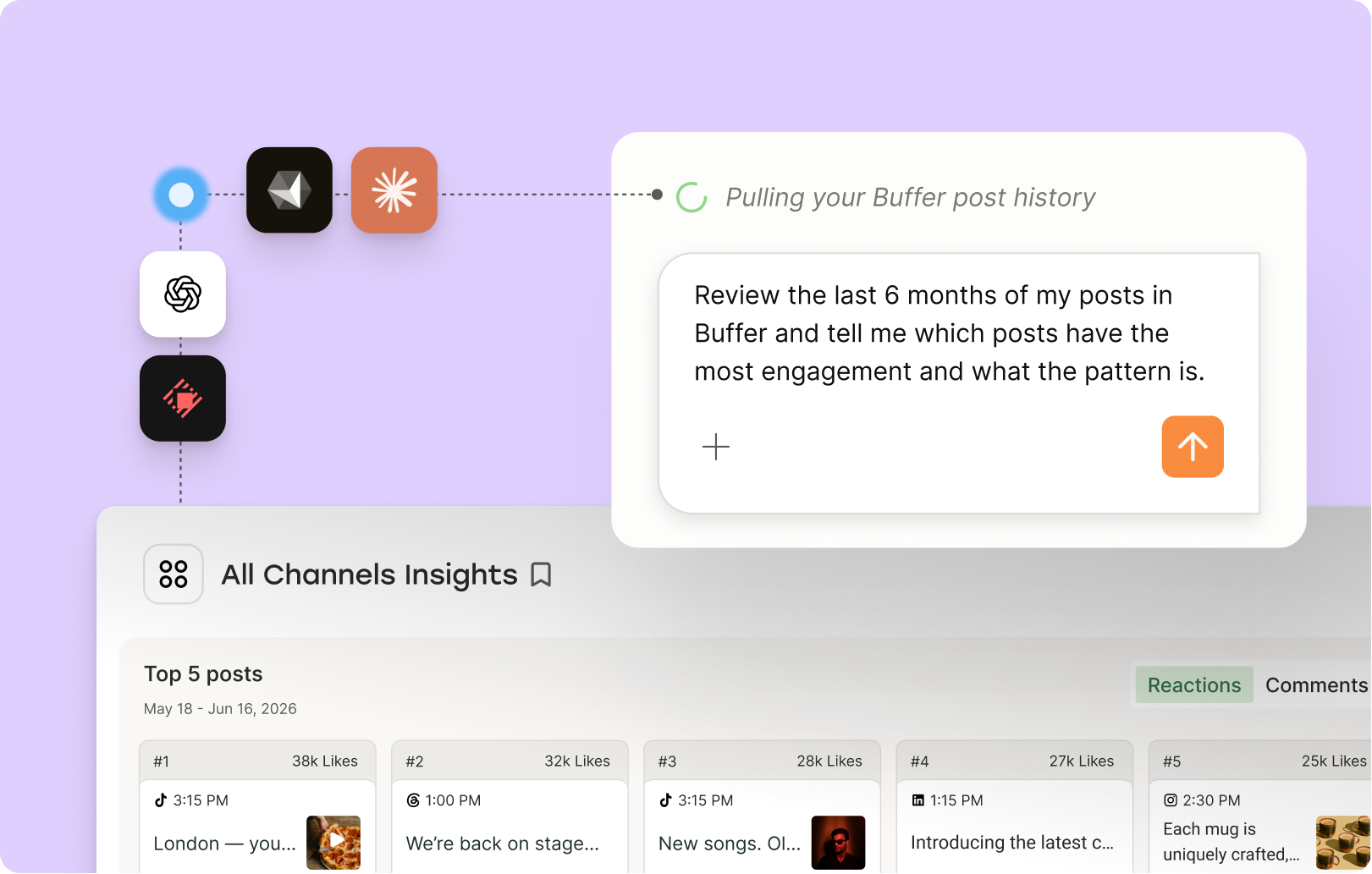
Buffer Insights addresses this by offering a standardized metric architecture. By enabling users to track follower growth, impressions, and engagement levels within a unified interface, the tool eliminates the manual labor previously required to consolidate CSV exports from individual platforms. The capability to export reports in PNG, PDF, CSV, and Markdown formats indicates a focus on professional workflows, catering to both independent creators and agency-level teams who require high-fidelity data for stakeholder reporting.
Integration with Generative AI: The Claude Connector
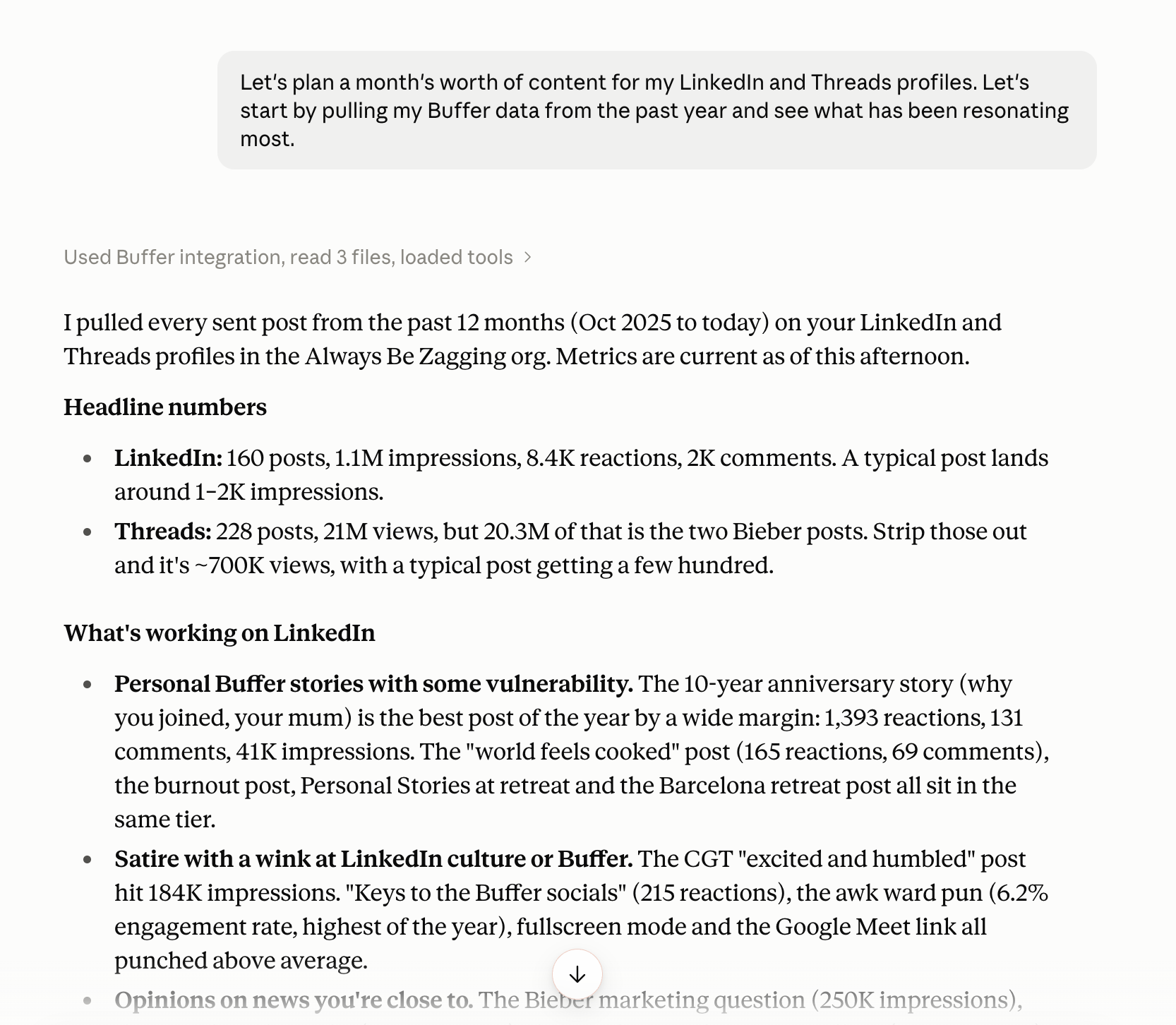
One of the most notable technical integrations within the new suite is the implementation of a Model Context Protocol (MCP) connector, which allows for direct data exchange between Buffer and large language models (LLMs) such as Claude and ChatGPT. This integration represents a shift in how content strategy is formulated. Instead of relying on manual data analysis to determine which topics resonate with an audience, marketers can now feed historical performance data directly into an AI model.
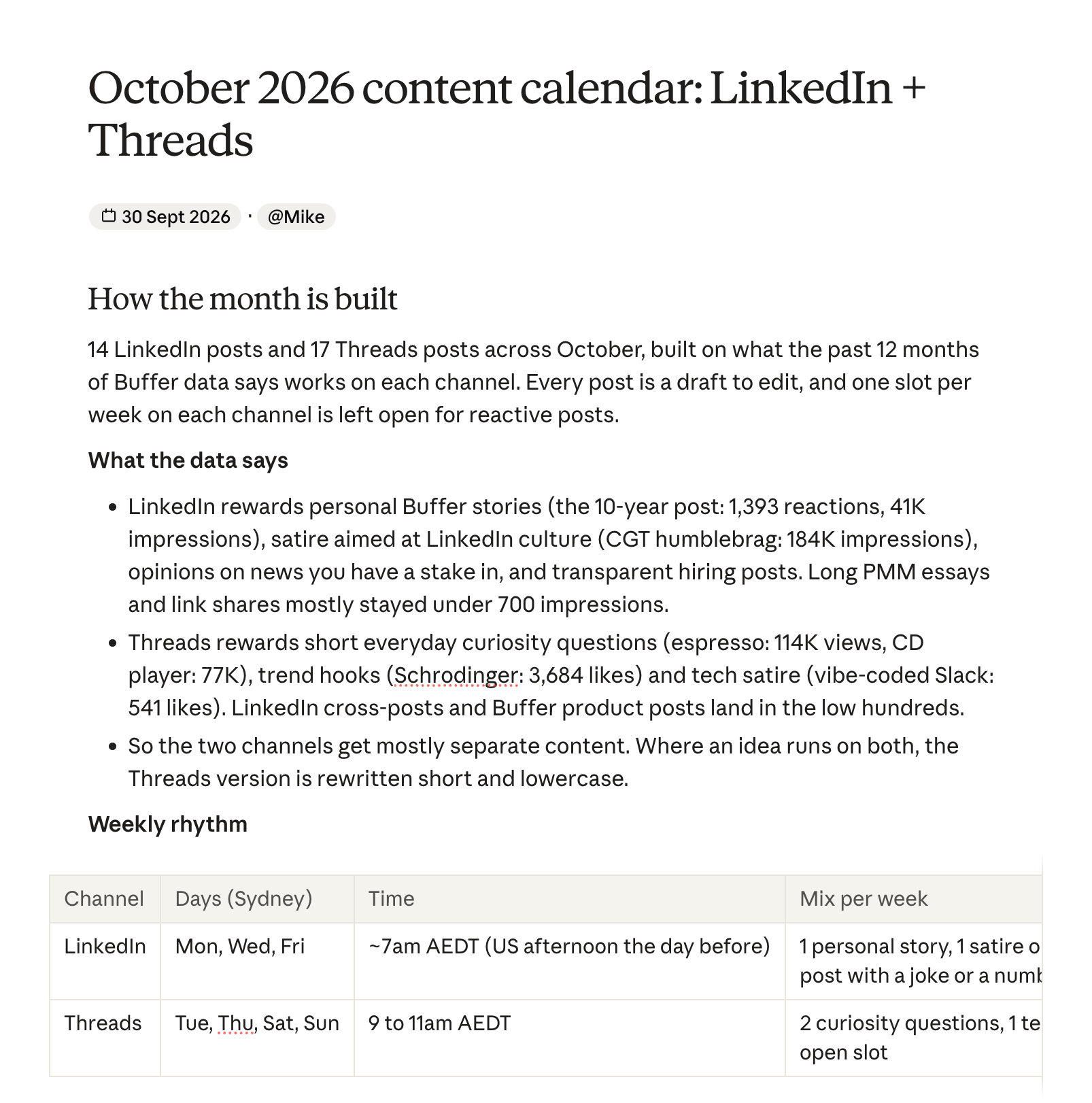
The standard operational workflow involves the AI ingesting past-year performance data to identify high-performing content archetypes. This allows users to request specific content plans—for instance, asking the model to plan a month of LinkedIn content based on successful posts from the previous quarter. By automating the ideation process, this feature addresses the "mental load" barrier often cited by marketing professionals as a primary cause of content burnout. Industry analysts note that this approach represents a shift toward "augmented intelligence," where the machine handles the pattern recognition and data synthesis, allowing the marketer to focus on brand voice and creative execution.
Tactical Performance Tracking: Weekly Pulse and Tagging
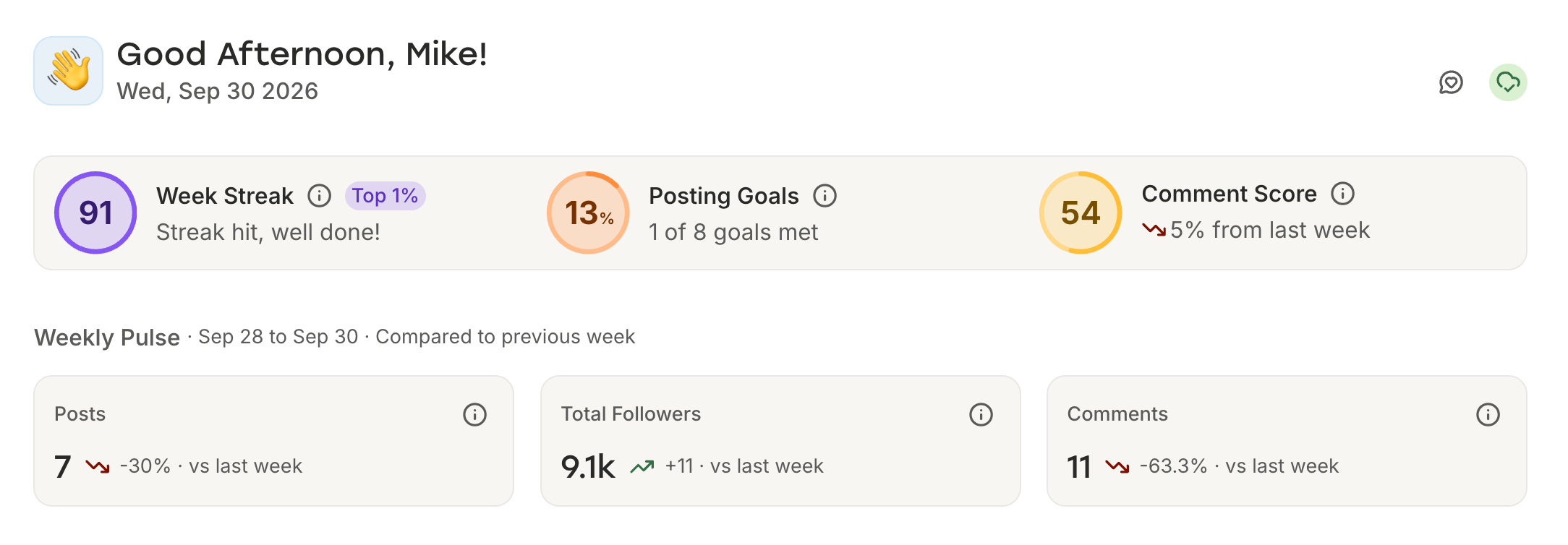
The "Weekly Pulse" feature serves as a real-time monitoring tool designed to mitigate the risks associated with long-term planning in a volatile digital environment. Because social media trends often shift within hours, relying solely on monthly reports can lead to missed opportunities. The Weekly Pulse provides a snapshot of current engagement levels and follower growth, allowing for rapid tactical pivots.
Supplementing this high-level view is a sophisticated tagging system. By applying custom tags to scheduled posts, users can create granular performance clusters. This is particularly effective for tracking the lifecycle of specific campaigns, such as product launches. For instance, if a company launches a new feature across multiple platforms, tagging these posts allows for the immediate aggregation of data. This allows for an analysis of the total "impact footprint" of a launch rather than viewing each platform’s metrics in isolation. Data from recent product rollouts, such as the implementation of Substack Notes integration, demonstrated that unified tagging could reveal precise performance metrics, such as total engagements versus total impressions, across a cohesive campaign period.
Reporting Standards and Organizational Transparency
Effective communication of marketing results remains a primary challenge for many teams. Whether justifying marketing spend to a leadership team or demonstrating ROI to a client, the ability to visualize data is crucial. The reporting features integrated into Buffer Insights provide a standardized format that reduces the subjectivity of performance reports.
The shift toward visual reporting—specifically the use of high-quality PNG snapshots—has become a preferred method for quick communication within collaborative environments like Slack or Microsoft Teams. By reducing the friction involved in generating reports, organizations are more likely to engage in "data-informed" decision-making. This transparency has broader implications for organizational culture; when performance data is easily accessible, it fosters a shift from intuition-based strategies to evidence-based growth.
Broader Implications for the Marketing Industry
The launch of Buffer Insights signals a maturation in the social media management tool category. As the digital economy continues to favor high-frequency, cross-channel engagement, the competitive advantage will lie with platforms that can provide actionable intelligence rather than just management services.
The economic implications for users are significant. By integrating advanced analytics and AI-driven planning into all tiers of service, including free plans, Buffer is lowering the barrier to entry for professional-grade analytics. Historically, high-end analytics suites were restricted to enterprise-level budgets, often costing thousands of dollars per month. The democratization of these tools suggests that smaller organizations can now compete on a more level playing field, using data to optimize their reach and engagement in ways that were previously unattainable.
Furthermore, the focus on multi-platform support—extending to newer networks like Bluesky and Substack Notes—indicates an industry-wide recognition that social media is no longer a monolithic entity dominated by a few giants. Marketers are diversifying their reach, and software providers must respond by ensuring that analytics tools are platform-agnostic and infinitely scalable.
Future Outlook and Conclusion
Looking ahead, the integration of AI-assisted planning and real-time performance tracking is expected to become the industry standard. As data privacy regulations become more stringent, the value of internal, first-party data provided by tools like Buffer Insights will only increase. By capturing performance data at the source—the point of publication—marketers can build proprietary insights that are not reliant on the shifting algorithms of third-party platforms.
The current iteration of the platform highlights a clear path forward: the convergence of automation, data visualization, and strategic oversight. For the marketing professional, the goal is no longer just to "be present" on social media, but to act as a data-driven curator of content that provides measurable value to the organization. As these tools continue to evolve, the capacity for marketers to iterate, refine, and prove their strategies will determine the success of future campaigns in an increasingly complex and competitive digital landscape.
Related posts: