The Art of Subtle Direction: Why Precision Hand Placement is the Defining Factor in Professional Portrait and Wedding Photography

In the highly competitive field of portrait and wedding photography, the technical mastery of lighting, lens focal length, and composition represents only half of the equation for success. The remaining half is dictated by the subtle, often subconscious language of the body, specifically the positioning of hands and fingers. While a photographer may successfully capture the technical requirements of a shot, an overlooked hand placement can serve as a "natural pointer," inadvertently drawing the viewer’s eye away from the subject’s face and toward an unintended focal point. This nuanced element of photography is increasingly recognized as a critical differentiator between amateur snapshots and professional-grade storytelling.
The Anatomy of a Natural Pointer
In photographic theory, a "natural pointer" is defined as any limb, digit, or object within a frame that directs the viewer’s gaze toward a specific area. When a subject’s arm is bent or a hand is positioned in a certain way, the lines created by the anatomy act as a visual arrow. Professional photographers categorize these as either constructive or destructive elements.

If a photographer is capturing a couple, the placement of a hand on the torso, for instance, creates immediate visual weight. Data from psychological studies on visual perception suggest that the human eye is biologically programmed to follow lines of force within an image. When a photographer places a hand across a subject’s midsection, the viewer’s eye will invariably gravitate toward that point. For subjects sensitive to body image, such as those in maternity sessions, this can be used as a deliberate tool to accentuate a feature. Conversely, in other portrait settings, such placement may cause the viewer to fixate on an area the subject prefers to minimize, effectively undermining the photographer’s objective to flatter the client.
Chronology of Posing Trends
The evolution of wedding and portrait posing has shifted significantly over the last two decades. In the early 2000s, the "prom pose"—characterized by rigid, symmetrical arm placement and stiff, locked-in posturing—was considered the industry standard. This era favored static, predictable, and highly controlled imagery.
However, by the mid-2010s, a movement toward "candid-posed" photography emerged. This shift, driven by social media platforms and the desire for more authentic digital narratives, demanded a move away from rigid staging. Today’s professional standards emphasize "micro-adjustments." Rather than directing a subject to "stand like this," modern photographers provide subtle prompts that encourage natural movement, such as asking a subject to adjust a sleeve, touch a partner’s neck, or relax a bouquet. This transition marks a departure from the "shrimp cocktail" aesthetic—a term used in the industry to describe the unappealing, interlaced, and claw-like finger positioning that often occurs when subjects are asked to hold hands without specific direction.

Data-Driven Posing Frameworks
Research into visual engagement shows that images featuring "open" poses—where the subject’s limbs are relaxed and not obscuring the face or torso—receive significantly higher engagement metrics on professional portfolios and social media platforms. The "continual loop" theory of composition is a core principle in this regard. By keeping the hands, eyes, and limbs in a closed loop, the viewer’s gaze is encouraged to bounce between the subjects’ faces, keeping the narrative focused on the human connection rather than peripheral distractions.
Photographic workshops, such as the Photographing the Couple curriculum, have standardized these metrics, noting that when hands are placed in "closed" or "distracting" configurations—such as covering a face or creating harsh, angular intersections with the body—the viewer’s cognitive load increases, often leading to a negative perception of the image.
Strategic Implications for Group Portraits
The challenges of hand placement multiply in group photography. A common technical error is the use of "mirrored" posing, where every individual in a group adopts the exact same arm and hand angle. This creates a psychological sense of artificiality. Analysis of professional group photography indicates that variation is essential for a natural aesthetic.

By encouraging diversity in height and angle, the photographer breaks the rigidity of the line. For example, if one subject has a hand in a pocket, another might have a hand resting naturally at their side, while a third may have a hand placed on a partner’s shoulder. This "staggered" approach prevents the composition from appearing like a military formation and instead allows the image to feel like a fleeting moment of genuine social interaction.
Professional Standards and Client Perception
The implications of these subtle gestures extend beyond aesthetics and into the realm of professional reputation. Client satisfaction surveys in the wedding industry consistently highlight that the most cherished photos are those where the subjects feel they look "natural" and "at ease." When a photographer ignores the placement of a subject’s hand, they risk creating a "distraction trap."
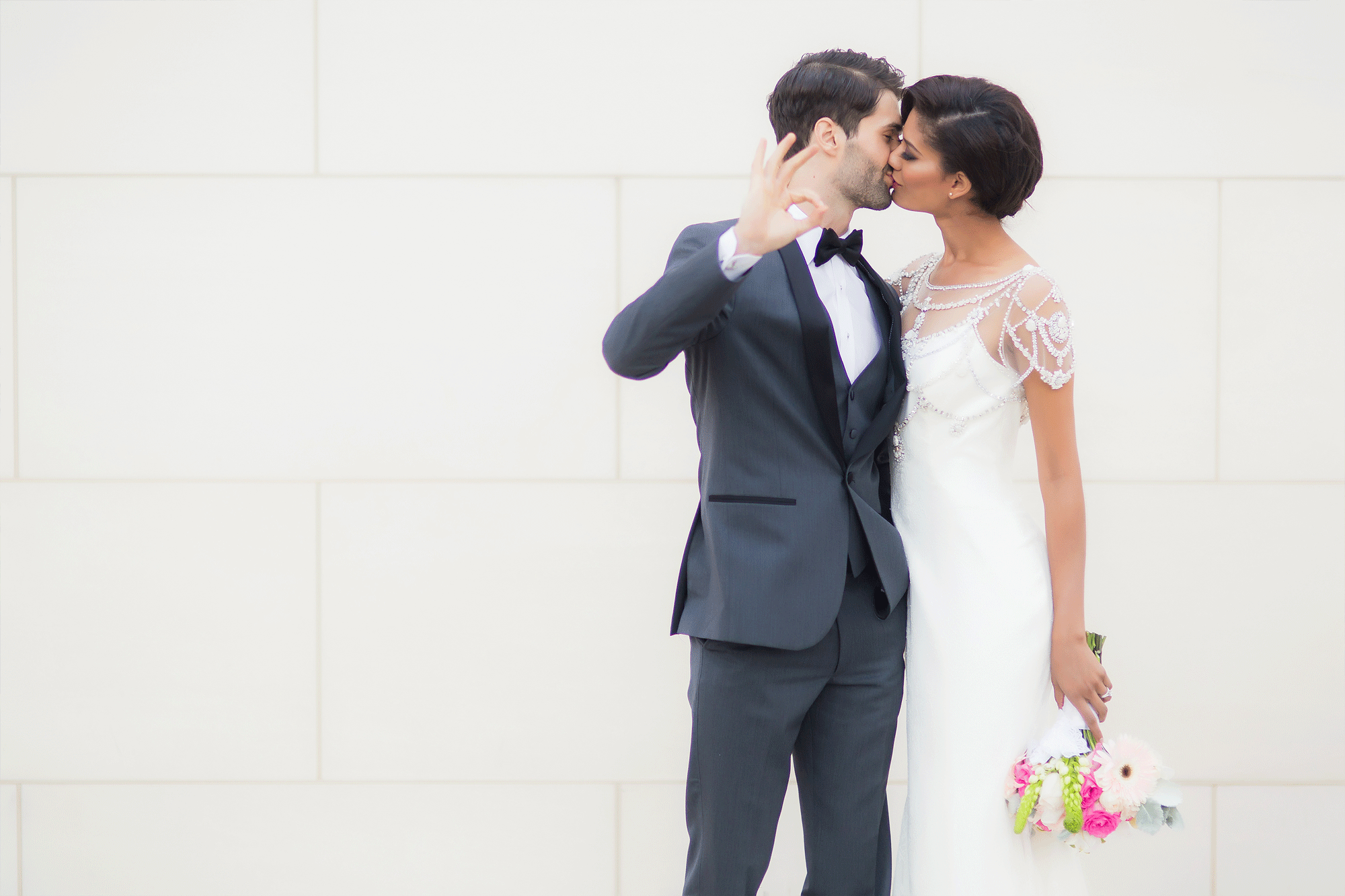
A frequently cited example involves the "broken" kiss: if a couple is captured in a romantic embrace but one subject’s hand is positioned awkwardly or awkwardly flexed, the viewer’s focus is immediately severed from the emotional intimacy of the kiss and relocated to the hand. This discrepancy between the intended emotional tone and the physical reality of the photo can lead to client dissatisfaction.

The Role of Directing as a Skill
Professional photography organizations and educational platforms, including the SLR Lounge, have emphasized that directing is an active, not passive, process. The role of the photographer is to act as a visual director who monitors "natural pointers" in real-time. This requires a high degree of observational discipline.
The process involves:
- Initial Assessment: Identifying the primary focal point of the shot (usually the faces).
- Pointer Audit: Checking if any arms or hands create lines that lead the eye away from the faces.
- Micro-Correction: Providing verbal or physical cues to adjust the angle of a wrist or the tension in the fingers.
- Final Verification: Ensuring the "continual loop" of the composition remains intact.
Conclusion: The Synthesis of Art and Technicality
Ultimately, the mastery of hand placement is a testament to a photographer’s attention to detail. While the average viewer may not be able to articulate why one photo feels more professional than another, the difference is almost always rooted in these subtle, structural decisions. Whether the goal is to create an atmosphere of intimacy, convey a sense of elegance, or capture a candid, playful interaction, the hands act as the primary conduits for that message.

As the industry moves toward increasingly sophisticated visual storytelling, the ability to control these small details will remain a foundational skill for any photographer aiming for excellence. By treating every hand, finger, and limb as a critical component of the visual narrative, photographers can elevate their work from simple documentation to a compelling, emotional art form. The evolution of this craft suggests that as technology continues to advance, the human element—the subtle, intentional directing of the body—will remain the true anchor of high-end portraiture.