Native Instruments Unveils Super*Saw: A Revolutionary Synthesizer Co-Created with PC Music Founder A.G. Cook

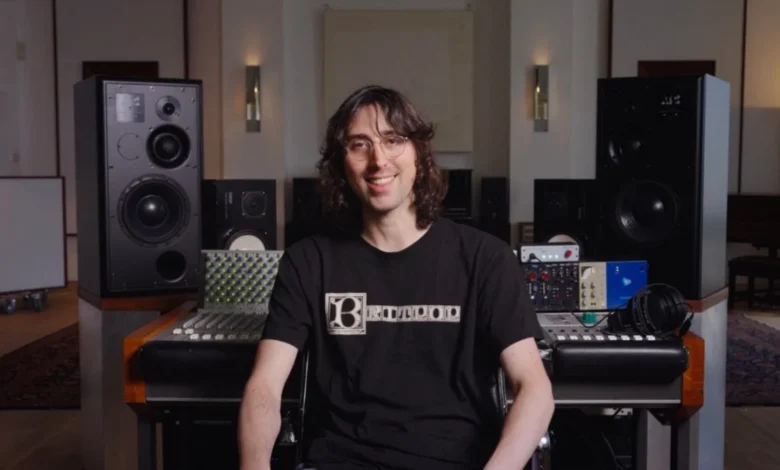
The landscape of electronic music production and contemporary sound design has long been defined by a handful of unmistakable sonic textures, chief among them being the stacked sawtooth wave. Originating during the digital and virtual analog hardware revolution of the 1990s, the supersaw quickly established itself as the bedrock of euphoric club anthems, underground rave culture, and expansive pop arrangements. Capitalizing on this rich sonic legacy, renowned audio software developer Native Instruments has officially announced the release of Super*Saw—phonetically pronounced SuperStarSaw—a groundbreaking software synthesizer developed in close collaboration with visionary producer, songwriter, and PC Music founder A.G. Cook.
Announced alongside an exclusive interview conducted at the historic Baltic Studios in London, the instrument bridges the gap between classic 90s synthesis methodologies and the hyper-modern production techniques championed by Cook over the past decade. Known extensively for his foundational work with pop avant-gardist Charli XCX, solo artistic endeavors such as 7G and Apple, and his recent full-length release Britpop, Cook has spent years exploring the extreme boundaries of digital audio workstations. The launch of Super*Saw marks the realization of a long-term professional ambition for the producer: creating a bespoke software instrument tailored explicitly to a singular, cohesive sonic ideology.
Background Context and the Evolution of the Supersaw
To fully understand the significance of Super*Saw, music industry analysts and sound designers must look back to the technological shifts of the late 20th century. Before the advent of powerful digital signal processing (DSP) and virtual studio technology (VST) plugins, analog synthesizers were severely limited by voice counts and oscillator availability. The introduction of virtual analog technology in the 1990s shattered these physical limitations, allowing producers to stack multiple sawtooth waves—often detuned slightly against one another—within a single patch. This technique created an extraordinarily thick, wall-of-sound frequency spectrum that cut through dense mixes with ease.
However, replicating this sound historically required convoluted routing, extensive digital audio workstation (DAW) sessions, and tedious manual automation. Producers frequently had to duplicate tracks across multiple mixer channels, manually adjust fine-tuning parameters for dozens of individual oscillators, and manage complex plugin chains just to achieve a cohesive evolving chord progression. In his own production workflow, Cook frequently encountered these exact bottlenecks. Tracks such as Stargon required complex multi-plugin workarounds to achieve the characteristic detuned density that fans of his catalog have come to expect.
Recognizing these inefficiencies, Native Instruments and Cook set out to design an instrument that could encapsulate the sheer power of multi-oscillator stacking within a streamlined, highly intuitive, and expressive interface. By restricting the instrument’s architecture strictly to sawtooth waves, Super*Saw compels producers to abandon monotonous technical workarounds and instead engage directly with the pure, unadulterated creative potential of harmonic accumulation.
Architectural Innovation and Interface Design

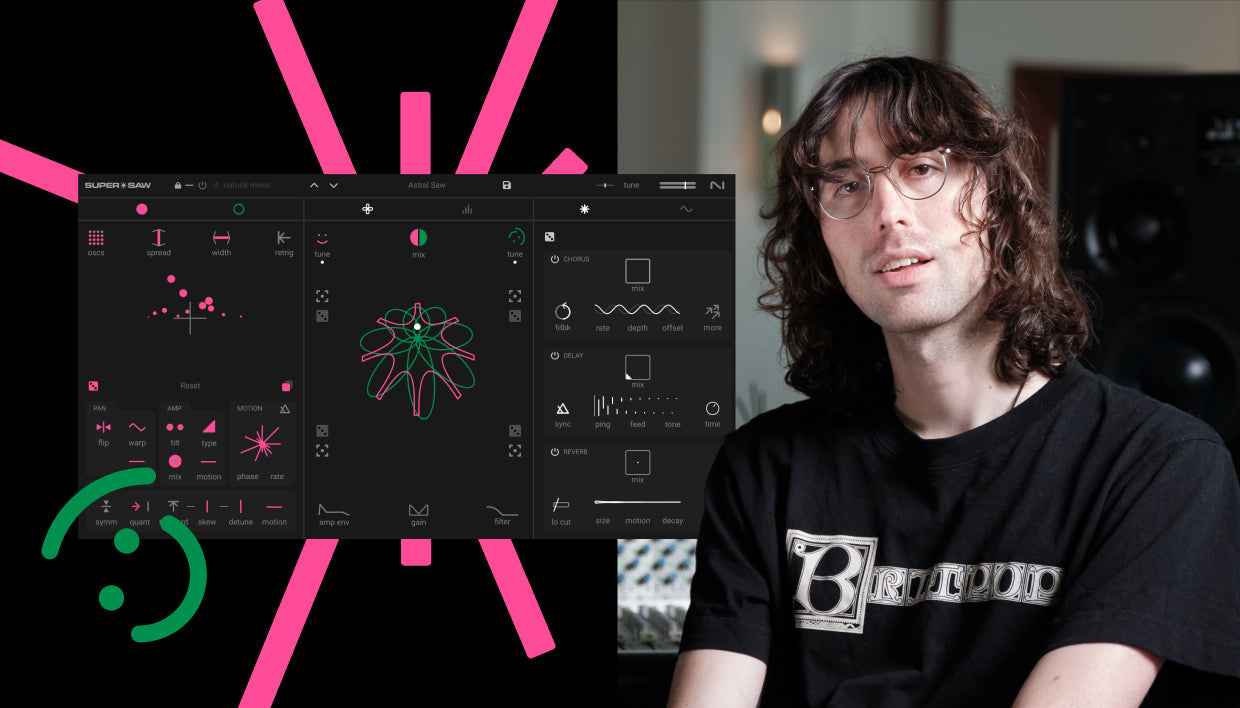
At the core of Super*Saw lies a sophisticated dual 8-voice sawtooth oscillator system. This architecture is divided into two distinct, color-coded visual and sonic layers: a vibrant pink layer and an electric green layer. This binary configuration was heavily influenced by Cook’s personal approach to sound design, which frequently relies on contrasting elements—such as a chaotic, heavily modulated top-end harmony sitting atop a stable, anchoring fundamental bassline.
The user interface of Super*Saw is engineered for real-time, dynamic performance rather than static programming. Featuring a specialized 4-corner Morpher, the synth enables musicians to seamlessly transition between disparate chord shapes, detuning rates, and modulation states fluidly while playing. Furthermore, a built-in star-shaped modulator can be dynamically mapped to various destination parameters, including stereo panning, amplitude modulation, and pitch shifting. For rapid inspiration, the plugin includes advanced randomization features, allowing producers to instantly generate unpredictable yet musical patches with the click of a button.
Industry Implications and Market Impact
The release of Super*Saw arrives at a time of significant convergence between hyperpop aesthetics and mainstream commercial production. As electronic music genres continue to absorb the maximalist tendencies of the 2010s and 2020s, tools that offer instant access to complex, high-energy textures are increasingly in high demand among professional producers and hobbyists alike.

From a market perspective, Native Instruments’ collaboration with A.G. Cook represents a strategic pivot toward artist-driven product development. Rather than releasing a generic sample library or a traditional emulation of vintage hardware, the company has delivered an opinionated instrument that codifies a specific, highly influential contemporary production style. Industry commentators note that this approach not only honors the legacy of 90s dance music innovation but also provides modern creators with a distinct competitive advantage in shaping futuristic soundscapes.
For Cook, the plugin serves as a definitive conceptual milestone. Describing the software as a "coda, epilogue, or final chapter" to his existing discography, the producer views Super*Saw as a means of democratizing his signature techniques. By distilling the sonic worlds of 7G, Apple, and Britpop into a standalone, playable instrument, Cook ensures that his experimental ethos can be reinterpreted and expanded upon by a global community of musicians.
Availability and Technical Specifications
SuperSaw is available immediately through the official Native Instruments digital storefront. Fully compatible with major digital audio workstations running standard plugin formats, the software includes a comprehensive factory library curated by Cook himself, alongside a robust suite of tutorials and walk-through videos detailing advanced patch creation techniques. As electronic musicians continue to push the boundaries of minimal versus maximal sound design, SuperSaw stands poised to become a staple tool in modern music production studios worldwide.