ProjectSAM and the Evolution of Orchestral Sampling: Inside the Development of Lineage Strings and Native Instruments Collaboration

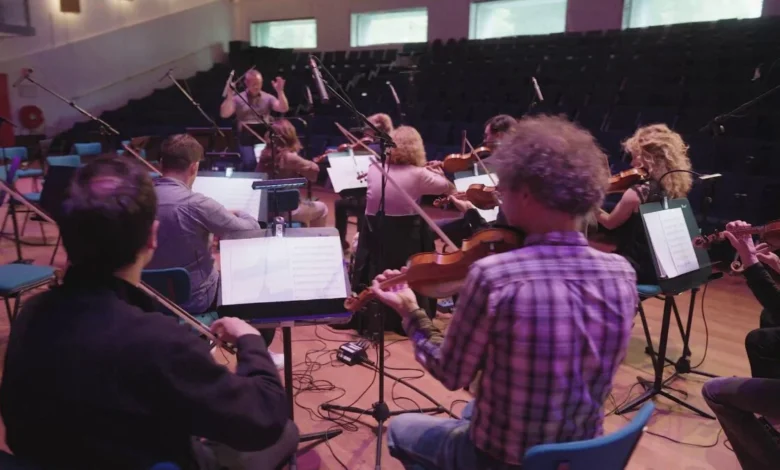
Orchestral sampling has undergone a profound transformation over the past two decades, shifting away from rigid, dry sample blocks toward dynamic, organic virtual instruments that capture the breathing acoustic space of world-class concert halls. For more than twenty years, the developer ProjectSAM has stood at the vanguard of this evolution, championing an ensemble-recording philosophy designed to bring authentic acoustic depth straight into modern composers’ studios. With the recent expansion of their groundbreaking Lineage Series from percussion into symphonic strings, industry observers and creators alike are examining how far virtual orchestration has come. To understand this milestone, we sat down with the ProjectSAM team to explore their foundational philosophy, the integration of the Native Kontrol Standard (NKS) to improve accessibility, and the intelligent features shaping the daily workflows of contemporary film, television, and game composers.
At the same time, producers and media composers looking to upgrade their sonic palettes have a limited-time opportunity to acquire these world-class orchestral textures. The ongoing Big Partner Sale hosted by Native Instruments provides significant savings across hundreds of NKS-compatible instruments, sound libraries, and production bundles developed by industry-leading creators, including ProjectSAM. Running through June 30, the promotional event highlights the expanding ecosystem of hardware and software integration that defines modern music production.
A Two-Decade Journey: From GigaSampler to Kontakt 8
To trace the trajectory of modern virtual orchestration, one must look back to the early 2000s, an era when digital sample libraries relied heavily on close-microphone techniques. Composers utilizing these early tools were forced to drench dry, sterile sample blocks in artificial reverb to achieve even a modest illusion of a realistic orchestral space. Recognizing this limitation, founders Vincent and Maarten established ProjectSAM in 2001 with a radically different vision: capturing the natural acoustic perspective of an orchestra from a distance to produce a more authentic and emotionally resonant listening experience.
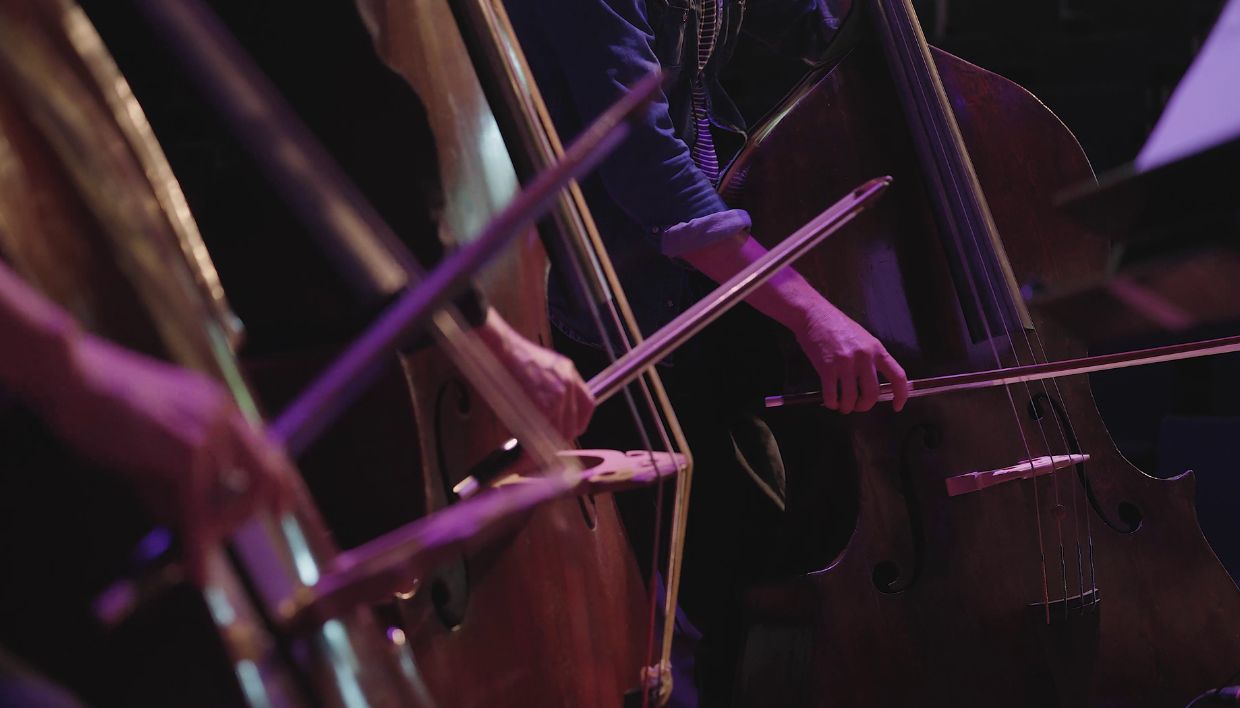
To test this acoustic philosophy, the team recorded a proof-of-concept demonstration utilizing local conservatory musicians. The resulting audio files were distributed freely online, generating a surge of interest that nearly crashed their academic institution’s web server. This early success laid the groundwork for landmark releases such as Symphobia and True Strike, products that forever altered how composers approached cinematic writing by offering pre-orchestrated ensemble textures that sounded instantly cinematic out of the box.
Despite these enduring philosophies regarding sound quality and spatial realism, the technological landscape of software development has shifted dramatically. In the nascent days of the industry, graphical user interfaces (GUIs) were rudimentary at best. Products like SAM Horns functioned primarily as basic collections of presets designed for early hardware and software samplers such as GigaSampler and early iterations of Kontakt. Furthermore, physical distribution presented constant logistical hurdles, requiring developers to troubleshoot buggy multi-disc DVD installation formats across diverse computer systems.
Today, the demands of software composition require extensive coding, deep scripting, and sophisticated UI architecture. ProjectSAM transitioned to an exclusive focus on the Native Instruments Kontakt platform in 2008, streamlining their development pipeline. Their latest flagship release, Lineage Strings, represents a major technical milestone as the first library developed entirely from the ground up for Kontakt 8. By anchoring their development to a single, highly optimized platform, the team has been able to dedicate their full technical resources toward maximizing audio fidelity, dynamic range, and musical responsiveness.
Redefining Accessibility Through NKS Integration
One of the most consequential advancements in modern virtual instrument design is the implementation of the Native Kontrol Standard (NKS). Developed by Native Instruments, NKS bridges the gap between software plugins and physical hardware controllers, such as the KOMPLETE KONTROL keyboards and MASCHINE production systems, enabling seamless parameter mapping, visual feedback via Light Guide technology, and unified preset browsing.

For ProjectSAM, the adoption of NKS—and specifically the advanced capabilities of NKS2—fundamentally altered how they approach interface design and user accessibility. Historically, the developer focused primarily on mouse-driven interfaces. While able-bodied composers could easily trigger notes via standard MIDI controllers, the sheer volume of advanced features, microphone positions, and articulation controls rendered these complex software environments largely inaccessible to blind and visually impaired musicians navigating screen readers.
The introduction of the NKS framework provided a standardized path toward universal accessibility. During the development of Lineage Strings and Lineage Percussion, ProjectSAM engineered the visual graphical interfaces and the hardware NKS layouts simultaneously to ensure complete functional parity. This dual-development approach presented unique technical hurdles, particularly regarding the hardware Light Guide integration. For instance, advanced features like Smart Lookahead delay introduced complex timing questions: should the physical keyboard LEDs illuminate the exact moment a key is depressed by the user, or precisely when the underlying audio samples are triggered by the engine? Through rigorous testing cycles conducted by an active beta-testing community comprising professional composers and accessibility advocates, the team successfully resolved these design challenges, establishing a new benchmark for inclusive instrument design.
Expanding the Symphobia Universe: The Birth of the Lineage Series
While ProjectSAM’s foundational libraries like Symphobia earned critical acclaim for their pre-orchestrated ensembles and hybrid cinematic textures, contemporary composers frequently require a balance between instant inspiration and granular traditional orchestration. This demand sparked the creation of the Lineage Series, an expanding product ecosystem designed to complement the Symphobia universe by providing highly playable, individual symphonic sections.
Whereas Symphobia prioritized broad, blockbuster chordal clusters and fast multi-instrument gestures, the Lineage line adopts a more traditional orchestral framework. It grants users precise control over individual instrument sections, enabling intricate voice-leading and detailed score preparation. Crucially, ProjectSAM managed to retain the hallmark speed and ease-of-use that made their earlier releases famous, ensuring that traditional layouts do not come at the expense of creative workflow velocity.
Under the Hood: Adaptive Phrasing and Intelligent Arranging
At the technological heart of Lineage Strings are two sophisticated engine capabilities designed to alleviate the technical fatigue of traditional MIDI orchestration: Adaptive Phrasing (powered by Smart Lookahead) and the Intelligent Arranger module.
In previous releases such as Pandora and Lineage Percussion, ProjectSAM introduced Adaptive Sync technology, which intelligently analyzed recorded rolls, swells, and rhythmic percussion patterns to match the user’s explicit note lengths in real time. With Lineage Strings, this concept has been expanded into the realm of melodic phrasing across virtually all recorded articulations.
Traditional sample libraries require composers to manually execute constant keyswitches or load multiple patches to transition between sustained notes, tenutos, staccatos, grace notes, and trills. The Lineage Strings engine utilizes a Smart Lookahead delay buffer to continuously analyze incoming MIDI data streams. By evaluating the duration, velocity, and contextual placement of incoming notes, the software automatically anticipates the composer’s musical intent and selects the most appropriate articulation on the fly. This automation allows creators to focus entirely on performance expression rather than micromanaging technical sample switches.
Complementing this is the Arranger module, a sophisticated multi-voice orchestration tool. Designed to assist both veteran orchestrators and media creators working under tight deadlines, the Arranger takes polyphonic chord inputs and intelligently distributes the constituent notes among the five core string sections. By analyzing chord inversions, root notes, and slash chords, the system generates convincing, professional string accompaniments instantly. Composers can choose to run the Arranger in a fully automated mode or manually assign specific chord voices to designated orchestral sections to maintain absolute creative control over the final arrangement.

The Broader Implications of Intelligent Virtual Instruments
As artificial intelligence and advanced machine learning algorithms continue to permeate the audio software industry, questions regarding the future of human creativity and automated assistance remain at the forefront of music technology discussions.
Despite rapid advancements in software intelligence, developing predictive musical engines presents significant engineering hurdles. Most notably, machine learning models do not naturally align with real-time, low-latency performance requirements. To intelligently select the ideal articulation for an evolving musical phrase, an algorithmic engine requires a temporal buffer—a small window of look-ahead time. Introducing a processing delay of even a few hundred milliseconds is necessary for the software to analyze incoming MIDI information and render an informed execution decision.
Industry leaders emphasize that while these predictive systems will undoubtedly grow faster and more sophisticated, software cannot truly anticipate human intent; it can only react to data already received. Consequently, while intelligent engines can generate remarkably convincing musical results, they may occasionally diverge from a composer’s exact expressive vision.
Consequently, developers view AI and algorithmic assistance not as replacements for human composition, but as powerful workflow assistants. By handling the tedious technical overhead of keyswitching, voice distribution, and phase alignment, intelligent software minimizes friction in the studio, allowing human composers to focus their energy on the emotional nuances that define a truly compelling musical performance.

Seizing the Opportunity: The Big Partner Sale
The ongoing evolution of virtual orchestration highlights how far sample library development has progressed since the early days of dry, static audio blocks. Through decades of acoustic research, platform optimization in Kontakt 8, and a dedicated commitment to accessibility via NKS integration, developers like ProjectSAM continue to redefine how creators interact with digital symphonic forces. By balancing cutting-edge workflow enhancements like Adaptive Phrasing with the organic warmth of traditional hall recordings, modern tools ensure that technology consistently serves the creative imagination.
For producers, songwriters, and media composers eager to integrate these advanced cinematic textures into their current setups, the timing is ideal. The Native Instruments Big Partner Sale is live through June 30, offering substantial discounts across an extensive catalog of hardware-optimized instruments, sound libraries, and production bundles from premier third-party developers. Creators are encouraged to visit the official Native Instruments online store before the promotion concludes to explore ProjectSAM’s catalog, discover Lineage Strings, and elevate their contemporary music production workflows.