Talking Heads Unite for SiriusXM Channel While Permanent Musical Reunion Remains Off the Table

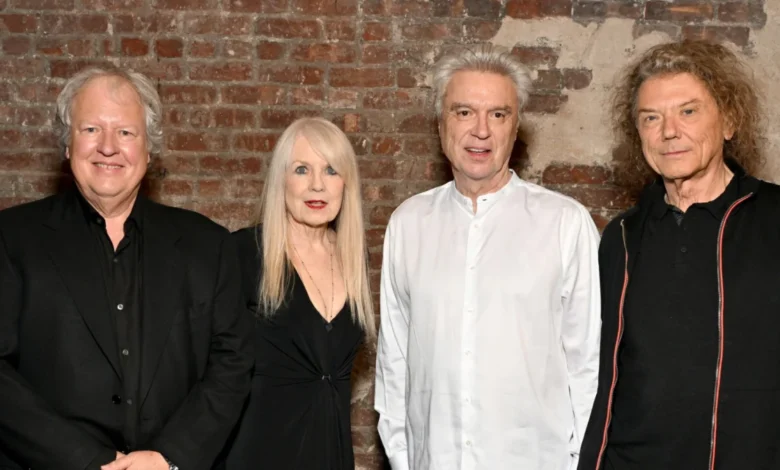
David Byrne, Tina Weymouth, Chris Frantz, and Jerry Harrison are coming together once again, though fans hoping for a full-scale musical comeback will have to temper their expectations. The iconic new wave band is officially launching a dedicated, limited-run radio station on SiriusXM titled Talking Heads Radio. While the venture brings all four original members back into the same cultural conversation, it underscores the permanent boundary that has been drawn between their amicable public diplomacy and any future collaborative recording or touring.
The Launch of Talking Heads Radio
Beginning October 1 and running through October 22 on satellite radios, with streaming availability extended until October 31 on the SiriusXM app, Talking Heads Radio will offer listeners an immersive dive into the band’s catalog. The programming is designed to encompass not only the core studio albums that defined the post-punk and art-rock movements of the late 1970s and 1980s, but also the extensive web of solo projects, side ventures, and spin-off bands associated with its members over the past four decades.
Filling a month-long broadcasting schedule with material solely from a band that released eight primary studio albums requires a deep dive into the archives. SiriusXM plans to leverage side projects such as Tom Tom Club—founded by Weymouth and Frantz—and Harrison’s solo output, alongside live recordings and deep cuts, to maintain listener engagement across the four-week broadcast window.
The station’s centerpiece will be a special promotional event recorded in New York City on September 28. Este Haim, musician and member of the acclaimed indie-pop trio HAIM, will host an intimate, in-person conversation with all four band members, followed by an exclusive audience Q&A session. This gathering marks yet another chapter in the unexpected thaw of relations among the group, who spent decades largely estranged or communicating only through the press.
A Modern Era of Amicable Relations
The current spirit of cooperation represents a significant departure from the bitterness that historically plagued the post-breakup trajectory of Talking Heads. Formed in Providence, Rhode Island, in 1975 before becoming a fixture of New York’s CBGB scene, the band officially dissolved in 1991, though they had ceased touring years prior in 1984. For decades, lingering creative differences, personal frictions, and disputes over leadership and legacy kept the members firmly apart.
The turning point in this long-standing detente arrived in 2002 when the band temporarily reunited to perform four songs at their induction into the Rock and Roll Hall of Fame. However, that performance proved to be an isolated incident rather than a catalyst for a broader revival.
It was not until late 2023 that the quartet began regularly appearing in public together again. To mark the 40th anniversary of their seminal 1984 concert film Stop Making Sense, directed by Jonathan Demme, A24 undertook a high-profile 4K restoration and theatrical re-release. Capitalizing on this renewed interest, Byrne, Weymouth, Frantz, and Harrison embarked on a coordinated press tour. They participated in high-profile Q&A sessions at international film festivals, including the Toronto International Film Festival, and sat together for television interviews, projecting a united and mutually respectful front that delighted global fandom.
The Creative Impasse and David Byrne’s Position
Despite the public warmth generated by the Stop Making Sense campaign, the barrier separating promotional camaraderie from creative collaboration remains firmly intact. Frontman and principal songwriter David Byrne has consistently maintained that the band’s musical chapter is closed for good.
In an interview with Rolling Stone, Byrne addressed the inevitable questions surrounding reunion rumors with characteristic pragmatism. While acknowledging that the promotional circuit allowed the members to achieve a newfound level of personal comfort with one another, he explicitly rejected the notion that this ease would translate into a studio session or a concert tour.
"We felt more comfortable with one another, but… I didn’t feel like, ‘Oh, yeah, let’s go out on tour again.’ Or, ‘Let’s make another record,’" Byrne stated. "Musically, I’ve gone to a very different place."
Byrne’s stance is rooted in a broader skepticism regarding legacy reunion tours and nostalgia-driven revivals. Having spent decades cultivating a diverse, avant-garde solo career that encompasses theatrical productions like American Utopia, Broadway scoring, and multi-disciplinary art installations, Byrne views looking backward as artistically restrictive.
Furthermore, Byrne expressed concern over the impossibility of recapturing the unique cultural and personal zeitgeist of the band’s formative years. He noted that while audiences often convince themselves that a reunion can transport them back to their youth, the lived reality of aging artists and changed perspectives makes such recreations fundamentally artificial. "It’s pretty much impossible to recapture where you were at that time in your life," Byrne observed. "For an audience… that was formative music for them at a particular time. They might persuade themselves that they can relive that, but you can’t."
Implications for the Legacy of Talking Heads
The launch of Talking Heads Radio and the continued promotional unity of the band members highlight a growing trend in modern music preservation: legacy acts finding digital and media-driven avenues to celebrate their histories without yielding to the commercial pressures of traditional live touring.
For the music industry, exclusive satellite radio partnerships have become a powerful tool for catalog monetization and fan engagement. By curating temporary, dedicated channels, platforms like SiriusXM offer aging acts a lucrative medium to reach both dedicated lifelong followers and younger demographics discovering classic catalogs through streaming algorithms and film restorations.
At the same time, the steadfast refusal of a creative reunion preserves the pristine historical boundary of Talking Heads’ recorded output. Rather than diluting their legacy with late-career studio material or nostalgic tours constrained by diminished physical capacities, the band retains an aura of definitive artistic completeness.
As fans tune in to SiriusXM throughout October to experience the carefully curated archive of Talking Heads Radio, they will engage with a band that has mastered the art of honoring its past while resolutely refusing to repeat it. The upcoming September 28 conversation hosted by Este Haim will undoubtedly provide further insight into the enduring chemistry of four musicians who helped shape the trajectory of modern rock, even if that chemistry is now strictly confined to conversation rather than creation.
Related posts: