Berlin Electronic Duo Calcou Redefines Collaborative Production and Modular Workflow in New EP Now, What?


The evolution of modern electronic music production often hinges on the delicate intersection of software precision and human intuition. For the Berlin-based electronic music project Calcou, this intersection has officially manifested as a dynamic duo with the release of their latest EP, Now, What? Long recognized as the solo endeavor of producer Stefan, the project has expanded into a full-fledged collaborative partnership with vocalist and songwriter Thea. This structural shift marks a defining chapter in the project’s trajectory, moving beyond solitary bedroom production to embrace a symbiotic creative process that bridges the gap between intricate electronic design, organic textures, and poignant songwriting.
The Chronology of a Collaborative Evolution
Long before formally establishing themselves as a duo, Stefan and Thea operated within the same creative orbit, quietly building a foundation of shared musical tastes and workflow habits in the vibrant cultural hub of Berlin. As the electronic music capital of Europe, Berlin has long served as a crucible for artists looking to push the boundaries of modular synthesis and club-oriented soundscapes. For Calcou, the transition from solo project to collaborative partnership happened organically rather than by corporate design.
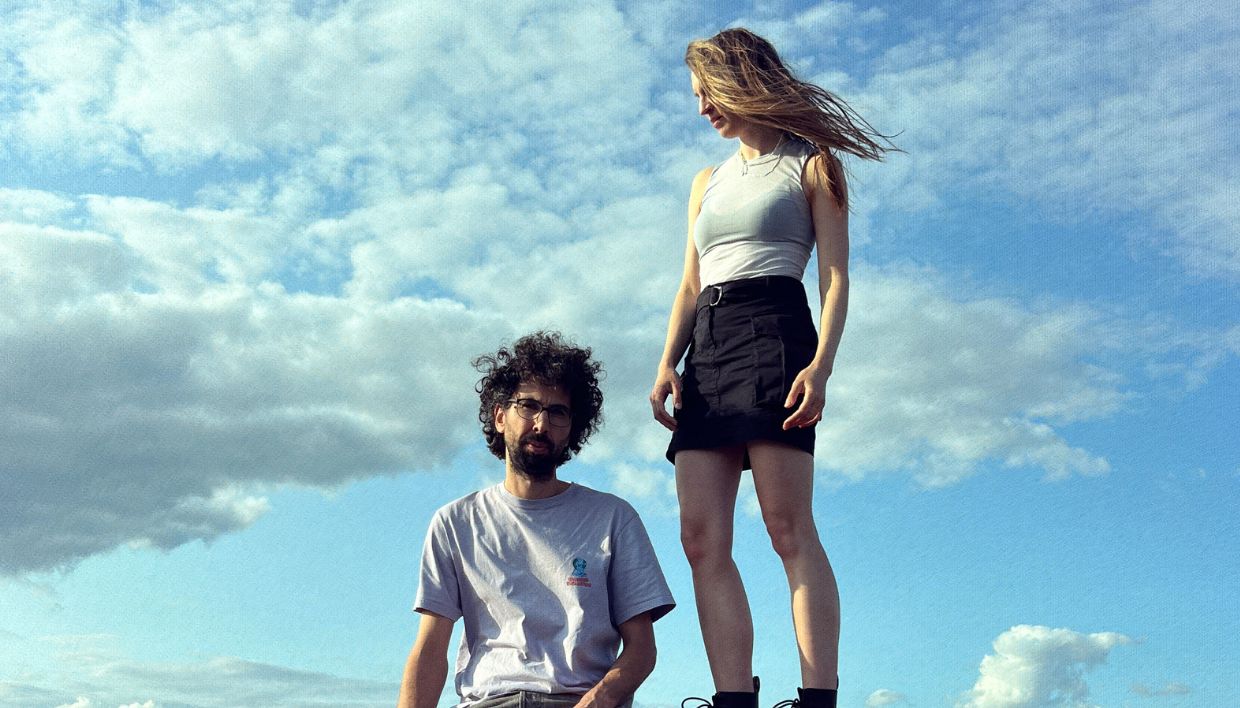
In the early phases of their joint work, Stefan naturally assumed the primary responsibilities of composition, arrangement, and foundational production, while Thea anchored the project with her distinct vocal toplines and lyricism. However, rather than operating in a rigid hierarchical studio environment, the duo developed a decentralized method of creation. When working on independent production elements, Thea relies on her own digital audio workstation (DAW) environment, sending completed stems to Stefan for integration. This reciprocal give-and-take allows both artists to critique, refine, and steer each track toward a unified aesthetic without the friction of competing artistic egos.
The resulting record, Now, What?, successfully captures this balance. Tracks like Closer and Green Hills demonstrate an acute tension between warm, organic instrumentation and precise rhythmic modularity. Rather than relying on heavy-handed post-production tricks to create artificial depth, the duo harnesses specific software tools—most notably Native Instruments’ Reaktor 6, Monark, and Super 8—to construct tracks that prioritize compositional integrity over superficial gloss.
Unpacking the Workflow: Why Reaktor Matters
In contemporary music production, software virtual studio technology (VST) plugins often present a double-edged sword. Many modern synths are engineered to impress consumers instantly with massive, washed-out reverbs, complex delay chains, and hyper-polished stereo fields. While these features make initial bedroom sketches sound larger-than-life, they frequently mask fundamental structural flaws in the underlying composition. When producers eventually take these tracks into professional mixing and mastering stages, stripping away the excessive effects often reveals a hollow arrangement lacking true emotional resonance.

Calcou has intentionally rejected this methodology, championing a philosophy of absolute sonic transparency. According to Stefan, Native Instruments’ Reaktor platform offers a refreshing antidote to overproduced virtual instruments. The raw presets and foundational architectures within Reaktor, Monark, and Super 8 are deliberately effect-light, forcing the duo to confront the core of their songwriting from the earliest developmental stages.
By relying on clean, unadorned sawtooth patches and modular frameworks like Reaktor Blocks, Calcou adheres to a strict compositional rule: if a melody or chord progression cannot move a listener when played through a simple, dry patch, the underlying idea requires fundamental revision. This methodology demands rigorous adherence to traditional music theory principles, including careful voice leading and minimalist harmonic structures. By restricting themselves to two- or three-note harmonies during the initial sketching phase, Stefan and Thea ensure that every song possesses a compelling narrative core before any sound design or complex mixing decisions take place.
Bridging the Studio-to-Stage Divide
Translating a deeply layered studio production into a compelling live performance remains one of the most persistent challenges for contemporary electronic artists. Studio arrangements for Calcou tracks frequently exceed one hundred individual tracks per song, filled with intricate automations, micro-sound design elements, and nuanced vocal processing. Replicating this complexity on a live stage without sacrificing performance integrity requires careful planning and technical foresight.

To solve this challenge, the duo developed a hybrid performance rig that bridges software flexibility with stage-ready reliability. Stefan and Thea utilize a customized Ableton Live performance pack that triggers pre-programmed Reaktor patches and dedicated effect chains in real time. This setup allows them to maintain the sonic integrity of their studio recordings while preserving enough operational headroom to introduce live improvisation between tracks.
Crucially, the duo adheres to a strict philosophical boundary regarding live performance integrity: if an audience cannot physically feel or perceive a real-time manipulation, it has no place on stage. Rather than performing superficial, invisible knob-twisting to mimic minor studio automations that are inaudible in a crowded venue, Calcou focuses their live energy on purposeful, high-impact interactions. Elements that do not require real-time manipulation are safely bounced to audio stems, eliminating the risk of MIDI latency or processing crashes and ensuring an unyielding, high-energy live experience.
Industry Implications and the Future of Modular Production
The release of Now, What? arrives at a time when the electronic music industry is experiencing a noticeable pivot toward transparent, hardware-inspired workflows. As digital saturation increases, listeners and producers alike are gravitating toward music that retains human fingerprints—the imperfect takes, the unexpected modular anomalies, and the raw acoustic moments that defy algorithmic perfection.
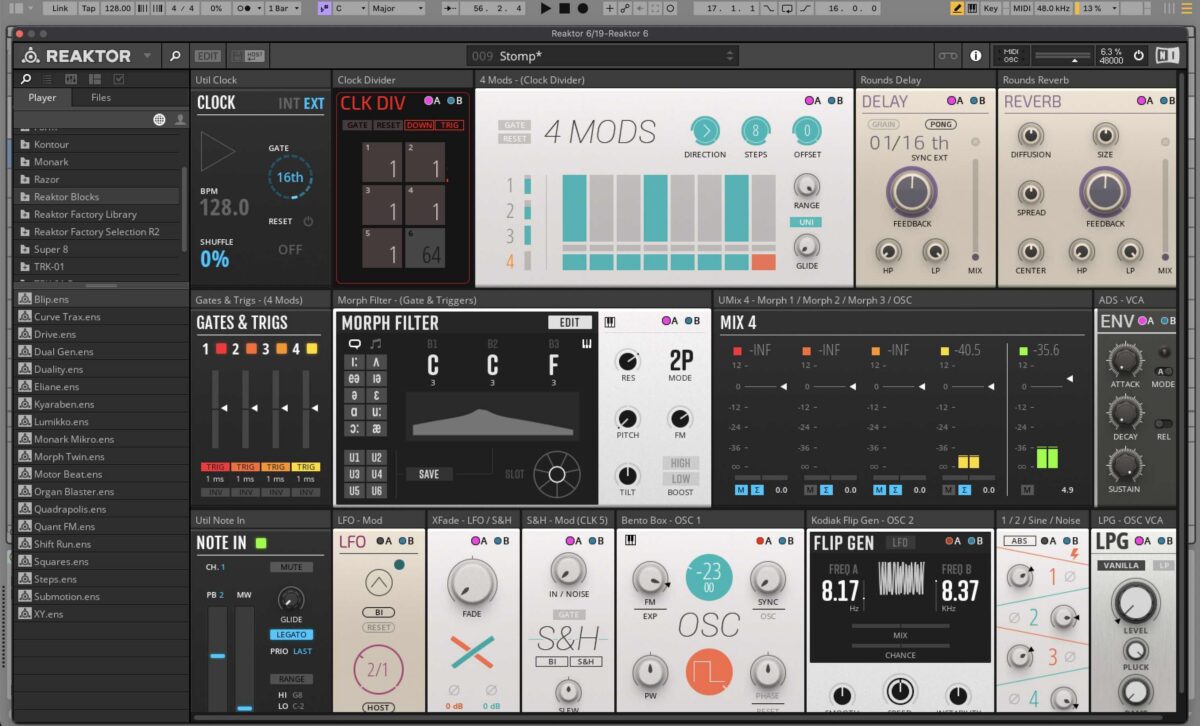
Calcou’s integration of Reaktor Blocks exemplifies this broader industry shift. By embracing modular tools whose complete routing pathways remain delightfully unpredictable, the duo invites happy accidents into their creative routine. Whether they are reverse-engineering complex factory presets to understand advanced sound design techniques or repurposing a lush pad sound by pitching it down into a mono bassline, their approach underscores a vital lesson for emerging electronic music producers: technical mastery does not stem from accumulating endless plugin choices, but from deeply exploring the creative limitations of a trusted toolset.
As Calcou brings the sonic world of Now, What? to international audiences—highlighted by high-profile showcases such as their recent feature on the Anjunadeep Edition series—the duo serves as a compelling blueprint for modern electronic collaboration. By establishing clear role divisions, setting strict creative milestones, and protecting the raw, experimental instinct that sparked their partnership, Stefan and Thea have engineered a blueprint for sustainable, deeply human electronic music in the digital age.
For producers looking to emulate their approach, Native Instruments continues to offer access to the foundational ecosystems behind the record, providing both the Reaktor platform and a curated selection of free presets utilized directly in the creation of Now, What? As the boundaries between software modularity and live performance continue to blur, Calcou stands firmly at the vanguard of this artistic frontier, proving that precision, intention, and emotion can coexist seamlessly within contemporary electronic music.