When Indie Rock Meets the Digital Military-Industrial Complex: How Geese Survived the Great Industry Plant Conspiracy of 2024

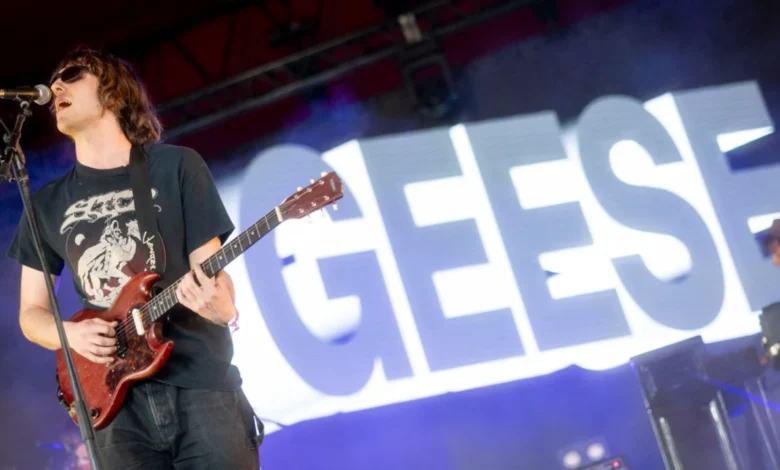
The modern music industry exists in an uneasy truce with the algorithms that dictate cultural visibility. For decades, traditional gatekeepers—A&R executives, radio programmers, and print music journalists—held the keys to commercial success. Today, platforms like TikTok, Spotify, and Instagram have decentralized this power, yet they have simultaneously introduced a new paranoia: the suspicion that nothing on the internet is organic. Enter Geese, a rising New York City indie rock band that found themselves trapped at the epicenter of a bizarre internet-age conspiracy theory. For the past several months, the moderately successful outfit has battled accusations that their rapid ascent was not the result of musical merit, but rather the product of a calculated psychological operation—a major label “psyop” designed to manufacture fake enthusiasm and fabricate a fanbase out of digital ether.
The allegations, which mutated from industry gossip into a full-scale internet phenomenon, highlight the deep-seated skepticism defining modern music consumption. Audiences, increasingly weary of algorithmic curation and corporate astroturfing, are quick to weaponize terms like “industry plant” against any artist who seems to achieve sudden traction. Yet the story of Geese offers a revealing window into how contemporary digital marketing agencies operate, the blurred lines between promotional strategy and manufactured hype, and how a band can successfully navigate—and ultimately capitalize upon—an existential public relations crisis.
Anatomy of a Scandal: The Origins of the Geese Psyop Allegations
The seeds of the controversy were planted not by a disgruntled fan or a rival musician, but by the very people hired to promote the band. The trouble began earlier in the spring when executives from Chaotic Good, a digital marketing firm, gave an interview to industry publication Billboard. In the profile, representatives from the firm discussed their proprietary promotional methods, casually boasting about their ability to execute “trend simulation” through networks of farmed social media accounts. “We know how to go viral, we have thousands of pages,” one marketer remarked, a boastful statement that would ultimately cast a long, damaging shadow over their client roster.
While Chaotic Good’s client list included massive mainstream heavyweights such as Coldplay and Travis Scott—artists whose commercial footprints are too large to be entirely attributed to viral marketing—it was Geese that bore the brunt of the backlash. The association with a firm specializing in synthetic digital engagement proved radioactive for an indie band striving for authenticity. Matters escalated significantly in April when The Wire, a respected and historically discerning music publication, ran a news piece featuring the provocative headline: “The Fanfare Around the Band Geese Actually Was a Psyop.”
The article crystallized the suspicions of internet sleuths and cynical music fans. Overnight, the narrative surrounding Geese shifted from that of a promising young guitar band from Brooklyn to that of a lab-grown corporate product. For a genre that prides itself on grassroots credibility and organic discovery, the label of "industry plant" is a near-fatal blow. The psychological toll on the band members themselves, however, proved to be the most surprising twist in the entire saga.
Inside the Band: Meltdowns, Digital Detectives, and Label Confrontations
While outsiders debated the authenticity of their streaming numbers, the members of Geese were experiencing their own internal crisis of faith. Confronted with convincing arguments and industry exposés, the musicians began to question the very reality of their success.
In a subsequent feature interview with Rolling Stone, frontman Cameron Winter admitted that the band members were initially just as skeptical as their harshest critics. “I thought the same thing, I really did,” Winter confessed, noting that given the shadowy nature of modern music promotion, a coordinated psychological operation seemed like a disturbingly reasonable explanation for their trajectory.
The realization triggered panic within the group’s ranks. According to Winter, the band suffered a collective meltdown, paralyzed by the thought that their supporters might not actually exist. Fuelled by a mixture of betrayal and disbelief, the members drafted an aggressive email to their record label representatives. “We were just like, ‘Oh, my God. The whole fucking thing is fake.’ We were having a meltdown,” Winter recalled. They marched up to their label demanding answers: “How long have all our fuckin’ fans been fake, you sons of bitches?”
To clear the air, the band arranged a direct confrontation with Chaotic Good to examine the exact mechanics of their promotional campaigns. The meeting ultimately provided a reassuring, if somewhat comical, reality check. Winter learned that the firm’s digital interventions were far less sinister—and far less sophisticated—than the “psyop” label implied.
According to the marketing team, the campaign did not involve deploying armies of artificial intelligence bots, fabricating fake comment sections, or purchasing fraudulent streaming numbers. Instead, the strategy relied on low-effort, ubiquitous TikTok reposts and short-form video clips designed simply to feed and manipulate the platform’s recommendation algorithm. Upon viewing samples of the promotional content, Winter’s anxiety began to dissipate. “It made me feel better because they were so shitty,” the singer noted, realizing that their viral footprint was merely the result of mundane internet spam rather than a shadowy government-style behavioral experiment.
The Broader Context: Astroturfing, Algorithmic Fatigue, and the Death of Organic Hype
The Geese controversy is emblematic of a broader cultural anxiety regarding the integrity of digital spaces. Astroturfing—the practice of masking sponsored or coordinated marketing as spontaneous, grassroots enthusiasm—has become a standard operating procedure for modern corporate entities. In the music industry, where attention is the ultimate currency, labels and independent marketing agencies continually seek innovative ways to hack the algorithm.
However, this systemic manipulation has fostered deep algorithmic fatigue among listeners. Modern consumers are increasingly sophisticated and cynical, constantly scanning for the telltale signs of manufactured virality. When audiences feel they are being force-fed content by an unseen corporate hand, their reaction is often swift and hostile. This dynamic explains why the “industry plant” accusation has become such a potent weapon in online discourse. It taps into a legitimate fear that human taste and genuine cultural connection are being systematically replaced by programmatic optimization.
At the same time, the discourse surrounding Geese reveals a profound misunderstanding of how modern music promotion actually functions. Few contemporary acts—even major label priorities—rely purely on organic word-of-mouth. Digital marketing firms like Chaotic Good occupy a gray area in the modern ecosystem, utilizing mass content dissemination to secure visibility in an overcrowded marketplace. While their methods may lack romanticism, they rarely create demand out of nothing; rather, they amplify existing material in the hope of capturing fleeting user attention spans.
Weathering the Storm: Commercial Success and Critical Vindicated
Despite the months of intense online scrutiny, mocking memes, and journalistic exposés, the ultimate test for Geese has always been their ability to convert controversy into tangible artistic momentum. By all objective metrics, the band has emerged from the crucible of the “psyop” scandal stronger and more commercially viable than ever before.
The tangible markers of their success are difficult to dispute. Their critically acclaimed fourth studio album, Getting Killed, achieved significant commercial milestones, earning a silver certification in the United Kingdom. Furthermore, the band’s theatrical autumn tour across the United States has defied the traditional trajectory of a niche indie act, with ticket sales rapidly approaching complete sellouts across major markets.
Rather than shying away from the controversy or attempting to rewrite history, the members of Geese have leaned into the absurdity of the narrative, recognizing the immense value of cultural relevance in an industry where indifference is the ultimate enemy. Bassist Dominic DiGesu encapsulated the band’s pragmatic philosophy in his interview with Rolling Stone, offering a defiant perspective on the months of public interrogation.
“I’m glad that people have thoughts about our stuff at the end of the day,” DiGesu remarked. “At least we’re not boring and mid.”
Implications for the Future of Indie Music Marketing
As the dust settles on the great Geese psyop controversy of 2024, the episode serves as a vital case study for the intersection of modern marketing, artistic integrity, and public perception. Several key implications emerge from the saga:
- The Weaponization of Transparency: As audiences become more media-literate, marketing firms can no longer operate entirely in the shadows. The exposure of agencies like Chaotic Good signals that the mechanics of digital promotion will face increasingly rigorous public scrutiny.
- The Resilience of Real Art: Ultimately, an intensive marketing campaign—synthetic or otherwise—cannot sustain a band that lacks fundamental musical substance. The fact that Getting Killed resonated with critics and ticket-buyers alike demonstrates that internet chatter ultimately yields to artistic execution.
- The Death of the Traditional Narrative: The traditional pathway of a band being discovered in a local basement and slowly rising through the ranks has been permanently altered by the digital age. Artists and labels must navigate a landscape where suspicion is the default setting for modern music consumers.
For Geese, the ordeal is now little more than a colorful chapter in their burgeoning career. Whether they were the beneficiaries of a sophisticated digital psychological operation or merely the victims of overzealous internet gossip, the outcome is clear: people are listening, crowds are filling venues, and the music, free of algorithmic conspiracy, continues to speak for itself.
Related posts: