Who Moved My Work? Tim Thompson Explores Creative Industry Disruption on RevThink The Weekly Briefing

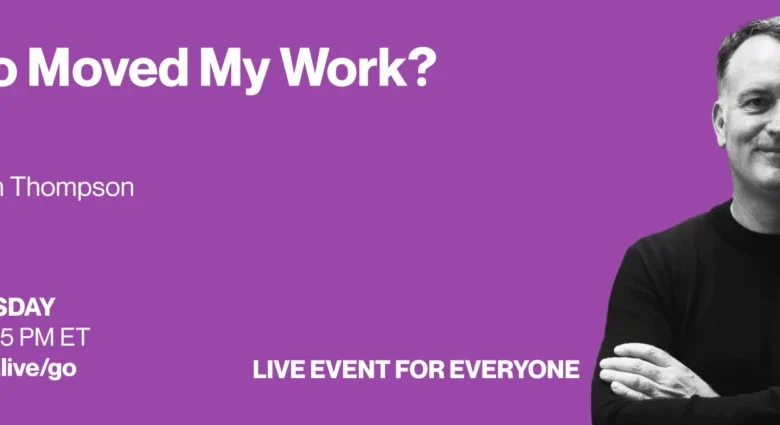
The modern creative landscape is undergoing a profound and irreversible structural transformation. While disruptive forces such as generative artificial intelligence, shifting corporate budgets, and evolving client expectations did not materialize overnight, their cumulative impact is testing the resilience of design studios, production companies, and independent creatives worldwide. For years, many agencies relied on predictable pipelines, established client relationships, and traditional scopes of work. Today, however, those legacy revenue streams are quietly evaporating, leaving many industry professionals searching for answers. Addressing this critical juncture, RevThink hosted a timely and focused session of The Weekly Briefing featuring Tim Thompson, tackling the unsettling reality of a shifting marketplace under the provocative “Who Moved My Work?”
The live virtual event, broadcast on Wednesday, September 23, at 5:00 PM ET, was designed to help creative leaders diagnose market shifts before their business models become obsolete. Rather than focusing solely on the technological tools driving change, Thompson’s presentation delved into the psychological, operational, and strategic traps that keep creative businesses tethered to outdated methods. As studios grapple with shrinking margins, in-house agency expansion, and automated content generation, the session served as an urgent wake-up call for leaders to audit their pipelines, rethink their value propositions, and proactively pivot toward emerging market demands.
The Anatomy of Creative Industry Disruption
To understand the core message of Thompson’s presentation, one must examine the broader macroeconomic and technological pressures currently reshaping the creative sector. Over the past five years, the intersection of advanced artificial intelligence, global economic uncertainty, and corporate cost-cutting has fundamentally altered how brands consume creative services. Enterprises that once outsourced high-end motion design, visual effects, and comprehensive branding campaigns to specialized boutique agencies are increasingly bringing those capabilities in-house or relying on software-driven efficiencies.
Simultaneously, the definition of value in the creative economy has shifted. Clients are no longer paying a premium simply for execution hours or technical proficiency—skills that have been largely commoditized by accessible software and AI integration. Instead, the market is placing a higher value on strategic partnership, high-level conceptual problem-solving, and measurable business outcomes. Despite these obvious market indicators, many studio owners and creative directors continue to cling to legacy service offerings simply because those models generated reliable income in the past.
During The Weekly Briefing, Thompson emphasized that this comfort zone is the primary hazard facing creative enterprises today. When studios wait for external market forces to force their hand, they often find themselves reacting out of desperation rather than executing a calculated strategic transition. Recognizing the early warning signs—such as lengthening sales cycles, compressed project budgets, or clients requesting drastically different deliverables—is the first step toward reclaiming momentum.
Background and Context: The Evolution of RevThink’s Briefings
RevThink has long established itself as a premier consultancy and advisory firm dedicated to helping motion design studios, creative agencies, and production companies build sustainable, profitable businesses. Founded on the principle that artistic talent alone is insufficient to guarantee long-term commercial success, the organization provides operational, financial, and strategic guidance to the creative sector.
The Weekly Briefing series was developed as a direct response to the volatile business climate following the pandemic and the subsequent technological revolutions. Designed as accessible, high-impact virtual sessions, these briefings bring industry leaders together to address immediate operational hurdles, leadership challenges, and macroeconomic trends. Tim Thompson, a core voice within the RevThink ecosystem, has frequently utilized these platforms to challenge conventional industry wisdom and push creative entrepreneurs to treat their studios as sophisticated commercial enterprises rather than traditional craft workshops.
The timing of the "Who Moved My Work?" session reflects a broader industry anxiety. Throughout late 2025 and into 2026, trade organizations and industry analysts have reported widespread contract contractions across traditional advertising and entertainment sectors. By dissecting these trends in real-time, RevThink aims to bridge the gap between creative excellence and business resilience, ensuring that studio principals can navigate ambiguity with clarity and confidence.
Key Themes Explored in the Session
Tim Thompson’s presentation was structured around three core pillars designed to help creative professionals evaluate their current market positioning and enact meaningful operational changes:

-
Early Recognition of Market Shifts: Thompson outlined the subtle indicators that signal a permanent change in client demand. Rather than waiting for a complete drying up of the project pipeline, attendees were urged to look closely at changing client vocabulary, altered procurement processes, and the types of briefs being submitted. When clients begin asking for faster, cheaper, and more generalized solutions, it often indicates a fundamental devaluation of specialized studio services.
-
Shedding Legacy Assumptions: A major focus of the session was dedicated to the psychological hurdles of letting go. Many creative leaders hold onto outdated service models because those offerings defined their early success or formed the bedrock of their studio’s reputation. Thompson argued that brand heritage can quickly become an anchor if it prevents a studio from embracing new modes of production and engagement.
-
Strategic Adaptation and Future-Proofing: Moving beyond critique, the session provided actionable frameworks for pivoting a creative business. This included diversifying revenue streams, packaging creative services as strategic business solutions rather than line-item production tasks, and upskilling internal teams to leverage emerging tools collaboratively rather than defensively.
Industry Implications and Expert Analysis
The issues raised by Thompson reflect a maturing creative economy that is shedding its twentieth-century operational structures. Industry analysts note that the divide between thriving studios and struggling agencies is widening significantly. Those successfully navigating the current climate are typically characterized by agile business models, deep integration of strategic consulting into their creative offerings, and a willingness to cannibalize their own legacy services before the market does it for them.
Conversely, studios that resist adaptation often experience a gradual erosion of profitability. Margins compress as competition intensifies for a shrinking pool of traditional production contracts. Furthermore, creative talent within these stagnant organizations often experiences burnout or disillusionment, as leadership struggles to provide a compelling vision for the future.
From a macroeconomic perspective, the shift emphasizes the transition of creative work from a craft-centric industry to an essential pillar of corporate innovation and digital transformation. As brands face unprecedented competition in crowded digital marketplaces, the demand for high-impact visual storytelling remains robust—but the mechanisms for procuring, producing, and valuing that work have changed permanently.
Broader Impact on the Creative Community
The response to RevThink’s session underscores a collective hunger for pragmatic, business-oriented guidance among creative professionals. For decades, the creative industries prided themselves on an ethos where artistry superseded commercial strategy. However, the complexities of the modern digital economy demand a dual focus on creative brilliance and rigorous business acumen.
Initiatives like The Weekly Briefing serve as vital community touchpoints where studio founders, executive producers, and independent artists can confront uncomfortable truths in a supportive, collaborative environment. By demystifying market disruption and framing it as an operational challenge rather than an existential crisis, sessions led by figures like Tim Thompson empower the creative community to take proactive control of their professional destinies.
As the industry continues to absorb the long-term implications of artificial intelligence, changing corporate procurement practices, and global economic fluctuations, the core question posed by RevThink remains relevant to every practitioner in the field: Are you waiting for the market to dictate your future, or are you actively shaping your own evolution? For those who tuned into the live session on September 23, the roadmap toward a more resilient, adaptable creative practice became significantly clearer.
Related posts: