Unveiling the Post-Apocalyptic Spectacle: Fallout Season 2’s Pioneering VFX and Hybrid Production Techniques

The highly anticipated second season of Prime Video’s Fallout pushes the boundaries of cinematic world-building, expanding its acclaimed post-apocalyptic universe with an unprecedented fusion of cutting-edge visual effects, extensive virtual production, and a surprising commitment to shooting on film. Scheduled to captivate audiences with its expanded scope, new creatures, and faithful recreation of iconic locations like New Vegas, the series stands as a testament to the intricate artistry and technological innovation driving contemporary high-end television production. At the heart of this ambitious endeavor is Visual Effects Supervisor Jay Worth, a veteran whose impressive resume includes critically acclaimed series like Westworld and Altered Carbon, who spearheaded a complex production pipeline that challenged conventional wisdom in visual effects.
A Hybrid Approach: Marrying Film with Virtual Production
One of the most distinctive and challenging aspects of Fallout Season 2’s production was the decision to shoot volume stage sequences on film. This choice deliberately diverged from the industry standard, where digital cameras are almost universally paired with LED volume stages for their immediate feedback and streamlined post-production workflows. Worth explained the arduous, yet ultimately rewarding, process: "If you are shooting on digital in a volume stage, you can go into your DIT tent, take a look at it and say, ‘Let’s up the luminance, bring up the saturation, fix the color balance, try brightening the wall and bringing down the key light. Alright, let’s shoot it again.’ For us, we have to shoot five different bracketed versions of luminance, color saturation, key light and fill light, develop the film, take a look at it, go back in, make more adjustments, learn what we learned, guess to make sure it’s going to make the effect we want, refilm it and relook at it. The testing process is the crazy part."
This unconventional methodology necessitated an intensive testing phase, a significant departure from the instant gratification offered by digital capture. The team, led by Worth and Cinematographer Bruce McCleery (Blue Beetle), embarked on a meticulous trial-and-error journey, relying on their expertise and trust in their technical and artistic teams. McCleery’s role was particularly crucial in mastering the delicate balance required to integrate film’s unique aesthetic with the dynamic demands of virtual production. Worth praised his cinematographer’s "amazing job doing those balances and understanding the technology and how film works with the technology. You’re trusting your technicians and artists to get it right, but you can’t see it until after you develop it."
The rationale behind this painstaking process was rooted in achieving a specific visual quality. The "softening" effect inherent in film photography, when applied to digital assets projected on the LED volume, imbues them with a heightened sense of believability and organic texture. "A digital asset then shot through film softens it in a way that makes it a lot more believable," Worth noted. "You look at the asset on the wall, and you’re like, ‘I don’t know about that.’ Then you look at the film, and you’re like, ‘It looks great.’" This commitment to a hybrid approach underscores a broader industry trend of filmmakers exploring innovative ways to combine practical, digital, and traditional techniques to achieve unique visual signatures, moving beyond the perceived limitations of purely digital workflows.
Expanding the World: Virtual Production’s Versatility
Beyond the groundbreaking film integration, virtual production served as a cornerstone for creating Fallout Season 2’s expansive environments. The technology allowed for unparalleled flexibility and immersion on set, enabling the creative team to visualize and interact with complex digital backdrops in real-time. Several key sequences benefited from this approach:
- The Abandoned Vault: The creative team revisited and reimagined an abandoned vault from Season 1, dynamically altering its environment within the volume. "What if we pop a hole in the ceiling and have sunlight blasting through?" Worth recalled, highlighting the ability to instantly transform digital sets.
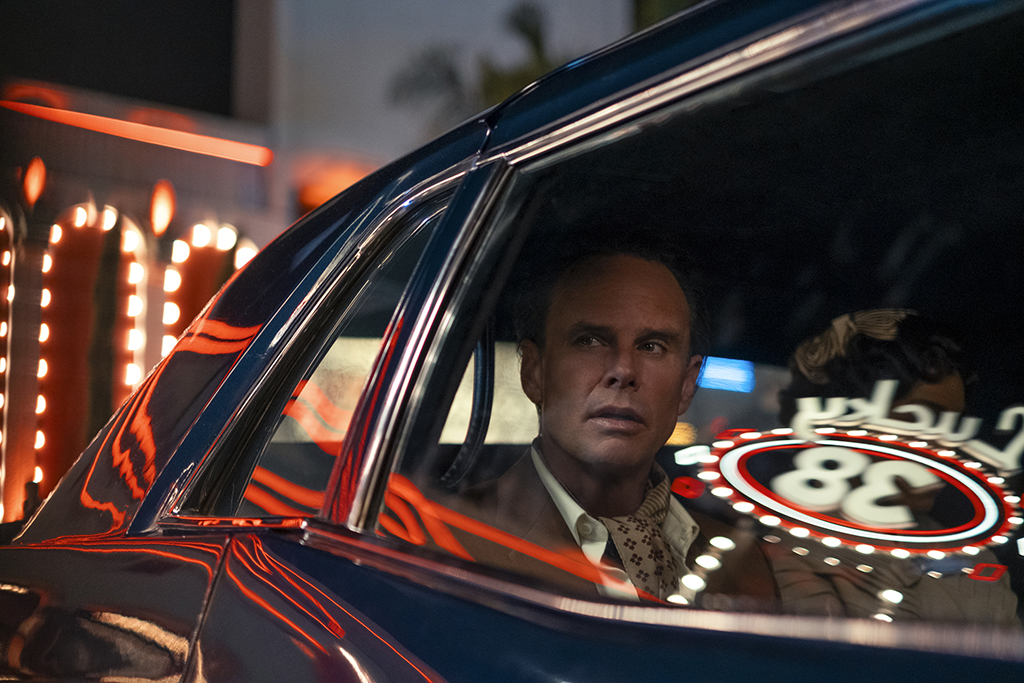
- New Vegas Penthouse Sequences: The opulent yet decaying interiors of New Vegas’s elite structures were brought to life through virtual production, providing expansive views and intricate details.
- Caswennan Airship: The formidable Brotherhood of Steel airship, a fan-favorite element from the games, was realized with virtual production. Sequences featuring "waving flags and the drifting desert" were shot on the volume, as were all the aerial maneuvers involving characters like Max and Xander, including docking scenes and individual flying shots.
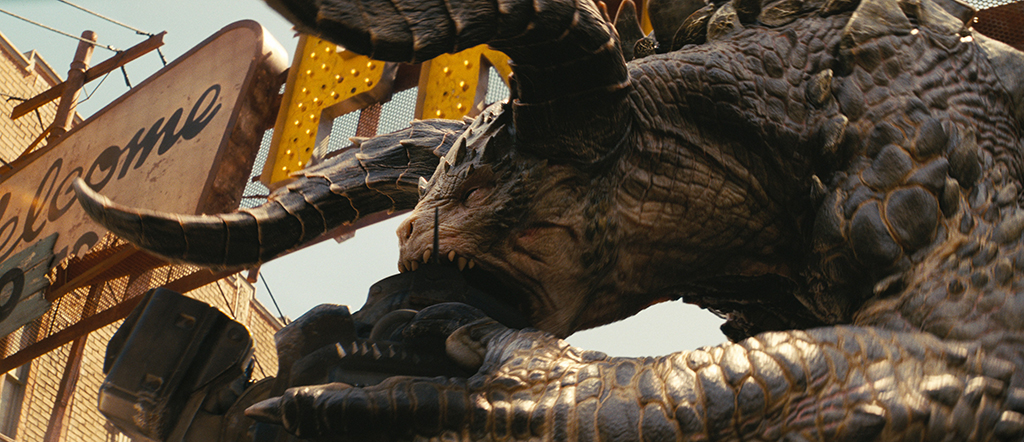
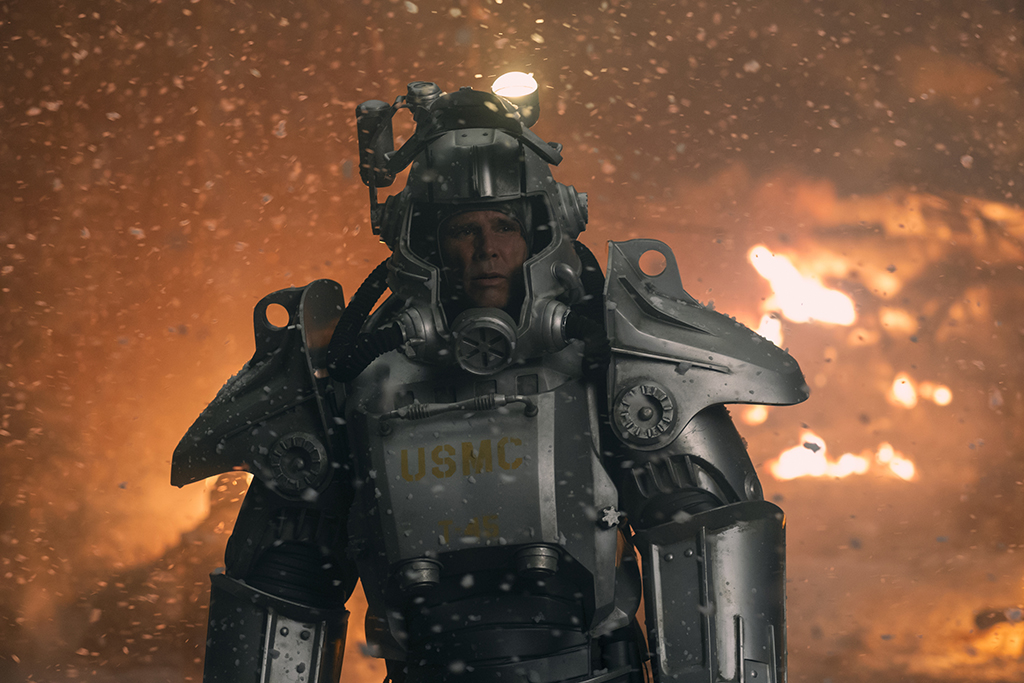
- Deathclaw Introduction: One of the season’s most anticipated reveals, the Deathclaw’s inaugural appearance, was crafted entirely on the volume. Worth described the challenging brief: "What if we try to do outside at night in a snowstorm with fire as our primary lighting element when we introduce the Deathclaw for the first time? That was all done on the volume. We never like to do things simply on our show!" This illustrates the volume’s capacity to create highly complex and atmospherically rich environments that would be impossible or prohibitively expensive to build practically.
To further enhance the realism of these virtual environments, practical atmospherics such as dust, clouds, steam, mist, and smoke were consistently blown through almost all the volume stage sets. This integration of tangible elements with digital backdrops helped ground the actors and cameras within the fantastical settings, creating a more cohesive and believable final image.
Creature Feature: Blending Practicality and Digital Prowess
The Fallout universe is renowned for its terrifying and iconic mutated creatures, and Season 2 significantly ups the ante. The VFX team meticulously crafted these monstrous denizens, often employing a sophisticated blend of practical effects and digital augmentation to achieve maximum impact and fidelity to the game.
-
The Deathclaw: A creature synonymous with the Fallout franchise, its introduction and subsequent battles were a major undertaking. The creative process began with "stuntvis and storyboards" rather than traditional previs, allowing for a more organic development of action sequences. While initial appearances in Episodes 204 and 205 involved a straightforward reveal, Episodes 207 and 208 escalated into full-blown battles, requiring intricate choreography. For its grand introduction, Legacy Effects built an incredible practical puppet head, providing a tangible reference for actors and filmmakers. This puppet served as a "grounding" element, lending an organic and tactile quality that made viewers question, "Is it a puppet? Is it real?" ILM then scanned this practical asset and built the full digital creature, augmenting the puppet for close-ups (adding shoulders, claws, breathing, nostrils, eye blinks) and handling all full-CG sequences in later episodes. The interaction between Max and the Deathclaw frequently involved the creature running into real objects, further blurring the lines between practical and digital.
-
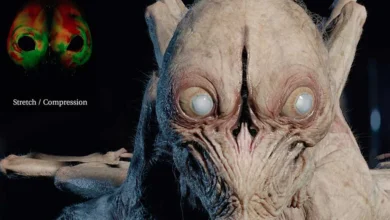
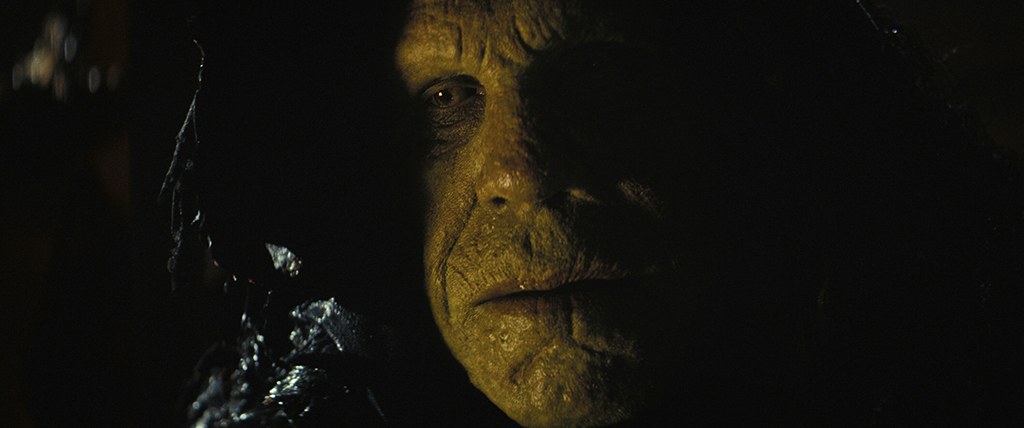
The Super Mutant: The introduction of a Super Mutant, featuring the legendary Ron Perlman, presented a unique challenge. While facial capture was initially attempted for Perlman, it didn’t meet expectations. The team at Important Looking Pirates (ILP) stepped in, delivering a full CG replacement for the Super Mutant’s head and face. The design cleverly integrated "flavors" of Perlman’s performance with the iconic look of the game character Marcus, creating a familiar yet fresh interpretation. The physical performance was provided by Carey Jones, a 6’8" Prosthetic Makeup Designer and stunt performer, who wore a practical hood. His on-set movements were later matched through animation, allowing Perlman’s acting nuances to shine through the CG transformation.
-
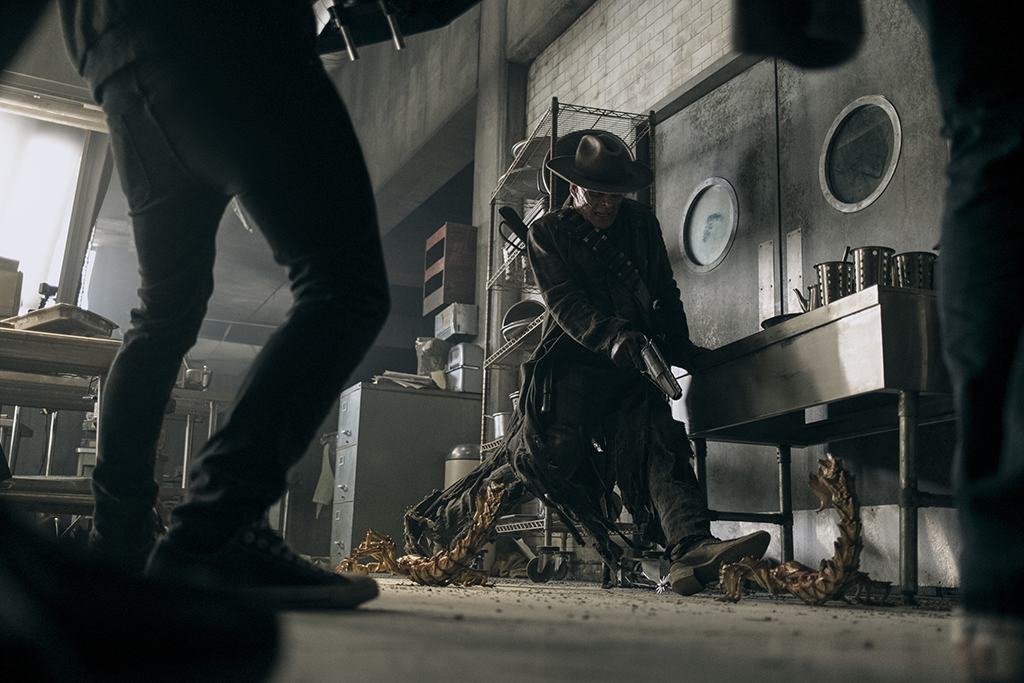
Radscorpions: These irradiated arachnids were brought to life through a combination of large-scale puppetry and nimble practical effects for their offspring. Quantum VFX built a "huge Radscorpion puppet" on a push dolly, enabling dynamic interaction with actor Walton Goggins. For the baby Radscorpions, the team ingeniously utilized puppets on sticks and wires. Worth recounted a particularly amusing and challenging scene where a baby Radscorpion jumps out of a pot onto Goggins’ face. This moment, directed by Fred Toye, was achieved practically with a monofilament wire pull, after numerous takes of "flopping" and "landing pathetically." ILP in Sweden contributed to these sequences, with many shots requiring only wire removal rather than full digital replacement, underscoring the effectiveness of the practical approach.
-
Radroaches: The persistent, bloodthirsty Radroaches returned to terrorize Vault Dwellers, and Refuge VFX took on the challenge of choreographing their "weird, dumb swarm of danger." Special effects makeup handled the gruesome neck injuries, while puppets were used for direct impacts, providing a physical motivation for the camera and actors. The team at Refuge VFX was given creative freedom to devise various "dumb bumblebee" actions, resulting in a chaotic yet entertaining portrayal of the creatures.
-
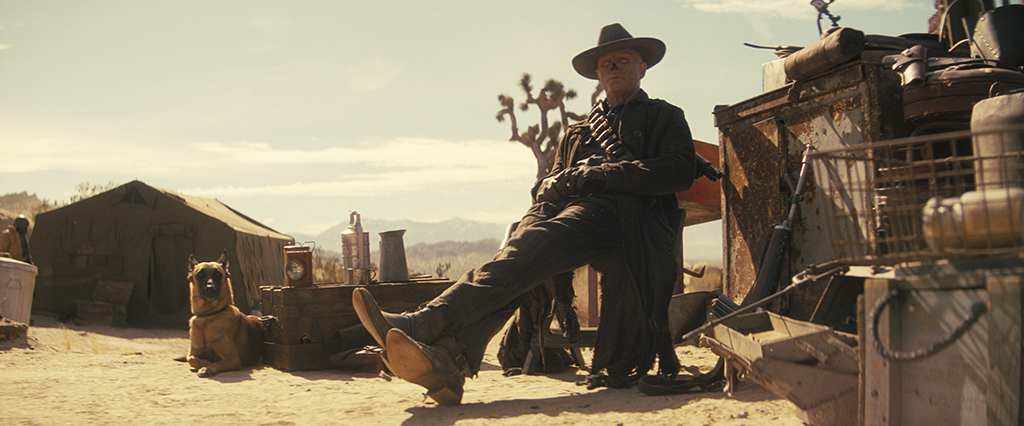
The Ghoul: The character of the Ghoul saw an increase in visual complexity, with the number of "hollow nose shots" rising to 800 for Season 2, indicating more detailed facial animation and prosthetics work to maintain consistency and expressiveness.
Building the Wasteland: From New Vegas to Area 51
The scope of environmental storytelling in Fallout Season 2 expanded dramatically, necessitating innovative approaches to set construction and digital extensions. The ambition to recreate New Vegas, a sprawling and iconic location from the games, presented a significant challenge.
-
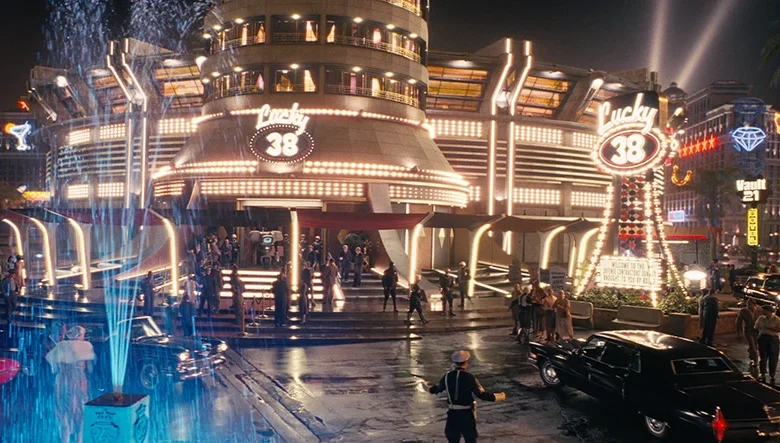
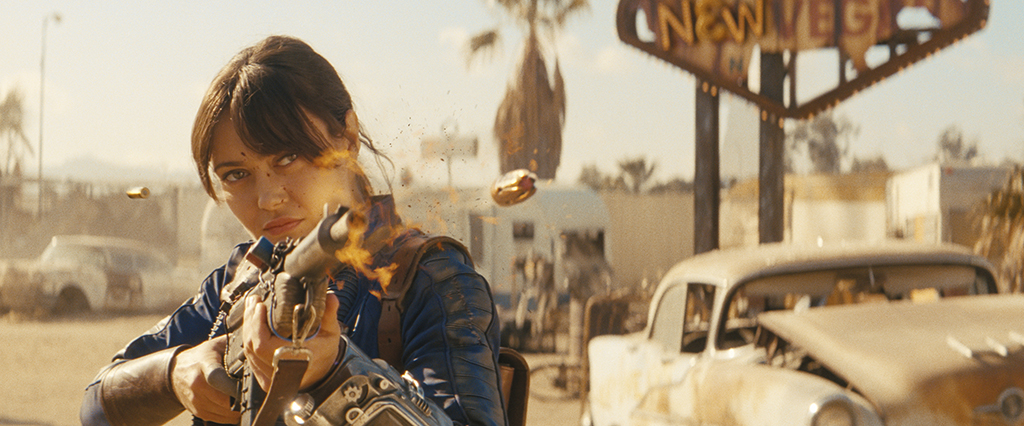
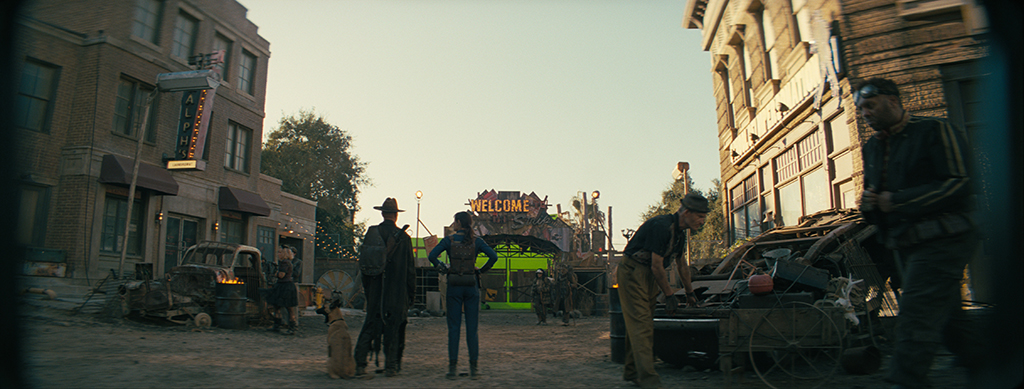
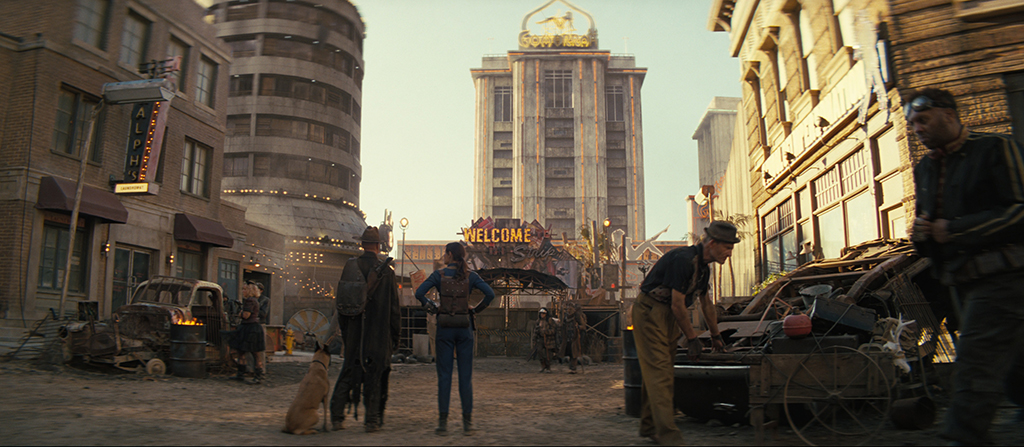
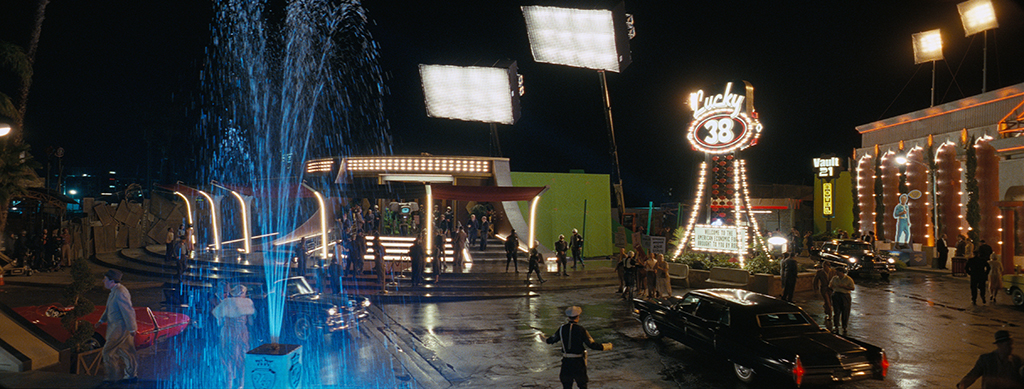
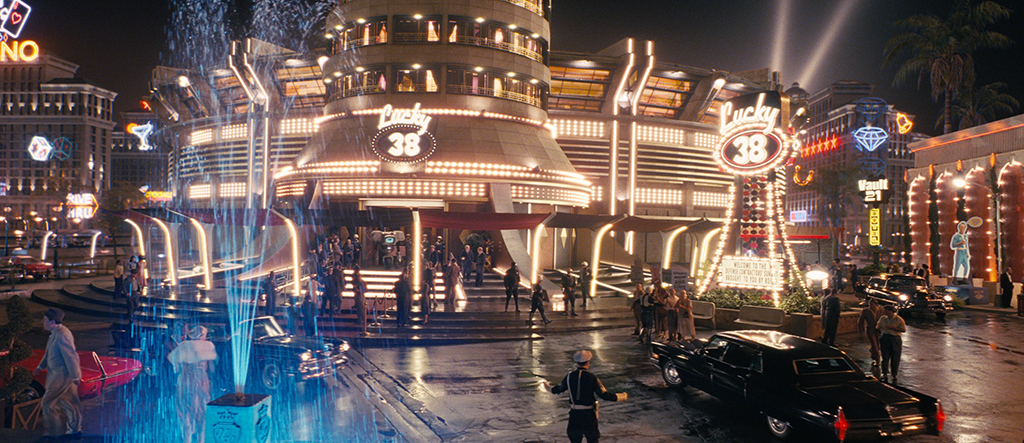
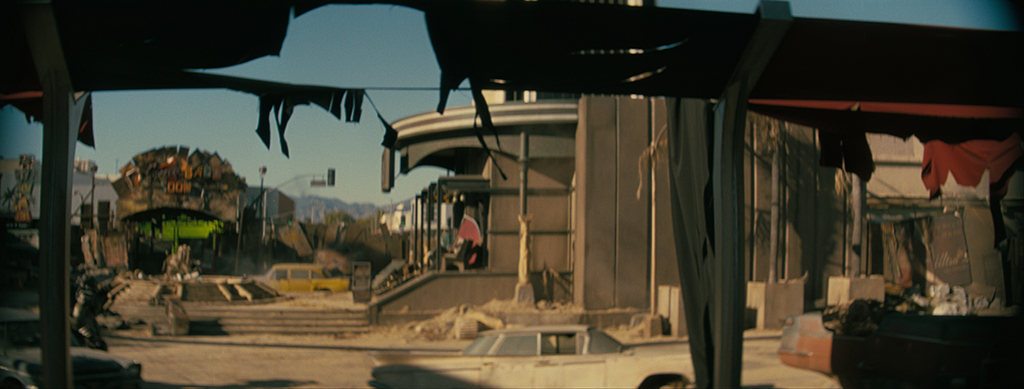
New Vegas: Production Designer Howard Cummings and Location Manager Mandi Dillin located an abandoned mall in North Hollywood, which became the canvas for parts of New Vegas. Here, the Southern Gate was physically built, along with facades of iconic casinos like Tops and Gomorrah, and a portion of The Lucky 38’s base. However, the sheer scale of New Vegas required extensive digital augmentation. Freeside, another key district, was uniquely rebuilt at Melody Ranch, a location familiar to Worth from his Westworld days. Raynault VFX was instrumental in crafting the digital set extensions for the grand reveal of New Vegas as Lucy and the Ghoul enter the city. The dynamic lighting conditions, ranging from sunny to overcast days, often required full sky replacements to maintain visual consistency.
-
Other Environments:
- New California Republic (NCR) encampment: Primarily required cleanup work.
- Caesar’s Legion: While a substantial portion of tents was physically constructed, the vastness of the encampment necessitated digital doubles and full set extensions to create the illusion of a massive army. Weather, particularly wind, posed significant challenges, leading to sets being knocked down and requiring pickups at different locations to match continuity.
- Dino Dee-lite Motel: In a stroke of serendipity, Cummings and Dillin discovered the actual motel that served as the basis for the game’s location, allowing for an authentic on-site shoot.
- Area 51: Uncovered in Season 2, this enigmatic location involved multiple shooting sites. The grand reveal was staged at Dumont Dunes, with the structure placed within the vast desert landscape. Hangar sequences were filmed at Ontario Airport, where existing dirt mounds were utilized practically, with set extensions completing the environment. Barracks scenes were shot in an abandoned prison, requiring the addition of dirigibles, sand dunes, and cleanup.
Signature Effects and Narrative Impact
Beyond creatures and environments, several distinct visual effects became signature elements of Fallout Season 2:
- Mini-Nuke Car Explosions: Showrunners Graham Wagner and Geneva Robertson-Dworet had the idea of incorporating the game’s "mini-nuke" car explosions. Refuge VFX masterfully brought this concept to life, creating visually spectacular, small-scale nuclear detonations that became a recurring and distinctive visual motif throughout the season.
- Nuclear Reflection in the Eye: A powerful visual from Season 1, the reflection of a nuclear explosion in a character’s eye, was revisited. RISE, who developed the look initially, recreated this effect, notably for the poignant moment in Episode 202 when Hank drops the nuke on Shady Sands.
- Slow-Motion Bullet Shots: Intricate camera work was required to achieve these technically challenging and visually impactful sequences.
Production Challenges and Evolution
Across its eight episodes, Fallout Season 2 delivered just over 3,202 visual effects shots, a monumental undertaking involving a consortium of leading VFX vendors including ILM, RISE, Important Looking Pirates, Raynault VFX, CoSA FX, FutureWorks, Haymaker VFX, Curated, Quantum VFX, and Refuge VFX.
The production schedule for Season 2 was notably shorter than its predecessor. However, Worth noted that this compressed timeline was offset by a clearer vision: "The schedule was more challenging this year. We had less time than in the past, but it helped us hone in on more specifics of what we were going to be doing." Unlike Season 1, which was a "blank slate" requiring the invention of creatures like Snip Snip and elements like the Vertibird battle, Season 2 benefited from established visual language. "Season 2 was, ‘We know what the Deathclaw, Radscorpion and New Vegas look like.’ It was a little more contained, even though the technological challenges of doing more creatures, volume work and different environments were challenging," Worth concluded.
This strategic evolution in production demonstrates the growing maturity of Fallout‘s cinematic adaptation. By leveraging a unique blend of traditional film aesthetics with advanced virtual production and a meticulous integration of practical and digital effects, Fallout Season 2 not only expands its world but also sets a new benchmark for immersive storytelling in the realm of video game adaptations. The series stands as a testament to the collaborative spirit and relentless innovation within the visual effects industry, pushing creative boundaries to bring beloved fictional universes to vivid, believable life on screen.