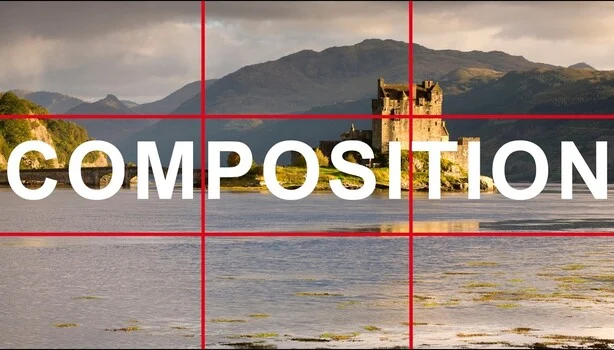
Every photographer embarks on their professional journey by mastering the rule of thirds, an elementary guideline that serves as the gateway to balanced framing. Yet, as practitioners progress, they accumulate an expansive arsenal of compositional techniques, each promising to elevate their work. The central inquiry facing modern photographers is determining which of these methodologies holds the greatest utility and whether the pinnacle of artistic expression lies within a codified technique or in the deliberate abandonment of structure altogether.
An Unconventional Tutorial Amidst Physical Adversity
In a recent comprehensive instructional video, photographer Craig Roberts provides a detailed overview of the essential tools of photographic composition. The presentation is notable not only for its technical depth but for its candid delivery; Roberts discloses at the outset that he is filming while suffering from a slipped disc that is actively pressing on a nerve. This transparency regarding his physical state contextualizes the occasional slurred speech throughout the video, serving as a testament to the commitment of practitioners to share knowledge despite personal challenges.
Roberts begins his technical breakdown with the rule of thirds, which he identifies as the "king of composition." Historically, this rule—a derivative of the golden ratio—has served as the foundation for both classical painting and modern digital photography. By dividing the frame into a three-by-three grid, photographers can place focal points along these intersections to create balance. However, Roberts issues a critical caveat: the rule of thirds can quickly become a crutch. When over-relied upon, it yields predictable, "obvious" imagery that lacks a unique authorial voice.
Chronology of Compositional Development
The evolution of a photographer’s eye generally follows a predictable timeline. Beginners start by rote memorization of the rule of thirds, seeking to avoid "dead center" shots. As they mature, they begin to incorporate diagonal lines to inject kinetic energy into static scenes, positioning elements corner-to-corner to guide the viewer’s gaze.
Following the discussion of diagonals, Roberts addresses the "vanishing point"—the psychological phenomenon where parallel lines converge in the distance. Rather than forcing this effect, Roberts suggests that the most effective compositions are those where the photographer identifies an existing vanishing point within the environment. This distinction marks the transition from mechanical application to intuitive observation.
The middle stages of this compositional development often involve:
- The S-Curve: Often considered the "jackpot" of natural composition, the S-curve leads the eye through the frame in a rhythmic, organic manner. Roberts notes that even simpler iterations, such as C-shapes or semi-circles, are highly effective within the standard rectangular constraints of a camera sensor.
- Framing: This involves using environmental elements—such as tree branches or architectural features—to create a "frame within a frame." This technique is frequently used to obscure empty, uninteresting sky or to hide "dead space" by placing a silhouetted foreground element between the lens and the subject.
- Central Composition: Contrary to the rule of thirds, central placement is defended here as a deliberate stylistic choice, reserved for subjects that demand absolute dominance and symmetry.
The Paradox of Rules and Freedom
The most provocative segment of Roberts’ analysis is his assertion that his "favorite" compositional rule is, in fact, the absence of all rules. He argues that composing by "feel" is not an act of negligence, but rather the final stage of professional development. The central argument is that one cannot meaningfully "break" a rule that one has not first mastered.
This philosophy mirrors the cognitive development of experts in other disciplines, such as jazz improvisation or classical literature. In music, a performer must understand the constraints of scales and time signatures before they can intentionally deviate from them to create something emotionally resonant. Similarly, in photography, the freedom to ignore the rule of thirds is earned only after the practitioner has shot thousands of frames using that very rule. By turning "going with your gut" into a defensible, empirical methodology, Roberts aligns his teaching with the reality of how high-level commercial and artistic photographers operate: the analysis occurs in the sub-second interval before the shutter is released, moving from a conscious effort to an automatic reflex.
Training Wheels and Professional Fluency
For those in the early stages of their photographic career, the takeaway is clear: treat each compositional technique as a formal assignment. Roberts suggests dedicating specific periods—a week of shooting only diagonals, a week focused exclusively on vanishing points—to ensure these techniques are internalized.
This approach is supported by data from cognitive psychology regarding "deliberate practice," a concept popularized by psychologist K. Anders Ericsson. The theory posits that expert performance is the result of thousands of hours of purposeful, structured repetition. By grinding through the rules, the photographer achieves "fluency"—the point at which the mechanics of the craft become transparent, allowing the photographer to focus entirely on the subject matter and the emotional narrative of the image.
The Odd One Out: Theoretical vs. Practical Application
Not every technique taught in the halls of art history is viable for the modern photographer. Roberts identifies one specific compositional concept that he has encountered in literature but has never successfully implemented in a real-world photograph. He speculates that this particular technique may be an artifact of oil painting, where artists can manipulate light and composition during the multi-layered process of painting, rather than capturing a single moment on a sensor.
By advising his audience to "give that one a miss," Roberts provides a refreshing, honest assessment that separates theoretical knowledge from practical, field-tested experience. This skepticism is a vital component of a professional’s pedagogical approach, encouraging students to discard techniques that do not translate into effective visual communication.
Implications for the Photographic Industry
The broader implication of Roberts’ discourse is that the industry is moving away from a "one-size-fits-all" approach to composition. As digital cameras become more accessible and AI-assisted photography begins to automate basic framing, the value of the human photographer lies in their ability to make unconventional, yet aesthetically pleasing, compositional decisions.
The transition from a rule-follower to an intuitive artist represents a significant shift in how photography is taught. Historically, photography education focused heavily on the "how" (technical settings and rule application). The current landscape, influenced by educators like Roberts, emphasizes the "why." This shift is necessary because the mechanical aspects of photography are becoming increasingly standardized.
Summary and Conclusion
The path to photographic excellence is not found in the blind adherence to a set of guidelines, but in the rigorous, disciplined study of those guidelines followed by their calculated abandonment. By treating the rule of thirds, diagonals, and vanishing points as training wheels, the photographer builds the muscle memory necessary to achieve a higher level of creative intuition.
Ultimately, the goal of any photographer should be to reach a state of fluency where they can compose a compelling, technically sound frame without needing to articulate the underlying theory. This mastery is the reward for the years of grinding through the basics. As Roberts demonstrates, the most sophisticated composition is often the one that feels completely natural, even if it defies every rule in the manual. The video serves as a reminder that while the rules are essential, they are merely the beginning of the conversation, not the end.