The Evolution of Visual Effects: An In-Depth Profile of Industry Veteran Tiffany Smith Llorens

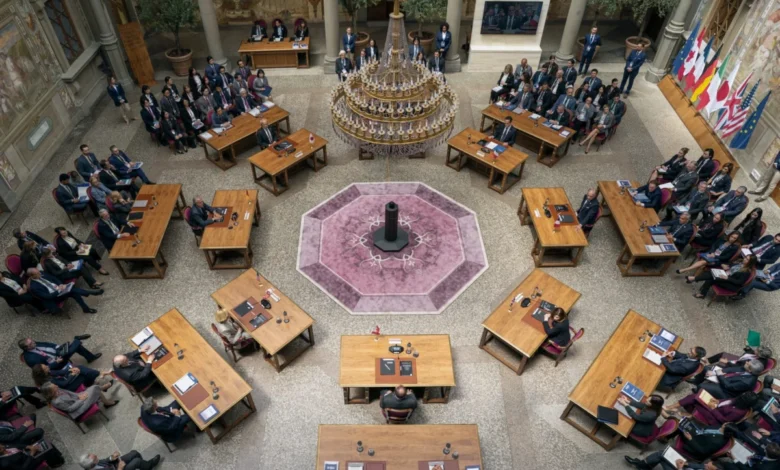
The landscape of modern visual effects (VFX) has undergone a seismic shift since the mid-1990s, evolving from labor-intensive analog processes to the highly sophisticated, machine-learning-assisted workflows that define contemporary cinema and television. At the center of this transformation is Tiffany Smith Llorens, a veteran producer and executive who has navigated the transition from film-based optical effects to the digital-first era. Currently serving as a Senior Executive Producer at Framestore, Llorens brings three decades of technical expertise and creative problem-solving to high-profile productions, most recently exemplified by her work on the Netflix political thriller The Diplomat.
A Career Forged in the Crucible of 1990s Hollywood
Llorens’ entry into the industry in 1996 occurred during a pivotal moment in film history. Beginning her tenure at Cinesite Hollywood, she arrived just as digital compositing began to supersede traditional photochemical effects. Her early resume reads like a roadmap of 1990s blockbuster innovation, including roles on James Cameron’s Titanic (1997), Space Jam (1996), and Waterworld (1995).

The technical environment of that era was characterized by severe limitations. Artists often worked with physical film stock, utilizing optical printers and rudimentary digital tools. According to industry records, the transition to digital workflows was not immediate; it required a decade of experimental integration. Llorens’ early experience at Cinesite provided her with a foundational understanding of the "invisible" craft—ensuring that effects work remained seamless to the audience, a philosophy she maintains to this day. Her ability to translate these complex processes into accessible concepts was evident early on, as she famously demonstrated the mechanics of blue-screen compositing to her peers at California State University, Northridge, using then-standard analog projectors.
From Spectacle to Invisible Integration
While Llorens spent years overseeing massive "spectacle" projects—including Netflix’s Wednesday, One Piece, and the Avatar: The Last Airbender series—her work on The Diplomat represents a different tier of VFX artistry. In the context of political dramas, the goal is often the inverse of a high-fantasy project. Instead of creating new worlds, the objective is to maintain the integrity of the existing one.
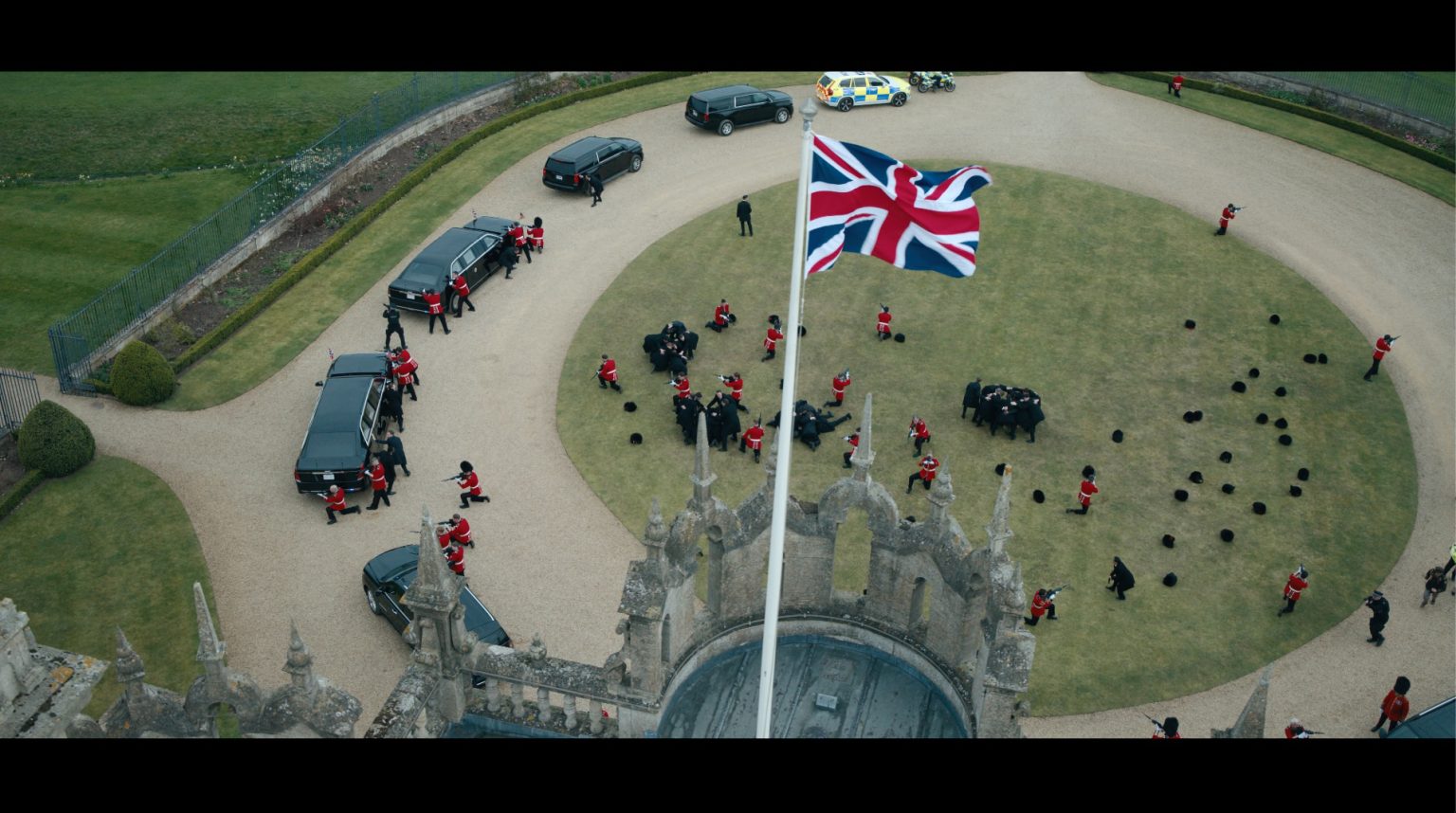
In this capacity, VFX functions as a "supporting actor." For instance, during the production of The Diplomat’s second season, the team faced significant challenges due to the industry-wide labor strikes, which disrupted filming schedules. The result was a discrepancy between the intended setting of the narrative and the seasonal reality of the filming location. Through digital environment manipulation—changing the foliage, adjusting lighting, and modifying background architecture—Llorens and the team at Framestore ensured continuity without distracting the viewer from the narrative tension. This "invisible" work is often more cost-effective than physical production, allowing studios to preserve budgets while meeting high-quality visual standards.

The Technological Leap: From Roto to Machine Learning
The shift in the VFX industry over the past thirty years can be quantified by the efficiency of specific tasks. Rotoscoping—the process of manually tracing over film frames to create mattes—is a primary example. In the mid-90s, this was a painstaking, frame-by-frame analog process. Today, while human oversight remains critical, machine learning algorithms and advanced software suites have reduced the turnaround time for such tasks by orders of magnitude.
However, Llorens emphasizes that technological advancement is not merely about speed; it is about the expansion of creative potential. Modern tools allow for the hyper-realistic simulation of fluid dynamics, such as ocean water, and complex organic elements like fur and human hair. Where earlier projects struggled to render convincing textures, contemporary artists can now simulate the physics of movement to a degree that is virtually indistinguishable from reality. This biological accuracy is particularly vital in creature design, as seen in projects like Avatar, where artists build internal skeletons and muscle structures for digital entities to ensure that their movement remains grounded in biological logic.
Strategic Production and the Philosophy of Practical Effects
A core tenet of Llorens’ professional philosophy is the strategic weighing of practical versus digital production. Despite the infinite possibilities afforded by computer-generated imagery (CGI), she maintains that "real life is always better." Her approach is rooted in a pragmatic producer’s mindset: evaluating the cost-to-benefit ratio of on-location shooting versus digital extension.
This assessment is governed by three primary factors:
- Budgetary Efficiency: Calculating whether it is more cost-effective to build a physical set or to create a digital environment.
- Performance Integrity: Recognizing that actors often deliver more authentic performances when physically present in a tangible environment, as opposed to a green-screen stage.
- Storytelling Utility: Determining whether a digital effect enhances the narrative or merely serves as a display of technical capability.
The industry has seen a resurgence in the "hybrid" production model, where practical elements are captured on set to serve as a baseline, which is then augmented by digital enhancements. This method mitigates the "uncanny valley" effect, where audiences perceive digital elements as unnatural, by providing the compositing artists with real-world lighting and color references.
Broader Industry Implications and Future Outlook
The role of the VFX producer has evolved from a purely technical oversight position into a core creative partnership. As production schedules tighten and the demand for high-quality content increases across streaming platforms, the ability to solve problems on the fly—whether dealing with unexpected weather, logistical constraints, or limited budgets—is the defining skill set of a modern VFX executive.

Llorens’ career trajectory highlights a broader trend: the importance of institutional memory in an era of rapid technological turnover. While many industry professionals struggled to adapt to the transition from film to digital in the late 90s and early 2000s, those who treated technology as a tool rather than a replacement have thrived.
The current state of the industry is one of unprecedented capability. With the integration of AI-assisted tools and the maturation of real-time rendering, the barrier between the imagination of the showrunner and the final product is thinner than ever. Yet, as Llorens notes, the fundamental objective remains unchanged: to serve the story. Whether it is a dragon flying over a mountain or a subtle set extension in a London-based drama, the successful execution of visual effects relies on the collaboration of a multidisciplinary team.
Looking ahead, the industry is poised to continue this integration of new tech into traditional workflows. The challenge for the next generation of VFX artists will be to master these sophisticated tools while maintaining the core storytelling values that have defined the medium for nearly a century. As production complexity increases, the ability to act as a bridge between the creative vision and the technical reality will remain the most valuable commodity in Hollywood. For professionals like Llorens, the "victory" of a finished project is not found in the technology itself, but in the seamless, often unnoticed, union of craft and narrative that allows an audience to remain fully immersed in the story.