The Professional Guide to Navigating the 2026 Apple Silicon Mac Ecosystem

The landscape of professional computing has undergone a significant transformation as of October 2026, driven by Apple’s latest M5 and M6 chip architectures. For creative professionals—ranging from video editors to AI developers—the decision to upgrade is no longer as simple as selecting the newest model. With the introduction of the M5 family, the M6 "efficiency" chips, and a global volatility in memory component pricing, the traditional metrics of performance have shifted. This guide analyzes the current Mac lineup, the critical role of hardware-level AI acceleration, and the financial implications of choosing the right configuration for professional workflows.
The Evolution of Apple Silicon: A 2026 Chronology
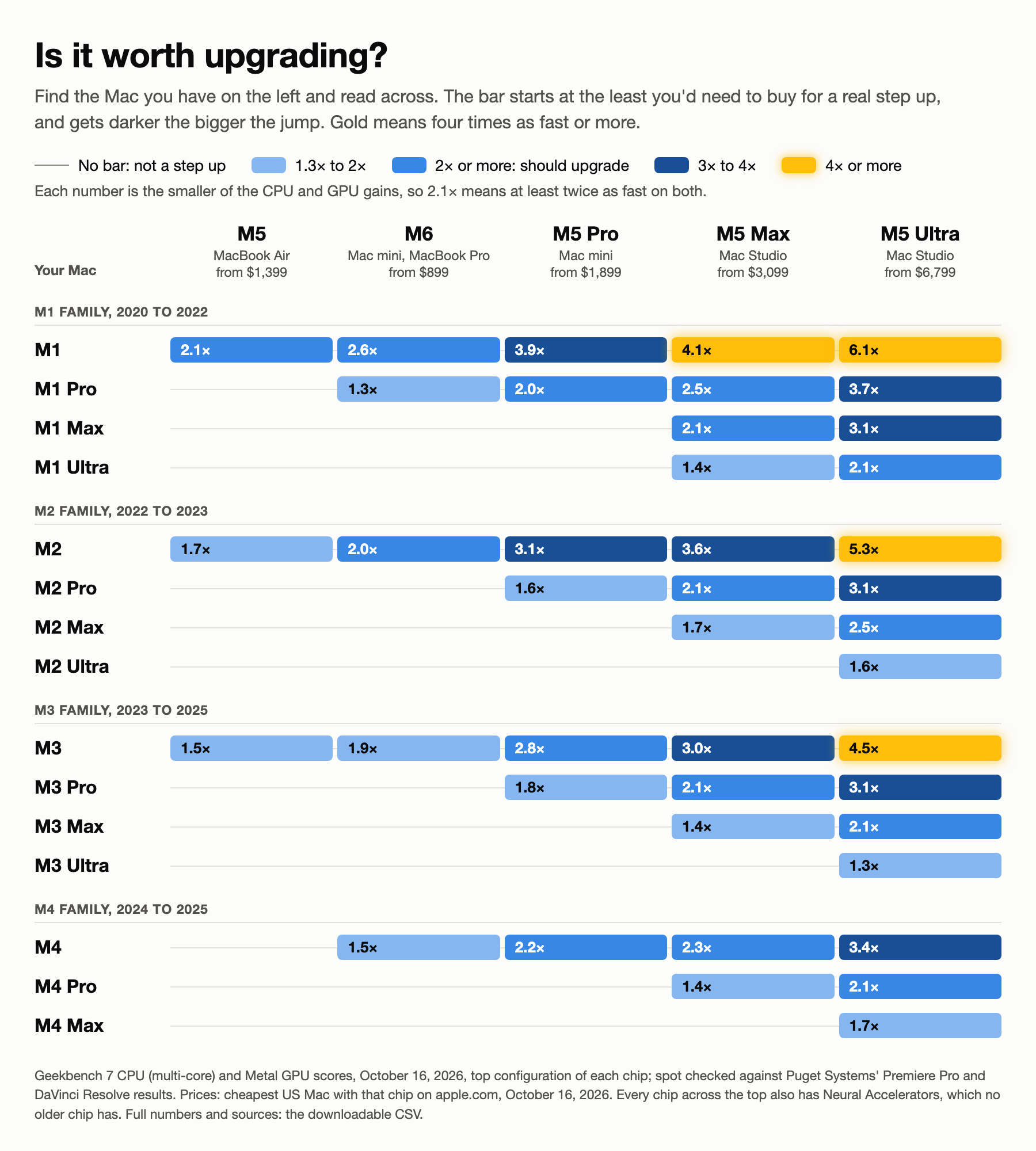
The transition to Apple Silicon, which began in 2020, reached a state of complex maturity by the third quarter of 2026. In September, Apple launched the M6 chip, primarily targeting the Mac mini, followed by a rollout to the 14-inch MacBook Pro and the iMac. However, the M6 rollout was accompanied by a strategic pause in the release of "Pro" and "Max" variants of the M6 architecture.
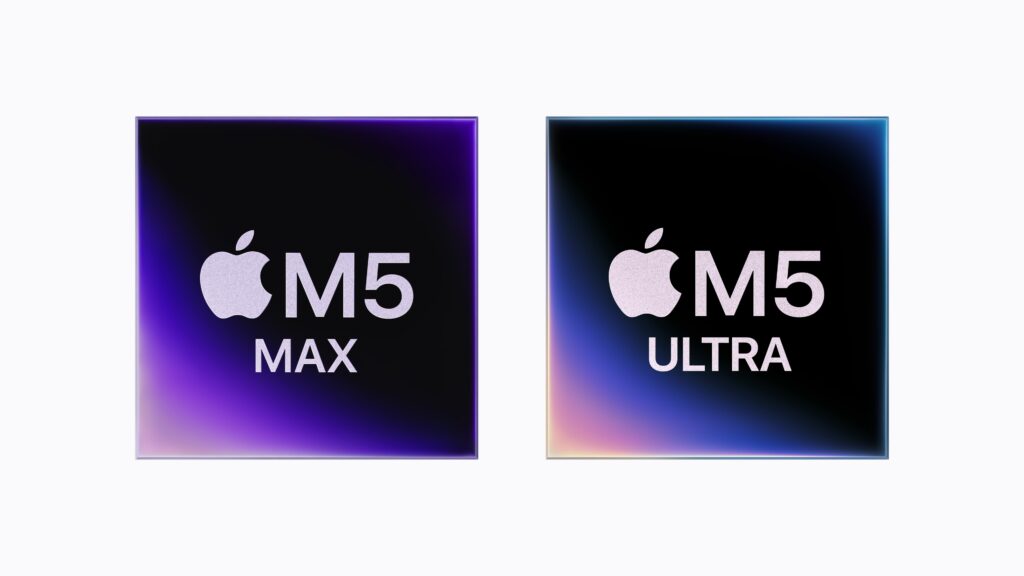
Industry analysts, including those tracking the supply chain, have noted that Apple is likely focusing its R&D on a more substantial M7 leap for its high-end professional tier, slated for late 2027. Consequently, the M5 Pro and M5 Max remain the current benchmarks for heavy-duty professional tasks. This divergence in release schedules means that the newest chip (M6) is not necessarily the most powerful, forcing a recalibration of the "newest is best" procurement rule that has dominated tech purchasing for years.

The Rise of Neural Accelerators
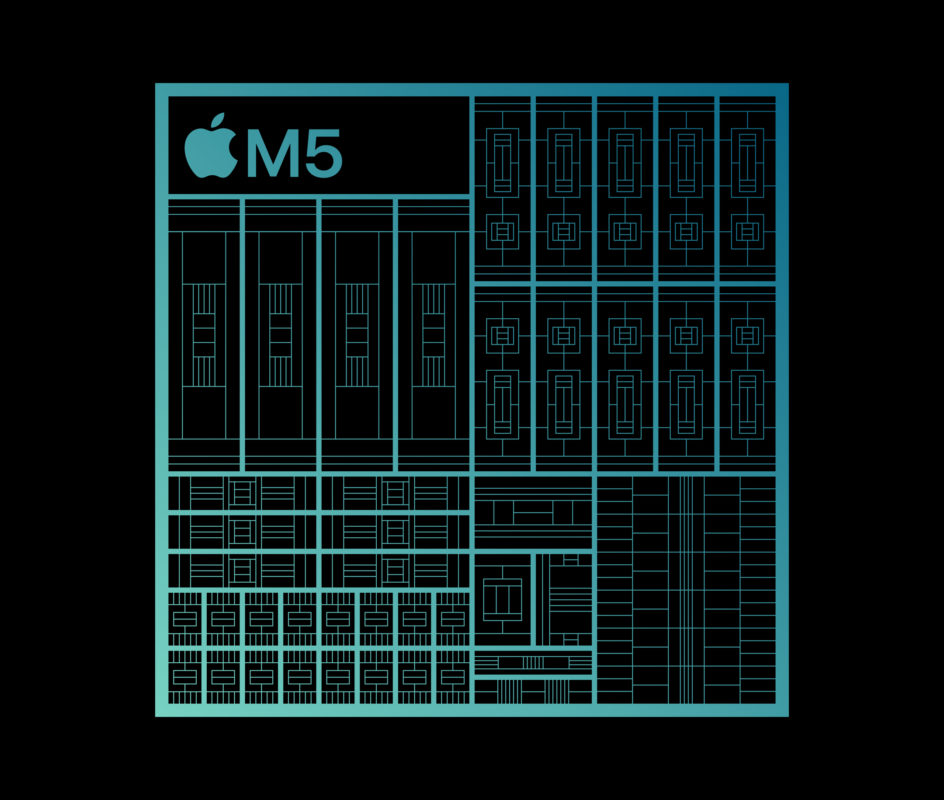
Perhaps the most significant technical differentiator in the 2026 lineup is the integration of dedicated Neural Accelerators into every GPU core across the M5 and M6 families. These hardware units are designed specifically to handle the intensive computational demands of artificial intelligence and machine learning tasks.
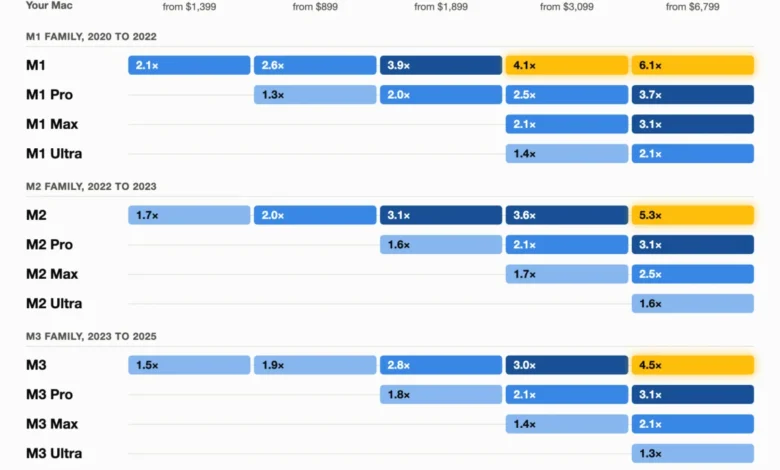
Benchmarks from third-party testing labs like Puget Systems indicate that for AI-driven post-production features—such as Premiere Pro’s "Enhance Speech" or DaVinci Resolve’s "Magic Mask"—the performance gains are substantial. In testing, the M5 Ultra demonstrated a nearly 4x speed improvement in speech transcription compared to the M3 Ultra. While raw video encoding speeds remain relatively stagnant compared to previous generations, the integration of Neural Accelerators has fundamentally altered the performance ceiling for AI-heavy workflows. For professionals relying on local large language models (LLMs) or sophisticated AI-based noise reduction, the M5 Max and Ultra chips represent a significant leap in functional capacity rather than just incremental clock speed improvements.
Memory Pricing and the "100-Year Flood"
A critical factor in the current purchasing climate is the unprecedented escalation in memory costs. In June 2026, Apple adjusted its pricing structures to reflect a surge in the spot market for DDR5 memory. Management has characterized the situation as a "100-year flood" in the memory supply chain, with costs for certain high-capacity RAM configurations rising by nearly 100% compared to March 2025 levels.
This shift necessitates a change in strategy for procurement. Because Apple Silicon uses a unified memory architecture—where RAM is shared between the CPU, GPU, and Neural Accelerators—there is no path for post-purchase upgrades. Professionals must now prioritize RAM capacity during the initial purchase, even if it requires trade-offs in storage or peripheral investments. For a standard professional workstation, 64GB of RAM is now considered the effective floor, with 96GB or more recommended for those integrating AI model training into their daily tasks.
Thunderbolt 5 and Peripheral Infrastructure
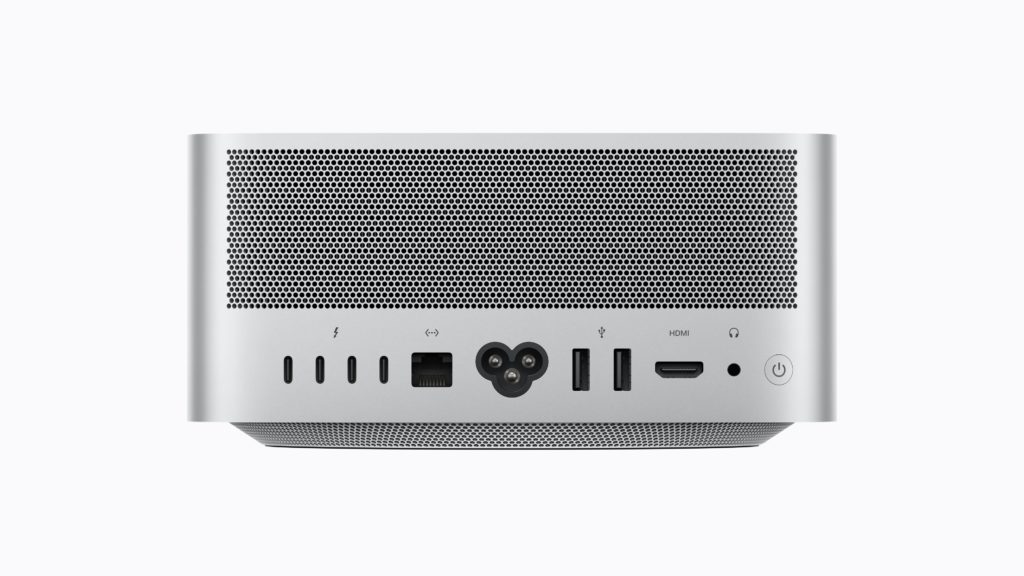
Connectivity standards have also seen a vital upgrade. The M5 Pro, Max, and Ultra chips support Thunderbolt 5, which offers 80Gb/s data transfer rates. This bandwidth is crucial for modern professional workflows involving massive raw video files or high-speed network-attached storage (NAS).
Devices lacking Thunderbolt 5—specifically those running on base-level M6 chips—rely on the older Thunderbolt 4 standard (40Gb/s). While sufficient for general office tasks, this serves as a bottleneck for high-end video production. When configuring a system, the choice of chip tier is now inextricably linked to I/O capabilities. Investing in a machine with Thunderbolt 5 is not merely a "future-proofing" measure; it is a necessity for maintaining an efficient data pipeline in environments where high-speed external SSDs and dual 10Gb Ethernet connections are standard.
Strategic Procurement: Desktop vs. Laptop
For professionals who do not require mobility, the desktop Mac remains the superior value proposition. A comparison between the MacBook Pro and the Mac Studio reveals a price disparity of roughly $800 to $1,100 for near-identical internal specifications. This premium covers the cost of the display, battery, and chassis, which provide little utility in a permanent studio setting.
Furthermore, the Mac Studio offers a thermal advantage, allowing the M5 Max and Ultra chips to sustain peak performance for longer durations without the thermal throttling risks inherent in a thin laptop enclosure. For teams, the most efficient architecture currently involves offloading heavy AI computation to a centralized, high-performance Mac Studio on the network, rather than equipping every individual workstation with maximum-spec hardware. This approach maximizes the utility of expensive components and allows for a more scalable infrastructure.
Implications for the Professional User
The primary takeaway for 2026 is that "tier" must take precedence over "generation." The M5 Pro remains a more capable machine than the M6 for professional video editing and complex color grading, due to its superior GPU core count, wider memory bandwidth, and Thunderbolt 5 support.
Professionals should categorize their needs based on three distinct tiers:
- The Baseline Pro: M5 Pro chips with at least 64GB of RAM. This is the sweet spot for editors and motion designers who require high-speed media processing and enough memory to handle complex multitasking.
- The AI-Ready Workstation: M5 Max chips with 64GB to 128GB of RAM. This is for users who incorporate AI models, high-bitrate multi-stream 8K playback, and heavy visual effects into their daily routine.
- The Ultra-Scale System: M5 Ultra chips with 96GB+ of RAM. These are reserved for dedicated color suites, enterprise-level post-houses, and local AI development labs where the throughput of multiple ProRes engines and massive memory bandwidth is non-negotiable.
Conclusion
As the industry moves into the latter half of 2026, the Mac lineup is characterized by high costs and high performance. The "decoder ring" approach—identifying the exact needs of a workflow and mapping them to the specific strengths of the M5 or M6 silicon—is the only way to ensure a sound return on investment. With memory prices likely to remain elevated through 2027, the focus must remain on purchasing for the specific technical requirements of the next four to five years, rather than seeking short-term cost savings. By prioritizing RAM, identifying the necessity of Neural Accelerators, and opting for the appropriate tier of silicon, professionals can continue to leverage Apple’s hardware to meet the evolving demands of the digital production industry.