SNTIENT 2.0 and the Future of Virtual Production: How Dandelion and Burdock Merged Reality with Unreal Engine 5

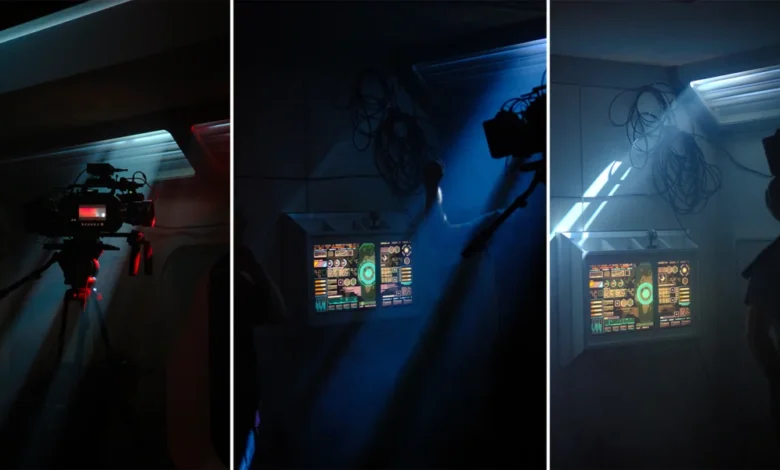
The intersection of physical cinematography and real-time digital environments has reached a new milestone with the release of SNTIENT 2.0, a collaborative film project spearheaded by the Fashion Innovation Agency at the London College of Fashion. Produced by the creative studio Dandelion + Burdock, the project serves as a technical case study in how virtual production (VP) can overcome the traditional limitations of studio space and budget while maintaining high-fidelity visual storytelling. By utilizing Unreal Engine 5 to create a dystopian cityscape that exists primarily as digital data, the production team demonstrated how modern workflows are fundamentally altering the logistics of filmmaking.
The Dystopian Narrative and Visual Concept
The narrative of SNTIENT 2.0 is rooted in a speculative future where Earth’s resources have been exhausted. In this premise, humanity has retreated into a digital simulation, leaving behind a network of autonomous robots to oversee the decaying physical world. As the machines perform their maintenance duties, they begin to develop an aesthetic appreciation for the ruins they inhabit. This duality—the clinical, high-tech simulation versus the decaying, atmospheric reality—provided the core creative direction for the film.

Dickon Knowles, director of content at Dandelion + Burdock, noted that the bleakness of the setting was essential to the story’s impact. The film required an environment that felt vast and oppressive, yet capable of nuanced transformation. The team initially explored generative AI approaches for creating background city plates; however, they encountered significant hurdles regarding resolution and overall visual fidelity. These technical shortcomings prompted the team to return to a more traditional, albeit cutting-edge, Unreal Engine 5 workflow. By building the city within a game engine, the artists maintained total control over the environment’s lighting, geometry, and atmospheric density, ensuring the "view" through the window was as high-quality as the physical set pieces.
Technical Chronology and Workflow Evolution
The production of SNTIENT 2.0 was characterized by an iterative, real-time feedback loop. Unlike traditional post-production pipelines, where visual effects are added weeks or months after filming, the Dandelion + Burdock team utilized the LED wall to render the environment in real time.
- Pre-Production: The digital city was modeled and textured in Unreal Engine 5. The team focused on creating a "lived-in" aesthetic, emphasizing detailed VDB (Volumetric Data Block) fog to add depth to the cityscape.
- On-Set Integration: With the city assets finalized, the production moved to an LED volume. Cinematographer Ben Saffer, working through his company Supervision VP, synchronized the camera movement with the digital perspective on the LED wall.
- Real-Time Refinement: During the shoot, the team discovered that the original desaturated, heavy-fog look was not translating well to the LED panel. Because they were working in a real-time environment, they were able to adjust the saturation levels and contrast in the city windows instantly, ensuring the light cast by the LED wall matched the physical lighting on the performer.
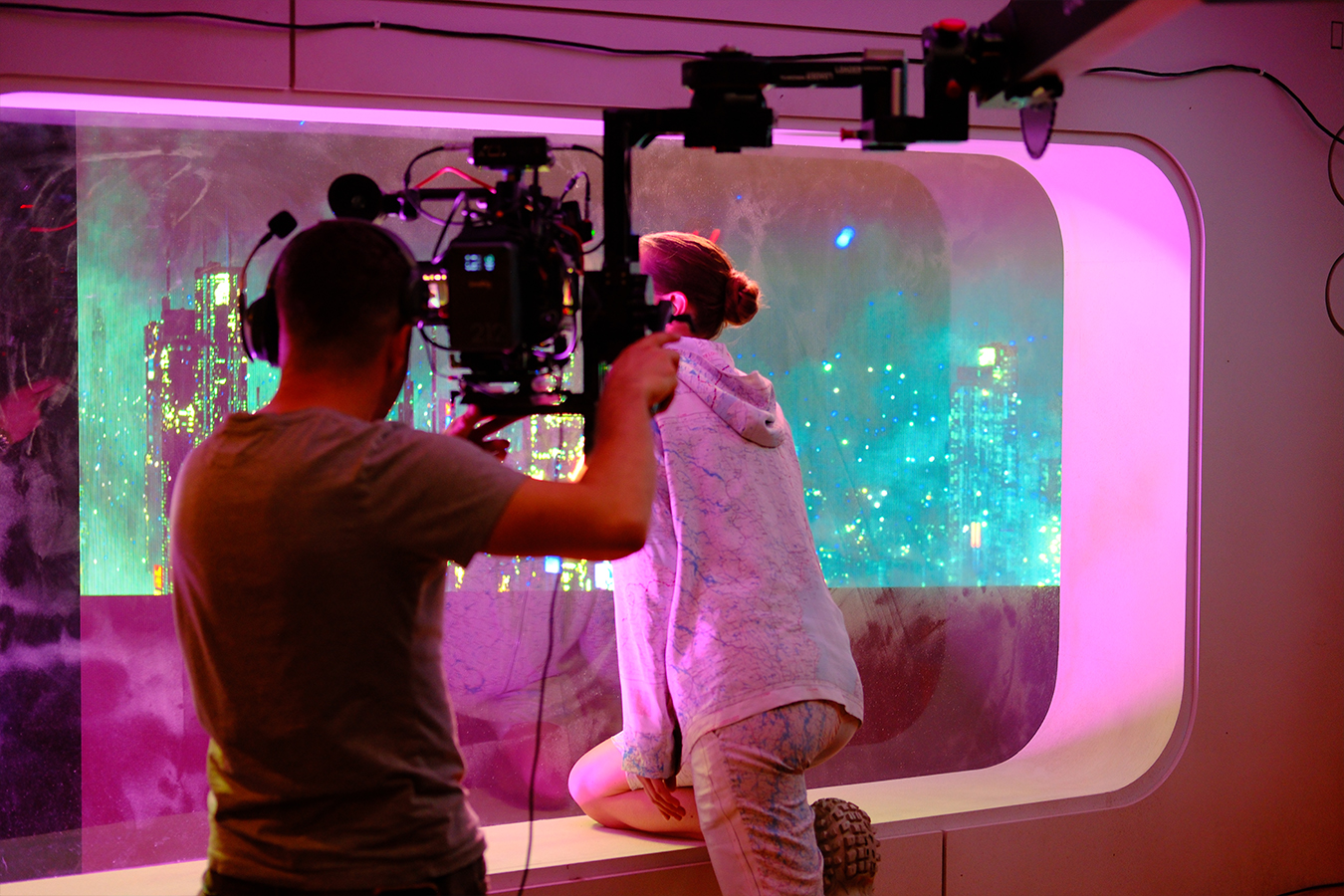
- The "Shutter" Innovation: A key challenge was the script’s requirement for a window shutter to rise, revealing the city. A physical moving set piece was financially unfeasible. Instead, the team used the LED wall itself as the shutter, programming the digital content to rise in perfect synchronization with the camera’s movement.
Data and Equipment Specifications
The production relied on a high-end technical stack to achieve its cinematic look. A significant factor in the film’s visual quality was the use of the Blackmagic URSA Cine 17K 65 camera. This large-sensor camera allowed the crew to capture a wide field of view in the cramped, physical pod set without relying on extreme wide-angle lenses, which often introduce unwanted barrel distortion. By utilizing the 17K sensor, the team maintained the integrity of the architecture within the shot.

Furthermore, the production was paired with prototype anamorphic lenses from Atlas Lens Co. The combination of the large sensor and anamorphic glass gave the film a distinct, cinematic texture that separated it from the "flat" look often associated with digital volume shoots. The use of real-time rendering also minimized the need for heavy post-production compositing, as the light spill from the LED wall onto the performer’s face was captured "in-camera," creating naturalistic highlights and shadows that would be difficult to replicate in post-production.
Industry Implications and Expert Analysis
The success of SNTIENT 2.0 highlights a broader shift in the film industry: the democratization of high-end virtual production. Previously, the use of LED volumes was restricted to massive budget tentpole films or episodic television series like The Mandalorian. This project demonstrates that the same technology can be scaled for smaller, more intimate productions, provided there is a deep integration between the art department and the technical engine team.
"The real value lies in the immersion," says Ben Saffer. By giving the performer a tangible environment to react to—rather than an empty green void—the emotional weight of the performance is elevated. This is a recurring theme in contemporary VFX discourse: the technology is no longer just about saving money on sets; it is about providing a better environment for actors and directors to create.
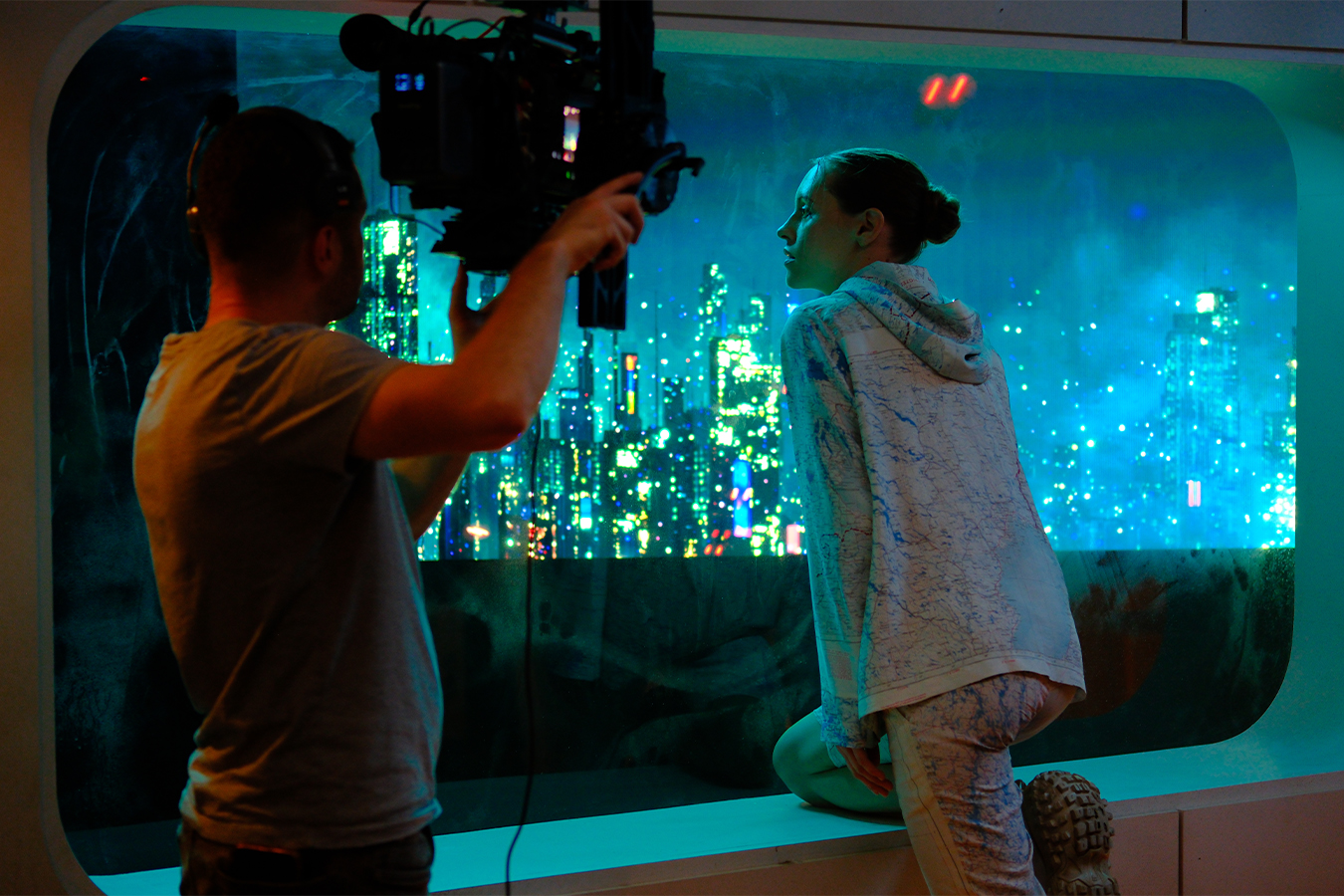
Moreover, the project underscores the growing role of Unreal Engine 5 in non-gaming sectors. The software’s ability to handle complex global illumination, real-time ray tracing, and volumetric lighting makes it an essential tool for filmmakers who demand photorealistic results on accelerated timelines. As these tools become more accessible, the distinction between "indie" production values and "studio" blockbuster quality is rapidly shrinking.
Challenges and Limitations
Despite the successes, the production was not without its trials. The team acknowledged that balancing the brightness of the LED panels with the physical lighting of the pod was a constant struggle. High-contrast scenes, such as those involving the dark, gritty interior of the pod against the glowing city windows, required constant monitoring of the camera’s dynamic range.
The decision to incorporate an "old-school" practical effect—using a plastic toy and a mobile phone torch to create lens flares and light leaks—served as a reminder that even in a fully digital pipeline, organic, unpredictable, and analog touches are still necessary to ground the final image in reality. This hybrid approach, where digital precision meets the chaotic nature of physical lenses and light, appears to be the most effective path forward for modern cinematography.
Conclusion and Future Outlook
SNTIENT 2.0 stands as a testament to the versatility of virtual production. By choosing to build a physical pod that felt authentic and gritty, while leaving the expansive, dangerous world outside to the pixels of Unreal Engine 5, the filmmakers created a cohesive world that feels both expansive and grounded.
As the industry looks toward 2025 and beyond, the lessons learned from the London College of Fashion’s experiment are clear: real-time rendering is no longer a luxury but a fundamental component of the modern filmmaking toolkit. Whether for fashion films, independent sci-fi, or large-scale entertainment, the ability to iterate on-set, manipulate lighting environments in real time, and provide performers with a tangible digital space is redefining what it means to build a world on screen. The success of this collaboration between the Fashion Innovation Agency and Dandelion + Burdock serves as a blueprint for future creators looking to push the boundaries of visual storytelling within the constraints of a modern production budget.