Candelabra Palaver at Piscina Gallery Redefines the Humble Candleholder Through Contemporary Design

The fundamental purpose of a candleholder has remained remarkably straightforward throughout human history: to keep a vertical flame upright and secure. Yet, within that singular, utilitarian constraint lies an infinite universe of creative potential. This tension between strict utility and boundless artistic expression sits at the heart of Candelabra Palaver, a major new group exhibition that opened on November 14, 2026, at Piscina, a contemporary collectible design gallery situated in the vibrant Red Hook neighborhood of Brooklyn, New York.
Bringing together approximately 80 distinct artists, designers, and creative studios, the exhibition serves as a sprawling exploration of how contemporary practitioners can reinvent a domestic object whose primary mechanical function has changed very little over the centuries. With no prescribed guidelines regarding materials, manufacturing scale, or stylistic direction, the participants were given absolute freedom to deconstruct, reimagine, and elevate the everyday candelabrum through the lens of their individual practices. The resulting showcase transforms a quiet corner of Brooklyn into a laboratory of decorative arts, proving that even the most modest household accessories can spark rigorous aesthetic dialogue.
A Deceptive Brief and an Open Call
The genesis of Candelabra Palaver traces back to an open call initiated by Piscina, inviting creators from a wide spectrum of disciplines to submit their own interpretations of a candleholder. The governing rules of the open call were deliberately minimal. Participants were asked to construct an object capable of holding a candle, but they were entirely unburdened by restrictions on weight, footprint, heritage materials, or production methods.
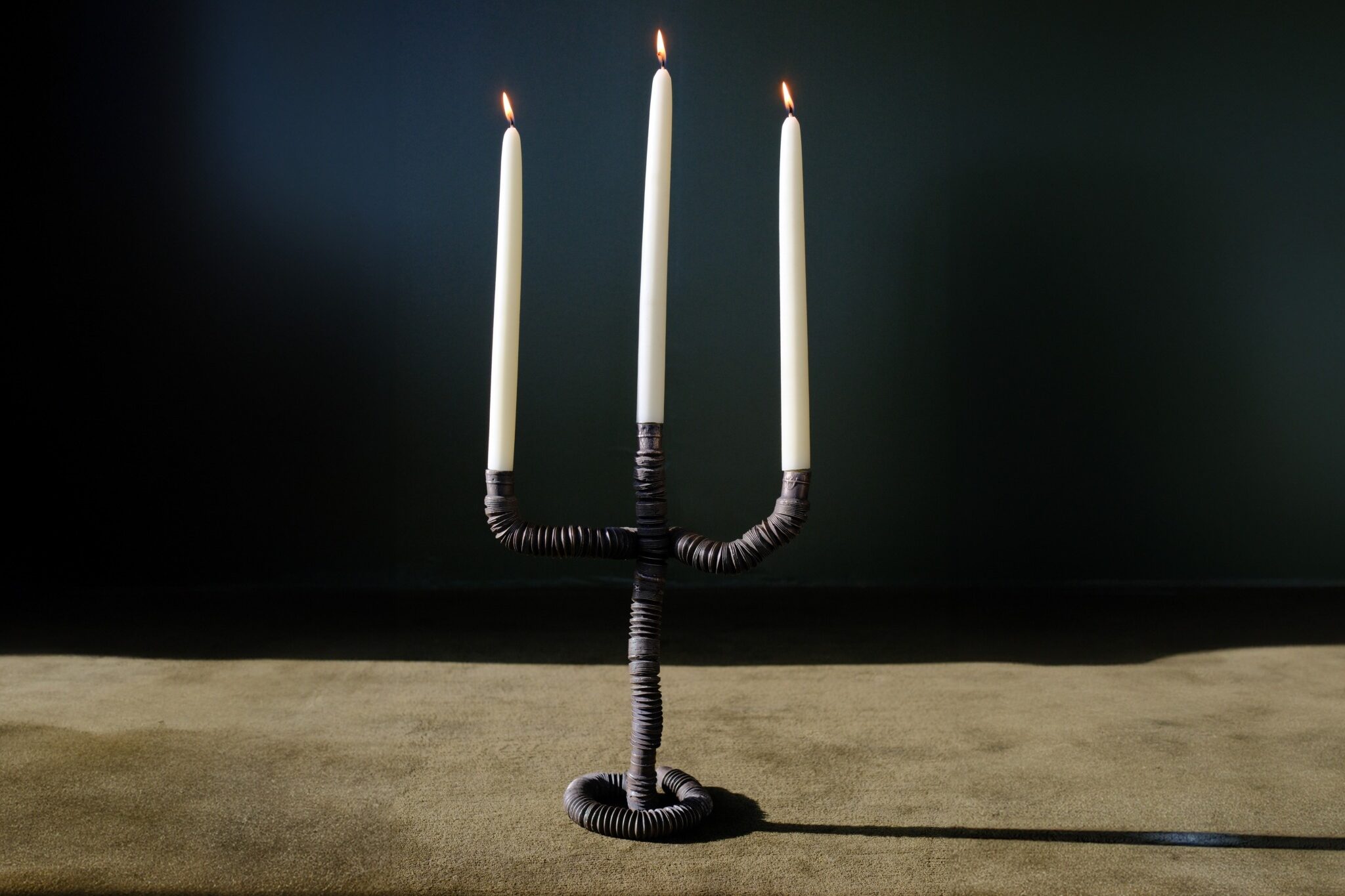
This lack of structural dogma yielded an eclectic collection of works that deliberately straddle the boundary between functional domestic product and standalone sculpture. Some contributors chose to honor historical archetypes, working within the familiar parameters of multi-branched candelabra and traditional taper bases. Others gleefully obliterated these conventions, engineering abstract, architectural, and kinetic forms that challenge viewers to reconsider how light interacts with mass and negative space.
The exhibition’s title offers a subtle wink to this playful premise. Derived from the word "palaver"—which denotes idle chatter, prolonged discussion, or unnecessary fuss—the title playfully frames the exhibition as a gathering of diverse creative voices arguing passionately, yet playfully, over the proper execution of an object as seemingly uncomplicated as a stick for wax and fire. Rather than offering a singular consensus on what a candleholder should be, Candelabra Palaver presents a chorus of competing, contradictory, and brilliant opinions.

A Cross-Disciplinary Roster of Talent
The breadth of Candelabra Palaver is heavily anchored by the diversity of its participants. The exhibition successfully bridges the gap between established industrial design studios and independent, studio-craft makers working at the intersection of art and architecture.
Prominent participating design studios include Fort Standard, known for its rigorous approach to materials and geometry; Kin & Company, celebrated for its structural and architectural metalwork; the Office of Tangible Spaces, which consistently blurs spatial design and object creation; Studio Daae; and Atelier Musset. These collaborative entities bring a refined commercial and structural sensibility to the gallery floor, balancing industrial precision with handcrafted warmth.
Alongside these studios, the exhibition highlights the highly personal, distinct perspectives of individual makers and artists. Contributors such as Sophie Collé, Steven Bukowski, Kaye Blegvad, Hanna Anonen, and Fitzhugh Karol inject a sense of tactile intimacy into the space. Working across fields as varied as contemporary furniture, fine art, ceramics, and sculpture, these makers utilize mediums ranging from traditional hardwoods and polished metals to experimental resins, ceramics, and found objects.

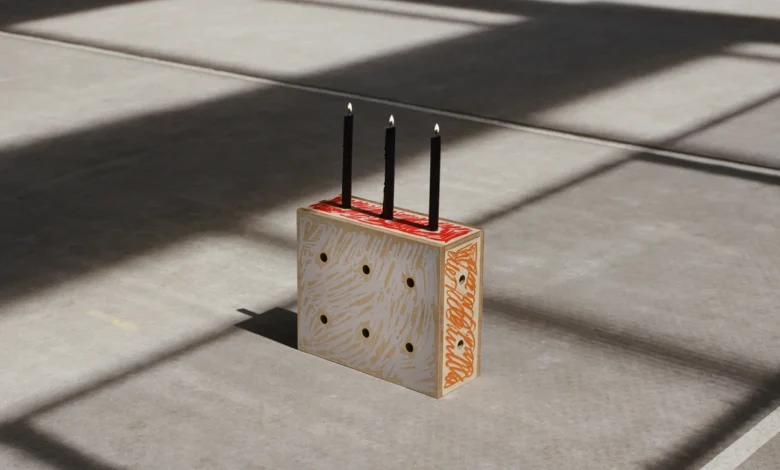
For instance, works by Hanna Anonen introduce vibrant splashes of color and geometric wooden architecture reminiscent of Scandinavian folk art filtered through a contemporary lens. Meanwhile, contributions from other makers utilize translucent materials like glass and resin to manipulate the ambient glow of the flame, turning the candleholder into an active participant in the illumination process rather than a passive base.
Chronology and Exhibition Timeline
The timeline of Candelabra Palaver is closely tied to the shifting seasonal rhythms of New York City and the strategic evolution of the hosting gallery.
The exhibition officially launched with a well-attended opening night reception on November 14, 2026. Timed deliberately to coincide with the onset of the darker, colder months in the Northern Hemisphere—a season historically defined by domestic gatherings, indoor entertaining, and a heightened reliance on artificial and ambient lighting—the exhibition taps into the psychological comfort of the lit flame.
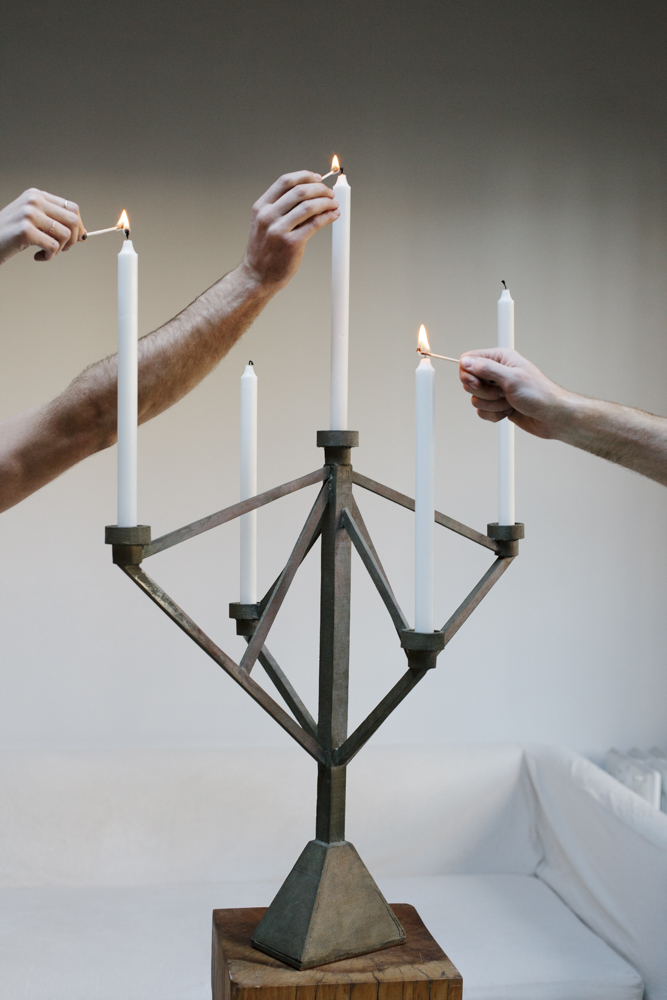
Running through the holiday season, Candelabra Palaver is scheduled to remain on public view until December 31, 2026. In keeping with Piscina’s commercial gallery model, every physical piece featured in the exhibition is available for purchase, offering collectors and design enthusiasts an opportunity to acquire unique, museum-quality design objects for private residential spaces.
The Evolution of Piscina as a Cultural Hub
To understand the cultural weight of Candelabra Palaver, one must examine the trajectory of Piscina itself. Founded in 2013 by artist and furniture designer Natalie Shook, the organization began its life as a cooperative studio environment. Over the span of more than a decade, Piscina steadily evolved, transitioning from a localized collective into a recognized gallery and showroom dedicated exclusively to contemporary collectible design.
The staging of Candelabra Palaver in Red Hook underscores this institutional growth. Earlier in 2026, Piscina marked a major milestone by introducing a dedicated gallery space alongside a completely reimagined showroom facility. This physical expansion was specifically designed to provide independent artists, experimental designers, and craftspeople with a formalized platform to present ambitious, thematic group exhibitions free from the constraints of traditional retail commerce.

By functioning as both a commercial showroom and an experimental art gallery, Piscina has carved out a distinct niche within the New York design landscape. The gallery champions works that resist mass production, favoring items that tell a distinct story about material science, maker intent, and contemporary culture. Candelabra Palaver serves as a textbook manifestation of this mission, utilizing a universally understood object to test the boundaries of what contemporary collectible design can achieve.
Broader Implications and Market Analysis
The success and conceptual framing of Candelabra Palaver point to broader shifts within the contemporary design market. In recent years, collectors and interior designers have increasingly gravitated toward "functional art"—pieces that retain a utilitarian purpose while serving primarily as sculptural statements within a room.
As digital fabrication and mass manufacturing have flooded the global market with homogenous, algorithmic design products, there has been a corresponding counter-movement among consumers and makers alike. Objects that showcase individual human touch, material quirks, and conceptual humor command intense interest. A candleholder is uniquely positioned to capitalize on this trend. Because its function is so absolute and minimal, the decorative envelope can be pushed to extreme lengths without compromising its basic utility. A consumer may not have space for a massive sculptural installation or a bespoke dining table, but almost anyone can find a surface for an expressive, artist-designed candleholder.

Furthermore, group exhibitions structured around a single, highly constrained prompt—such as an open call for a candleholder—offer a democratizing effect within the elite collectible design sector. By lowering the barrier to conceptual entry while demanding rigorous execution, galleries like Piscina can unearth fresh talent, pairing emerging voices directly alongside established industry veterans like Fort Standard.
Ultimately, Candelabra Palaver transcends its modest functional premise. By inviting eighty distinct creative minds to ruminate on the simple act of holding a candle, Piscina has curated a snapshot of contemporary design thinking: diverse, humorous, technically accomplished, and deeply appreciative of the enduring power of material culture. As visitors walk through the Red Hook gallery space, surrounded by everything from delicate wire-and-resin architectures to heavy, polychromatic wooden boxes, they are reminded that innovation does not always require inventing a completely new problem to solve. Often, the most profound creativity arises when an artist takes the oldest problem in the world and looks at it with entirely fresh eyes.
Related posts: