ProjectSAM and the Evolution of Orchestral Sampling: Inside the Development of Lineage Strings and the Native Instruments Big Partner Sale

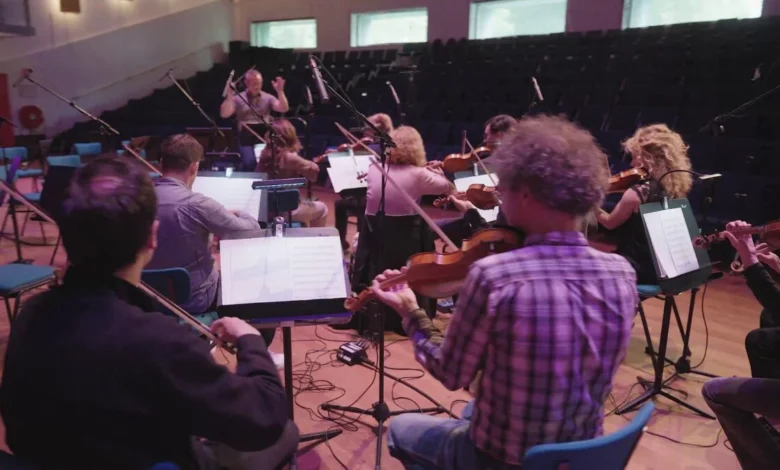
For over two decades, the landscape of virtual orchestration has undergone a profound transformation, moving away from rigid, dry sample blocks toward dynamic, living acoustic spaces. At the vanguard of this evolution is ProjectSAM, a developer that has spent more than twenty years pioneering ensemble-recording philosophies that bring the natural resonance of concert halls directly into modern production studios. As the company expands its groundbreaking Lineage Series from percussion into strings with the release of Lineage Strings for Kontakt 8, the intersection of traditional acoustic recording and next-generation software design has never been more apparent.
This technological leap coincides with the ongoing Native Instruments Big Partner Sale, a seasonal event offering significant discounts across hundreds of Native Kontrol Standard (NKS) instruments, sample libraries, and bundles developed by top-tier audio creators, including ProjectSAM. Running through June 30, the promotional window provides composers and producers with an opportunity to integrate world-class cinematic textures into their workflows at reduced pricing structures.
A Chronology of Innovation: From Early Samplers to Kontakt 8
Founded in 2001 by Vincent and Maarten, ProjectSAM entered an industry dominated by close-microphone sampling techniques. During that era, achieving a realistic orchestral sound required composers to heavily drench dry, sterile sample blocks in digital reverb. ProjectSAM challenged this paradigm by introducing an ensemble-recording philosophy that captured the natural acoustic perspective of an orchestra from a distance. Their early proof-of-concept recordings, captured using local conservatory musicians, generated an overwhelming response from the composition community—nearly overwhelming their academic institution’s servers upon release.
In the ensuing years, the technical demands of virtual instrument development shifted drastically. Products released during the early part of the millennium, such as the seminal SAM Horns and library classics like True Strike and Symphobia, functioned primarily as straightforward preset collections for platforms like GigaSampler and early iterations of Kontakt. At the time, developers faced considerable hurdles managing multiple physical DVD installation formats and dealing with software bugs unique to early hardware-software integration.
By 2008, ProjectSAM standardized its ecosystem by focusing exclusively on the Native Instruments Kontakt platform. This strategic pivot enabled the development team to concentrate its collective engineering resources on advanced scripting, deep coding, and refined user interface design. The culmination of this multi-decade trajectory is Lineage Strings, developed specifically to harness the advanced architecture of Kontakt 8.

Bridging Tradition and Technology: The Lineage Series Versus Symphobia
To understand the strategic positioning of Lineage Strings, one must examine its relationship to ProjectSAM’s broader catalog, most notably the enduring Symphobia universe. While Symphobia established its reputation on pre-orchestrated ensembles, explosive cinematic combinations, and instant scoring gratification, the Lineage Series addresses a different compositional requirement: traditional orchestration utilizing individual sections and granular flexibility.
The Lineage line was conceived to complement the Symphobia ecosystem rather than replace it. By preserving the core ease of use and rapid workflow speed of Symphobia while applying it to a traditional orchestral layout, ProjectSAM allows composers to transition seamlessly between macro-level cinematic layering and micro-level voice distribution.
Intelligent Workflows: Adaptive Phrasing and the Arranger Module
Modern virtual instruments are increasingly defined by their integration of intelligent algorithms that automate technical complexities, allowing composers to focus on musical expression. Lineage Strings incorporates sophisticated features such as Adaptive Phrasing with Smart Lookahead delay and an intelligent Arranger module.
Building upon the Adaptive Sync technology previously developed for Pandora and Lineage Percussion—which automatically matched recorded rolls and swells to specific note lengths—Adaptive Phrasing extends this logic to virtually all recorded articulations within the string section. When a composer inputs MIDI data, the Lineage Strings engine differentiates between sustained notes, tenutos, and staccatos, automatically selecting the appropriate articulation. The system is also capable of identifying grace notes and trills in real-time, reducing the need for exhaustive keyswitch programming.
Concurrently, the built-in Arranger module analyzes incoming chords—detecting inversions, root keys, and slash chords—and intelligently distributes the harmonic content across the five individual string sections. This functionality functions as a real-time compositional assistant, enabling users to generate realistic string accompaniments instantaneously through full automation or manual voice assignment.
NKS Integration and Accessibility Milestones
The adoption of the Native Kontrol Standard (NKS), and specifically NKS2 protocol updates, has fundamentally altered how developers approach user interface design and hardware integration. Prior to widespread NKS adoption, virtual instrument design prioritized mouse-driven graphical interfaces. While keyboards could trigger notes, the myriad configuration options, micro-controls, and advanced parameters remained largely inaccessible to the blind and visually impaired producer community.

The integration of NKS protocols with Lineage Strings and Lineage Percussion mandated a parallel design philosophy, ensuring complete parity between visual software controls and hardware-mapped layouts. Furthermore, leveraging hardware features such as the Native Instruments Light Guide presented unique engineering challenges. During the development of Lineage Strings, beta-testing teams collaborated closely with engineers to solve complex operational questions, such as whether the Light Guide should illuminate keys when physically pressed or when the underlying samples are triggered under Smart Lookahead delay conditions.
Industry Implications: The Role of Machine Learning in Composition
As artificial intelligence and machine learning technologies increasingly intersect with audio software development, questions regarding the future of creative control remain central to the industry. According to ProjectSAM’s development team, one of the primary technical barriers in applying machine learning to virtual instruments is the inherent conflict between real-time, low-latency performance and predictive analysis.
Because machine learning algorithms cannot genuinely forecast future intent, systems require a brief look-ahead window—typically measured in milliseconds—to analyze incoming MIDI sequences and make informed articulation choices. While these systems successfully reduce technical friction and streamline drafting phases, developers emphasize that AI and machine learning should function as assistive tools rather than autonomous creators. The nuances that define an expressive musical performance still rely on the direct, deliberate control of the human composer.

Market Context and Availability
The release of Lineage Strings arrives during a broader industry push toward highly optimized, subscription- and sale-driven software ecosystems. Through June 30, the Native Instruments Big Partner Sale provides structural discounts on an extensive catalog of NKS-compatible libraries, allowing independent artists, media composers, and studio professionals to acquire professional-grade scoring tools at reduced price points.
As virtual orchestration continues to evolve through deeper hardware integration, accessibility standards, and predictive performance engines, tools like ProjectSAM’s Lineage Series illustrate how software design can respect classical orchestration traditions while embracing the efficiency of modern studio workflows.
Related posts: