The landscape of music production hardware has undergone a significant transformation over the past decade, shifting from a market dominated by affordable, entry-level units to one that increasingly caters to professional "aspirational" setups. While the early 2010s saw a resurgence in budget-friendly analog clones, the current era is defined by feature-dense workstations that blur the lines between drum machines and full-scale synthesizers. For producers with a budget exceeding $500, the choices today represent a pinnacle of engineering, combining legacy analog warmth with cutting-edge digital synthesis and generative sequencing.

The Evolution of the High-End Rhythm Machine
Historically, drum machines were utilitarian devices designed to provide a steady pulse for solo performers or songwriters. The 1980s saw the emergence of the Roland TR series, which utilized analog synthesis and early sampling to define the sound of hip-hop and house music. However, as Digital Audio Workstations (DAWs) became the industry standard in the early 2000s, hardware drum machines were momentarily relegated to the status of niche collectibles.

The current resurgence is driven by "tactile fatigue"—a phenomenon where producers seek to escape the computer screen in favor of physical knobs, faders, and pads. Modern high-end machines are no longer mere "rhythm boxes"; they are sophisticated instruments capable of sound design, live arrangement, and complex modulation. Manufacturers are now competing on the quality of their digital signal processing (DSP), the robustness of their build quality, and the innovation of their internal sequencers.

Sonicware CyDrums: The Wavetable Disruptor
Leading the entry-level of the premium category is the Sonicware CyDrums. While most percussion instruments rely on traditional subtractive synthesis or simple sample playback, the CyDrums utilizes wavetable synthesis—a method usually reserved for melodic synthesizers. Japanese manufacturer Sonicware has successfully translated this technology into the percussive realm, offering a sound palette that is distinctly more aggressive and "metallic" than traditional analog units.

The machine features 22 "Sound Structures" that allow users to warp wavetables in real-time, assigning velocity and pressure to various parameters for expressive performance. With an eight-track sequencer and integrated effects, the CyDrums targets producers in the industrial, techno, and experimental IDM genres. Its $500 price point serves as the gateway to the professional market, offering a specialized alternative to the more generalized budget machines.

Roland TR-8S: The Standard for Live Performance
The Roland TR-8S remains a cornerstone of the modern studio and live stage. Released as the successor to the original TR-8, the TR-8S incorporates Roland’s proprietary Analog Circuit Behavior (ACB) technology to model the circuits of the legendary TR-808, 909, 606, and 707. However, its true value lies in its hybrid nature; it allows users to import their own samples and includes a powerful FM (Frequency Modulation) synthesis engine.

Industry analysts note that the TR-8S has become the "standard" for live electronic music due to its intuitive fader-per-channel layout and its reliability on large-scale PA systems. It bridges the gap between the classic sounds of the 1980s and the demands of modern multi-genre production.

Elektron Digitakt II: The Sampling Powerhouse
Elektron has established a dominant position in the high-end market with its unique approach to sequencing. The Digitakt II represents a significant leap forward from its predecessor, offering stereo sampling, 400MB of sample memory, and a massive 20GB of internal storage. The machine’s "parameter locking" capability—allowing every step of a sequence to have its own unique sound settings—has become a hallmark of modern electronic music production.

With 16 tracks available for internal sounds or external MIDI control, the Digitakt II functions as the "brain" of a hardware studio. The inclusion of Euclidean sequencing and conditional triggers allows for the creation of evolving, non-repetitive rhythms that are difficult to achieve in a traditional DAW environment.

The Replica Movement: Steda SR-909 and Din Sync RE-808
For a segment of the market, digital modeling is insufficient. This has given rise to the "replica" movement, led by companies like Steda and Din Sync. Unlike clones that merely mimic the sound, these machines are component-level replicas.

The Steda SR-909 is an exacting reproduction of the Roland TR-909, utilizing the same operating system and internal components as the 1983 original. Similarly, the Din Sync RE-808 offers a component-accurate remake of the TR-808. These units are often sold as DIY kits, requiring significant technical skill to assemble. For the purist, these replicas represent the only way to obtain the "authentic" sound of the 80s without paying the exorbitant prices of the vintage market, which can often exceed $5,000 for a well-maintained original unit.

Elektron Analog Rytm MKII and Jomox Alpha Base Mk II: Analog Supremacy
The Elektron Analog Rytm MKII is frequently cited as the most versatile analog drum machine on the market. It combines an eight-voice analog engine with a digital sample layer, allowing producers to layer the punch of analog circuits with the texture of recorded sounds. Each voice features a dedicated analog multimode filter and overdrive, making it a favorite for techno producers who require heavy, distorted kick drums.

Similarly, the Jomox Alpha Base Mk II occupies the "boutique" high-end space. Designed by Jürgen Michaelis, the Alpha Base is renowned for its uncompromising sound quality. Its analog kick drum is widely considered one of the most powerful in the industry. The Mk II version, released recently, further refined the sound engine and internal processing, maintaining Jomox’s reputation for instruments that require minimal mixing to sound "club-ready."

Experimental Frontiers: Erica Synths Perkons HD-01 and Soma Pulsar-23
In the last five years, a new category of "experimental" rhythm machines has emerged. The Erica Synths Perkons HD-01, named after the Baltic god of thunder, features four digital voices paired with analog multimode filters. Its "knob-per-function" design encourages improvisational performance rather than meticulous programming.

The Soma Pulsar-23 takes experimentation even further. As a semi-modular drum machine, it uses alligator clips and metal turrets for patching, allowing users to create complex feedback loops and chaotic rhythmic structures. It is a "weirdo" instrument that rejects the predictability of traditional sequencers in favor of an "organismic" approach to sound.

The Flagship Era: Roland TR-1000 and Polyend Drums
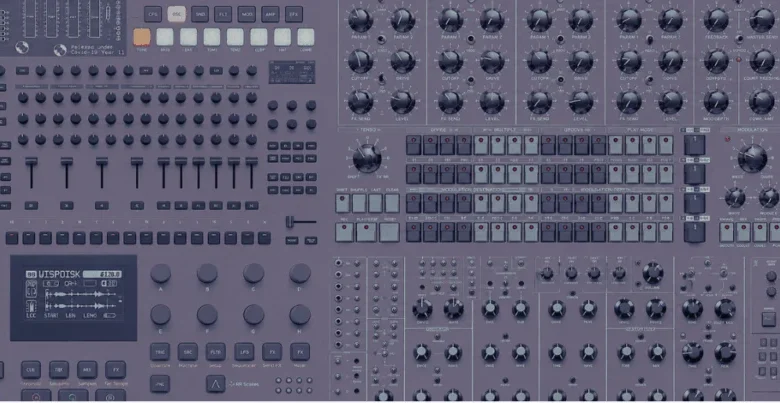
The top tier of the 2026 market is defined by the Roland TR-1000 and Polyend Drums. The TR-1000 represents Roland’s ultimate response to decades of user requests for a modern, high-end analog TR machine. It integrates a pure analog engine with the sampling capabilities of the SP-404MKII, providing a studio-grade experience that spans the entire history of the brand.

Competing directly with Roland is the Polyend Drums. This hybrid machine features eight tracks of analog, digital, and sample-based synthesis. Its design philosophy emphasizes live performance, featuring a crossfader to morph between different kits and an intuitive sequencer layout. The emergence of the Polyend Drums at the same price point as the TR-1000 indicates a highly competitive high-end market where manufacturers must offer both aesthetic beauty and technical depth.

Market Implications and Future Outlook
The proliferation of high-end drum machines suggests a robust health in the hardware music industry. Supporting data indicates that while the software market remains larger by volume, the hardware sector is seeing higher growth in terms of per-unit profit margins. Professional producers are increasingly viewing these machines as long-term investments rather than disposable electronics.

The broader impact of this trend is a diversification of the "electronic sound." As more producers adopt instruments with unique synthesis methods—like the wavetable engine of the CyDrums or the modular chaos of the Pulsar-23—the reliance on standard "808 kits" is beginning to wane.

Furthermore, the integration of generative sequencing and AI-assisted rhythm generation in units like the Polyend Drums suggests that the next frontier for drum machines will be "intelligent" collaboration. The machine is no longer just a tool that follows instructions; it is becoming a creative partner that can suggest variations and evolve alongside the performer. For those with the capital to invest, the current market offers an unprecedented level of creative freedom and sonic power.
Related posts: