Pleatech Audio WorldVerb Professional Reverb Plugin Offered Free to Bedroom Producers Blog Community Through Limited Time Promotion

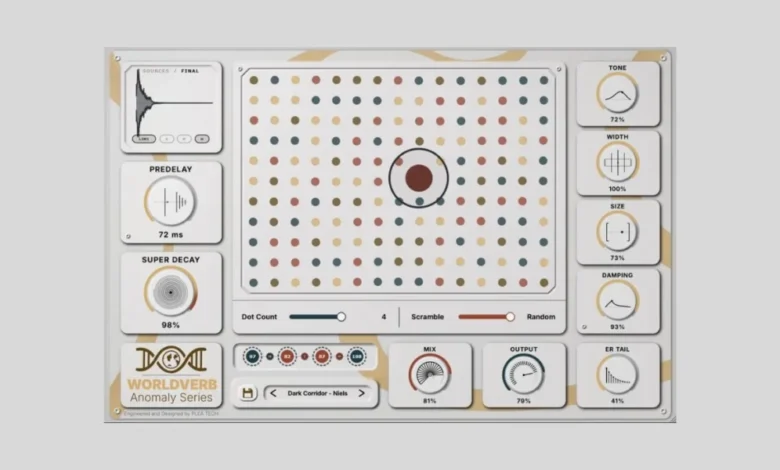
Pleatech Audio, an emerging developer in the digital signal processing and music technology sector, has announced a strategic collaboration with the Bedroom Producers Blog community to provide its WorldVerb reverb plugin free of charge. This promotion, initiated by the developer known as Niels, utilizes a specific promotional code, KAAPXM3, to grant full access to the software, which typically retails for a MSRP of $15. The offer includes all future updates and reflects a growing trend of independent developers engaging directly with niche production communities to expand their user base and solicit professional feedback.
The release of WorldVerb marks a departure from traditional algorithmic and convolution reverb designs, prioritizing a "creative" and experimental workflow over standard architectural simulation. By offering the tool for free through July 27, 2026, Pleatech Audio aims to position itself within the competitive landscape of Windows-based virtual studio technology (VST) while providing high-value tools to independent musicians and sound designers.
Technical Architecture and the Selection Grid Concept
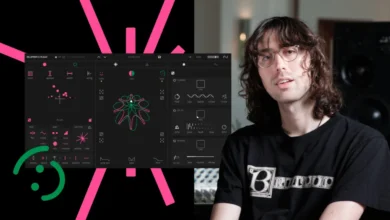
At the core of WorldVerb’s functionality is a library of 173 real captured spaces, categorized as impulse responses (IRs). Unlike traditional convolution reverbs that utilize a linear list or a drop-down menu for preset selection, WorldVerb employs a two-dimensional selection grid. This interface allows users to navigate a spatial map of acoustic environments by dragging a selection ring across the grid.
The grid system facilitates the simultaneous selection of up to four distinct acoustic spaces. This multi-selection capability is the foundation of the plugin’s "Merge Rack," a processing engine designed to combine disparate environments into a single, unified output. This approach allows for the creation of "impossible" acoustic spaces—such as the combination of a small metallic resonant chamber with the sprawling decay of a cathedral—offering a level of sonic customization rarely found in entry-level reverb units.
The impulse responses included in the package are sourced from high-quality, open-source contributors, including NoiseCollector and Nox_Sound. These IRs are provided under a Creative Commons Zero (CC0) license, ensuring that any audio generated or exported through the plugin is free of royalty obligations, a critical factor for professional sound designers working in film, gaming, and commercial music production.
Advanced Sound Manipulation: The Seven Blend Operators
The defining characteristic of WorldVerb is its suite of seven proprietary blend operators. These algorithms determine how the selected impulse responses interact within the Merge Rack. Rather than simple volume summation, these operators use complex digital signal processing to transform the character of the reverb tail.
- Layer: This is the most traditional mode, stacking the selected spaces in a parallel configuration. It is used to add density and complexity to a sound without fundamentally altering the temporal characteristics of the individual IRs.
- Series: In this mode, the signal path is routed sequentially. The output of the first selected space feeds into the input of the second, and so on. This creates cascading reflections that can lead to highly complex, evolving textures suitable for ambient and cinematic compositions.
- Carve: Utilizing spectral analysis, the Carve operator subtracts overlapping frequencies between the selected spaces. This prevents the "muddy" buildup often associated with stacking multiple reverbs, ensuring that the resulting output remains clear and defined even when using dense, long-decay IRs.
- Morph: This operator introduces a temporal element to the blending process. As the reverb tail progresses, the sound transitions from the characteristics of the first selected environment to the next. This creates a sense of physical movement through different spaces over time.
- Shimmer: A staple in modern ambient production, the Shimmer operator shifts one or more of the selected spaces up by an octave. When combined with the feedback loops of the Merge Rack, this produces ethereal, pad-like textures that follow the harmonic content of the input signal.
- Scatter: This operator applies granular synthesis principles to the impulse responses. It breaks the acoustic reflections into microscopic particles and redistributes them, resulting in a diffused, non-linear reverb character that avoids the repetitive "metallic" ringing sometimes found in digital reverbs.
- Split: The Split operator functions as a multiband processor, assigning different frequency ranges to different selected spaces. For example, a user could apply a tight, controlled room IR to the low-mid frequencies while using a large, cavernous hall IR for the high-end shimmer.
User Interface and Workflow Innovations
The design philosophy behind WorldVerb emphasizes tactile interaction and visual feedback. In an industry increasingly dominated by sleek, minimalist, or AI-driven user interfaces, WorldVerb opts for a distinct aesthetic that balances character with functional utility.
A standout feature of the interface is the draggable waveform display. The plugin generates a color-coded visual representation of the final merged impulse response. Users can click and drag this visual representation directly from the plugin interface into their Digital Audio Workstation (DAW) or a third-party sampler. This functionality effectively turns WorldVerb into a powerful IR generator, allowing producers to "bake" their custom-designed spaces into WAV files for use in other hardware or software convolution engines.
In addition to its unique blending features, WorldVerb includes a comprehensive set of standard sculpting controls. These include Size (temporal scaling), Decay (length of the tail), Damping (high-frequency absorption), and Pre-delay. The "ER Tail" control allows users to balance the ratio between early reflections and the late reverberant field, providing fine-grained control over the perceived distance of the sound source.
To manage the potential volume spikes that can occur when stacking and morphing multiple high-energy IRs, the developer has integrated a "Merged Limiter." This safety feature offers three modes—Soft, Medium, and Hard—ensuring that the output signal remains within digital headroom limits regardless of the complexity of the internal processing.
Background and Industry Context
The release of WorldVerb comes at a time when the "bedroom producer" market is more saturated than ever. According to industry reports from 2024 and 2025, the demand for unique, non-standard DSP tools has risen as creators look for ways to differentiate their sound from the standardized presets of major plugin suites.
Pleatech Audio’s decision to offer a $15 product for free is a calculated move within the "freemium" marketing ecosystem of the music software industry. By providing a fully functional version of the software to the Bedroom Producers Blog community—a hub for independent creators—the developer gains immediate visibility and a large pool of beta testers for future updates.
Historically, convolution reverb was considered a high-overhead process requiring significant CPU resources. However, advancements in modern processor architecture have allowed developers like Pleatech to implement complex spectral carving and granular scattering in real-time. WorldVerb’s Windows-only VST3 format suggests a focus on the most common platform for independent producers, though the developer has indicated that future updates may include a dedicated dark mode to accommodate various studio lighting environments and user preferences.
Chronology of the Promotion
The promotion was officially introduced in late July 2026 when Niels, the lead developer at Pleatech Audio, posted the offer within the community section of the Bedroom Producers Blog. The coupon code KAAPXM3 was verified by community moderators shortly thereafter.
The promotional timeline is as follows:
- Initial Release: WorldVerb was launched as a paid creative reverb tool.
- Community Engagement: Niels shared the coupon code to foster goodwill within the BPB community.
- Verification: Users and moderators confirmed the code’s validity for the full version of the software, including future update paths.
- Expiration: The offer is scheduled to expire on July 27, 2026, after which the plugin will return to its standard retail pricing.
In addition to the coupon code, the Pleatech Audio website features an interactive "Lucky Pleatech" spin game. According to the developer, this feature is designed to ensure a "win" for every participant, serving as an alternative method for users to acquire a free license and increasing engagement with the brand’s digital storefront.
Implications for Sound Design and Production
The implications of WorldVerb’s release extend beyond the immediate benefit of a free software acquisition. For sound designers, the ability to spectrally subtract and morph between real-world IRs represents a significant shift in the utility of convolution technology. Traditionally, convolution was used for "realism"—placing a dry recording into a realistic hall or studio. WorldVerb recontextualizes these same IRs as raw materials for sound synthesis.
The use of CC0-licensed source material is another significant factor. As copyright enforcement becomes more automated in digital distribution platforms, the assurance that the core components of a producer’s "space" are legally clear provides a layer of professional security.
Furthermore, the "drag-to-WAV" feature aligns with a broader industry trend toward modularity. Producers are increasingly using specialized "one-shot" plugins to create custom assets rather than relying on a single plugin to handle all processing in real-time. By allowing users to export their merged IRs, WorldVerb functions as both a real-time effect and a sound design workstation.
Conclusion and Future Outlook
While WorldVerb is currently limited to the Windows VST3 format, its reception within the BPB community suggests a strong demand for its unique feature set. The developer’s commitment to future updates, including aesthetic improvements like a dark mode, indicates a long-term roadmap for the product.
As the promotion nears its July 27 deadline, the influx of new users is expected to provide Pleatech Audio with the data necessary to refine the "Merge Rack" algorithms and potentially expand to other formats, such as Audio Units (AU) for macOS or CLAP for cross-platform efficiency. For now, the WorldVerb giveaway stands as a notable example of how independent developers can leverage community-focused platforms to distribute innovative DSP technology while lowering the barrier to entry for high-quality audio production tools.
Related posts: